Ambedkar Centenary One Rupee
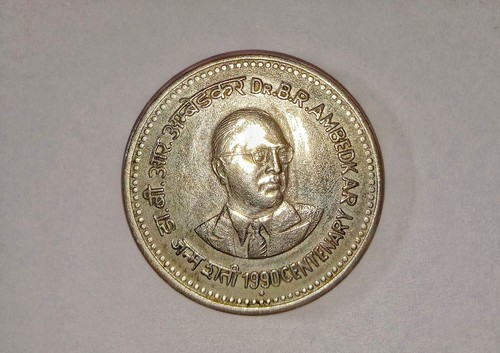
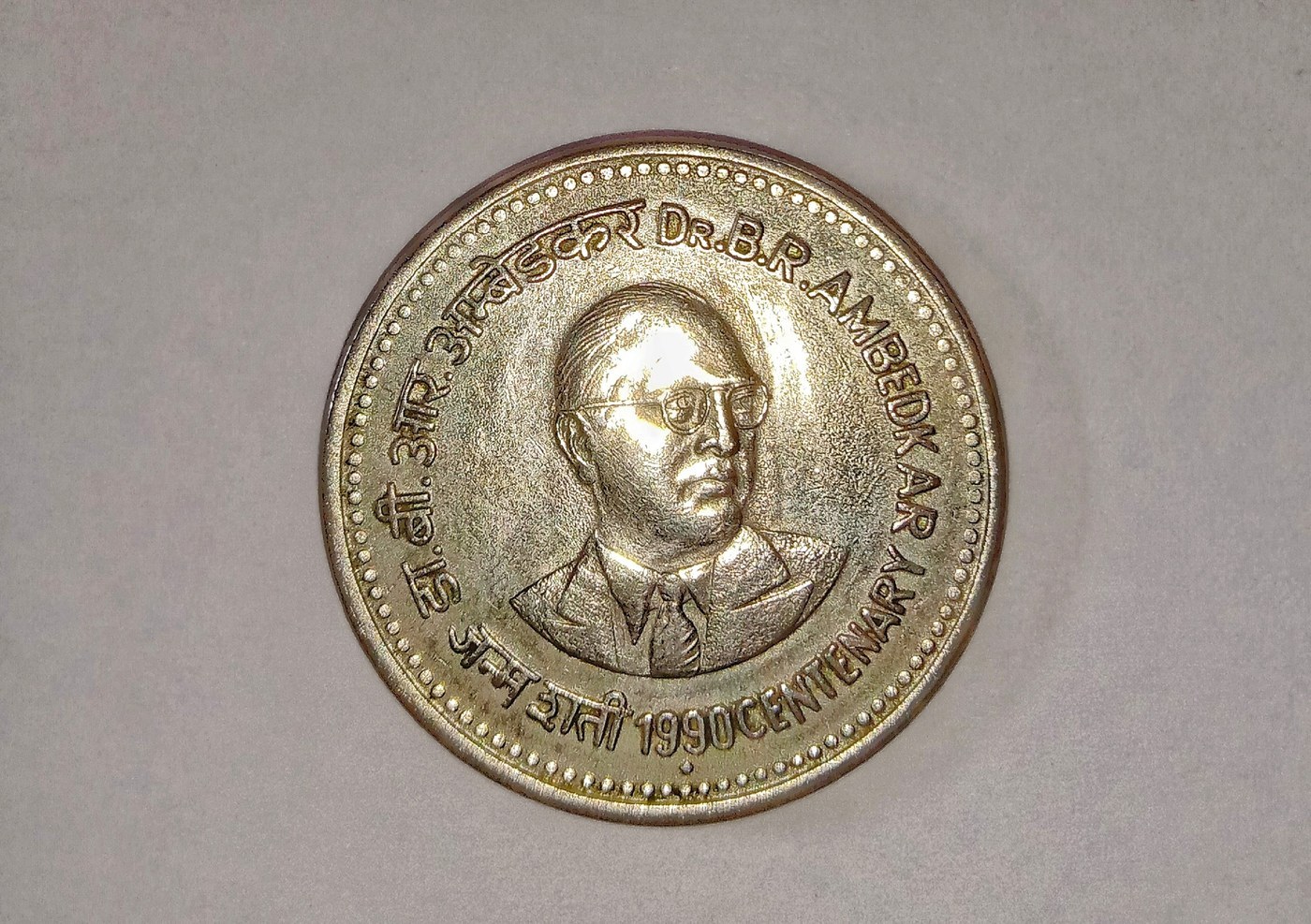
A 1990 Indian one-rupee commemorative honoring the birth centenary of Dr. B.R. Ambedkar, its obverse bearing his bespectacled portrait and bilingual legend.
- Country
- India
- Denomination
- 1 Rupee
- Metal
- Copper-nickel
Got a coin like this?
Identify any coin from a photo, free.
Overview
The Ambedkar Centenary One Rupee is a circulating commemorative coin issued by the Republic of India in 1990 to mark the birth centenary of Dr. Bhimrao Ramji Ambedkar (1891–1956), the principal architect of the Indian Constitution. The obverse shown here carries a right-facing bust of Ambedkar in his characteristic spectacles and suit, encircled by his name in Devanagari (डॉ. बी. आर. आम्बेडकर) and in English (Dr. B.R. AMBEDKAR), with the legend "जन्म शती 1990 CENTENARY" reading around the lower rim.
The piece is a copper-nickel one-rupee of the standard national denomination, meaning it was legal tender and circulated alongside ordinary rupees rather than being a purely collector medal. The reverse is not visible in our photograph, but on this type it follows the regular Indian one-rupee pattern of the period, carrying the denomination and the Lion Capital state emblem.
As a widely produced commemorative that entered general circulation, it remains one of the more familiar early Ambedkar coins and is frequently encountered by collectors of modern Indian issues.
History & Background
Dr. B.R. Ambedkar was a jurist, economist and social reformer who chaired the drafting committee of the Constitution of India and is revered as a champion of social justice and the rights of the historically oppressed. His birth centenary in 1990–91 was marked nationwide, and the Government of India released commemorative coinage as part of the observance.
The centenary program included this one-rupee coin intended for circulation together with a higher-denomination commemorative struck for collectors. Issuing a commemorative in the everyday one-rupee denomination was a deliberate way to place Ambedkar's image into the hands of the general public rather than confining it to numismatic circles.
Ambedkar has since become one of the most frequently commemorated figures on modern Indian coinage, with later anniversary issues appearing in subsequent decades. The 1990 centenary rupee stands at the beginning of that tradition and is dated to the centenary year itself.
How to Identify
Look first at the obverse, which is the diagnostic face. It shows a right-facing bust of a bespectacled man in a suit and tie, surrounded by the name "डॉ. बी. आर. आम्बेडकर" and "Dr. B.R. AMBEDKAR" and the phrase "जन्म शती 1990 CENTENARY" (janma shati, meaning birth centenary) at the base. A beaded border rings the design. The date 1990 appears within that lower legend rather than on the reverse alone.
The coin is a copper-nickel one-rupee of the early 1990s standard, a round coin roughly 26 mm in diameter with a plain-looking pale alloy surface; toned or handled examples can take on a warm golden cast, as in the photograph here. The reverse, not shown in our image, carries the value "1" with "रुपया / RUPEE," the Lion Capital of Ashoka emblem with the motto सत्यमेव जयते, and a small mint mark beneath the date.
Because the portrait and centenary legend are unique to this issue, the obverse alone is enough to attribute the coin; the presence of "1990 CENTENARY" distinguishes it from later Ambedkar commemoratives that carry different dates and anniversary wording.
Value & Collectibility
The 1990 Ambedkar centenary one-rupee was produced for general circulation, so it is common and most circulated examples are worth only a small premium over face value. Its interest to collectors comes from the subject and its status as an early Ambedkar commemorative rather than from scarcity.
Value rises with condition and with the specific mint. Coins in uncirculated or proof-like state, pieces retaining full original surfaces, and issues from the scarcer mint facilities are more sought after than well-worn circulated coins. As always, the small mint mark beneath the date can matter to specialists building a complete set.
Prices depend heavily on grade, eye appeal and demand among Indian-coin collectors, so figures should be treated as general context rather than fixed quotes. A clean, problem-free example is modest but collectible; heavily circulated pieces trade close to token value.
Frequently asked questions
Who is the man on this coin?
It is Dr. Bhimrao Ramji Ambedkar (1891–1956), the chief architect of the Indian Constitution and a leading social reformer. The coin was struck in 1990 to mark the centenary of his birth.
What does "जन्म शती 1990 CENTENARY" mean?
"Janma shati" is Hindi for "birth centenary." Together with the English word CENTENARY and the date 1990, the legend states that the coin commemorates 100 years since Ambedkar's birth.
Is this coin made of silver or gold?
No. Despite a sometimes golden-looking tone, the circulating one-rupee is copper-nickel, a base-metal alloy. Any gold color comes from lighting or surface toning, not precious metal.
Was it real money or just a collector item?
It was legal tender. The one-rupee commemorative circulated alongside ordinary rupees, which is why worn examples are common today.
Is the Ambedkar centenary rupee valuable?
Most circulated examples carry only a small premium over face value because they were widely produced. Uncirculated coins and scarcer mint varieties are more desirable to collectors.
Ambedkar Centenary One Rupee guides
In-depth guides for identifying, valuing, and collecting Ambedkar Centenary One Rupee.