
How to Identify the Ambedkar Centenary One Rupee
A collector's guide to spotting the 1990 Ambedkar birth-centenary rupee: the portrait, bilingual legend, metal, size, mint marks and look-alikes.
Read the full Ambedkar Centenary One Rupee encyclopedia entry →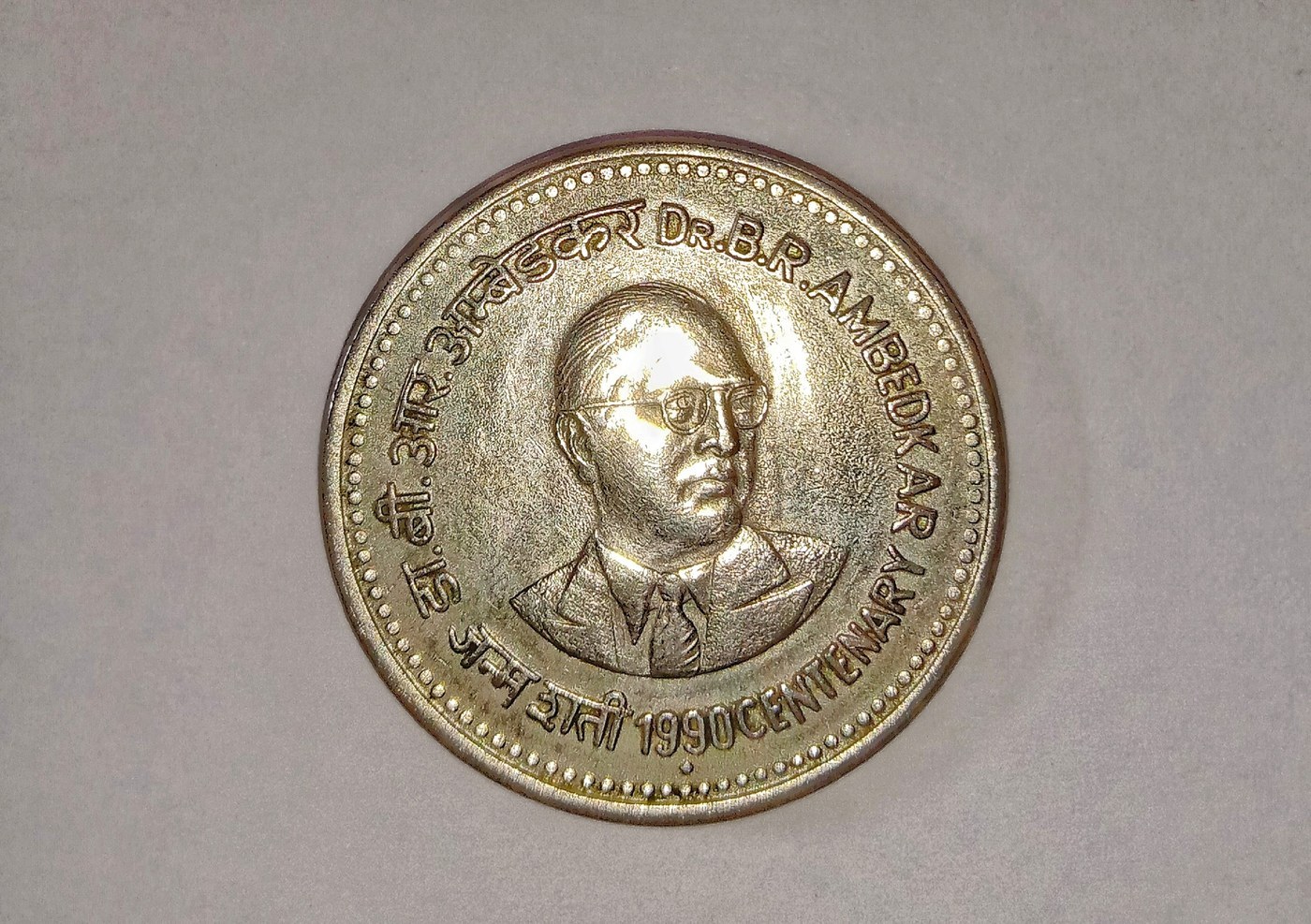
Begin with the obverse portrait, which is the fastest identifier. This coin shows a right-facing bust of a man in spectacles, a suit and a tie — Dr. B.R. Ambedkar — ringed by his name in both Devanagari (डॉ. बी. आर. आम्बेडकर) and English (Dr. B.R. AMBEDKAR). The clinching detail is the lower legend "जन्म शती 1990 CENTENARY," which fixes both the subject and the year. A beaded inner border frames the design. If those elements are present, no further reading is needed to attribute the type.
Confirm the physical coin. This is a copper-nickel one-rupee, a round base-metal piece about 26 mm across with a plain edge and a pale silvery alloy that often tones to a warm brass-like color, as in the example photographed. It is not magnetic in the way later ferritic stainless-steel rupees are, and it is not silver or gold; weight and a non-magnetic test help separate it from unrelated look-alikes and from later steel one-rupee coins.
Check the reverse for the denomination and mint mark. Although the reverse is not shown in our photograph, on this type it carries the numeral "1" with "रुपया / RUPEE," the Lion Capital of Ashoka and the motto सत्यमेव जयते. A tiny mint mark sits below the date: a diamond for Mumbai, no mark or a dot for Kolkata, a star for Hyderabad, and a dot for Noida on the standard rupees of this era. Identifying that mark matters to collectors assembling a full set.
Watch for look-alikes. Ambedkar appears on several later Indian commemoratives with different dates and anniversary wording (for example issues tied to later milestones), so read the legend carefully — only the 1990 piece says "1990 CENTENARY." Do not confuse this circulating copper-nickel rupee with the higher-denomination collector commemorative from the same program, which is a larger coin.
Apply the usual authentication cautions. Genuine coins are struck, with crisp lettering and a sharp beaded border; be wary of cast copies showing soft detail, seams or bubbles, of pieces artificially colored to imitate gold, and of any "gold Ambedkar rupee" claims, since the circulating coin was never issued in precious metal. When unsure, weigh and measure the coin and compare the legend against a reliable reference for modern Indian issues.
Frequently asked questions
How do I know it is the 1990 centenary coin and not a later Ambedkar issue?
Read the lower legend. Only the birth-centenary coin carries "जन्म शती 1990 CENTENARY." Later Ambedkar commemoratives use different dates and anniversary wording, even though the portrait style is similar.
Where is the mint mark?
It is a small symbol beneath the date on the reverse (not visible in this obverse photograph). Common marks on Indian rupees of this era include a diamond for Mumbai, a star for Hyderabad, and a dot for Noida; Kolkata usually has no mark.
The coin looks golden — could it be gold?
No. The circulating one-rupee is copper-nickel. A golden or brassy appearance comes from toning, cleaning or lighting. Any coin sold as a solid-gold Ambedkar rupee of this type should be treated with suspicion.
How can I spot a fake or altered example?
Genuine coins are struck with sharp lettering and a clean beaded border. Watch for casting seams, bubbles, mushy detail, artificial gold plating, or an incorrect weight and diameter, and verify against a standard catalog of modern Indian coins when in doubt.