
How to Identify the India 50 Paise
A collector's guide to spotting the George VI 1946 half rupee (50 paise): reading the crowned bust, the lion reverse, the alloy, mint marks and look-alikes.
Read the full India 50 Paise encyclopedia entry →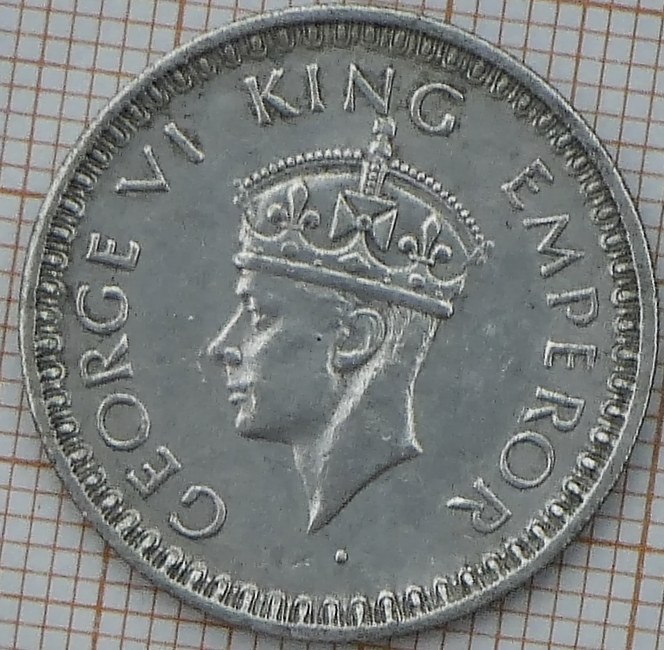
Begin with the obverse portrait. This coin carries the crowned profile bust of King George VI surrounded by a royal titling inscription in English. A crowned monarch, rather than the Lion Capital emblem or Ashoka pillar used on Republic of India coins, tells you at once that you are holding a British India colonial issue and not a post-1947 Indian coin.
Turn to the reverse for confirmation. The defining features are a rampant lion, the English legend HALF RUPEE INDIA, and the date 1946. The words HALF RUPEE — rather than a figure in paise — mark this as a pre-decimal coin, even though its value corresponds to fifty paise under the later 100-paise rupee. Reading that legend clearly is the surest single check that you have this type and not a similar-sized rupee or quarter rupee.
Check the metal and size. This is a mid-sized coin in a pale, yellow-tinged nickel-brass alloy, noticeably brassier in tone than the white silver half rupees of earlier years. If a half rupee of this period looks bright silver-white and rings differently, it may be an earlier silver issue rather than this base-metal type. Weighing and measuring the coin against catalogue figures for the George VI half rupee helps confirm the alloy and denomination.
Look for a mint mark. British India coins can carry a small symbol — commonly placed beneath the date or the bust — that identifies the striking mint. Its presence, absence or shape helps distinguish issues of the different government mints and can matter for attribution, so examine that area under good light and magnification.
Finally, rule out look-alikes and cautions. Do not confuse this coin with Mughal or princely-state pieces, which use Persian script and no royal portrait, nor with Republic of India 50 paise coins, which drop the king and the word rupee. Because it is a common coin, high-grade fakes are uncommon, but worn examples can hide the mint mark or date; when the legend or date is unclear, compare both faces against a trusted reference before making a final call.
Frequently asked questions
How do I tell this from a Republic of India 50 paise?
This coin shows a crowned King George VI and the words HALF RUPEE INDIA dated 1946. Republic of India 50 paise coins drop the royal portrait, use the Ashoka Lion Capital emblem, and are denominated in paise rather than as a half rupee.
What is the quickest way to confirm the coin?
Read the reverse. The rampant lion together with HALF RUPEE INDIA and the 1946 date is the definitive combination for this George VI type.
Where is the mint mark?
On British India coins a small mint symbol, when present, is usually placed beneath the date or the bust. Examine that area under magnification, as wear can make it faint.
Should I worry about fakes?
This is a common base-metal coin, so counterfeits are unusual. The bigger issue is wear obscuring the date, alloy tone or mint mark, so check those details and compare against a reference when they are unclear.