
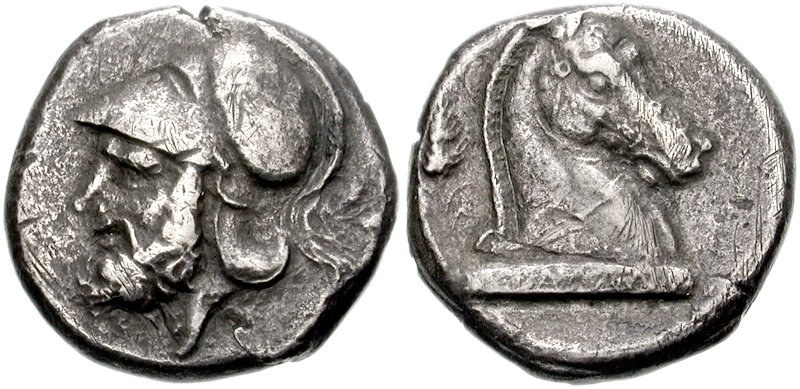
Ancient Greek Didrachm
An ancient Greek silver didrachm worth two drachms, here with a bearded male head and a horse-and-rider reverse in the tradition of Magna Graecia.
- Country
- Ancient Greece
- Denomination
- Didrachm
- Metal
- Silver
Got a coin like this?
Identify any coin from a photo, free.
Overview
The didrachm was a silver coin of the ancient Greek world equal to two drachms, one of the standard denominations used across the Greek-speaking cities of the Mediterranean. In the Greek colonies of southern Italy and Sicily it often served as the principal city coin, and in that region the didrachm was sometimes called a nomos. The example shown here carries a bearded male head facing left on the obverse and a horse with rider, a horseman, on the reverse.
Bearded heads and cavalry or horse motifs are recurring themes on the didrachms of Magna Graecia, where mounted youths, riders, and horses celebrated local identity, athletics, and military prestige. Because each Greek city struck its own coins with its own types, a didrachm is best read from its specific obverse and reverse designs, legends, and style rather than from a single fixed pattern; the denomination names the coin's value and weight, not one unique image.
History & Background
The drachm and its multiples formed the backbone of Greek silver coinage from the Archaic period onward. The didrachm, at two drachms, was a convenient mid-sized silver piece and became especially important in the western Greek world, the cities of southern Italy and Sicily collectively known as Magna Graecia, where it functioned as the standard civic coin from roughly the 6th into the 3rd century BC.
Horse-and-rider and bearded-head types belong firmly to this tradition. Cities such as Taras (Roman Tarentum) are famous for horseman reverses, and mounted or equestrian imagery appears across numerous mints as an emblem of civic pride and aristocratic horsemanship. Over time many of these local silver standards were displaced as Rome expanded through Italy and Sicily and imposed its own coinage, bringing the era of the independent city didrachm to a close.
Because these coins were struck by many separate city-states over several centuries, there are no central production records, and exact mintages are unknown. The historical picture is reconstructed from surviving coins, hoards, find-spots, and stylistic study rather than from documented output figures.
How to Identify
Start with size and metal. A didrachm is a hand-struck silver coin, typically thicker and heavier than a single drachm but smaller than a large tetradrachm; weight and diameter, checked against reference standards for the two-drachm denomination, are central to confirming it. Ancient silver usually shows toning, patina, or old surface texture rather than bright modern luster.
On this coin, read the obverse as a bearded male head facing left, and the reverse as a horse bearing a rider, a horseman. Note the direction the head and horse face, the treatment of the beard and hair, whether the rider is nude or armed, and any objects, symbols, or figures in the field. Search the fields and rim for Greek lettering or an ethnic, the abbreviated name of the issuing city, which is the strongest single clue to attribution when it survives.
Expect the irregular look of ancient hand-striking: uneven flans, off-center designs, and borders that vary from coin to coin. No two genuine strikes are identical. The combination of denomination weight, the specific bearded-head obverse, the horseman reverse, and any legible legend is what pins the piece to a particular city and issue rather than to another Greek silver denomination.
Value & Collectibility
Values for ancient Greek silver didrachms span a very wide range depending on the issuing city, the specific type, the quality of the strike, and condition. Common, worn, or off-center examples of familiar types often fall in the low hundreds of dollars, while attractive, well-centered coins with sharp detail and clear legends command more, and rare cities, fine artistic style, or exceptional preservation can push prices substantially higher.
Strike quality and eye appeal matter as much as raw grade with hand-struck ancient coins. Full, centered designs, complete legends, and pleasing toning add value, while corrosion, tooling, smoothing, cleaning scratches, or edge damage reduce it.
Because ancient Greek silver is heavily forged and sometimes tooled or re-engraved, provenance and authentication weigh heavily on price. A didrachm accompanied by a credible attribution, a dealer or auction record, or third-party certification will generally be worth considerably more than an unattributed piece of similar apparent grade.
Frequently asked questions
What is an ancient Greek didrachm worth?
It varies widely by city, type, and condition. Common worn examples often sell in the low hundreds of dollars, while sharp, well-centered, or rare types go higher, sometimes far higher. Authentication and provenance strongly affect price.
How much is a didrachm worth in drachms?
A didrachm equals two drachms, hence the name. In the Greek cities of southern Italy and Sicily this two-drachm coin was often the main civic denomination and was sometimes called a nomos.
Who is on the obverse of this coin?
This example shows a bearded male head facing left. On Greek didrachms such heads can represent a deity, a river god, a hero, or a local figure; the exact identity depends on the issuing city and is best confirmed from the legend and style.
What does the horseman on the reverse mean?
Horse-and-rider reverses were popular in Magna Graecia, celebrating horsemanship, athletics, and civic prestige. Cities such as Taras are especially known for mounted-youth types, though many mints used equestrian imagery.
Are ancient Greek didrachms often faked?
Yes. Ancient Greek silver is a frequent target for forgeries and tooled or altered coins, so weight, style, strike, legends, and above all provenance or third-party certification matter greatly when judging authenticity.
Ancient Greek Didrachm guides
In-depth guides for identifying, valuing, and collecting Ancient Greek Didrachm.
Other coins you may enjoy
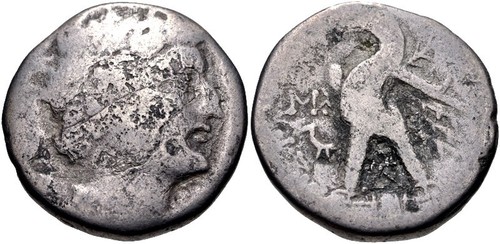
Tetradrachm of Ptolemy XII
80-51 BC
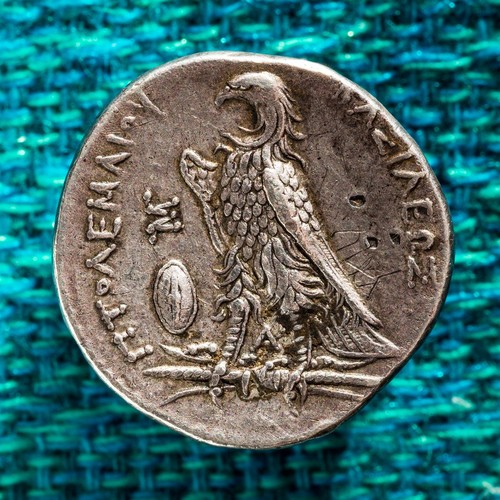
Tetradrachm of Ptolemy I
305-283 BC
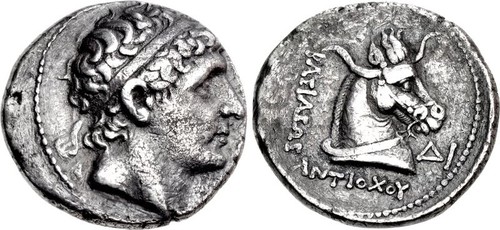
Tetradrachm of Antiochos I Soter
281-261 BC
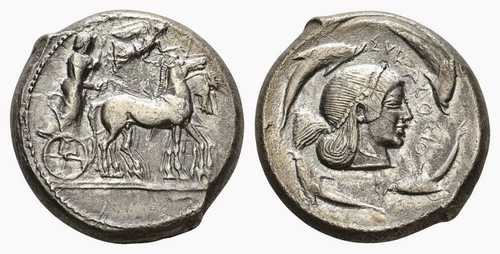
Syracuse Tetradrachm
c. 5th-4th century BC (Classical period)
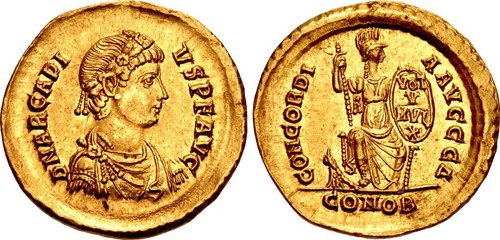
Solidus of Arcadius
AD 395-402
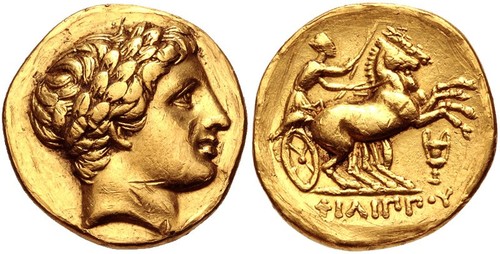
Philip III Gold Stater
323-317 BC
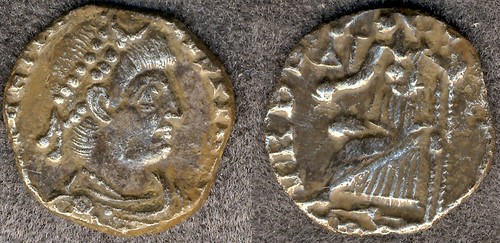
Siliqua of Gratian
AD 367-383
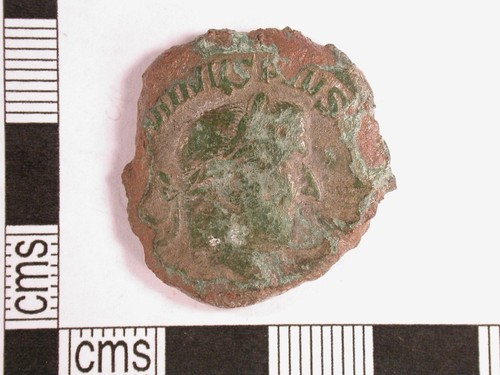
Sestertius of Maximinus Thrax
235-238 AD
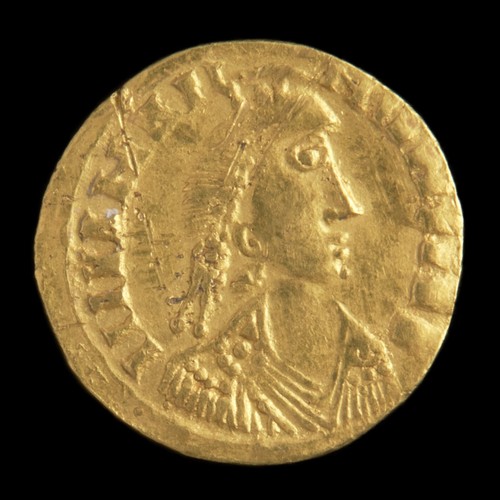
Solidus of Valentinian III
AD 425-455
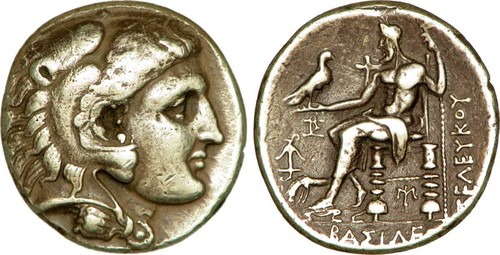
Seleucus I Nicator Tetradrachm
Late 4th-3rd century BC
Nummus of Magnentius
AD 350-353
Follis of Galerius
AD 308-310