
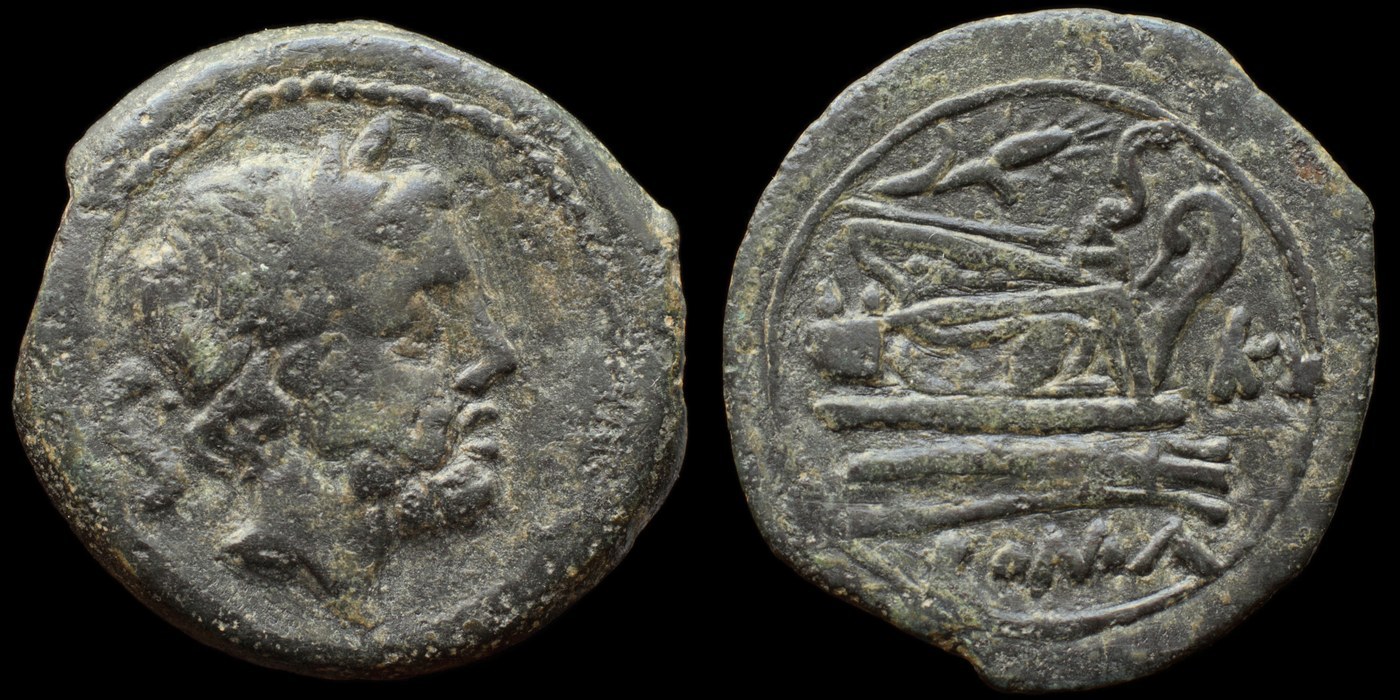
Ancient Sicilian Silver Coin
A silver coin of ancient Greek Sicily, showing a female goddess or nymph head on one face and a two-horse chariot (biga) on the other.
- Country
- Sicily (Ancient)
- Denomination
- Unknown
- Metal
- Silver
Got a coin like this?
Identify any coin from a photo, free.
Overview
This is a silver coin from one of the Greek city-states of ancient Sicily, a region famed in antiquity for some of the finest coinage of the classical world. The example shown pairs a female head facing right, usually a goddess or local water nymph, with a reverse showing a two-horse chariot, or biga, driven by a standing figure. Both motifs are hallmarks of Siculo-Greek silver struck roughly in the 4th to 3rd century BC.
Because the coin is not fully legible in hand and Sicilian mints shared closely related designs, the exact issuing city and denomination cannot be stated with certainty from the images alone. The head-and-chariot pairing was used at Syracuse and imitated or adapted at several other Sicilian and south Italian mints, so this piece is best described broadly as an ancient Sicilian Greek silver coin rather than tied to a single ruler or year.
History & Background
The Greek colonies of Sicily, among them Syracuse, Akragas, Gela, Katane, and Messana, were prosperous trading powers from the 6th century BC onward, and their mints produced silver coinage that is still celebrated for its artistry. The nymph-or-goddess head and the racing chariot were among the most enduring images on this coinage, the chariot echoing the prestige of victories in Greek athletic and equestrian games.
Throughout the 5th and 4th centuries BC these designs spread and evolved as cities competed, allied, and fell under the sway of powerful tyrants and, later, Carthaginian and Roman influence. A coin of the 4th to 3rd century BC belongs to the later part of this tradition, a period of political turbulence in Sicily that nonetheless continued to yield handsome silver issues before Roman control reshaped the island's currency.
Given the shared visual language across mints, ancient Sicilian silver of this type circulated widely and was much imitated in antiquity. Surviving pieces today range from well-preserved museum-quality strikes to worn, off-center, or fragmentary examples that have passed through more than two thousand years of handling and burial.
How to Identify
The defining features are the pairing of a female head in profile facing right with a two-horse chariot on the reverse. The head typically represents a goddess or nymph and may be surrounded by small symbols such as dolphins, grain ears, or a wreath; the reverse charioteer is often shown driving the biga at speed, sometimes with a flying Nike above crowning the horses. Look for Greek lettering in the fields, which would name the issuing city, though it is frequently off the flan or worn away.
The coin is struck in silver, hand-hammered rather than machine-milled, so expect an irregular, roughly round shape, slightly uneven thickness, and high-relief devices that may be off-center. Genuine ancient silver usually carries a soft gray tone or old cabinet toning rather than bright modern shine.
Size and weight are the main clues to the original denomination, which is not certain here. Larger, heavier pieces correspond to tetradrachms, mid-sized ones to didrachms or drachms, and small thin pieces to fractional silver such as litrai. Without secure weight, diameter, and legend, this coin is best catalogued as an unattributed ancient Sicilian silver type.
Value & Collectibility
Ancient Sicilian Greek silver spans an enormous value range, so no single figure applies. Common, heavily worn, off-center, or unattributed small silver pieces can be relatively affordable, while well-centered, sharply struck coins from famous mints such as Syracuse can reach into the thousands of dollars or far more for celebrated masterpieces. Condition, artistic quality, clear attribution, and secure provenance are the biggest drivers of price.
Because this coin cannot be pinned to a specific city, denomination, or date from the images alone, any estimate is only a broad context rather than a firm valuation. Attribution by weight, diameter, and a legible legend would sharply narrow the range, as would confirmation that the piece is authentic and legally collectible.
Anyone considering buying or selling ancient Sicilian silver should seek an in-hand assessment by a specialist in Greek coins and confirm lawful provenance and export history, since authenticity, condition, and documentation matter far more to value than the general type alone.
Frequently asked questions
What exactly is this coin?
It is a silver coin from an ancient Greek city-state in Sicily, showing a female goddess or nymph head on one side and a two-horse chariot (biga) on the other, a design used roughly in the 4th to 3rd century BC. The exact city and denomination cannot be confirmed from the images alone.
Who is the woman on the front?
She is a goddess or local water nymph, a common subject on Sicilian Greek silver. Different mints used different figures, so without a clear legend the specific identity cannot be stated with certainty.
What does the chariot mean?
The two-horse chariot, or biga, evoked the prestige of chariot racing in Greek games and was a favored symbol of civic pride on Sicilian coinage. A small winged Nike is sometimes shown crowning the horses.
How much is it worth?
Values range widely, from modest sums for worn, unattributed small silver to thousands of dollars for well-preserved coins of famous mints. Condition, attribution, and provenance matter most, so an in-hand expert appraisal is essential.
How do I know it is genuine and not a modern copy?
Genuine pieces are hand-struck silver with irregular shape, high relief, and natural gray toning. Because ancient Sicilian coins are widely copied, authentication by a specialist in Greek numismatics is strongly recommended before assigning any value.
Ancient Sicilian Silver Coin guides
In-depth guides for identifying, valuing, and collecting Ancient Sicilian Silver Coin.
Other coins you may enjoy
Tetradrachm of Ptolemy XII
80-51 BC
Tetradrachm of Ptolemy I
305-283 BC
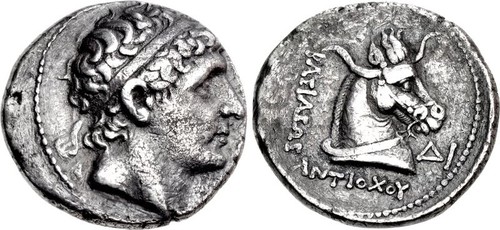
Tetradrachm of Antiochos I Soter
281-261 BC
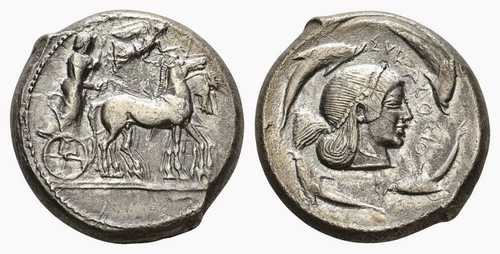
Syracuse Tetradrachm
c. 5th-4th century BC (Classical period)
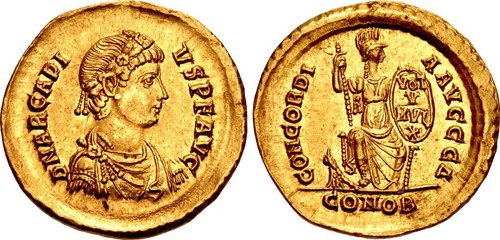
Solidus of Arcadius
AD 395-402
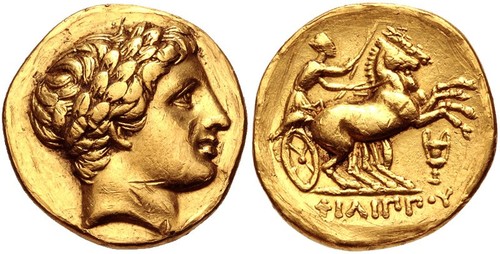
Philip III Gold Stater
323-317 BC
Siliqua of Gratian
AD 367-383
Sestertius of Maximinus Thrax
235-238 AD
Solidus of Valentinian III
AD 425-455
Seleucus I Nicator Tetradrachm
Late 4th-3rd century BC
Nummus of Magnentius
AD 350-353
Follis of Galerius
AD 308-310