New Zealand Florin
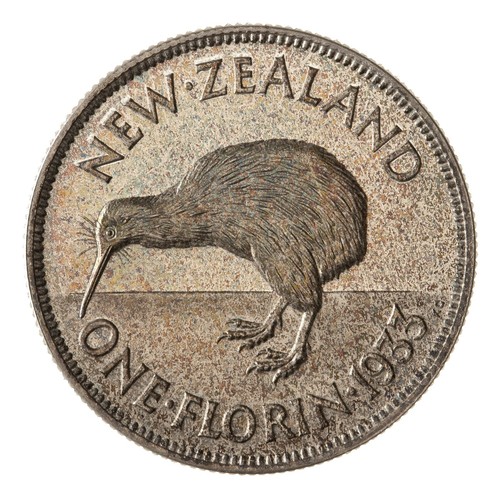
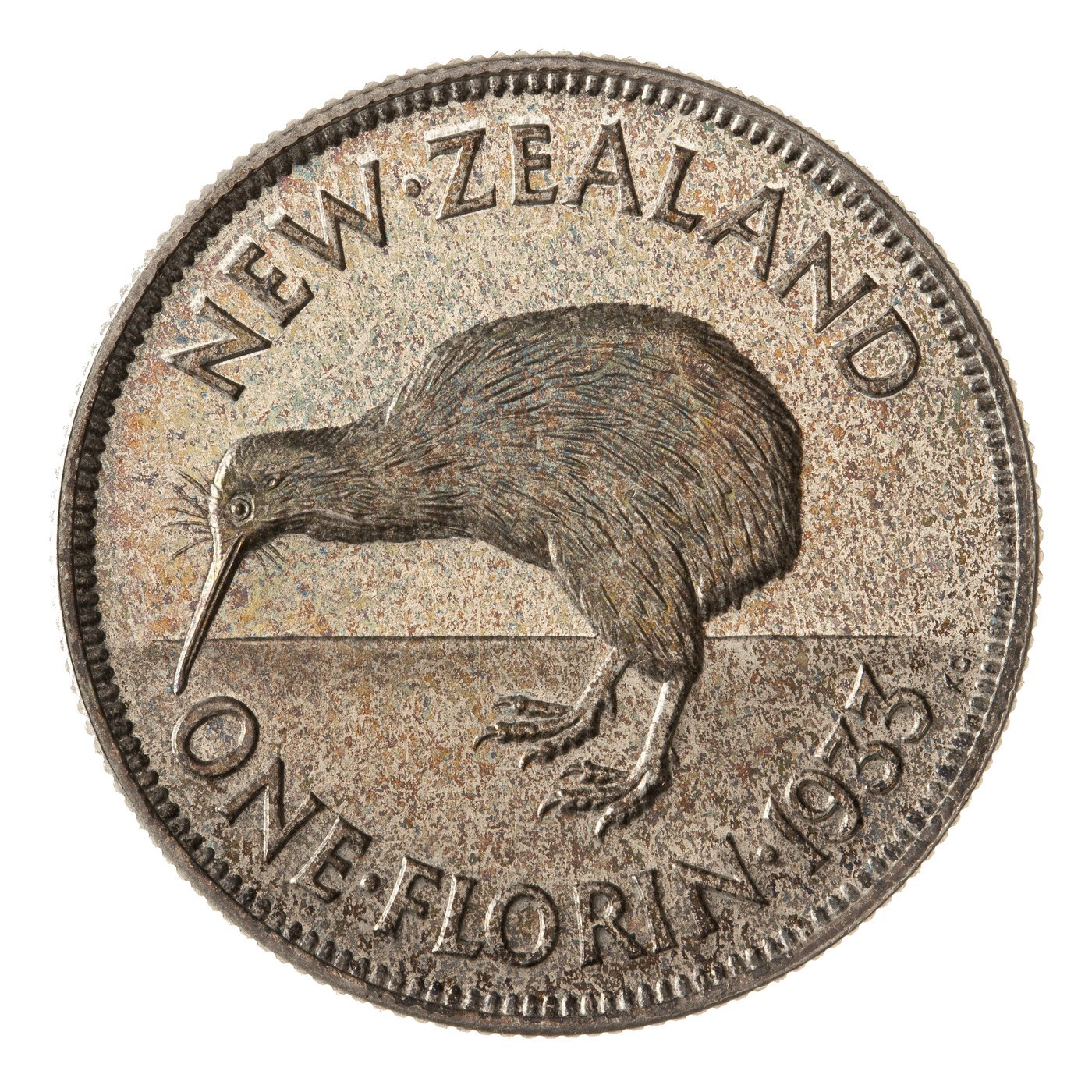
New Zealand's silver two-shilling coin; this 1933 first-year example shows a kiwi and the legend NEW ZEALAND ONE FLORIN.
- Country
- New Zealand
- Denomination
- Florin
- Metal
- Silver
Got a coin like this?
Identify any coin from a photo, free.
Overview
The New Zealand Florin was the country's silver two-shilling piece and, for most of its run, the largest silver denomination in everyday circulation. The example shown here is dated 1933, the very first year of a distinct New Zealand coinage, and carries the legend NEW ZEALAND ONE FLORIN 1933 around a standing kiwi, the national bird.
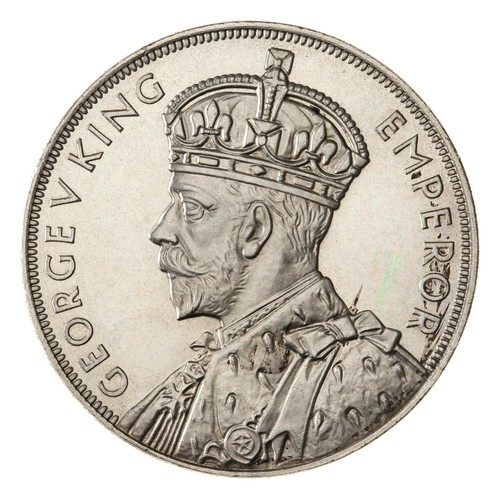
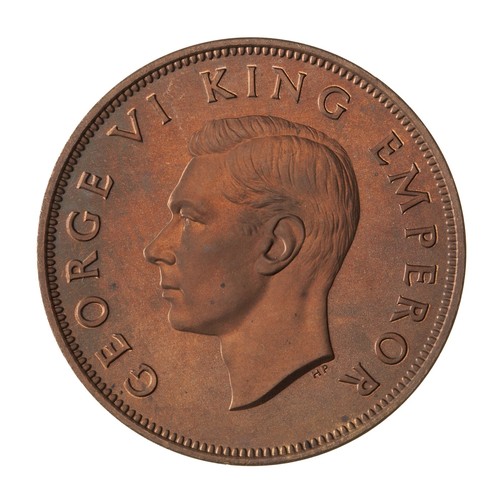
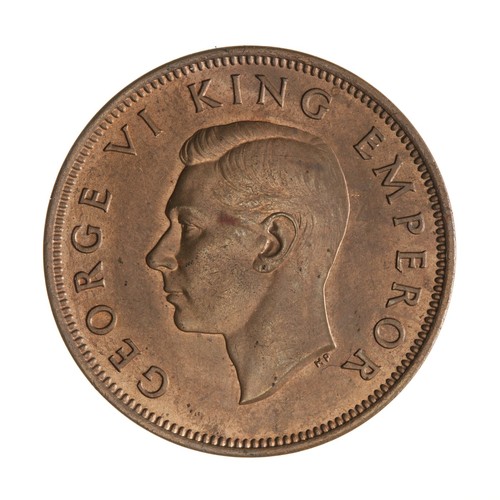
The kiwi reverse is the defining feature of the florin and stayed with the denomination for its whole life. The obverse (not shown on this proof example) carries the crowned effigy of the reigning monarch, King George V for a 1933 coin, with the royal titles around the rim.
Struck in .500 fine silver for this early period, the florin measures roughly 28-29 mm across and weighs about 11.3 grams, with a reeded edge. It was worth two shillings, or one-tenth of a pound, and served as a workhorse of daily commerce until New Zealand moved to decimal currency in 1967.
History & Background
Until 1933 New Zealand relied largely on British and Australian coins. Falling silver prices and an outflow of coin across the Tasman prompted the country to issue its own distinct silver coinage, and the florin was among the denominations introduced that year. This 1933 coin therefore belongs to the inaugural year of a truly New Zealand currency.
The reverse design, a kiwi standing on the ground, was the work of George Kruger Gray, whose animal and heraldic designs feature across the 1933 series. The crowned effigy of King George V used on the obverse was modelled by Percy Metcalfe. The florin continued under George VI and Queen Elizabeth II, running until the pre-decimal coinage was retired.
Early florins from 1933 through 1946 were struck in .500 (50%) silver, a lower fineness than the sterling silver of older British issues. From 1947 the coin was changed to cupro-nickel as silver was withdrawn. The florin was one of the coins replaced when New Zealand decimalised in 1967, its size and value passing to the twenty-cent piece.
How to Identify
Identify this type from the reverse. Look for a kiwi standing in the field with the legend NEW ZEALAND ONE FLORIN and the date, here 1933. That kiwi is unique to the florin within the New Zealand series, so the bird plus the ONE FLORIN wording together confirm the two-shilling denomination.
The obverse, not visible on this example, should carry the crowned bust of King George V with Latin royal titles for a 1933 coin. Later dates in the series show George VI or Queen Elizabeth II, so the monarch narrows the year. Confirm the physical standard: the florin is about 28-29 mm in diameter, weighs roughly 11.3 grams, and has a reeded edge; issues from 1933 to 1946 are .500 silver.
Use the reverse animal to separate the florin from its neighbours. The shilling shows a Māori warrior, the sixpence a huia bird, the half-crown the national arms, and the threepence crossed patu. Only the florin carries the kiwi, and it is larger and heavier than the shilling, sixpence, and threepence.
Value & Collectibility
Most circulated New Zealand florins are valued first for their silver content and then for any collector premium. A 1933-1946 florin is .500 silver, so even worn examples carry a base bullion value, with numismatic demand adding to that in better grades.
As a first-year coin, the 1933 florin holds particular interest for collectors of the series, and cleaner, higher-grade examples command a premium over common circulated pieces. Certain scarce dates elsewhere in the run are worth well above bullion to specialists, while proof or specimen strikes are valued separately again.
Because values move with the silver price and with grade, treat any figure as indicative only. For a specific coin, especially a scarce date, a proof, or a high-grade example, seek an opinion from a reputable dealer or a third-party grading service before buying, selling, or insuring it.
Frequently asked questions
Is the New Zealand Florin made of real silver?
The 1933 to 1946 florins, including this 1933 coin, are struck in .500 (50%) silver. From 1947 the florin was changed to cupro-nickel and is no longer a silver coin.
Why does the florin show a kiwi?
The kiwi, New Zealand's national bird, was chosen as the florin's reverse design when the country introduced its own coinage in 1933. It remained the florin's emblem throughout the series.
Is the 1933 florin special?
1933 is the first year New Zealand issued its own distinct coinage, so the 1933 florin is a first-year type that many collectors of the series seek out.
What was a florin worth in old New Zealand money?
A florin was two shillings, equal to one-tenth of a pound. It was the largest silver denomination in everyday circulation before decimal currency arrived in 1967.
Whose portrait is on the obverse?
A 1933 florin carries the crowned effigy of King George V, modelled by Percy Metcalfe, with his Latin royal titles around the rim. The obverse is not shown on this example.
New Zealand Florin guides
In-depth guides for identifying, valuing, and collecting New Zealand Florin.