New Zealand Waitangi Crown
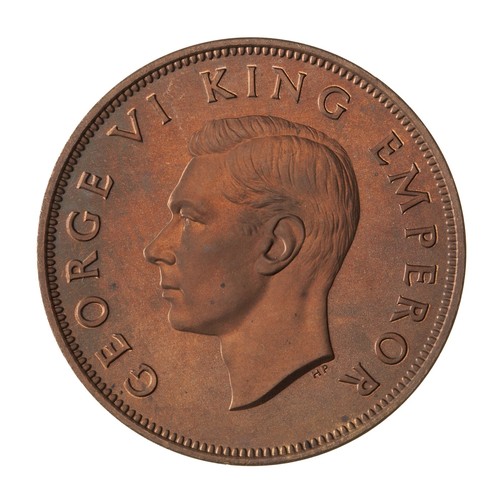
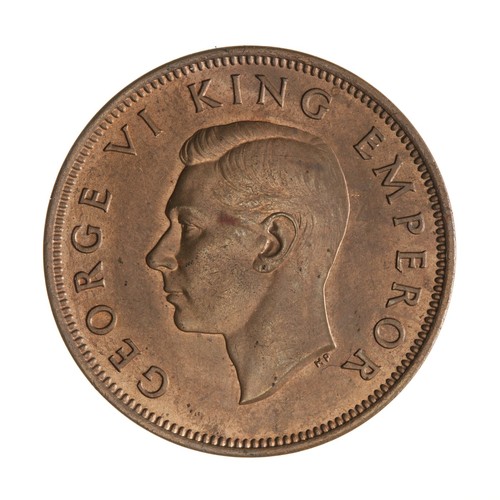
New Zealand's first and rarest crown, a 1935 silver five-shilling piece with a crowned George V obverse and the Treaty of Waitangi handshake reverse.
- Country
- New Zealand
- Denomination
- Crown
- Metal
- Silver
Got a coin like this?
Identify any coin from a photo, free.
Overview
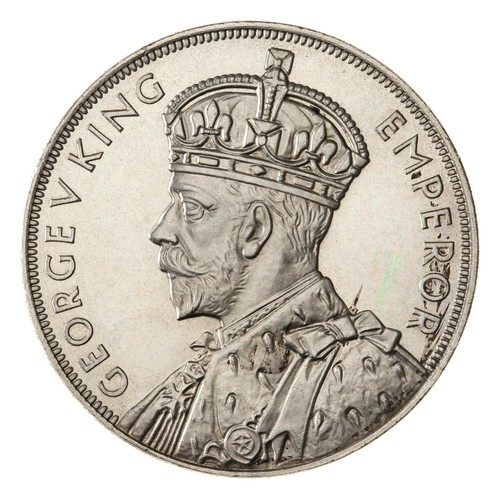
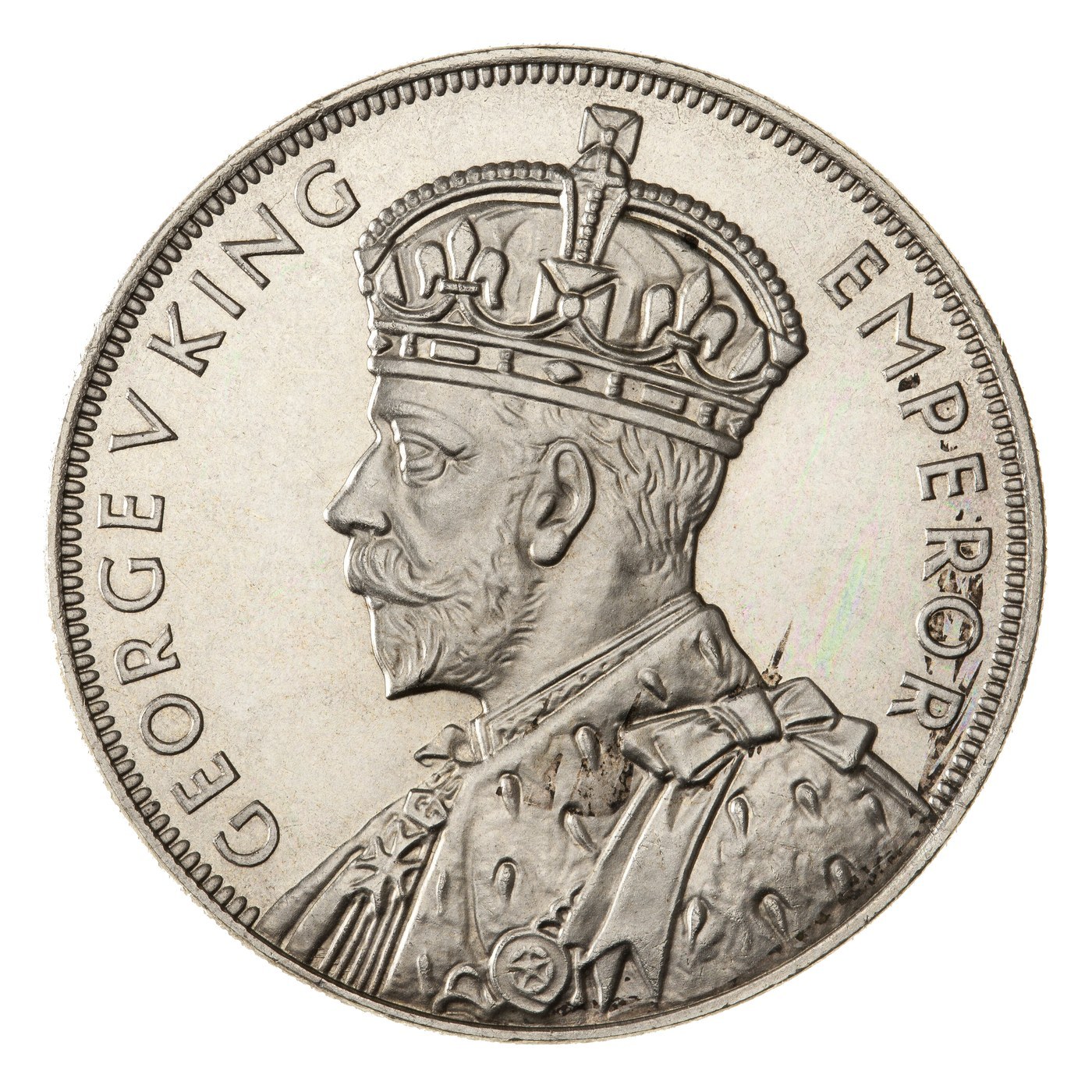
The New Zealand Waitangi Crown is a large silver five-shilling coin issued in 1935, and it is one of the most celebrated rarities of New Zealand numismatics. The example shown here displays the obverse: a crowned and robed portrait of King George V facing right, wearing the crown and coronation regalia rather than the bare-headed profile used on smaller coins.
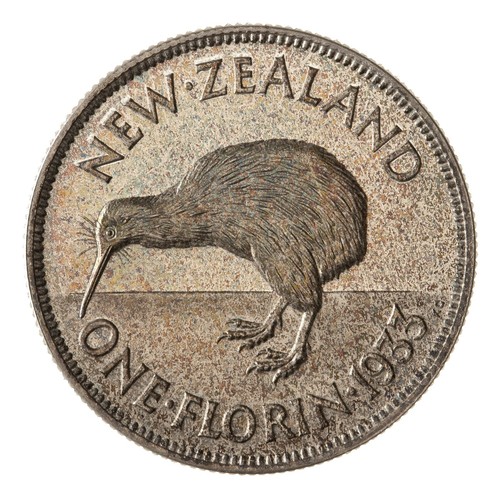
The coin takes its name from its reverse, which depicts the signing of the Treaty of Waitangi: a Maori chief and a British representative clasping hands, a scene emblematic of the 1840 agreement. This reverse is not visible in the present image, but it is the design that defines and names the type.
Struck in silver at roughly 38.6 mm across and about 28.3 grams, the Waitangi Crown was produced in tiny numbers and never circulated as everyday money. It was effectively a commemorative and presentation piece, and surviving examples are prized well above ordinary pre-decimal silver.
History & Background
New Zealand introduced its own distinct coinage in 1933, replacing the British coins that had circulated there. The crown followed in 1935 and was the country's first coin of that denomination. It was conceived as a prestige piece rather than a workaday coin, and the Treaty of Waitangi subject was chosen to mark New Zealand's founding agreement of 1840.
The crowned George V obverse portrait was modelled by Percy Metcalfe, and the Waitangi handshake reverse was the work of George Kruger Gray, a prolific designer of Commonwealth coinage of the period. The coins were struck at the Royal Mint in London.
The issue was very small, numbered in the low thousands including a portion struck as proofs, and the crown was not repeated as an annual circulating type. Because of the tiny production and its historical subject, the 1935 Waitangi Crown has long been regarded as a cornerstone rarity for New Zealand collectors.
How to Identify
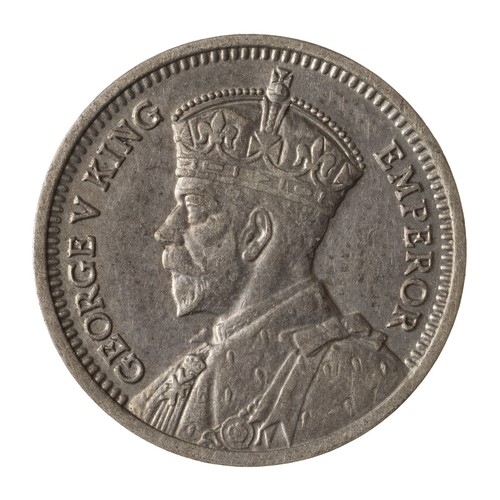
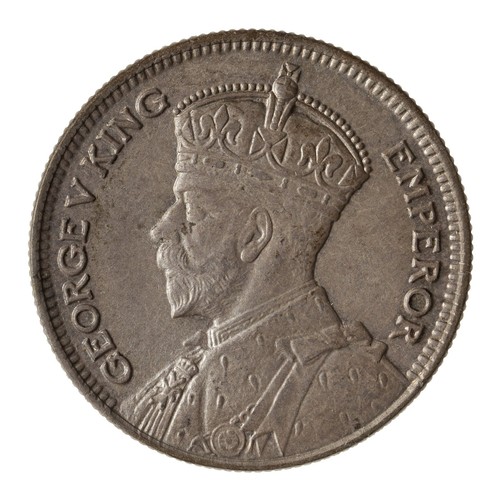
The obverse identifies the reign at a glance: a crowned, robed bust of King George V facing right, in full regalia. This distinguishes the crown from New Zealand's smaller George V silver, which uses a bare-headed profile. The date 1935 appears with the coin, and the type exists for that single year only.
The defining feature is the reverse, which shows the Treaty of Waitangi handshake between a Maori figure and a European figure. If the reverse instead shows a different scene, a shield, or another denomination, the coin is not a Waitangi Crown. Confirm the physical standard as well: a large silver coin about 38.6 mm in diameter and roughly 28.3 grams, with a reeded edge.
Because only one date exists, identification rests on the crowned George V portrait, the Waitangi reverse, the crown size, and the silver composition together. There is no annual date range to sort through, and the coin carries no distinguishing mint-mark letter for New Zealand.
Value & Collectibility
The Waitangi Crown is a genuine rarity, struck in only the low thousands, so it commands strong premiums far above its silver content. Even well-circulated examples are valuable, and choice or proof specimens rank among the most expensive New Zealand coins. This is not a common bullion-type crown.
Condition, originality, and the distinction between circulation strikes and proofs all move the price substantially. Cleaned surfaces, edge damage, and impaired proofs reduce value, while original, well-struck examples with attractive surfaces bring the highest sums. Because the population is small, provenance and third-party certification matter more than usual.
Given the coin's rarity and value, treat any figure as indicative and obtain a specific appraisal. For a coin of this class, have any example authenticated and graded by a reputable third-party service before buying, selling, or insuring it, as the field attracts counterfeits and altered pieces.
Frequently asked questions
Why is it called the Waitangi Crown?
It is named for its reverse, which depicts the signing of the Treaty of Waitangi, New Zealand's 1840 founding agreement, shown as a Maori chief and a British representative shaking hands.
What year is the Waitangi Crown?
It was struck in a single year, 1935. There is no annual series, so every genuine Waitangi Crown carries the 1935 date.
Is the Waitangi Crown rare?
Yes. It was produced in only the low thousands, including some proofs, and is considered one of the key rarities of New Zealand numismatics. It never circulated widely as everyday money.
Who is on the obverse?
King George V, shown crowned and robed in coronation regalia facing right, rather than the bare-headed profile used on the smaller New Zealand silver coins of the period.
Is the Waitangi Crown made of silver?
Yes, it is a silver crown roughly 38.6 mm in diameter and about 28.3 grams. Its high value comes from its rarity and history, not merely its silver content.
New Zealand Waitangi Crown guides
In-depth guides for identifying, valuing, and collecting New Zealand Waitangi Crown.