
Cambodia Two Francs
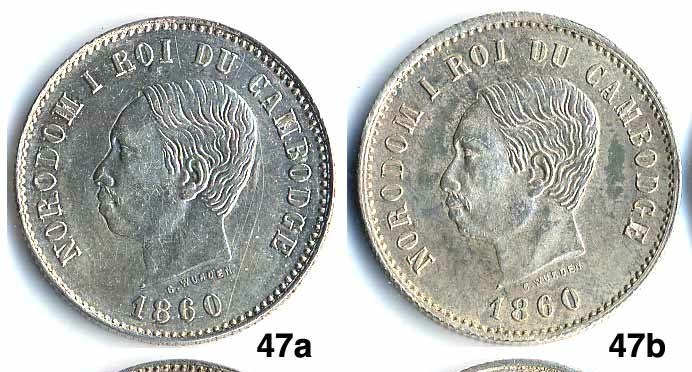
A crown-sized Cambodian Two Francs of King Norodom I, its obverse a royal profile and DEUX FRANCS reverse over a crowned coat of arms; dated 1860 but long restruck.
- Country
- Cambodia
- Denomination
- 2 Francs
- Metal
- Copper-nickel
Got a coin like this?
Identify any coin from a photo, free.
Overview
The Cambodia Two Francs is a crown-sized coin struck in the name of King Norodom I, the sovereign who reigned over Cambodia from 1860 to 1904. The example photographed here shows the two defining faces of the type: an obverse with the king's profile portrait and the legend NORODOM I ROI DU CAMBODGE around the date 1860, and a reverse carrying the denomination DEUX FRANCS above an ornate crowned coat of arms.
The franc was the accounting unit tied to Cambodia's coinage from the mid-19th century, and the Two Francs sat among the larger silver-format denominations of the Norodom series alongside the one franc, four francs and the fractional centimes. The design work is signed C. WURDEN for the engraver Henri Charles Würden, whose name appears in small letters on the obverse.
This type is best known in silver, but it was also struck in other metals, and the copper-nickel piece seen here belongs to the pattern-and-restrike side of the series rather than to ordinary circulation. Its bright silvery tone and heavier feel, combined with the 1860 date and DEUX FRANCS legend, mark it clearly as a Norodom Two Francs.
History & Background
King Norodom I came to the throne in 1860, the same year that appears on this coinage, and shortly afterward Cambodia became a French protectorate. The franc-and-centime coinage bearing his portrait was prepared in a European style, engraved by Henri Charles Würden, and is dated 1860 even though the actual striking took place over a much longer span of years.
Numismatic tradition divides the Norodom coinage into original strikings and later restrikes produced at workshops associated with Brussels, Birmingham and eventually Phnom Penh. Accounts describe pieces first made in a private Brussels workshop in the 1870s, with the press and dies later passing to King Norodom so that further coins could be struck in Cambodia, some as late as the 1890s and beyond. The larger silver denominations were often distributed by the sovereign at ceremonies and state occasions rather than pushed into everyday commerce.
Because the dies were reused across decades, the Two Francs exists in original strikings, in restrikes of varying sharpness, and in off-metal patterns and trial pieces, including copper-nickel. This layered production history is why the coin carries a single fixed date of 1860 yet is encountered in several distinct forms, a point that matters a great deal to collectors trying to place a specific example.
How to Identify
Confirm the type from the legends first. The obverse reads NORODOM I ROI DU CAMBODGE around a bare-headed profile portrait of the king facing to the side, with the engraver's signature C. WURDEN and the date 1860 in the field. The reverse spells out the value as DEUX FRANCS and shows an ornate coat of arms: an oval shield resting on a draped mantle and topped by a tall conical crown, framed by decorative script.
The coin is a crown-sized piece, roughly 27 to 28 millimeters across, with a milled (reeded) edge. In its standard form the Two Francs is silver, about 10 grams; a copper-nickel example like the one shown will have the same size and design but a slightly different weight and a harder, brighter surface, consistent with a pattern or restrike rather than a currency strike.
Use the portrait, the spelled-out DEUX FRANCS and the crowned arms together to separate this coin from the smaller centime denominations of the same series and from the one franc and four francs, which share the Norodom portrait but state different values. The presence of a strong, sharp strike versus a granular or slightly irregular one can also hint at whether a piece is an earlier or later product of the reused dies.
Value & Collectibility
Value in the Norodom Two Francs series depends heavily on the exact striking, the metal and the condition, so treat any figure as broad context rather than a fixed price. The type as a whole is scarce and collectible, and high-grade silver examples can reach into the low thousands of US dollars at auction, while lesser examples and restrikes trade for considerably less.
A copper-nickel piece is understood as a pattern or restrike rather than a regular currency coin, and its value is driven by how it is catalogued, its rarity in that metal, and its state of preservation. Off-metal strikings of this kind can be desirable to specialists but are also the area where careful attribution matters most, since not every piece is documented the same way.
Because the same date and design span original strikings, restrikes and patterns, the most reliable guide to a particular coin's worth is recent auction results for the matching metal, striking and grade, ideally with an expert or reputable catalog confirming exactly which variant is in hand.
Frequently asked questions
Why is the coin dated 1860 if it was made later?
1860 is the year King Norodom I came to the throne, and his whole franc-and-centime series carries that date. The coins were actually struck and restruck over many later years using the same dies, so the fixed 1860 date does not pin down when a given piece was made.
Is the Cambodia Two Francs silver or copper-nickel?
The standard Two Francs of this type is silver, around 10 grams. The copper-nickel example shown here is an off-metal pattern or restrike of the same design, so it shares the size and imagery but not the regular silver composition.
Whose portrait is on the coin?
It shows King Norodom I of Cambodia, who reigned from 1860 to 1904. The obverse legend NORODOM I ROI DU CAMBODGE names him, and the engraver Henri Charles Würden signed the dies as C. WURDEN.
What is on the reverse of the Two Francs?
The reverse states the denomination DEUX FRANCS and displays an ornate coat of arms: an oval shield on a draped mantle beneath a tall conical crown, surrounded by decorative script.
Is this a rare coin?
The Norodom Two Francs is scarce as a series, and value swings widely by metal, striking and grade. Original silver strikes in high grade are the most sought after, while restrikes and patterns need careful attribution to judge properly.
Cambodia Two Francs guides
In-depth guides for identifying, valuing, and collecting Cambodia Two Francs.
Other coins you may enjoy
Straits Settlements Dollar
1904
Philippines 20 Centavos
1937–1945 (this example dated 1944)
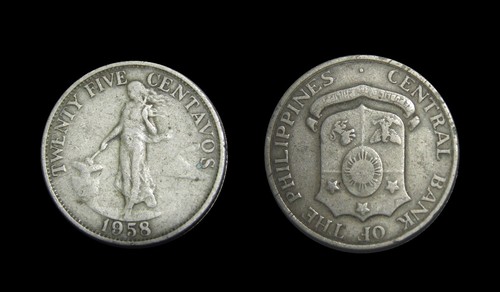
Philippines 25 Centavos
Dated 1958, part of the Republic of the Philippines "English Series" coinage struck from 1958 to 1966
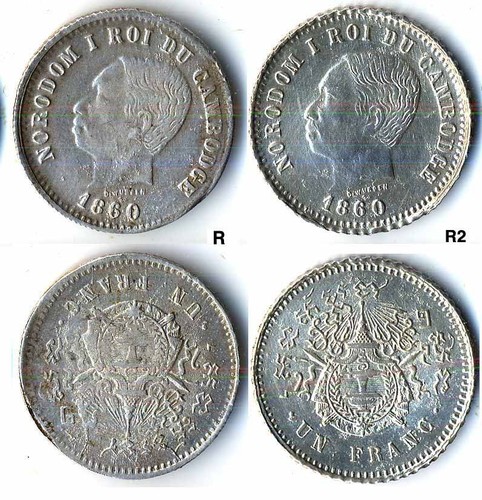
Cambodia One Franc
1950s–1960s
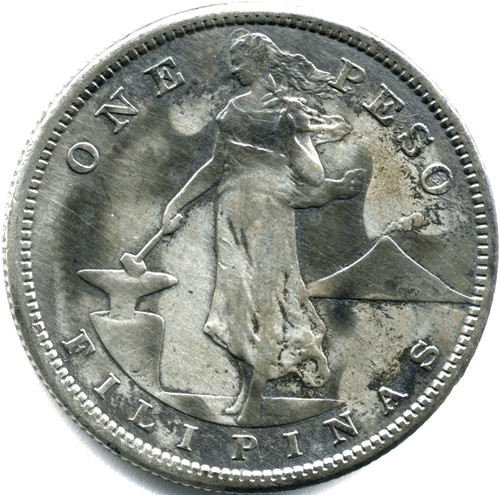
Philippines One Peso
1903–1912
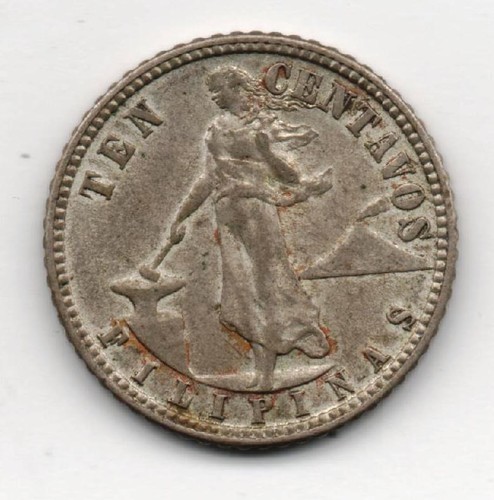
Philippines 10 Centavos
1907–1935 (this example dated 1911)
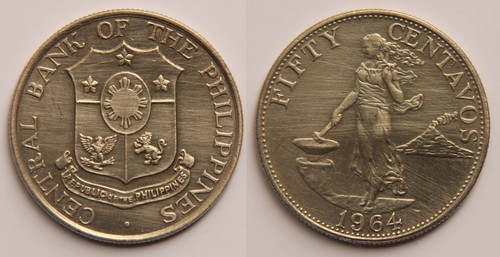
Philippines 50 Centavos
1958–1966 (English series); example dated 1964
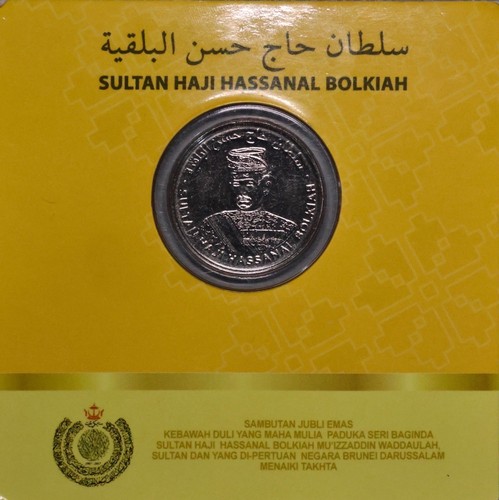
Brunei Golden Jubilee 50 Cents
Golden Jubilee issue, 2017
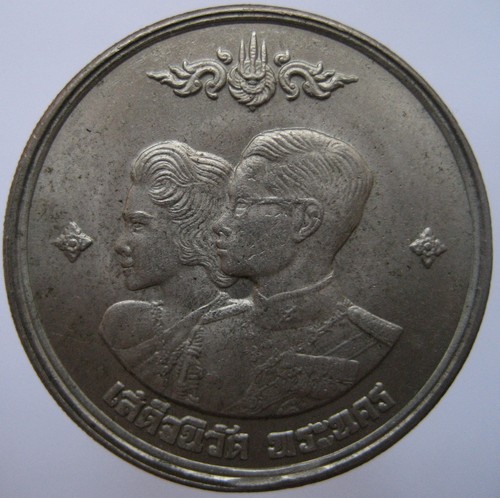
Thailand One Baht Commemorative
1961
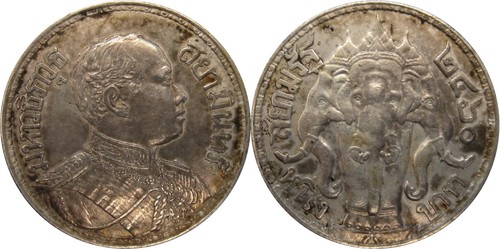
Thailand One Baht
1917
Vietnam 2 Tien - Bao Dai
1926-1945
Indonesia 5 Rupiah
2003