
How to Identify the Cambodia Two Francs
A collector's guide to the Norodom I Two Francs: the royal profile, DEUX FRANCS and crowned coat of arms, crown size, metal, and original-versus-restrike cautions.
Read the full Cambodia Two Francs encyclopedia entry →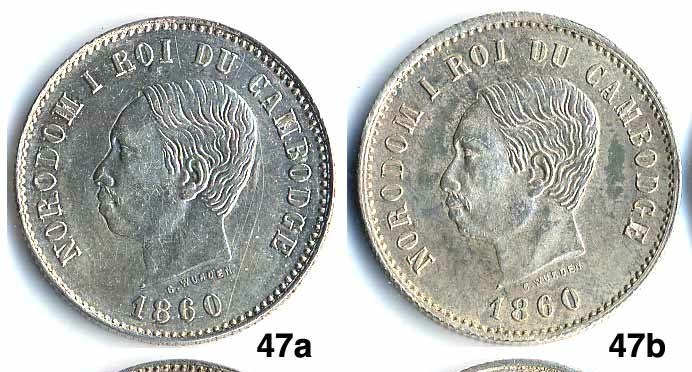
Begin with the two legends, because they settle the type quickly. The obverse should read NORODOM I ROI DU CAMBODGE around a side profile of the king, with the small engraver signature C. WURDEN and the date 1860 in the field. The reverse should spell the value as DEUX FRANCS above an ornate coat of arms. If either legend is missing or reads a different value, you are looking at another coin.
Read the reverse heraldry carefully. The Norodom arms show an oval shield set on a draped, ermine-style mantle and crowned by a tall conical royal crown, framed with decorative script. This crowned-shield motif is shared across the franc and centime denominations, so the coat of arms alone does not fix the value; you must pair it with the spelled-out DEUX FRANCS to confirm this is the two-franc piece rather than the one franc or four francs.
Check size and metal. This is a crown-sized coin of roughly 27 to 28 millimeters with a milled, reeded edge. The standard version is silver at about 10 grams; a copper-nickel example will match the diameter and design but feel harder and brighter and weigh differently, which is a signal that it is a pattern or restrike rather than a normal currency strike. Weigh and measure the coin and compare it against catalog specifications for the metal you think you have.
Be alert to the series' complex striking history. The same 1860-dated dies were used for original coins and for later restrikes at workshops linked to Brussels, Birmingham and Phnom Penh, so sharpness and surface quality vary. Very crisp, even strikes tend to be earlier products, while granular, slightly irregular fields can indicate later restrikes from worn or long-stored dies. None of this is proof by itself, but it helps place a piece within the series.
On authentication, this is exactly the kind of scarce, higher-value type where careful attribution matters. Off-metal strikings such as copper-nickel demand extra caution, since documentation differs between references and desirable patterns invite modern copies. Confirm the portrait style, the exact legends, the weight and diameter, and the edge, and when a coin is valuable or unusual seek an expert opinion or a reputable catalog reference before treating an attribution as settled.
Frequently asked questions
How do I tell the Two Francs from the one franc or four francs?
All three share the Norodom profile and the crowned coat of arms, so read the spelled-out value on the reverse. Only the two-franc piece states DEUX FRANCS; the others give their own denominations.
How can I tell an original from a restrike?
Both carry the 1860 date, so the date will not help. Compare strike sharpness and surface: crisp, even strikes tend to be earlier, while granular or slightly irregular fields suggest later restrikes from long-used dies. Confirm with a specialist reference.
What size and weight should it be?
It is a crown-sized coin near 27 to 28 millimeters with a milled edge. The standard silver strike is about 10 grams; a copper-nickel example matches the size but weighs differently, consistent with a pattern or restrike.
Should I be worried about fakes?
Yes, with any scarce, valuable type. Off-metal pieces like copper-nickel especially warrant care. Verify the legends, portrait, weight, diameter and edge, and get an expert opinion before accepting an attribution or paying a premium.