
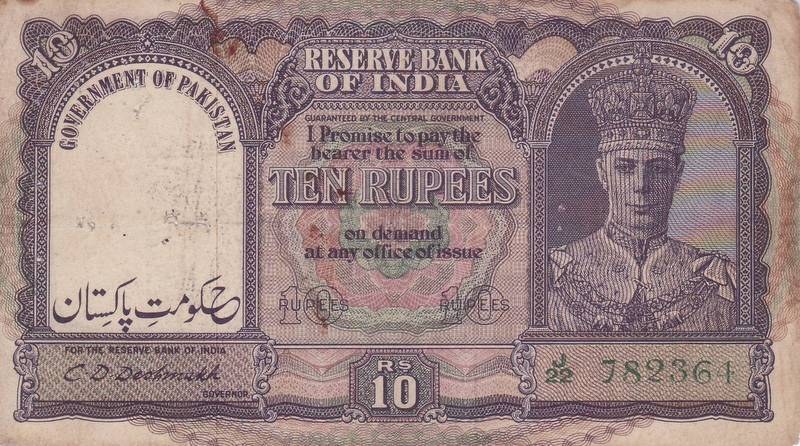
India 10 Rupees
A silver-era Indian coin carrying the profile of King George VI, struck during the final years of British India and the transition to the Republic.
- Country
- India
- Denomination
- 10 Rupees
- Metal
- Silver
Got a coin like this?
Identify any coin from a photo, free.
Overview
This coin belongs to the George VI period of Indian coinage, identifiable by the king's left-facing profile portrait and surrounding royal titles on the obverse. It sits within the silver-denominated Indian series issued while George VI reigned as ruler of British India, from his accession in the late 1930s through the constitutional transition around 1950.
George VI Indian coinage is widely collected because it spans a pivotal moment in history: the last British monarch to appear on Indian money and the bridge to independent India's own designs. Pieces from this era are prized both for their silver content and for their portrait, which was engraved in the standard uniformed profile style used across the British Commonwealth.
Because only the obverse portrait is visible on the reference example, the denomination and reverse motif should be confirmed directly from the coin's reverse and legends before cataloging.
History & Background
George VI became King and Emperor of India in 1936 following the abdication of his brother, and coins bearing his portrait were struck for circulation in India from the late 1930s onward. Throughout the early 1940s the subcontinent's silver coinage carried his crowned or uniformed profile alongside the Latin-style royal legend, produced at the mints serving British India.
A key historical diagnostic falls within this window: on issues struck up to Indian independence in 1947, the king is titled 'GEORGE VI KING EMPEROR,' reflecting his role as Emperor of India. On later issues, after India's independence and before the Republic's own coinage, the imperial title was dropped and he appears simply as 'GEORGE VI KING.' This change lets collectors place a George VI Indian coin on one side or the other of 1947.
The portrait coinage of George VI was superseded when the Republic of India introduced its own emblem-based designs in the early 1950s, ending the era of British monarchs on Indian money.
How to Identify
The defining feature on the reference coin is the obverse: a profile bust of George VI facing left, encircled by a raised legend giving his name and royal title. Reading that legend is the fastest way to date the piece — 'KING EMPEROR' indicates a pre-1947 imperial issue, while 'KING' alone points to a later issue after the imperial title was dropped.
Because the reverse is not visible on this example, confirm the denomination from the reverse face, which on Indian coinage of the period typically states the value in English and often in one or more Indian scripts, along with the year. A stated '10 RUPEES' (or 'DAS RUPAYE') on the reverse is what would confirm the denomination; without it, the value should be treated as unverified.
Silver examples should show the density, ring, and toning characteristic of struck silver rather than a plated or base-metal surface. Note the diameter, weight, and edge (reeded or plain) and compare them against published specifications for the specific George VI Indian issue you are matching before assigning a catalog number.
Value & Collectibility
Value for George VI Indian silver coinage is driven by the specific denomination, date, mint, silver fineness, and condition, so a firm figure cannot be given from the obverse portrait alone. As a general guide, common circulated silver pieces of this era trade for modest premiums tied largely to their bullion content, while scarcer dates, higher grades, and better-preserved strikes command more.
Because the denomination here is recorded from a label rather than confirmed from the reverse, treat any valuation as provisional until the reverse legend and full specifications are verified. Uncirculated examples with original luster and sharp portrait detail always sit well above worn, cleaned, or damaged coins.
For an accurate estimate, weigh the coin, confirm its exact denomination and date from the reverse, and check recent auction and dealer results for that precise George VI Indian issue.
Frequently asked questions
Who is on this coin?
The obverse shows King George VI, who reigned as King and Emperor of India during the final years of British rule, in a left-facing profile portrait surrounded by his royal titles.
How can I date a George VI Indian coin quickly?
Read the obverse legend: 'GEORGE VI KING EMPEROR' indicates a pre-1947 issue, while 'GEORGE VI KING' (without 'EMPEROR') points to a later issue after India's independence.
Is the coin really silver?
Coins of this George VI Indian series were struck in silver of varying fineness. Confirm by weight, ring, and toning, and check the piece against published specifications rather than relying on appearance alone.
Why can't the exact denomination be confirmed from the photo?
Only the obverse portrait is visible in the reference image. The denomination and year appear on the reverse, so the '10 Rupees' value should be verified directly from the coin's reverse legend.
When did George VI stop appearing on Indian coins?
His portrait coinage ended when the Republic of India introduced its own emblem-based designs in the early 1950s, closing the era of British monarchs on Indian currency.
India 10 Rupees guides
In-depth guides for identifying, valuing, and collecting India 10 Rupees.
Other coins you may enjoy
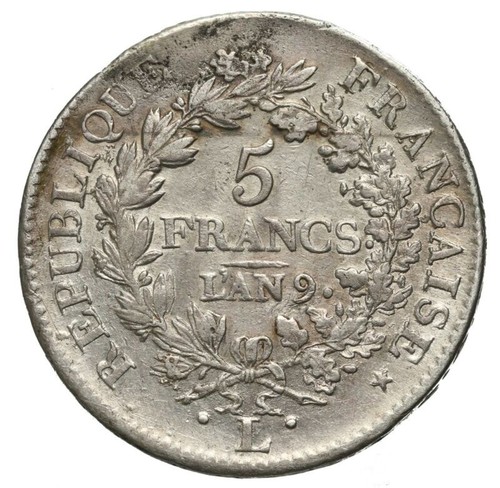
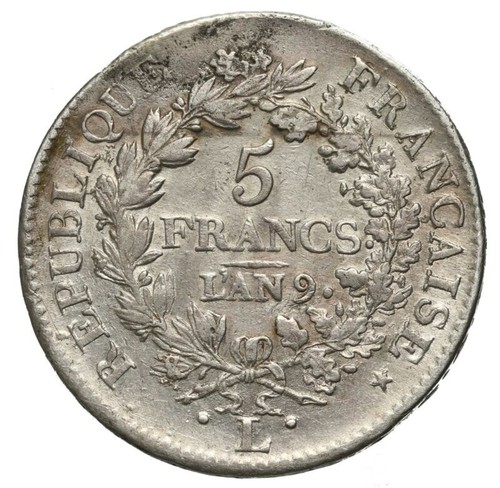
5 Francs (First Republic)
L'an 9 (1800–1801)
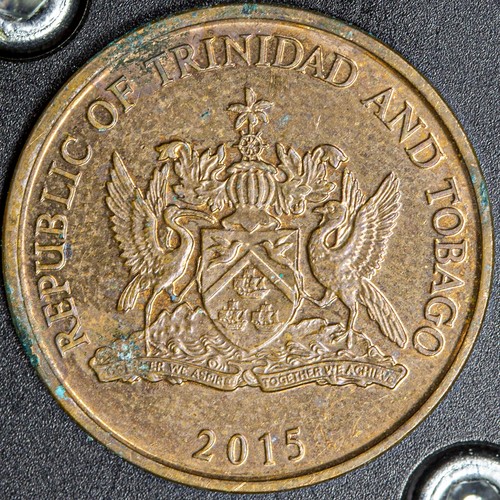
Trinidad and Tobago Dollar
2015
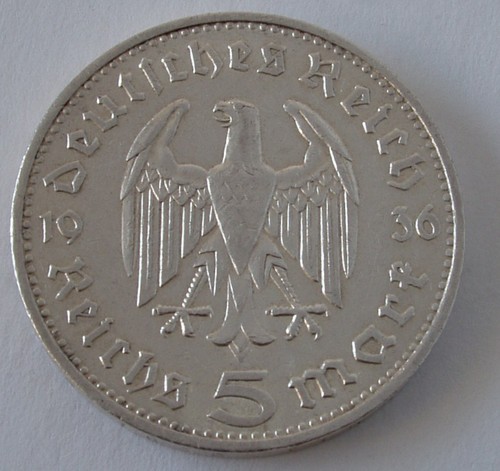
German 5 Reichsmark (Hindenburg)
1935–1936 (Hindenburg type with swastika)
5 Francs Semeuse
1960–1969
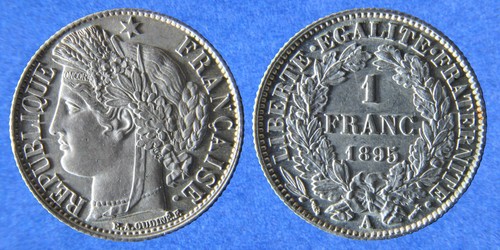
French Cérès 1 Franc
1849–1895
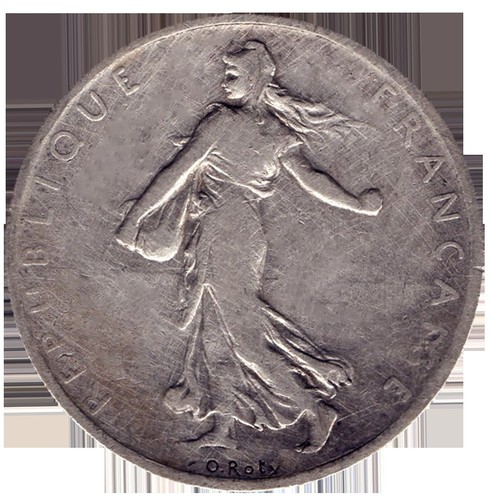
French Semeuse 2 Francs
1898–1920 (silver issues; pictured example dated 1899)
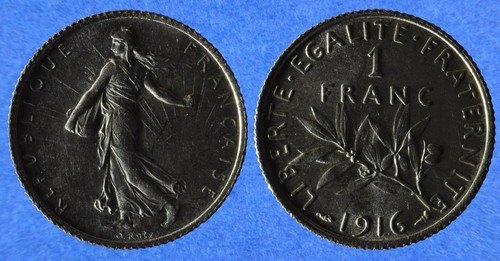
French Semeuse 1 Franc
1898–1920 (silver Semeuse 1 franc type)
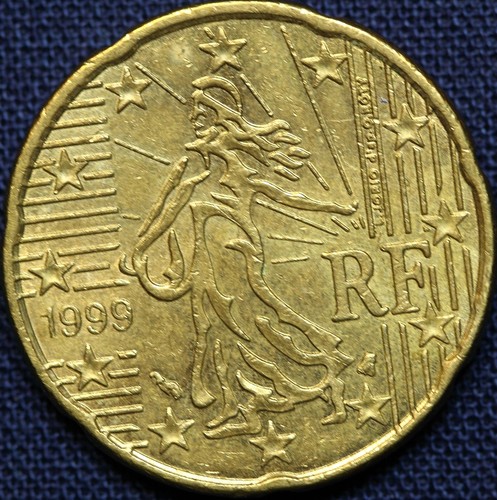
France 50 Cent Euro
1999–present
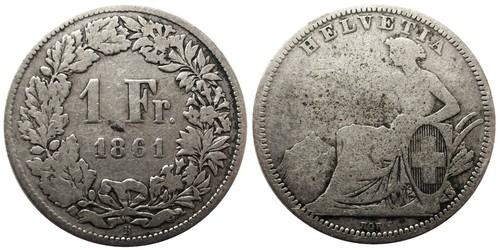
Swiss 1 Franc
1861
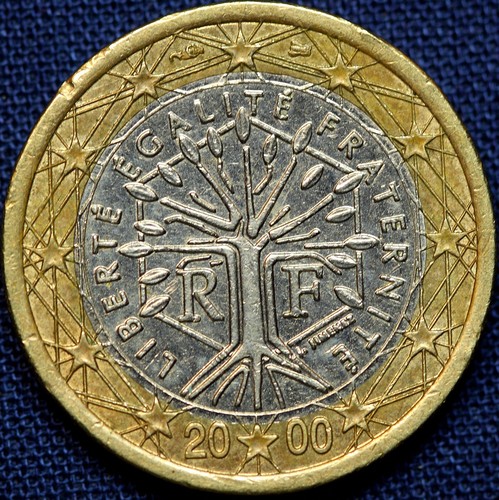
France 20 Centimes
1962–2001 (Fifth Republic, Marianne / Lagriffoul type)
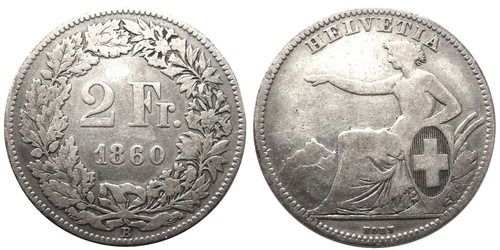
Swiss 2 Francs
1860
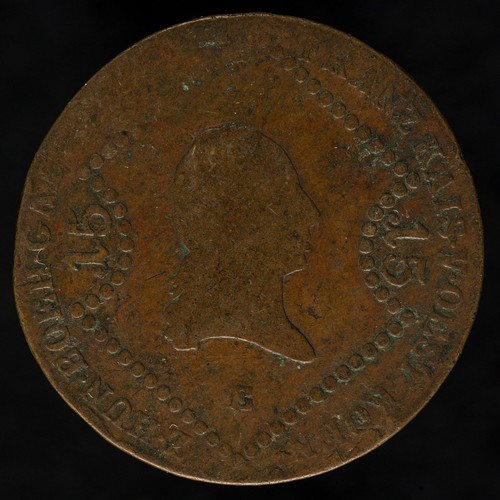
Austria-Hungary 15 Kreuzer
1807