
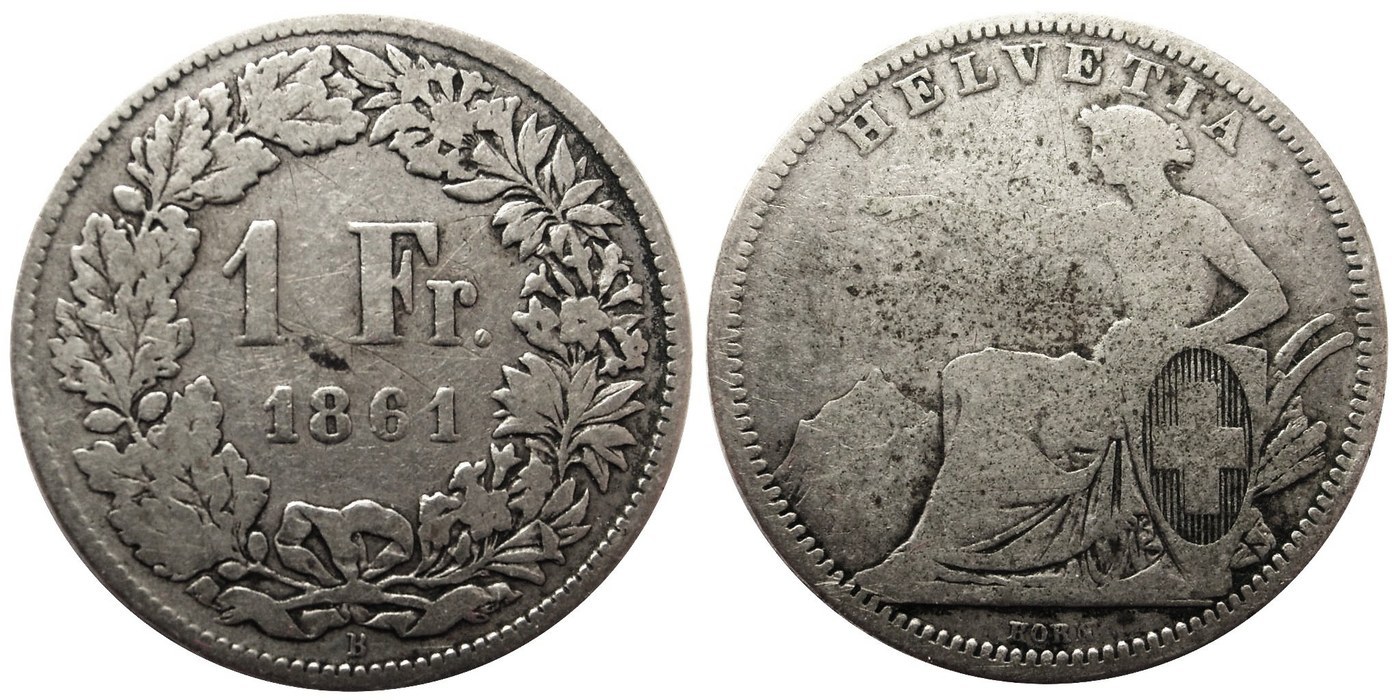
Swiss 1 Franc
A silver Swiss 1 Franc dated 1861, with the figure of Helvetia and the national coat of arms on one side and the value '1 Fr' in wreaths on the other.
- Country
- Switzerland
- Denomination
- 1 Franc
- Metal
- Silver
Got a coin like this?
Identify any coin from a photo, free.
Overview
The Swiss 1 Franc is a silver circulation coin of Switzerland, the federal state's standard franc denomination. The example shown is silver and dated 1861, an issue of the young Swiss Confederation whose coinage was aligned with the franc system of the Latin Monetary standard.
One face carries the figure of Helvetia, the female national personification, together with the Swiss coat of arms (the cross shield). The other face is the value side, displaying the denomination 1 Fr and the date 1861 framed by wreaths. The coin belongs to the small silver franc series that circulated across Switzerland in the mid-19th century.
History & Background
After the founding of the modern Swiss federal state in 1848, Switzerland introduced a unified national currency, the franc, in 1850 to replace the many cantonal coinages that had circulated before. The new federal silver coins, including the 1 franc, were struck to a common standard so they could pass throughout the whole Confederation rather than only within a single canton.
The franc was defined on the model of the French franc, and Switzerland's silver denominations shared the weight and fineness conventions later formalized under the Latin Monetary Union, the mid-19th-century agreement that harmonized silver and gold coinage among several European nations. This is why a Swiss silver franc of this era matches its French, Belgian, and Italian counterparts in size and metal.
The 1861 date places this coin among the early federal silver issues struck at the Swiss mint. These small silver francs served everyday commerce, and surviving dated examples are collected today as artifacts of the Confederation's first decades of unified coinage.
How to Identify
Value side: the denomination 1 Fr with the date 1861, enclosed by wreaths (typically laurel and oak sprays). This is the design element seen in the photograph and is the quickest way to confirm the one-franc value and the year.
Helvetia side: the figure of Helvetia accompanied by the Swiss coat of arms (the shield bearing the national cross) and stars around the field. National inscriptions in the Confederation's Latin form appear on the coinage of this family.
Physical clues: the piece is silver and a small module appropriate to the one-franc denomination — noticeably smaller than the 2-franc and 5-franc silver coins of the same series. Confirm the type by matching the 1 Fr value, the 1861 date, and the Helvetia-with-shield design together rather than relying on any single feature.
Value & Collectibility
Value depends on the date, the mint state, the sharpness of Helvetia and the wreaths, and any wear or damage. As a silver coin, the 1 franc carries a base value from its precious-metal content, and well-preserved or scarcer early dates can trade above that bullion floor with collectors.
Exact prices vary widely with grade and demand, so treat any single figure with caution. Circulated examples are common and modest in value, while high-grade or better-date pieces command premiums. Compare recent sales of matching Swiss 1 Franc coins of the same date and condition, and be cautious of cleaned or altered pieces when assessing worth.
Frequently asked questions
What is the Swiss 1 Franc?
It is Switzerland's standard one-franc coin. The example shown is a silver piece dated 1861, part of the federal franc coinage introduced after the modern Swiss state was formed.
Who is the figure on the coin?
It is Helvetia, the female personification of Switzerland, shown together with the Swiss coat of arms bearing the national cross.
What do '1 Fr' and the wreaths mean?
'1 Fr' is the denomination, one franc, and the wreaths frame the value and the date 1861 on that side of the coin. The wreaths are a decorative laurel and oak motif.
Is the coin real silver?
Yes, the mid-19th-century Swiss 1 franc was struck in silver, matching the weight and fineness standards later formalized under the Latin Monetary Union.
Is it valuable?
Its silver content sets a base value, and condition and date determine the premium above it. Circulated examples are common and modest, while high-grade or scarcer dates are worth more.
Swiss 1 Franc guides
In-depth guides for identifying, valuing, and collecting Swiss 1 Franc.
Other coins you may enjoy
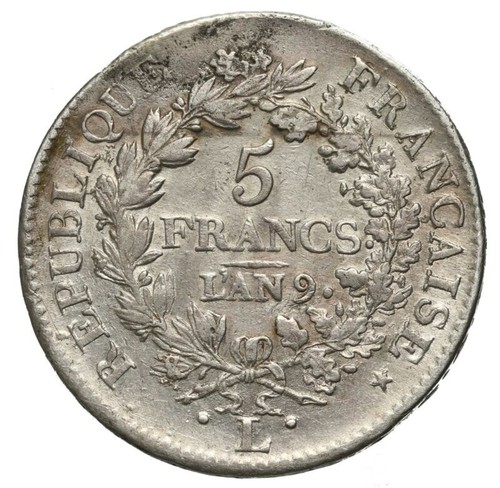
5 Francs (First Republic)
L'an 9 (1800–1801)
Trinidad and Tobago Dollar
2015
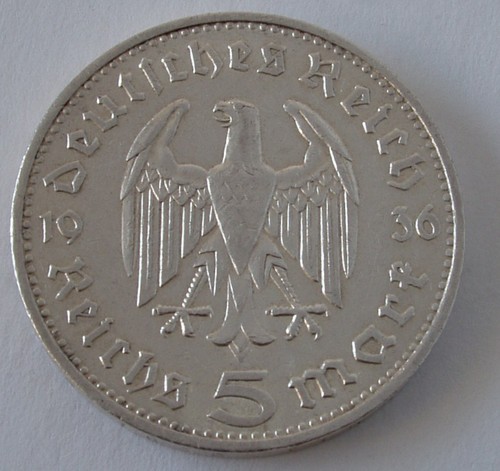
German 5 Reichsmark (Hindenburg)
1935–1936 (Hindenburg type with swastika)
5 Francs Semeuse
1960–1969
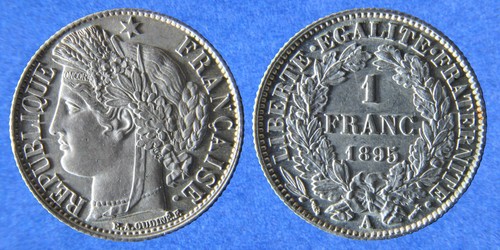
French Cérès 1 Franc
1849–1895
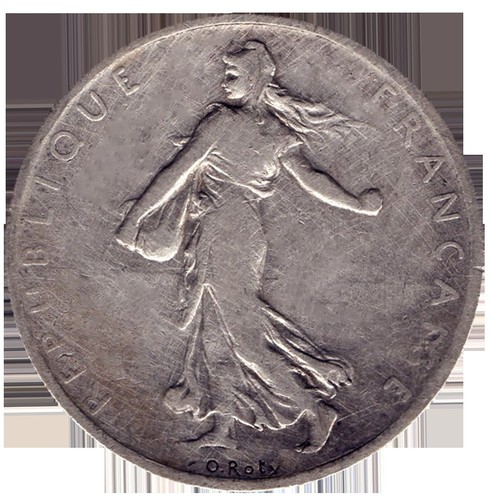
French Semeuse 2 Francs
1898–1920 (silver issues; pictured example dated 1899)
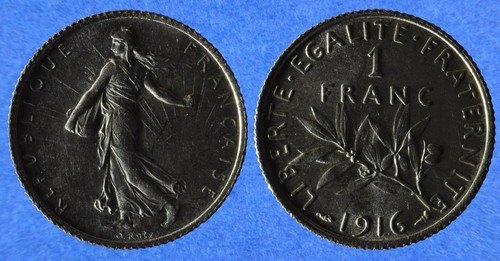
French Semeuse 1 Franc
1898–1920 (silver Semeuse 1 franc type)
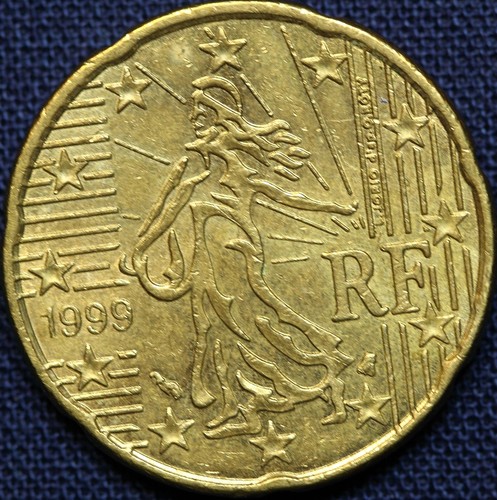
France 50 Cent Euro
1999–present
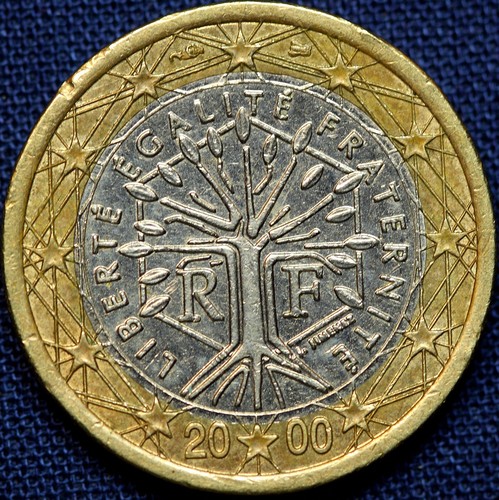
France 20 Centimes
1962–2001 (Fifth Republic, Marianne / Lagriffoul type)
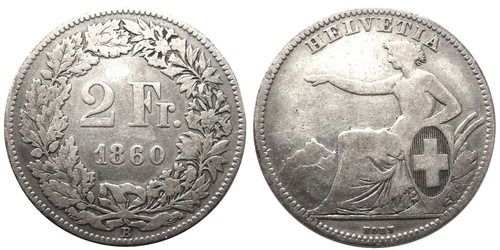
Swiss 2 Francs
1860
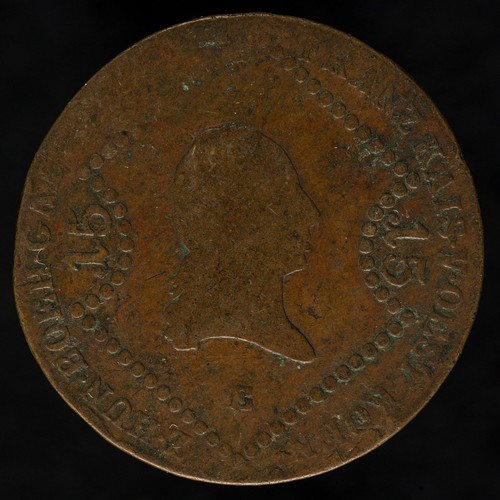
Austria-Hungary 15 Kreuzer
1807
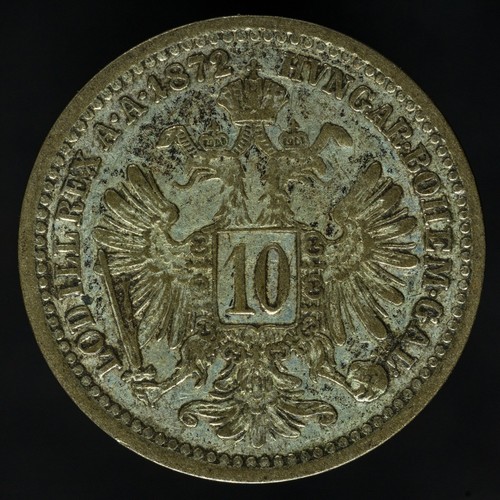
Austria-Hungary 10 Kreuzer
1872 (issue shown)