
How to Identify the Swiss 1 Franc
Identify a silver Swiss 1 Franc by its '1 Fr' value in wreaths, the 1861 date, the Helvetia-and-shield design, and its small franc-sized silver module.
Read the full Swiss 1 Franc encyclopedia entry →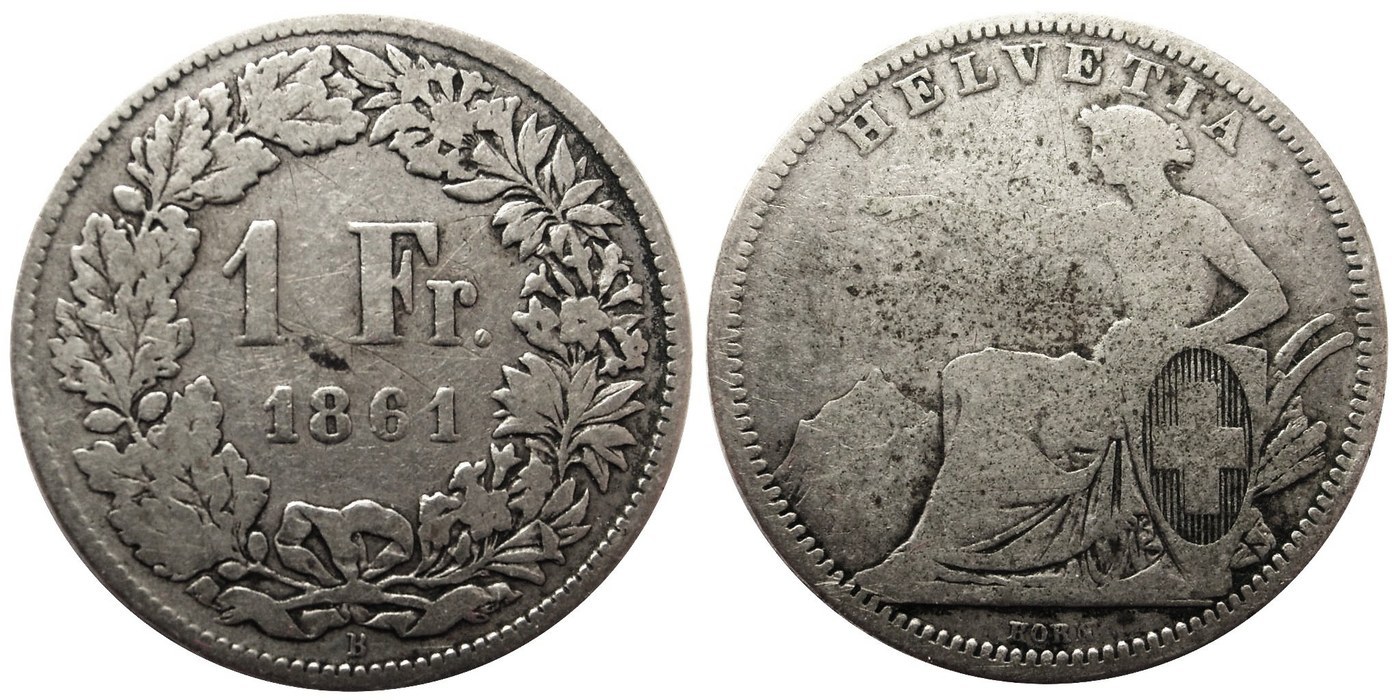
Start with the value side. Look for the denomination 1 Fr with the date 1861 framed by wreaths. This combination confirms both the one-franc value and the year at a glance and separates the coin from the 2-franc and 5-franc pieces of the same design family, which carry different numerals.
Read the Helvetia side. The other face shows the figure of Helvetia with the Swiss coat of arms (the cross shield) and stars in the field. National inscriptions appear in the Confederation's Latin form. Confirming Helvetia together with the shield ties the design to the Swiss federal franc series rather than to a look-alike foreign franc.
Check size and metal. The 1 franc is a small silver coin, clearly smaller than the 2- and 5-franc silver coins. Weigh and measure it and compare against published specifications for the type; genuine period silver is dense, rings clear, and is non-magnetic. A weight or diameter well off the expected range is a warning sign.
Watch for look-alikes. Because Switzerland's silver franc matched the Latin Monetary Union standard, French, Belgian, and Italian silver francs of the era are similar in size and metal — so verify the Swiss Helvetia-and-shield design and the 1 Fr legend, not just the diameter. Later Swiss francs use a standing Helvetia and, in the 20th century, base-metal alloys, so match the date and metal carefully.
Authenticate with care. Popular silver types attract counterfeits and altered dates. Inspect the edge and surfaces for casting seams or tooling, check that Helvetia and the wreaths are crisp rather than soft, and be wary of cleaned or re-engraved coins. For a valuable or better-date example, seek a specialist opinion or third-party certification and compare recent auction records for matching pieces.
Frequently asked questions
How do I confirm this is a 1 franc and not a 2 or 5 franc?
Read the value side: it should show '1 Fr' in the wreaths. The 1 franc is also the smallest of the silver Helvetia coins, so its diameter is noticeably less than the 2- and 5-franc pieces.
Where is the date and what should it read?
The date appears on the value side alongside the denomination, framed by the wreaths, and reads 1861 on this example. Matching the date to the Helvetia design links both faces to the correct issue.
How can I tell a Swiss franc from a French or Italian one?
They share size and silver content under the Latin Monetary Union, so check the design and legend: the Swiss coin shows Helvetia with the national cross shield, while foreign francs use their own national figures and inscriptions.
What are the main authentication risks?
Counterfeits, cast copies, and altered dates occur for popular silver types. Inspect the edge for seams, look for crisp Helvetia and wreath detail, avoid cleaned coins, and get valuable examples professionally authenticated.