
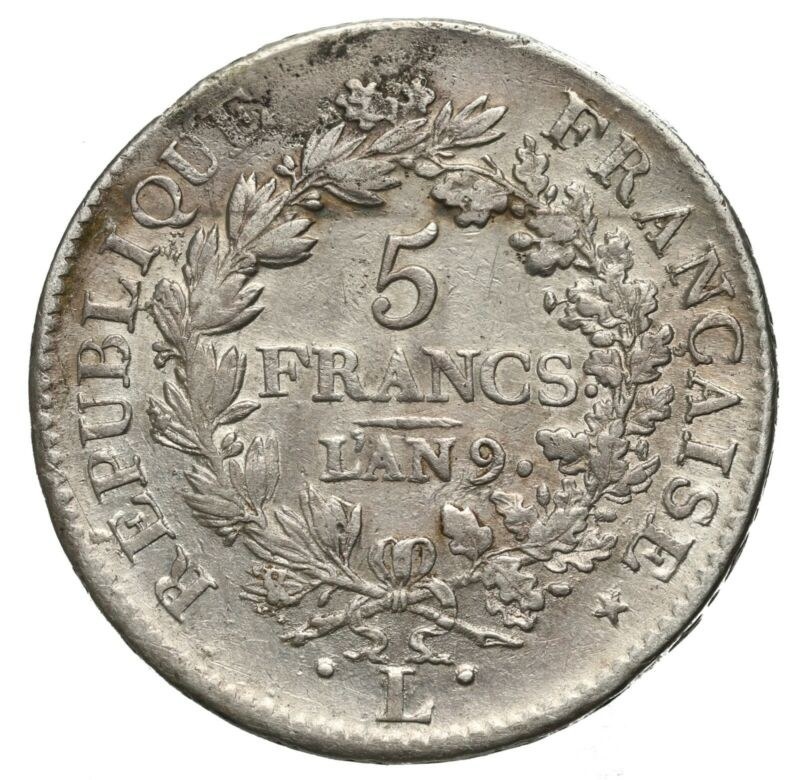
5 Francs Semeuse
France's silver 5 francs of the New Franc era: Roty's striding Semeuse (Sower) on the obverse, the value in an olive spray on the reverse.
- Country
- France
- Denomination
- 5 Francs
- Metal
- Silver
Got a coin like this?
Identify any coin from a photo, free.
Overview
The 5 Francs Semeuse is a silver French circulation coin struck for the New Franc (nouveau franc) currency introduced in 1960. Its obverse carries the celebrated Semeuse, or "Sower," a striding female figure scattering seed against the rising sun, encircled by the legend for the French Republic. The reverse shows the value 5 FRANCS framed by an olive branch, with the republican motto and the date.
Struck in silver, the coin has a substantial, weighty feel and a bright reeded edge. It was the largest and most valuable circulating silver piece of its short series, and remains one of the most recognizable French coins of the 1960s, prized both for its classic allegorical design and for its silver content.
History & Background
In 1960 France carried out a currency reform, replacing the old franc with the "nouveau franc" (new franc) worth one hundred old francs. The silver 5 francs was created as the flagship coin of this reformed system and was minted from 1960 through 1969. The observed 1960 piece belongs to the first year of this issue.
The Semeuse design is much older than the coin itself. The Sower was engraved by Louis-Oscar Roty in the 1890s and first appeared on French silver coinage around the turn of the twentieth century, becoming an enduring national emblem. When France needed a dignified motif for its new silver 5 francs, it revived Roty's classic figure, linking the modern coin to a long republican tradition.
Production of the silver 5 francs ended in 1969, after which the denomination continued only in base metal (nickel) with a different design. Because the silver Semeuse circulated for less than a decade before silver was withdrawn, it forms a compact, collectible series defined largely by date and mintmark.
How to Identify
The obverse is the definitive feature: a full-length female figure—the Semeuse—striding to the left, sowing seed with her arm swept back, her gown and hair blown by the wind, with a sunburst behind her. The legend around the rim identifies the French Republic. Roty's signature typically appears near the ground line beneath the figure.
The reverse displays the value 5 FRANCS, flanked or accompanied by an olive branch, together with the republican motto LIBERTÉ ÉGALITÉ FRATERNITÉ and the date. The edge is reeded. In hand the coin is clearly silver: pale grey-white, heavier than a same-size base-metal coin, and it does not respond to a magnet.
Distinguish it from the later, larger nickel 5 francs (Semeuse type continued in base metal after 1969) by weight, color and the magnetic/ring test. Small mintmarks and engravers' privy marks sit near the date on the reverse and confirm the Paris mint issue.
Value & Collectibility
The silver 5 Francs Semeuse is valued first for its silver content, which sets a bullion floor that rises and falls with the silver market. Common, well-circulated dates typically trade at or a little above their melt value, making them an accessible entry point into collectible silver.
Above that floor, price depends on date, mintmark and condition. Most years of this 1960s series are relatively plentiful, but certain dates and any coins in fully uncirculated or proof-like condition command premiums over bullion. Bright, unworn examples with full detail in the Sower's gown and hair are the most sought after.
As always with a widely struck circulation silver coin, check recent sales for the exact year and grade rather than assuming a single figure; the 1960 first-year issue is a common and affordable date in most conditions.
Frequently asked questions
Is the 5 Francs Semeuse made of real silver?
Yes. The 5 francs struck from 1960 to 1969 is a genuine silver coin, which gives it a heavy feel, a pale silver color and a bullion value. The later 5 francs in the same Semeuse style is base-metal nickel, not silver.
Who designed the Semeuse (Sower) figure?
The Sower was engraved by Louis-Oscar Roty in the 1890s. His signature usually appears beneath the striding figure. The motif became a national emblem and was revived for the 1960 silver 5 francs.
What does the reverse of the coin show?
The reverse carries the value 5 FRANCS with an olive branch, the republican motto LIBERTÉ ÉGALITÉ FRATERNITÉ, and the date. Small mintmarks sit near the date.
How much is a 1960 5 Francs Semeuse worth?
As a common silver circulation coin, most examples are worth roughly their silver melt value, a little more in nice uncirculated condition. Scarcer dates and proof-quality pieces bring higher premiums; check recent sales for the specific year and grade.
5 Francs Semeuse guides
In-depth guides for identifying, valuing, and collecting 5 Francs Semeuse.
Other coins you may enjoy
5 Francs (First Republic)
L'an 9 (1800–1801)
Trinidad and Tobago Dollar
2015
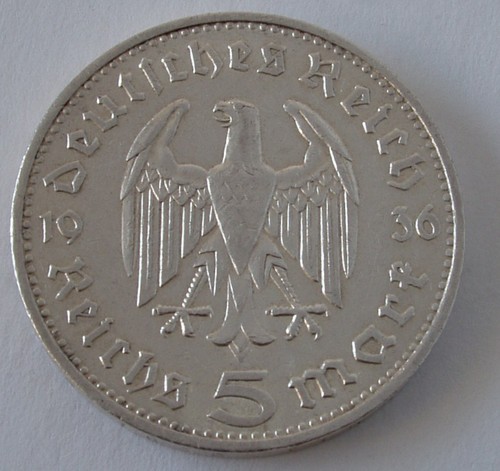
German 5 Reichsmark (Hindenburg)
1935–1936 (Hindenburg type with swastika)
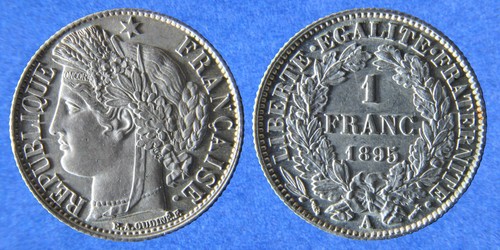
French Cérès 1 Franc
1849–1895
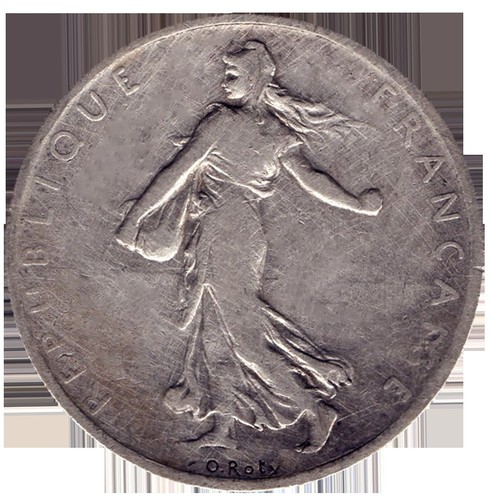
French Semeuse 2 Francs
1898–1920 (silver issues; pictured example dated 1899)
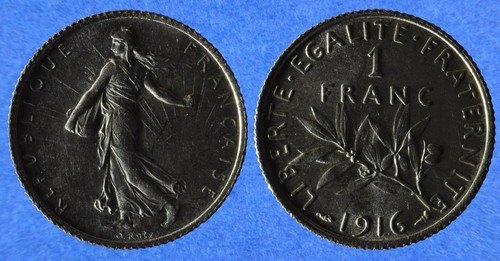
French Semeuse 1 Franc
1898–1920 (silver Semeuse 1 franc type)
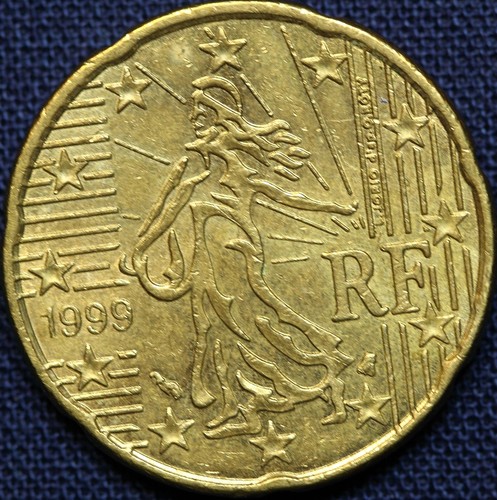
France 50 Cent Euro
1999–present
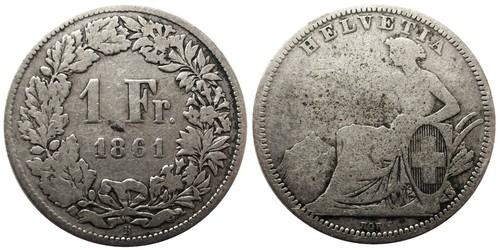
Swiss 1 Franc
1861
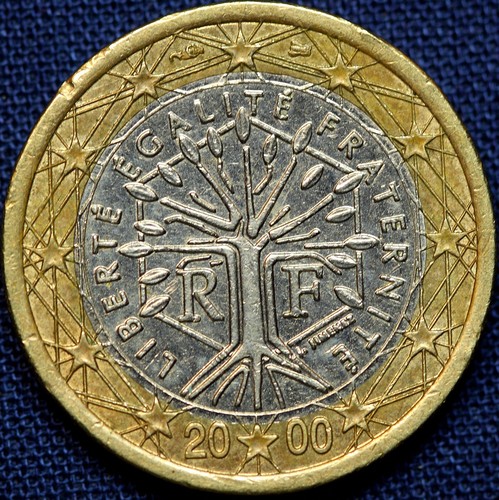
France 20 Centimes
1962–2001 (Fifth Republic, Marianne / Lagriffoul type)
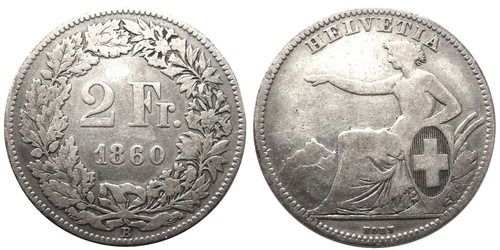
Swiss 2 Francs
1860
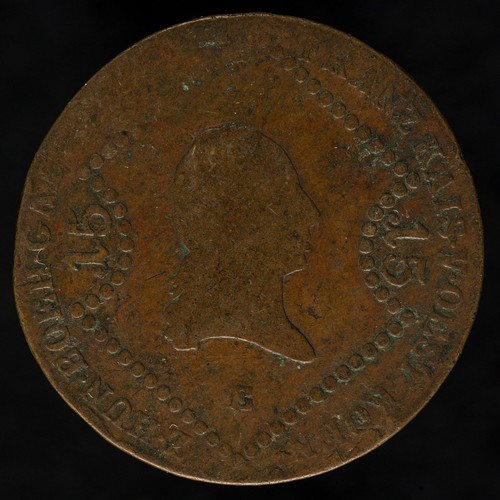
Austria-Hungary 15 Kreuzer
1807
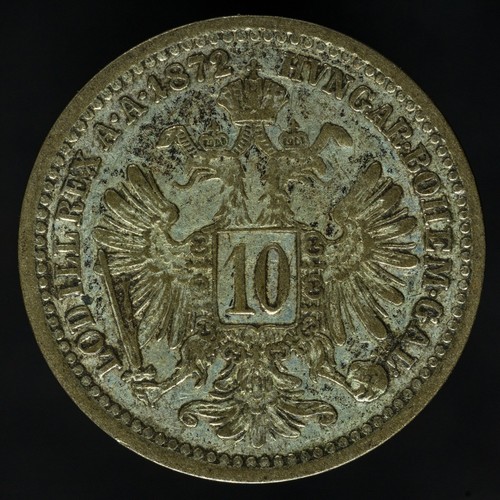
Austria-Hungary 10 Kreuzer
1872 (issue shown)