
How to Identify the 5 Francs Semeuse
A collector's guide to recognizing France's silver 5 francs by its striding Sower obverse, olive-spray reverse, silver weight and mintmarks.
Read the full 5 Francs Semeuse encyclopedia entry →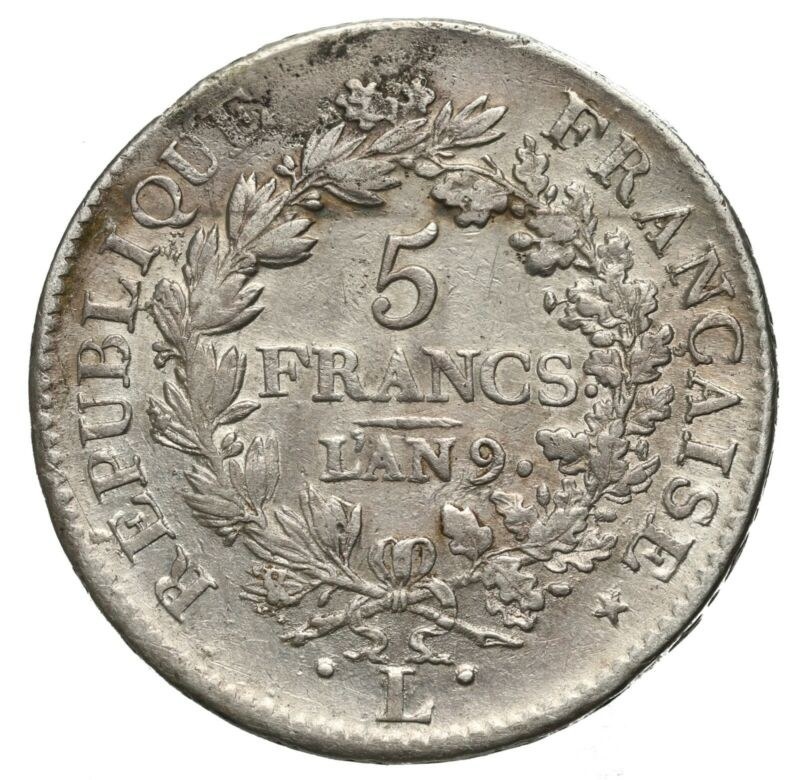
Start with the obverse, which is the surest identifier. The 5 Francs Semeuse shows a full-length woman striding left across the field, one arm swept back as she casts seed, her dress and hair streaming in the wind and a sunburst rising behind her. This is Roty's Sower; look for his engraver's signature along the ground beneath her feet. The legend naming the French Republic runs around the rim. No other French denomination pairs this large striding figure with a silver planchet.
Read the reverse to confirm the value and date. It states 5 FRANCS, set with an olive branch and the motto LIBERTÉ ÉGALITÉ FRATERNITÉ, with the year below. The date is what places the coin within the 1960–1969 silver series and, together with any small privy marks beside it, identifies the Paris mint issue.
Confirm the metal physically. The silver Semeuse is pale grey-white, noticeably heavy for its size, has a reeded (grooved) edge, and is completely non-magnetic. A silver coin also gives a longer, higher ring when balanced and tapped. These simple checks separate the genuine silver piece from base-metal coins of similar diameter.
Beware the main look-alike: after 1969 France continued a 5 francs in the Semeuse style struck in nickel or nickel-clad base metal. It is larger, lighter in color tone, magnetic on some issues, and lacks silver's heft and ring. If a "Semeuse 5 francs" feels light and thin or is dated in the 1970s or later, it is the base-metal type, not the silver coin described here.
For authentication, weigh and measure the coin against published silver specifications and compare the date and mintmark to reference listings, since date is the main driver of any premium above melt. Silver bullion-value coins are occasionally counterfeited or cast; watch for soft, mushy detail in the Sower's gown, seams on the edge, incorrect weight, or any magnetic response, all of which point to a fake or a base-metal substitute.
Frequently asked questions
How do I tell the silver 5 francs from the later nickel one?
The silver coin (1960–1969) is heavier, pale silver-grey, non-magnetic, and has a clear ring. The later base-metal 5 francs in the same Sower style is larger, lighter in heft, sometimes magnetic, and dated from the 1970s onward.
Where is the date and mintmark on the coin?
Both are on the reverse, near the value. The year sits below 5 FRANCS, with small engraver's privy marks and any mintmark beside the date; these confirm the issue and the specific year.
What quick tests confirm it is genuine silver?
Check that it is non-magnetic, feels heavy for its size, has a reeded edge, and rings when tapped. Then weigh and measure it against published silver 5 francs specifications and compare the design detail to trusted reference images.