
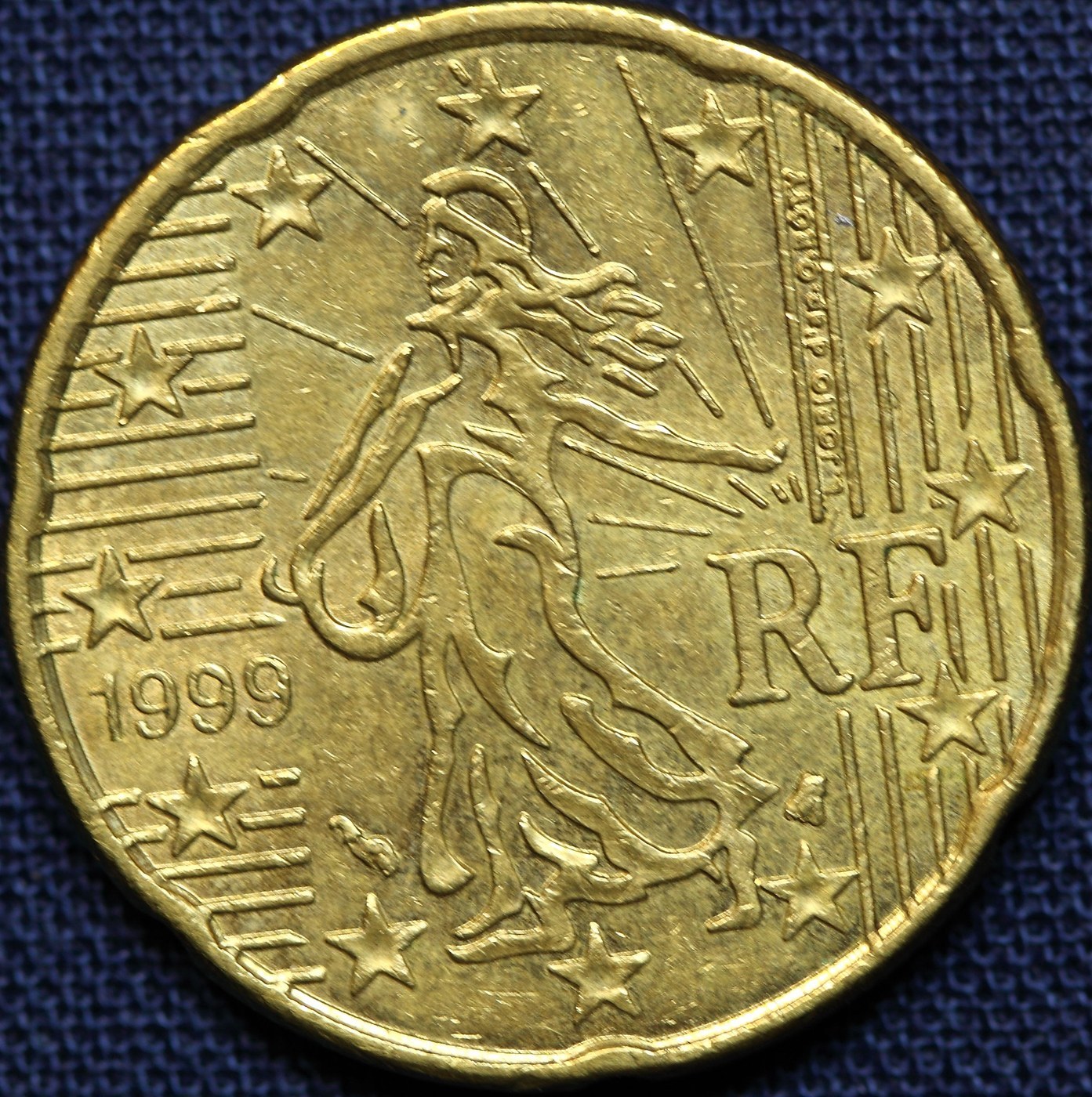
France 50 Cent Euro
France's gold-coloured 50 euro cent coin, showing the striding Sower (Marianne) among the EU stars on one side and the value 50 on the other.
- Country
- France
- Denomination
- 50 Euro Cent
- Metal
- Brass
Got a coin like this?
Identify any coin from a photo, free.
Overview
The France 50 Cent Euro is a circulating coin of the euro, the shared currency of the eurozone, struck for France by the Monnaie de Paris. Like all euro coins it has a common European value side and a distinct national design; the French national side shows the allegorical Sower — the striding female figure long used to personify France in the Marianne tradition — encircled by the twelve stars of the European Union. The example shown here is dated 1999, the first year in which French euro coins were struck.
It is one of the three gold-coloured euro cent denominations (10, 20 and 50 cent), struck in a brass-like alloy commonly called Nordic gold. At roughly 24 mm across it is the largest of the gold-coloured cents and sits between the small copper 1, 2 and 5 cent pieces and the two-tone 1 and 2 euro coins.
As an everyday circulating coin produced in very large numbers, the French 50 cent is common and normally worth its face value. It is collected mainly as part of a French or eurozone type set rather than for individual rarity.
History & Background
France was a founding member of the eurozone, and its euro coins carry dates from 1999 even though euro coins and notes did not enter public circulation until 1 January 2002. Coins dated 1999, 2000 and 2001 were minted in advance so that supplies were ready for the changeover from the French franc.
The national design of the 10, 20 and 50 cent coins is a modern reinterpretation of The Sower (La Semeuse), the classic motif created by Oscar Roty that had appeared on French franc coinage. The euro version, adapted by Laurent Jonchère, shows the Sower striding across the field sowing seed against a rising sun, with the letters RF for République Française, the twelve EU stars and the year.
The reverse, or common European side, was designed by Luc Luycx of the Royal Belgian Mint. On coins of this early period it depicts the member states of the European Union as separate territories among the stars; the common side was later revised (from 2007) to show a map of the whole of Europe. The French national side has remained essentially unchanged, so the Sower motif links the modern coin to more than a century of French coinage tradition.
How to Identify
National side (Sower, shown): a striding female figure — the Sower, an allegory of France in the Marianne tradition — sowing seed against a rising sun, surrounded by the twelve stars of the EU. Look for the initials RF (République Française) and the year, here 1999. Small mint symbols appear in the field: the Monnaie de Paris privy marks, typically a cornucopia (horn of plenty) and the mint engraver's differing mark.
Common side (value): the large numeral 50 with the words EURO CENT, set beside a stylised map of Europe and framed by the twelve stars, with fine lines radiating between the stars. Size and metal: about 24 mm in diameter and roughly 7.8 g, struck in Nordic gold, a gold-coloured brass alloy of copper, aluminium, zinc and tin, with a finely ridged (reeded) edge.
The quickest identifiers are the gold colour, the value 50 EURO CENT on one side and the Sower with RF and the stars on the other. The gold tone separates it from the small copper 1–5 cent coins and the two-colour 1 and 2 euro coins, and the Sower design distinguishes the French issue from the many other national 50 cent designs used across the eurozone.
Value & Collectibility
The French 50 euro cent is an abundant modern circulating coin, so ordinary examples from general dates are worth their face value of 50 euro cents. Circulated pieces have essentially no premium and are collected simply to fill a slot in a French or eurozone set.
Uncirculated coins, and those taken from official annual mint or proof sets rather than from change, carry a modest premium over face value. Early dates — 1999, 2000 and 2001 — and any lower-mintage years are the ones collectors watch most, though even these are common in circulated grade. Condition and eye appeal drive most of the difference in price.
Because values depend on the specific date, grade and the collector market, treat any single figure as a rough guide. Compare recent sales of French 50 cent coins of the same date and grade before buying or selling.
Frequently asked questions
What is shown on the France 50 cent euro?
The national side shows the striding Sower, an allegory of France in the Marianne tradition, with the letters RF, the year and the twelve EU stars. The common side shows the value 50 EURO CENT with a map of Europe and the stars.
What metal is the French 50 cent made of?
It is struck in Nordic gold, a gold-coloured brass alloy of copper, aluminium, zinc and tin. This gives it a warm gold tone and separates it from the copper small cents and the two-tone euro coins.
Why is the coin dated 1999 when the euro began in 2002?
France minted euro coins in advance of the changeover, so coins carry dates from 1999 onward even though they only entered public circulation on 1 January 2002.
Is the France 50 cent euro valuable?
Generally no. It is a common circulating coin worth its face value, though uncirculated examples and early or lower-mintage dates can carry a small premium among collectors.
How do I tell it from other countries' 50 cent euro coins?
The common value side is shared across the eurozone, so check the national side. The French coin shows the Sower with the letters RF; other countries use entirely different national designs.
France 50 Cent Euro guides
In-depth guides for identifying, valuing, and collecting France 50 Cent Euro.
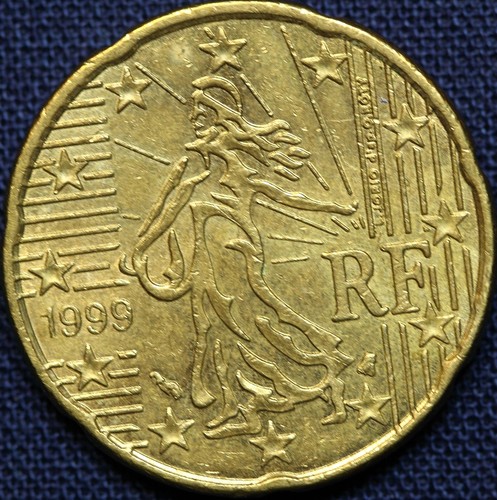
France 50 Cent Euro identified by the community
Real coins identified with Coin Identifier.

Other coins you may enjoy
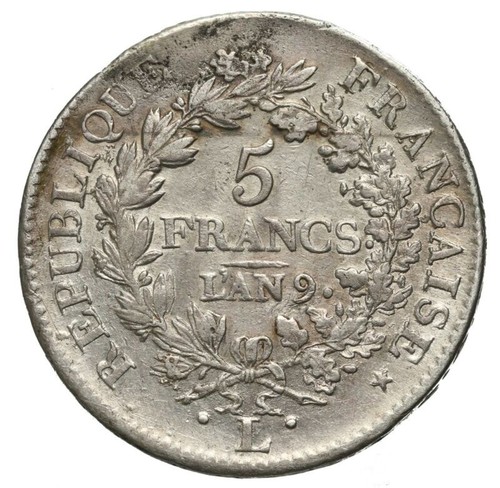
5 Francs (First Republic)
L'an 9 (1800–1801)
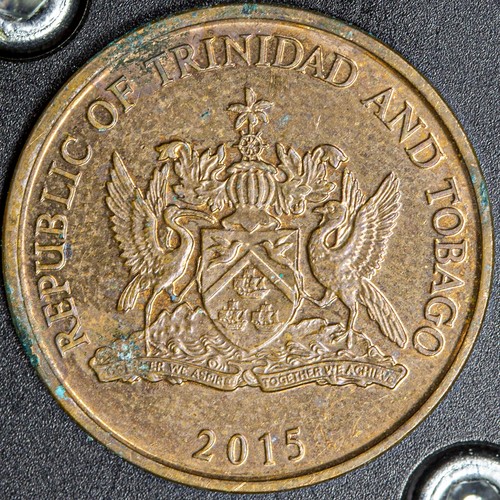
Trinidad and Tobago Dollar
2015
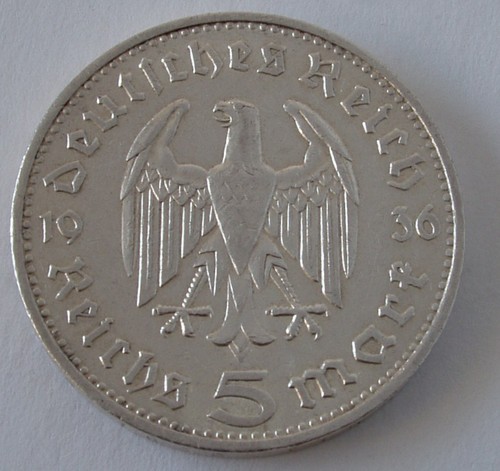
German 5 Reichsmark (Hindenburg)
1935–1936 (Hindenburg type with swastika)
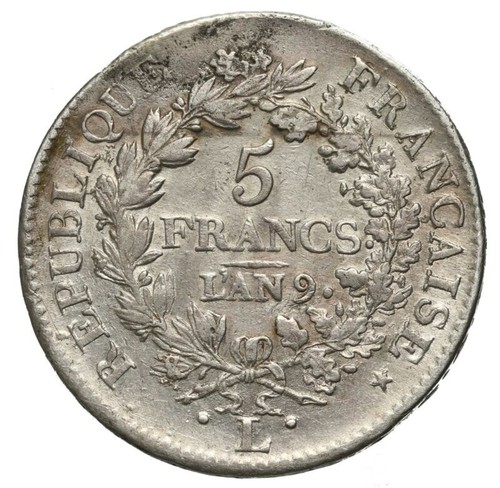
5 Francs Semeuse
1960–1969
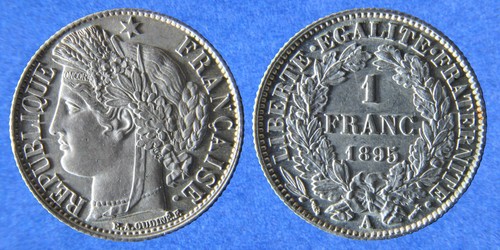
French Cérès 1 Franc
1849–1895
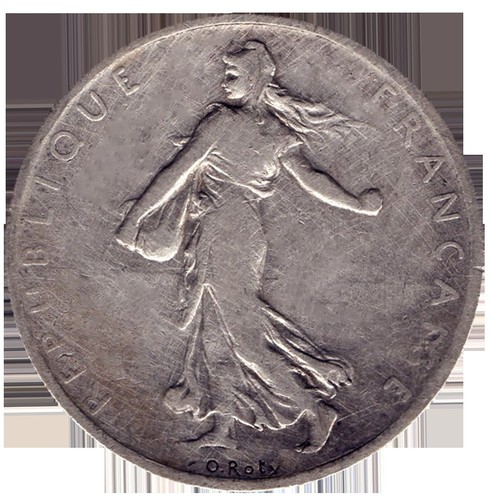
French Semeuse 2 Francs
1898–1920 (silver issues; pictured example dated 1899)
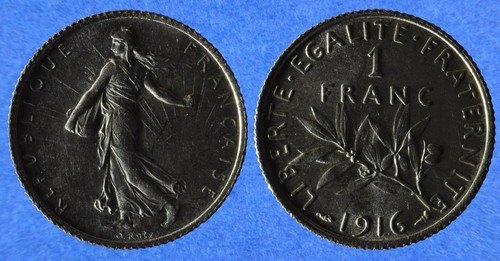
French Semeuse 1 Franc
1898–1920 (silver Semeuse 1 franc type)
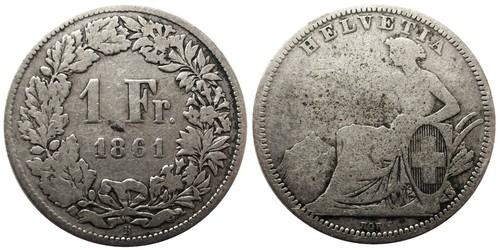
Swiss 1 Franc
1861
France 20 Centimes
1962–2001 (Fifth Republic, Marianne / Lagriffoul type)
Swiss 2 Francs
1860
Austria-Hungary 15 Kreuzer
1807
Austria-Hungary 10 Kreuzer
1872 (issue shown)