
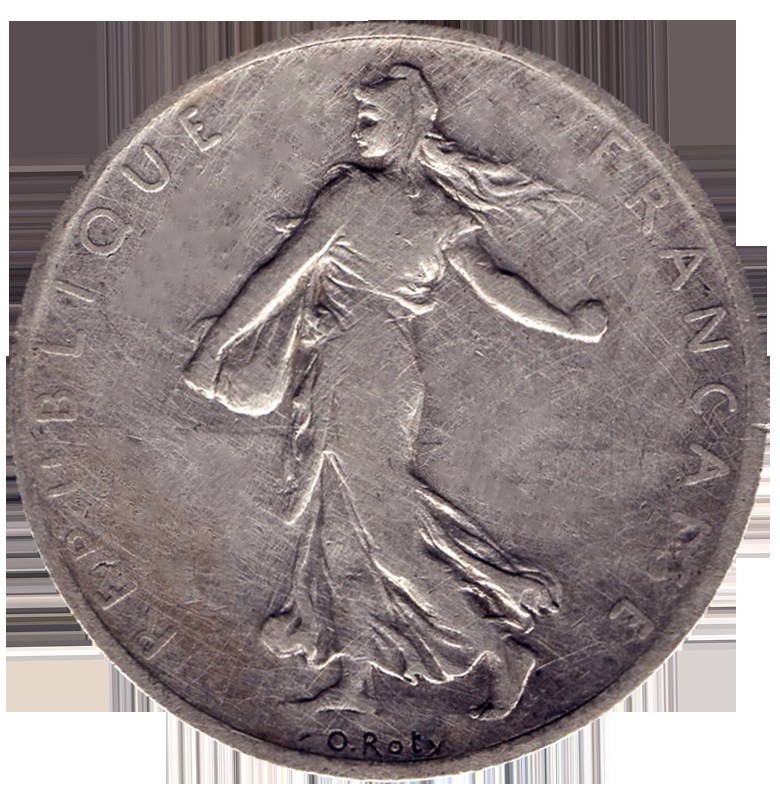
French Semeuse 2 Francs
French Third Republic silver 2 francs showing Roty's striding Sower (Semeuse); the pictured example is dated 1899.
- Country
- France
- Denomination
- 2 Francs
- Metal
- Silver
Got a coin like this?
Identify any coin from a photo, free.
Overview
The French Semeuse 2 Francs is a silver circulating coin of the French Third Republic, part of the famous "Semeuse" (Sower) silver series designed by the medallist Louis-Oscar Roty. The obverse shows a female figure striding and sowing seed by hand as she faces left, while the reverse carries the denomination 2 FRANCS flanked by branches. The example shown here is dated 1899.
Struck in silver and measuring about 27 mm across, the 2 francs was the largest of the Semeuse silver denominations, which also included the 50 centimes and 1 franc. The Sower quickly became one of the most recognisable images in French coinage and would later reappear on twentieth-century nickel coins and on French euro cents.
As an everyday commerce coin of pre-First World War France, the silver 2 francs Semeuse was produced across many years. Common dates survive in quantity today, valued largely for their silver content and their classic Belle Époque design.
History & Background
The Sower motif was created by Louis-Oscar Roty in the 1880s and 1890s and was adopted for France's new silver coinage at the end of the nineteenth century. The 50 centimes and 1 franc appeared first, and the larger 2 francs joined the series shortly after, with silver striking running from the late 1890s into the early 1920s. The 1899 piece shown here sits near the start of that run.
The design belongs to the Third Republic (1870–1940), and the coins carry the Republic's identity through the legend RÉPUBLIQUE FRANÇAISE and, on many issues, the motto Liberté Égalité Fraternité. The imagery of a citizen sowing seed against a rising sun was read as an optimistic emblem of the Republic spreading its ideals.
Production of the silver 2 francs was interrupted and eventually ended around the upheavals of the First World War era, as rising silver prices and wartime economics pushed France away from large silver circulating coins. The Semeuse image, however, endured and was revived on later French coinage, keeping Roty's figure in use for well over a century.
How to Identify
Obverse (shown): the Sower — a standing female figure in flowing dress and a Phrygian-style cap, walking and casting seed with her right hand while facing left, with a rising sun and its rays low behind her. The legend RÉPUBLIQUE FRANÇAISE curves around the rim, and Roty's signature O. ROTY appears near the ground line.
Reverse (shown): the value 2 FRANCS across the centre with the date below (1899 on this example), framed by branches (olive and oak foliage), and often the Republican motto around the edge. Size and metal: roughly 27 mm in diameter and about 10 g, struck in silver, with a reeded (milled) edge.
Use the denomination and diameter together to separate the 2 francs from its smaller siblings: the 1 franc Semeuse is about 23 mm and the 50 centimes about 18 mm, all sharing the same Sower obverse. Tiny mint marks and engravers' privy marks sit in the reverse field near the date — French coins of this era were struck chiefly at Paris — and help pin down the exact issue.
Value & Collectibility
Most silver 2 francs Semeuse coins are valued first as silver bullion, since the type was produced in large numbers over many years. Well-worn common dates typically trade close to their silver melt value, in the modest single-digit to low double-digit range in dollars or euros, moving with the silver price.
Better-preserved coins with sharp, lustrous detail command more, and genuinely scarce dates or high-grade certified examples can reach well into the tens or low hundreds. Early dates such as 1899, key low-mintage years, and pieces with strong original toning tend to sit at the upper end.
Because value depends heavily on the specific date, mint mark, grade and the current silver market, treat any single figure as a guide only. Compare recent sales of the same date and grade, and be aware that cleaning or damage reduces both eye appeal and price.
Frequently asked questions
Is the Semeuse 2 francs made of real silver?
Yes. The circulating 2 francs Semeuse of this era was struck in silver (a fineness of roughly .835), which is why most examples are valued largely for their precious-metal content.
Who is the woman on the coin?
She is the Semeuse, or "Sower" — an allegorical figure sowing seed, designed by Louis-Oscar Roty as an emblem of the French Republic. She is not a specific historical person.
What do the branches on the reverse mean?
They are foliage — olive and oak — framing the value 2 FRANCS. Such branches are a traditional decorative and symbolic device on French Republican coinage.
How big is the 2 francs compared with the 1 franc Semeuse?
The 2 francs is the largest of the silver Semeuse coins at about 27 mm and 10 g. The 1 franc is around 23 mm and the 50 centimes about 18 mm, all sharing the same Sower design.
Is a 1899 example rare?
The type as a whole is common, but individual dates vary. 1899 is an early date and can be more sought-after than later mass-produced years, though condition matters most for value.
French Semeuse 2 Francs guides
In-depth guides for identifying, valuing, and collecting French Semeuse 2 Francs.
Other coins you may enjoy
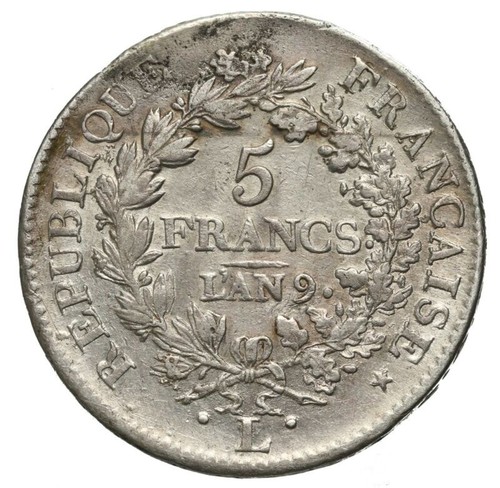
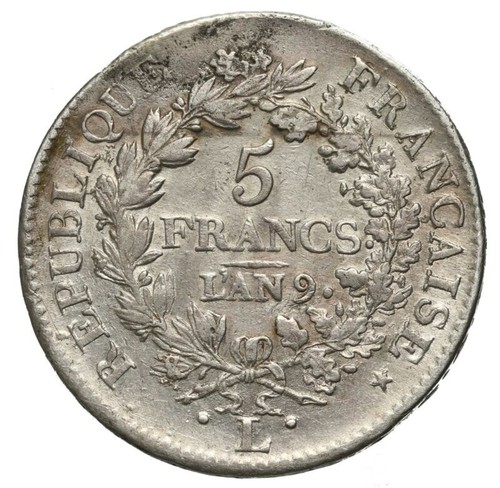
5 Francs (First Republic)
L'an 9 (1800–1801)
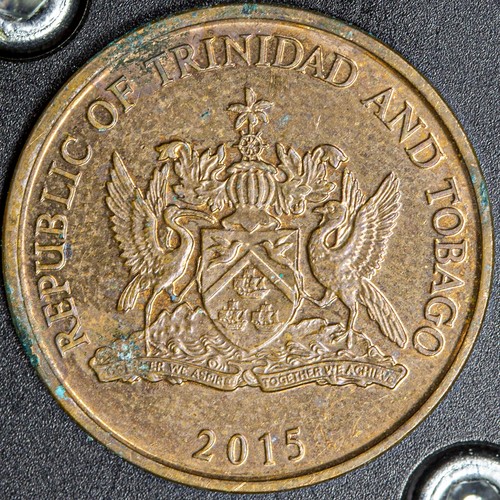
Trinidad and Tobago Dollar
2015
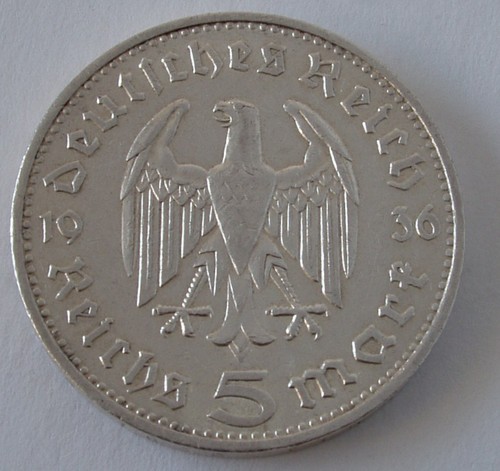
German 5 Reichsmark (Hindenburg)
1935–1936 (Hindenburg type with swastika)
5 Francs Semeuse
1960–1969
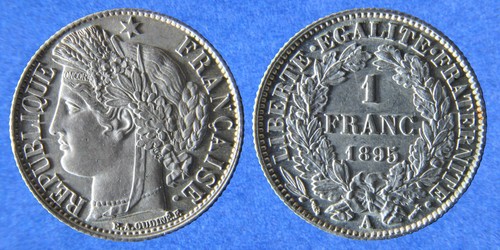
French Cérès 1 Franc
1849–1895
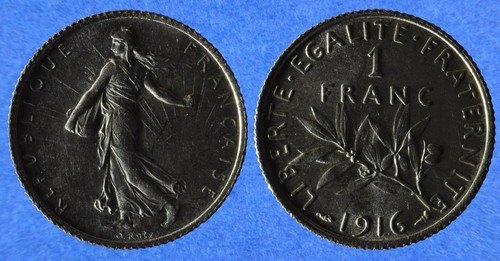
French Semeuse 1 Franc
1898–1920 (silver Semeuse 1 franc type)
France 50 Cent Euro
1999–present
Swiss 1 Franc
1861
France 20 Centimes
1962–2001 (Fifth Republic, Marianne / Lagriffoul type)
Swiss 2 Francs
1860
Austria-Hungary 15 Kreuzer
1807
Austria-Hungary 10 Kreuzer
1872 (issue shown)