
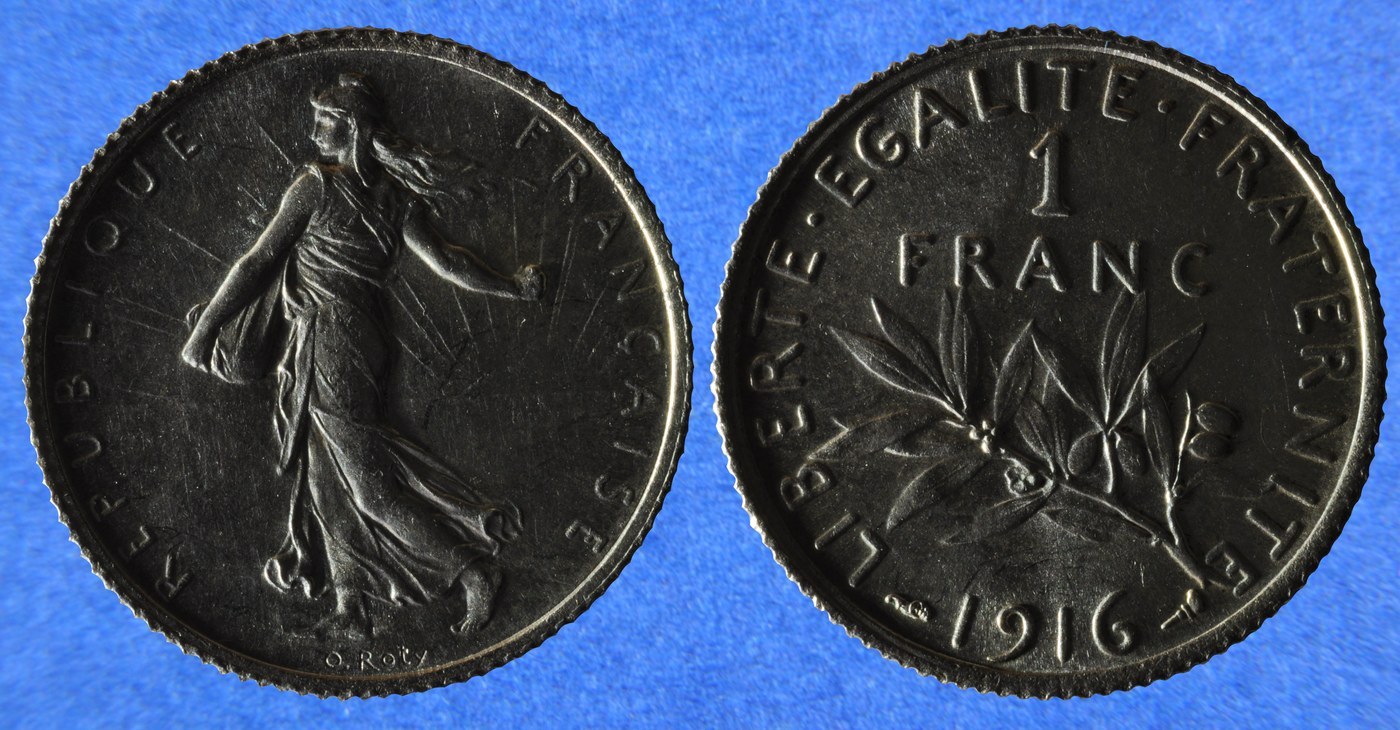
French Semeuse 1 Franc
France's classic silver 1 franc showing the Semeuse (Sower) with a liberty cap, backed by an oak-and-olive wreath around the value; this example is dated 1916.
- Country
- France
- Denomination
- 1 Franc
- Metal
- Silver
Got a coin like this?
Identify any coin from a photo, free.
Overview
The French Semeuse 1 Franc is a small silver circulation coin of the French Third Republic, famous for its graceful design of a woman sowing seed at dawn. The obverse shows the Semeuse (“the Sower”) striding and scattering grain while wearing a Phrygian liberty cap; the reverse encloses the denomination 1 FRANC within a wreath of oak and olive branches. The photographed example is dated 1916.
This type belongs to a celebrated family of French silver coins — the Semeuse also appeared on the 50 centimes and 2 francs — all sharing the same allegorical figure by the sculptor Oscar Roty. The 1 franc is the middle-sized member: a modest, everyday silver piece rather than a large crown.
As a widely struck circulation coin, the Semeuse 1 franc is common and affordable in most grades. It is valued today for its elegant classical design and its silver content rather than for great rarity.
History & Background
The Semeuse design was created by Louis-Oscar Roty, whose sowing figure first appeared in the 1890s and became one of the enduring emblems of the French Republic. The silver 1 franc bearing this motif was introduced late in the 19th century and struck through the following decades, spanning the years around the First World War, which is when the 1916 example shown here was produced.
The coin circulated during a turbulent period for French money. Wartime pressures strained silver supplies, and small silver denominations like the franc became increasingly difficult to keep in circulation. By the early 1920s the silver Semeuse franc gave way to base-metal coinage, ending the run of the silver type.
The Semeuse proved so beloved that France revived the motif much later on its 20th-century base-metal francs and again on some euro-era commemoratives, but those are separate, non-silver issues. The original silver Semeuse franc remains the classic form of the design.
How to Identify
Obverse: the Semeuse — a standing female figure facing left, walking into a rising sun, sowing seed from a bag, and wearing a Phrygian (liberty) cap. The legend REPUBLIQUE FRANCAISE appears around her, with the designer's name (O. ROTY) along the ground line.
Reverse (shown): the value 1 FRANC with the date, framed by a wreath of oak (left) and olive (right) branches tied at the base. The 1916 date sits with the denomination inside this wreath.
Size and metal: a small silver coin, noticeably smaller and lighter than a crown-sized piece, struck in a fairly high-grade silver alloy that gives it a bright white-to-grey tone. Its reeded edge and pale silver colour separate it at a glance from later base-metal francs. Small privy marks near the date (such as a torch or cornucopia and engraver's initials) indicate the Paris mint and workshop.
Value & Collectibility
The silver Semeuse 1 franc was struck in large numbers across many years, so it is a common and accessible coin. Well-worn to moderately circulated examples typically trade for a few dollars, valued largely for their silver content plus a small collector premium.
Condition drives most of the price. Crisp, lightly worn coins retaining sharp detail in the Sower and the wreath command more, and fully uncirculated or lustrous pieces can be worth substantially more than common circulated ones. Scarcer dates and mint varieties within the series carry additional premiums that a dated price guide can pinpoint.
Because values are modest and depend heavily on exact date, grade and silver spot price, treat any figure as a range: this is a coin bought for its beauty and silver rather than as a rarity. Always confirm the specific date against a current catalogue before assigning a value.
Frequently asked questions
Is the French Semeuse 1 Franc made of silver?
Yes. The classic Semeuse 1 franc of this era, including the 1916 example, was struck in a silver alloy. Later French francs revived the Sower design in base metal, so silver applies to the earlier dated type shown here.
Who is the woman on the coin?
She is the Semeuse, or “the Sower” — an allegory of the French Republic sowing seed at dawn while wearing a Phrygian liberty cap. The figure was designed by sculptor Oscar Roty.
Is a 1916 Semeuse 1 franc rare or valuable?
It is generally common. Circulated examples are inexpensive and valued mostly for silver content, while sharp uncirculated pieces are worth more. Exact worth depends on date, grade and silver price.
What is on the back of the coin?
The reverse shows the denomination 1 FRANC with the date, enclosed by a wreath of oak and olive branches. The country name REPUBLIQUE FRANCAISE appears with the Sower on the obverse.
French Semeuse 1 Franc guides
In-depth guides for identifying, valuing, and collecting French Semeuse 1 Franc.
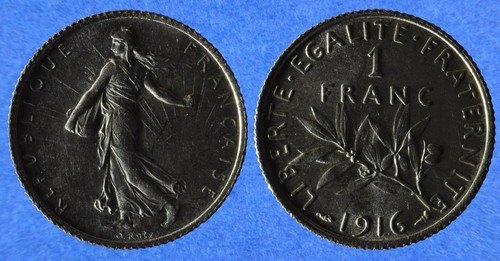
French Semeuse 1 Franc identified by the community
Real coins identified with Coin Identifier.
Other coins you may enjoy
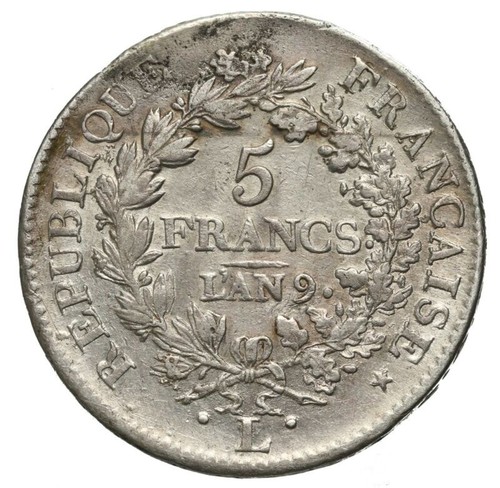
5 Francs (First Republic)
L'an 9 (1800–1801)
Trinidad and Tobago Dollar
2015
German 5 Reichsmark (Hindenburg)
1935–1936 (Hindenburg type with swastika)
5 Francs Semeuse
1960–1969
French Cérès 1 Franc
1849–1895
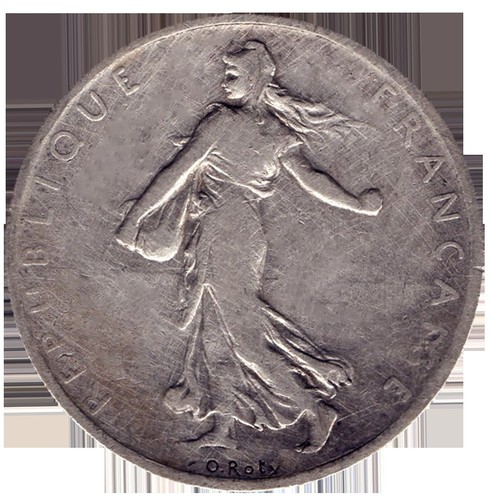
French Semeuse 2 Francs
1898–1920 (silver issues; pictured example dated 1899)
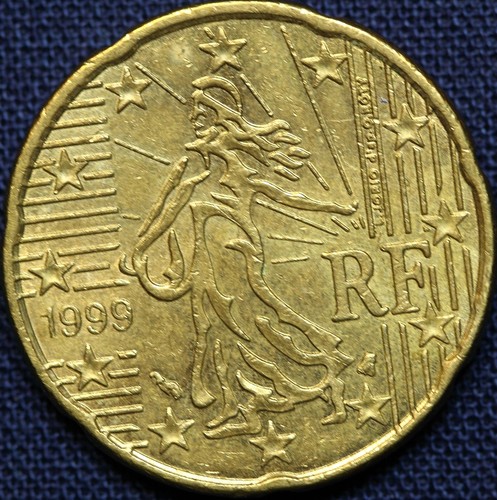
France 50 Cent Euro
1999–present
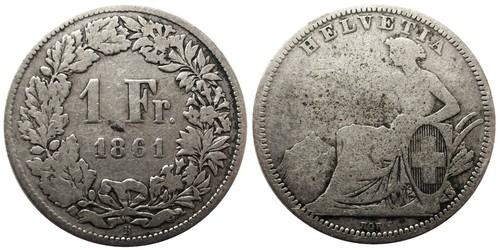
Swiss 1 Franc
1861
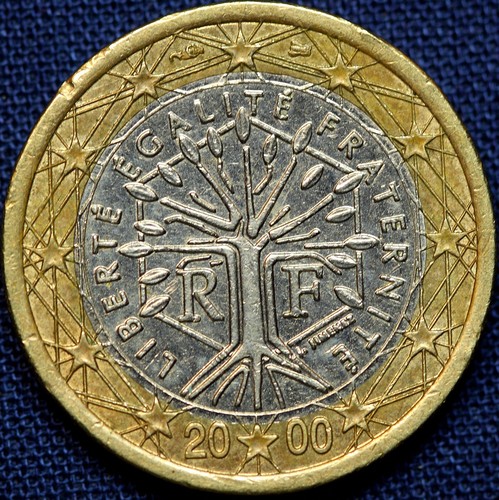
France 20 Centimes
1962–2001 (Fifth Republic, Marianne / Lagriffoul type)
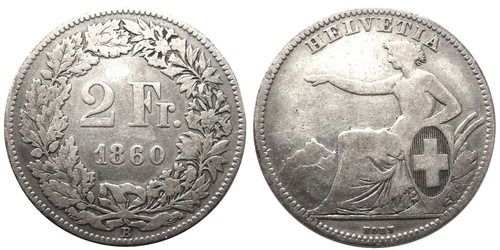
Swiss 2 Francs
1860
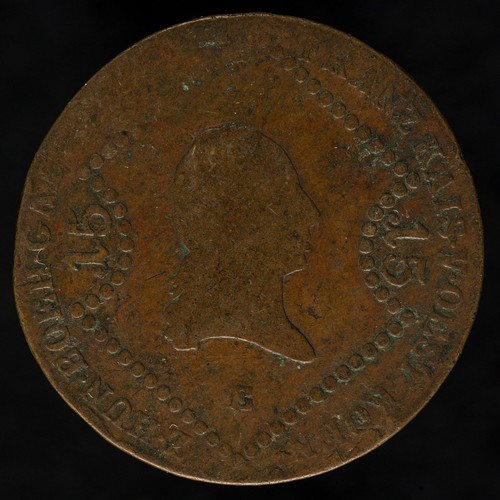
Austria-Hungary 15 Kreuzer
1807
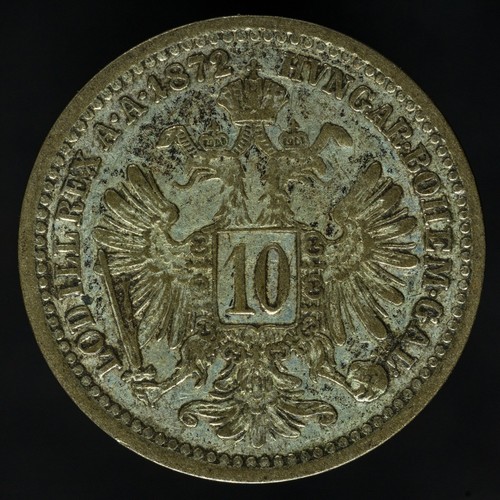
Austria-Hungary 10 Kreuzer
1872 (issue shown)