How to Identify the French Semeuse 1 Franc
A collector's guide to spotting the silver Semeuse 1 franc: the sowing figure, oak-and-olive wreath, small silver size and how to separate it from base-metal look-alikes.
Read the full French Semeuse 1 Franc encyclopedia entry →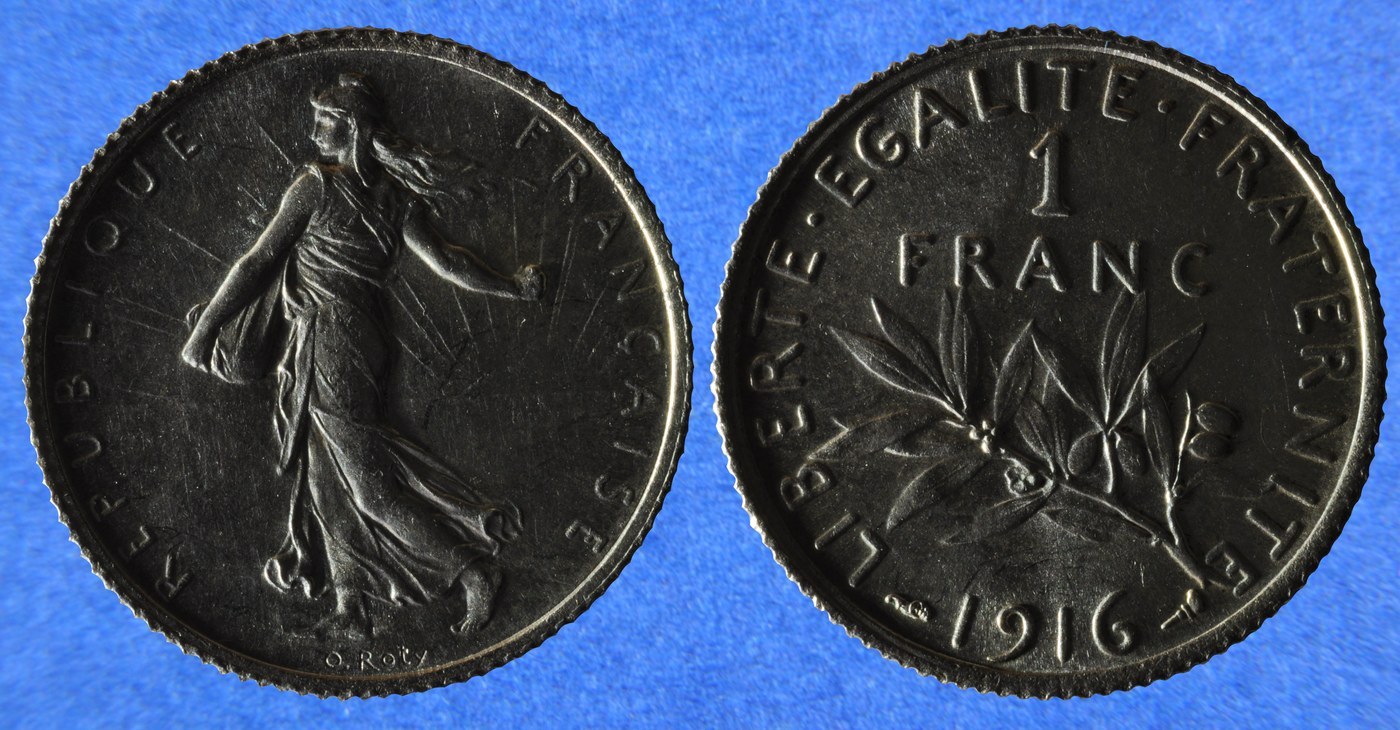
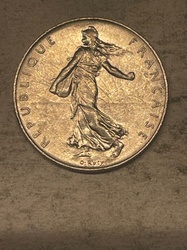
Start with the figure on the obverse. The Semeuse is unmistakable: a woman striding left into a rising sun, scattering seed from a bag, wearing a soft Phrygian liberty cap and flowing gown. The legend REPUBLIQUE FRANCAISE curves around her and the designer's signature O. ROTY runs along the ground line. If your coin shows this sowing figure with the cap, you are looking at a Semeuse type.
Confirm the denomination and date on the reverse. The value 1 FRANC with the year sits inside a wreath of oak (rounded lobed leaves) and olive (slender leaves) branches tied at the bottom. On the photographed coin the date reads 1916. The word FRANC (not CENTIMES) and the single numeral 1 separate it from the smaller 50 centimes and the larger 2 francs, which share the same Sower design.
Check size and metal. The silver Semeuse franc is a small, light coin with a bright to grey silver tone and a reeded edge — clearly smaller than a crown. A genuine silver piece has a distinct heft and colour compared with the later base-metal francs. Look near the date for tiny privy marks (an engraver's symbol such as a torch or cornucopia and initials): these identify the Paris mint and can help pin down the exact issue.
Beware of look-alikes. France revived the Sower on 20th-century base-metal francs (nickel, stainless steel, aluminium-bronze) and on later commemoratives; these carry the same figure but are not silver and often show larger or different denominations. Match the FRANC denomination, the pre-1920s date, and the silver appearance together before concluding you have the original silver type.
For authentication, weigh and measure the coin against published specifications for the silver franc and inspect the strike: genuine examples show crisp wreath veins and fine detail in the Sower's face and hands. Be cautious of altered dates, cast fakes with soft or grainy surfaces, and cleaned coins with unnatural brightness. When value or authenticity matters, compare against a reputable catalogue image or seek a professional opinion.
Frequently asked questions
How do I tell the silver franc from a modern base-metal Semeuse franc?
Check the date and metal. The original silver type carries an early date (into about 1920) and has a bright silver colour and heft. Later Sower francs are base metal, often larger, and lack the silver tone.
How can I distinguish the 1 franc from the 2 francs or 50 centimes Semeuse?
Read the reverse legend inside the wreath. It states the denomination directly — 1 FRANC, 2 FRANCS or 50 CENTIMES. The coins also differ in size, the 1 franc being the mid-sized member.
What do the small symbols beside the date mean?
They are mint privy marks and engraver's initials indicating the mint and workshop (typically Paris). They help identify the exact issue but do not change the coin's basic type.
How do I spot a fake or altered example?
Weigh and measure against published specs, and look for soft cast surfaces, grainy fields, tooled dates, or unnatural cleaning brightness. Sharp wreath and facial detail favour authenticity; when unsure, get a professional opinion.
French Semeuse 1 Franc identified by the community
Recent French Semeuse 1 Franc coins identified with Coin Identifier.