
How to Identify the India 10 Rupees
A step-by-step guide to reading the George VI portrait, dating the piece by its royal title, and confirming the denomination and silver content.
Read the full India 10 Rupees encyclopedia entry →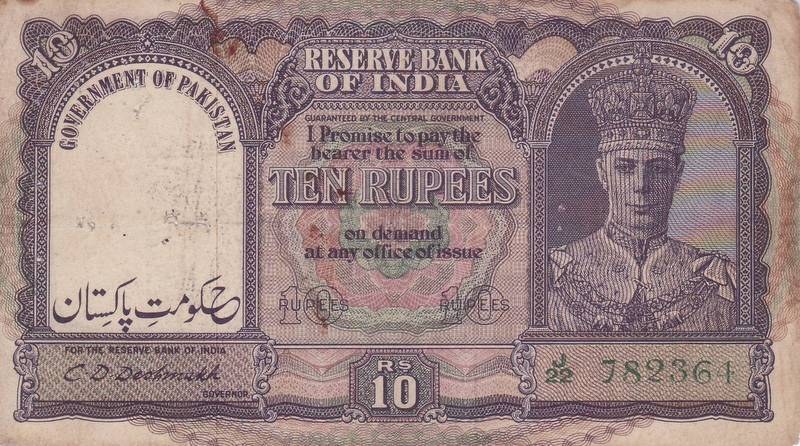
What It Is
This is a silver-era Indian coin from the reign of King George VI, identified in hand by his left-facing profile portrait on the obverse. The reference example shows the obverse only, so identification starts with the portrait and legend and finishes by confirming the reverse denomination.
Obverse (Front)
Look for the uniformed left-facing bust of George VI, ringed by a raised legend. The wording is the single most useful diagnostic: 'GEORGE VI KING EMPEROR' marks a pre-1947 imperial issue, while 'GEORGE VI KING' alone marks a later issue after the imperial title was dropped. Note the sharpness of the portrait's hair and jaw lines to gauge wear.
Reverse (Back)
The reverse is where the denomination lives, and it is not visible on the reference coin. Indian coinage of this period usually states the value and year in English and one or more Indian scripts. Confirm the denomination there — a stated '10 Rupees' or 'DAS RUPAYE' with a year — before accepting the value; until then, treat the denomination as recorded but unverified.
Size, Weight, Metal, and Edge
Measure the diameter, weigh the coin, and check the edge (reeded or plain). Genuine silver shows the heft, ring, and gradual toning of struck silver rather than the dull surface of plating over base metal. Match your measurements to published specifications for the specific George VI Indian issue rather than assuming from the portrait.
Telling It Apart from Look-Alikes
George VI's portrait appears on coins across the British Commonwealth, so a similar bust may belong to another country entirely — the surrounding legend and reverse design distinguish an Indian issue from a British, South African, or other Commonwealth coin. Within Indian coinage, the pre- and post-1947 title change also separates otherwise similar-looking pieces.
Authentication Cautions
Be cautious with high-denomination silver labels attached to portrait-only images: without the reverse legend, weight, and dimensions, a denomination cannot be confirmed. Watch for plated base-metal fakes, tooled or re-engraved legends, and cleaned surfaces that mute the portrait. When value is at stake, verify the full specifications and, for higher-grade or scarce pieces, seek third-party authentication.
Frequently asked questions
What is the fastest identifying feature?
The obverse legend around George VI's portrait. 'KING EMPEROR' means a pre-1947 issue; 'KING' alone means a later, post-independence issue.
Could this portrait belong to a coin from another country?
Yes. George VI appears on coins across the Commonwealth, so always confirm the country from the full legend and the reverse design rather than the bust alone.
How do I confirm it is silver and not plated?
Check weight and diameter against published specifications, listen for the clear ring of struck silver, and look for even silver toning; when in doubt, have it tested non-destructively.
Why should I verify the denomination separately?
The value and year are on the reverse, which is not visible here. Read the reverse legend to confirm the denomination before cataloging or valuing the coin.