
Coin Encyclopedia
Search and identify coins from around the world — with country, denomination, metal, mint, history, and how to tell them apart.
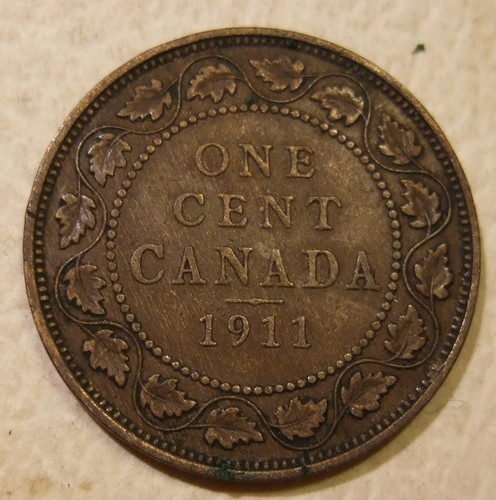
Canadian One Cent
Bronze Canadian large cent with a maple-leaf wreath reverse; the 1911 issue is the famous first-year 'Godless' cent lacking DEI GRATIA.
Canadian & Provincial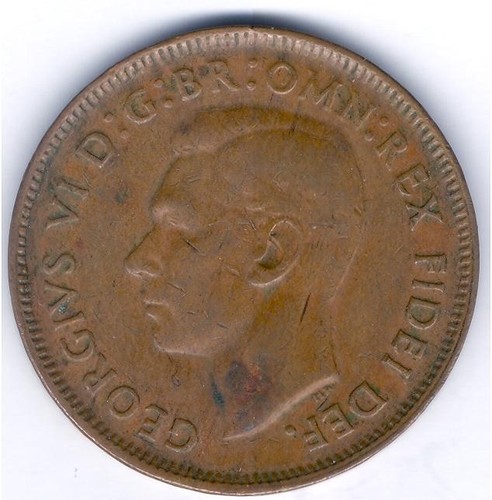
Australian Halfpenny
Small bronze pre-decimal Australian half penny; the George VI kangaroo type shown here was struck through the early 1950s.
Australian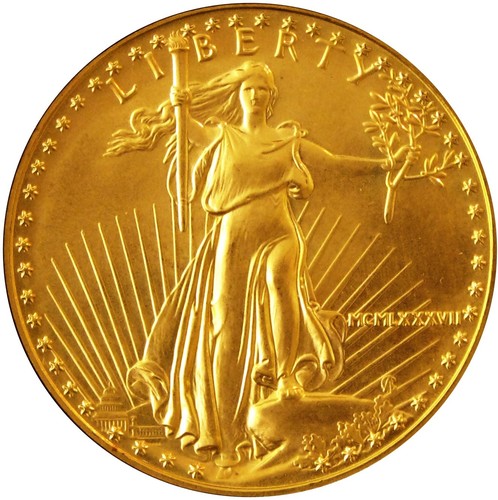
U.S. Gold Five Dollar (Half Eagle)
Modern U.S. $5 gold coin: Saint-Gaudens striding Liberty with torch on the obverse and a soaring eagle reverse; this piece is dated 1987.
Us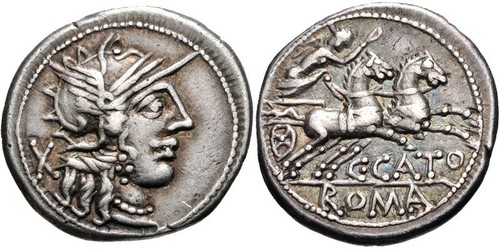
Denarius of C. Cato
Silver Roman Republican denarius struck at Rome in 123 BC by the moneyer C. Cato, with a helmeted head of Roma and Victory driving a chariot.
Ancient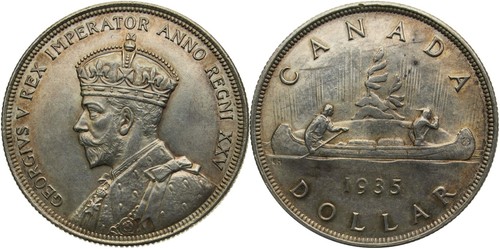
Canadian Silver Dollar
Canada's first circulating silver dollar, the 1935 Voyageur type, showing George V and a canoe with paddlers on the reverse.
Canadian & Provincial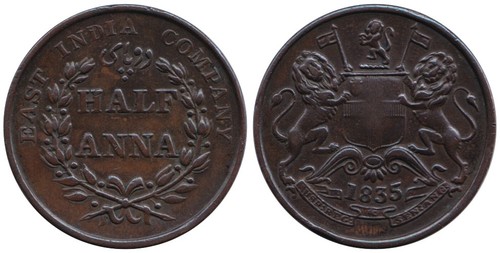
East India Company Half Anna
Large copper Half Anna of the East India Company, dated 1835, with laurel-wreath legend and the Company's heraldic lion-and-shield arms.
British India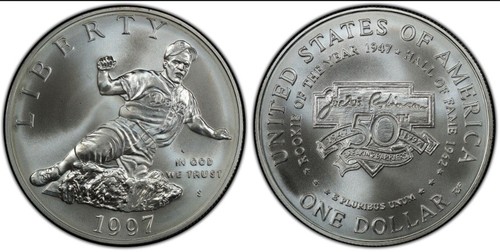
Jackie Robinson Silver Dollar
A 1997 U.S. silver dollar honoring Jackie Robinson and the 50th anniversary of his breaking baseball's color barrier, with an action portrait and eagle reverse.
Modern Commemorative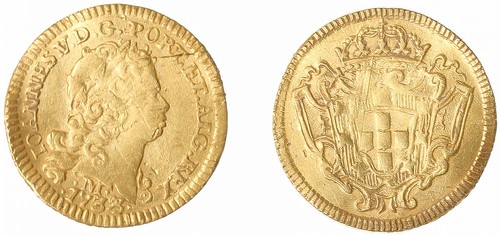
Half Escudo (800 Reis) of Joao V
A small Portuguese gold coin of King Joao V, valued at half an escudo (800 reis), with his laureate bust and a crowned Portuguese shield.
Colonial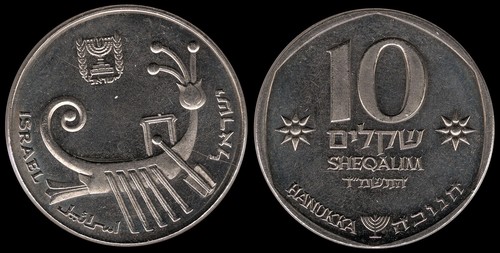
Israel 10 Sheqalim Hanukka Commemorative
A silver Bank of Israel commemorative from the annual Hanukka series, showing a historic Hanukka lamp with stars, dated 1983 and valued at 10 Sheqalim.
World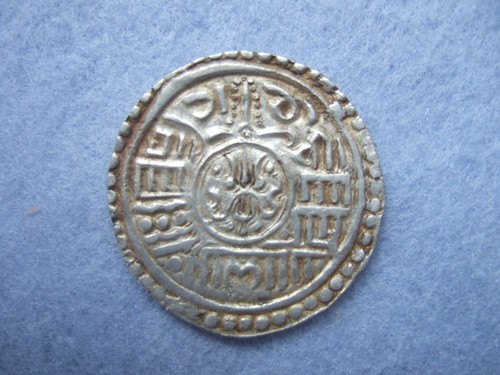
Nepalese Mohar
Silver mohar of the Nepalese Shah kingdom, with ornate Devanagari legends and auspicious symbols arranged around a mandala-style central design on both faces.
Himalayan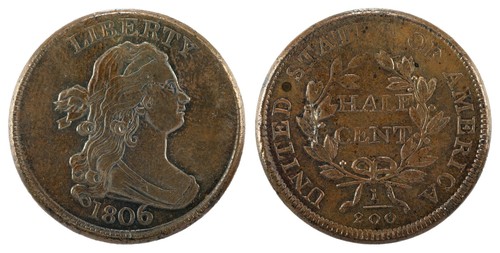
Draped Bust Half Cent
An early U.S. copper half cent showing draped Liberty with flowing hair; the smallest denomination the Mint ever struck, made 1800–1808.
Half Cent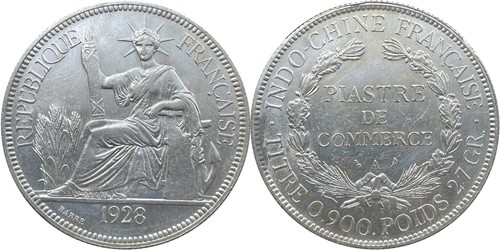
French Indochina Piastre
A 1928 silver piastre of French Indochina, its obverse showing seated Liberty with torch and laurel, its reverse reading UNION INDOCHINE FRANÇAISE in a floral wreath.
Southeast Asia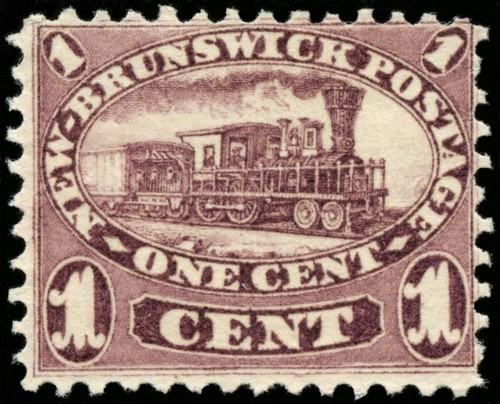
New Brunswick One Cent
A bronze one-cent piece dated 1860 showing a steam locomotive with NB and ONE CENT — a New Brunswick locomotive-type token distinct from the official 1861/1864 cent.
Canadian & Provincial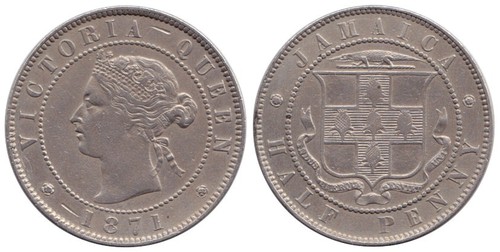
Jamaica Half Penny
An 1871 colonial Jamaica halfpenny in copper-nickel: young Queen Victoria facing left on the obverse, the crowned Jamaican shield of arms on the reverse.
Colonial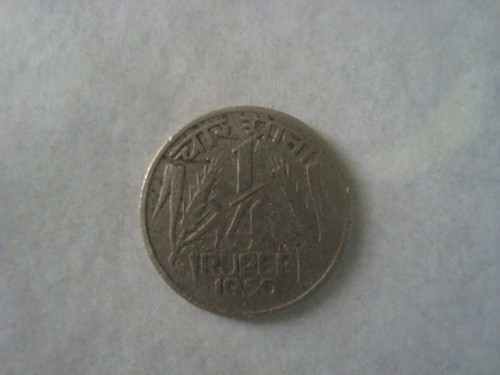
India Four Anna
An early Republic of India quarter rupee (four annas) of 1950, showing the Ashoka Lion Capital emblem with radiating rays and the country name INDIA.
Modern India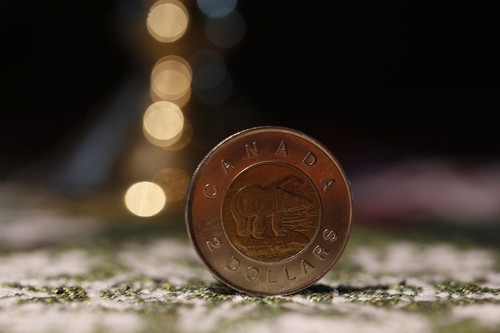
Canadian Two Dollar (Toonie)
Canada's bimetallic $2 coin, introduced in 1996 with a polar bear design; universally nicknamed the 'toonie' after the loonie dollar.
Canadian & Provincial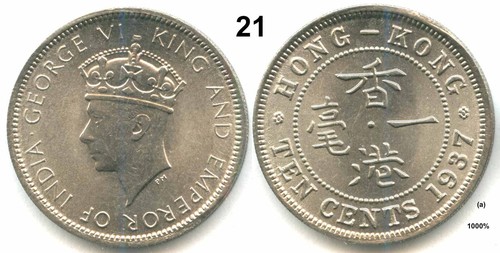
Hong Kong 10 Cents
A small silver 10-cent coin of British Hong Kong showing the crowned profile of King Edward VII, with 'HONG-KONG TEN CENTS' and Chinese characters on the reverse.
Circulation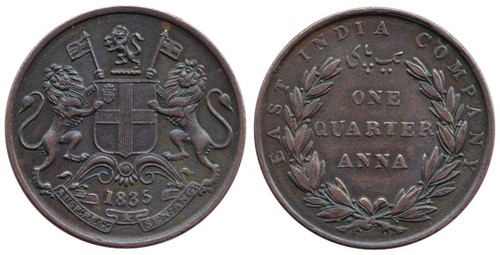
East India Company Quarter Anna
Large copper 1/4 anna of the East India Company dated 1835, with a heraldic lion-and-shield obverse and a laurel-wreath reverse.
British India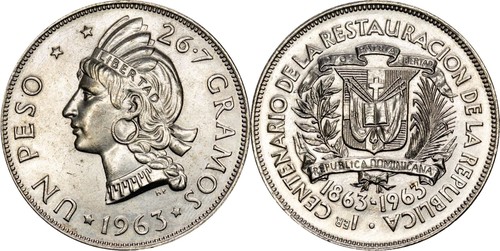
Restoration Anniversary Peso
A silver Dominican one-peso commemorative dated 1963, marking the centennial of the Restoration, with a Liberty head obverse and the national arms.
Commemorative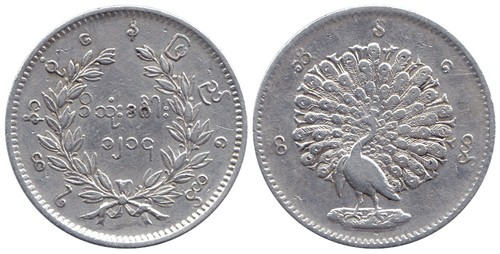
Burma One Kyat (Mindon Min)
Silver kyat of King Mindon Min's Burma, showing the royal peacock with spread tail on the obverse and the denomination within a wreath on the reverse.
Southeast Asia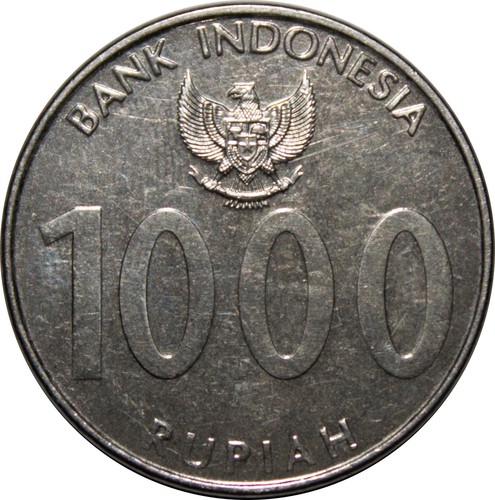
Indonesia 1000 Rupiah
A 2010 Indonesian 1000-rupiah circulation coin, its obverse bearing the Garuda Pancasila emblem and Bank Indonesia legend, its reverse a traditional monument design.
Southeast Asia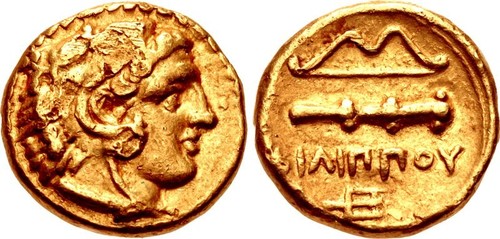
Alexander the Great Gold Quarter Stater
A small gold fraction of the Alexander the Great coinage, showing the head of Heracles and an eagle perched on a thunderbolt, the attributes of Zeus.
Ancient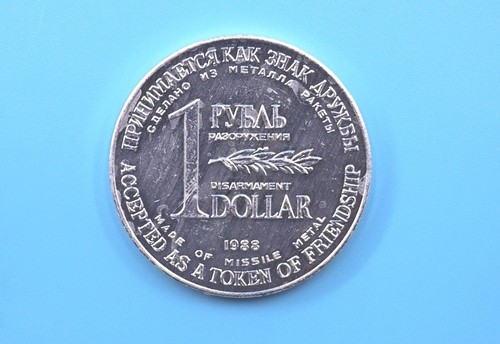
Disarmament Commemorative Ruble
A 1988 Soviet copper-nickel commemorative ruble marking the US-Soviet treaty that scrapped intermediate- and shorter-range nuclear missiles.
World Coins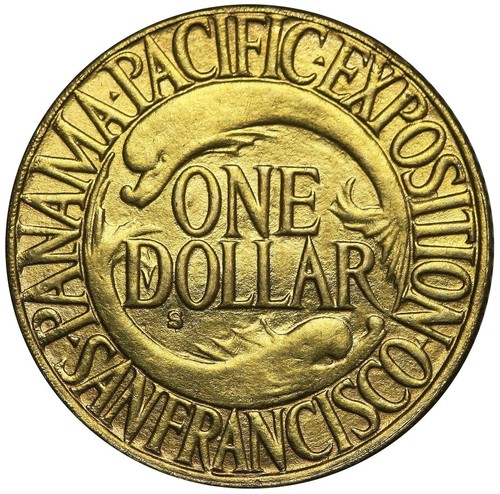
Panama-Pacific Exposition Dollar
An 1915 U.S. gold dollar struck for the Panama-Pacific International Exposition, showing a canal laborer and two dolphins encircling the denomination.
Classic Commemorative