
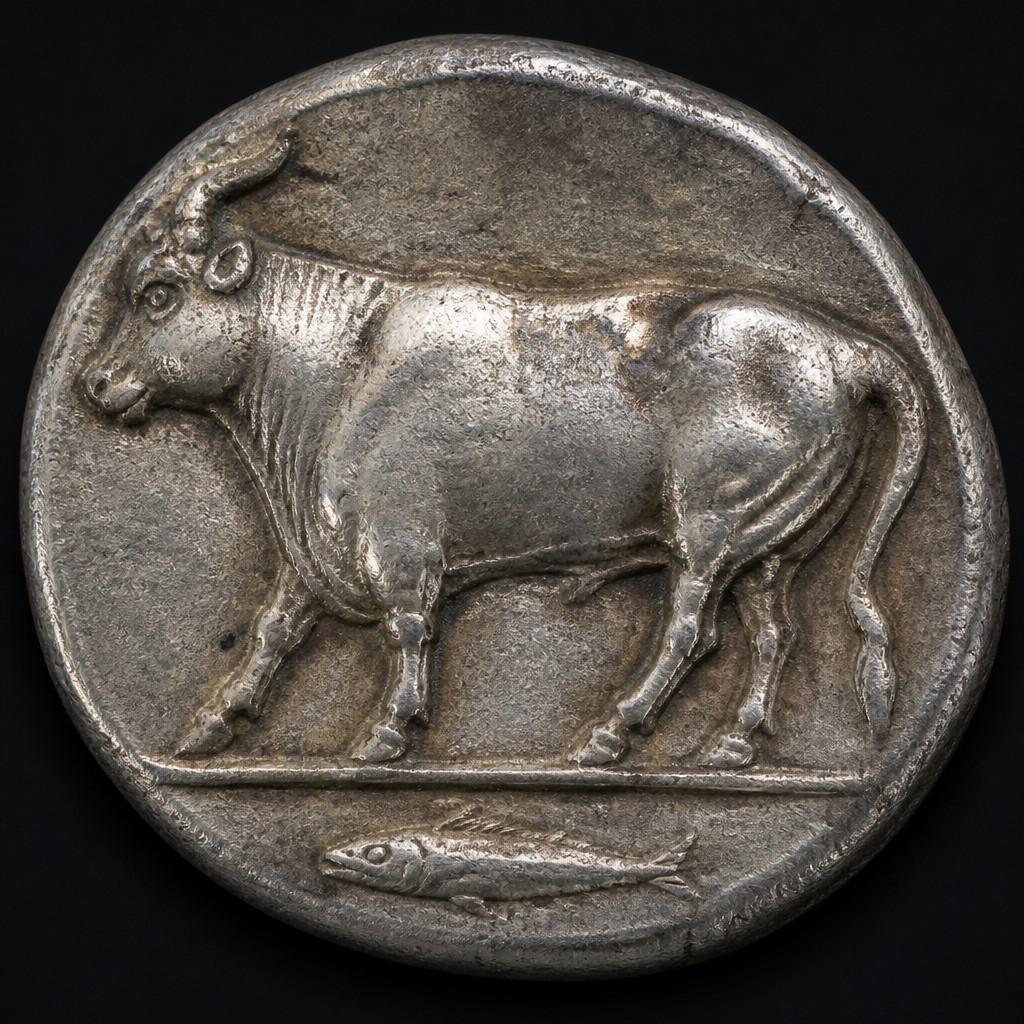
Sybaris Bull Stater
An archaic incuse-fabric silver stater from the legendarily wealthy city of Sybaris, showing a bull looking back over its shoulder, struck before the city's destruction in 510 BC.
- Country
- Ancient Greece (Sybaris, Lucania)
- Denomination
- Stater
- Metal
- Silver
Got a coin like this?
Identify any coin from a photo, free.
Overview
Sybaris was, before its dramatic destruction in 510 BC, one of the wealthiest and most luxurious cities of the Greek world, so renowned for opulence that 'sybaritic' remains an English word for extravagant self-indulgence. Its coinage, struck in the broad, thin incuse fabric shared with nearby Achaean colonies, centers on a bull, most often shown looking back over its shoulder, a powerful symbol of the city's agricultural and pastoral wealth.
Because Sybaris was destroyed and its mint fell silent so early, these staters represent a firmly bounded and historically poignant chapter of Magna Graecia coinage, prized by collectors for both their antiquity and their connection to one of the ancient world's most famous cautionary tales of excess.
History & Background
Sybaris was founded around 720 BC by Achaean and Troezenian settlers on the Gulf of Taranto in southern Italy, and by the sixth century BC it had grown immensely wealthy through fertile farmland and extensive trade networks reaching across the Italian peninsula. Ancient authors describe the Sybarites' legendary luxury, including claims of banning noisy trades near residential areas so citizens' sleep would not be disturbed.
The city's silver coinage, struck in the archaic incuse technique alongside neighbors like Kroton and Kaulonia, dates almost entirely to the decades before its downfall. In 510 BC, after a bitter conflict, the rival city of Kroton conquered and utterly destroyed Sybaris, reportedly diverting a river to bury its ruins, bringing an abrupt end to its independent coinage.
How to Identify
The obverse shows a bull standing or walking, most distinctively with its head turned backward over its shoulder, a pose unique enough to be immediately recognizable among Magna Graecia types. The reverse, following the shared incuse technique of the region, presents a sunken mirror-image of the same bull. The city's abbreviated ethnic, often rendered as the retrograde letters 'VM' (an archaic rendering related to the city's name), appears in the field.
Collectors identify genuine Sybaris staters by the specific backward-turning bull pose combined with the incuse technique and archaic lettering style; later imitative or restruck types from other mints occasionally borrowed similar bull imagery, so attribution relies on close comparison of style, fabric, and legend.
Value & Collectibility
Sybaris staters are scarce and historically significant, commanding strong interest from collectors of archaic Greek coinage. Prices for legible, reasonably struck examples generally start in the low thousands of dollars, with well-centered, sharply struck pieces reaching considerably higher at auction due to the type's rarity and historical resonance.
Because the entire coinage was produced within a narrow window before the city's destruction, supply is inherently limited, and demand is bolstered by the coin's connection to one of antiquity's most famous stories of a city's rise and catastrophic fall.
Frequently asked questions
Why is Sybaris famous?
Ancient Sybaris was renowned for its extraordinary wealth and luxury, so much so that the English word 'sybaritic' derives from its name.
What happened to the city?
In 510 BC, the rival city of Kroton defeated and completely destroyed Sybaris after a prolonged conflict, ending its independent existence and coinage.
Why does the bull look backward?
The reversed-head bull is simply the distinctive artistic convention chosen by Sybaris's die engravers, making the type instantly recognizable among Magna Graecia coinage.
What does 'VM' mean on the coin?
It is an abbreviated, archaic rendering of the city's ethnic name in the local Achaean alphabet, often appearing retrograde.
Other coins you may enjoy
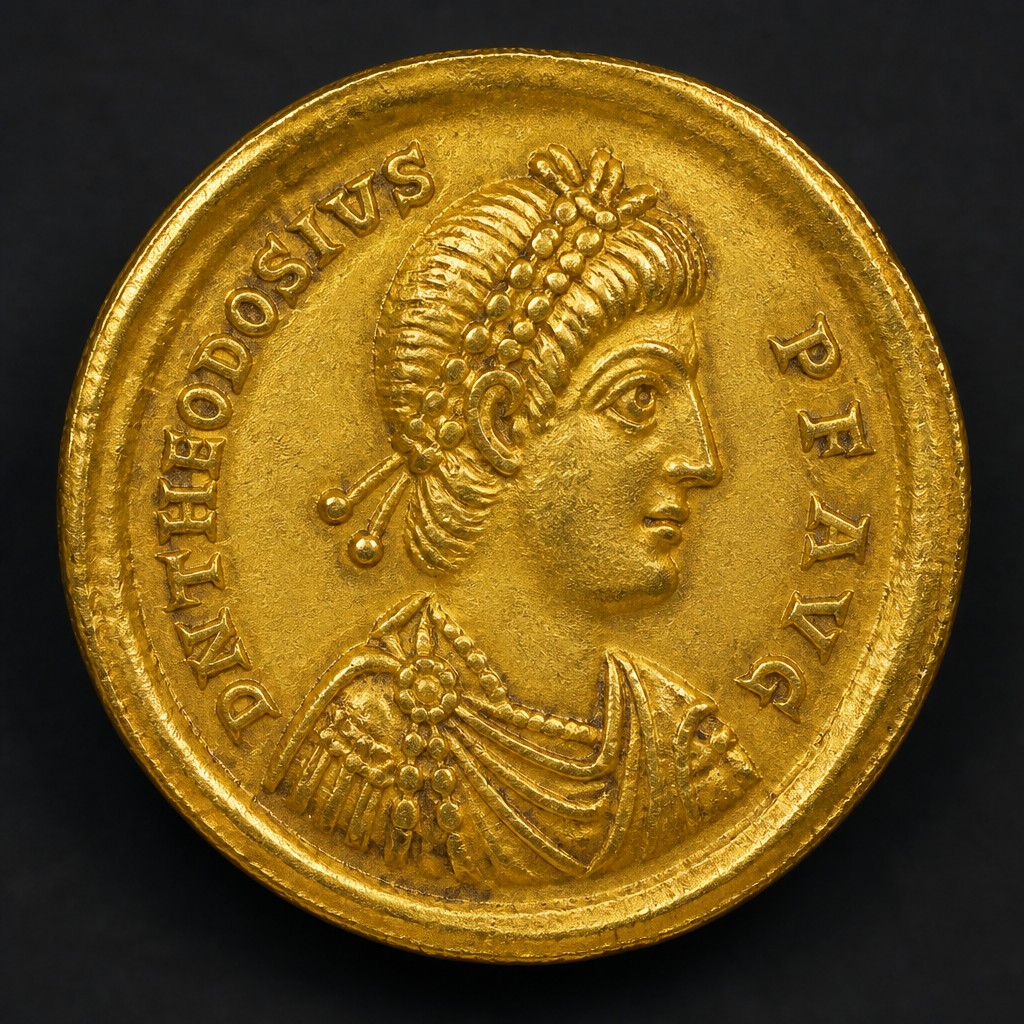
Theodosius I Solidus
379–395 AD
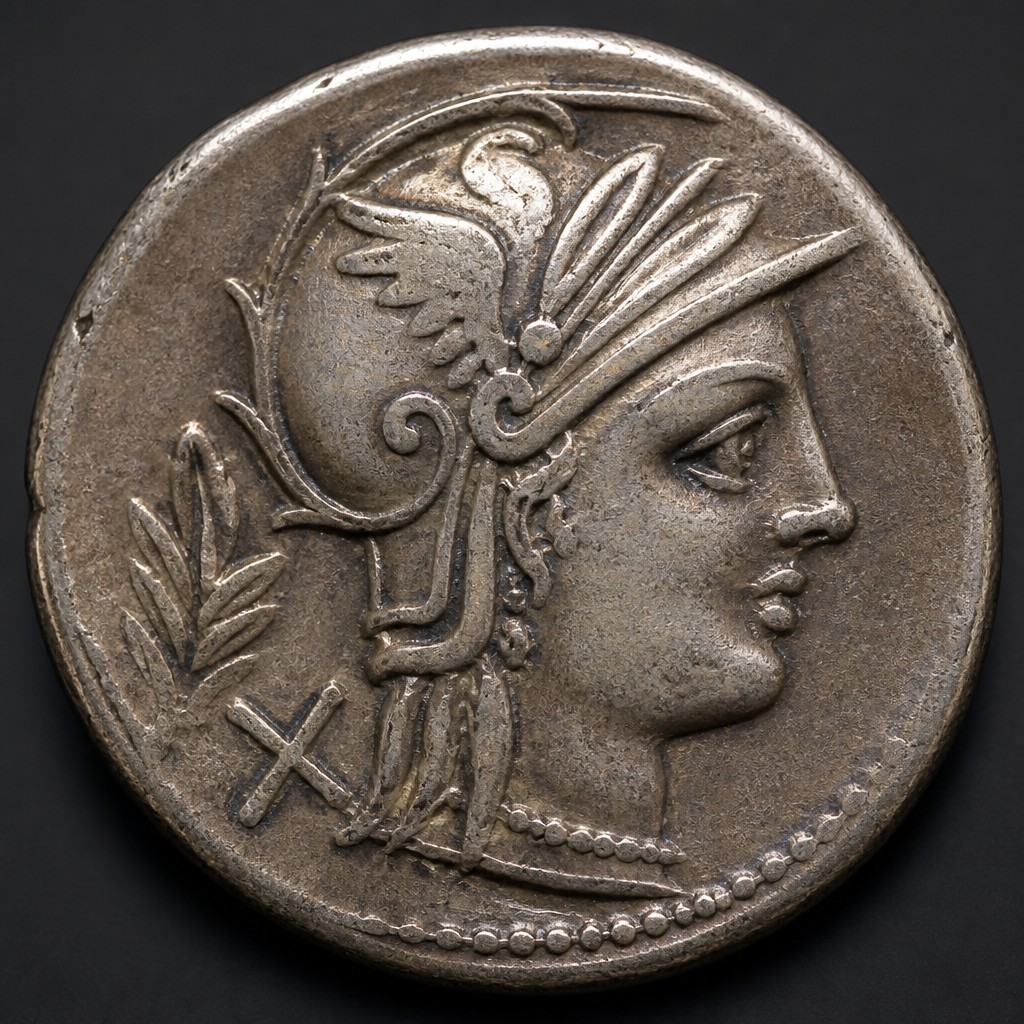
Republican Victoriatus
c. 211–170 BC
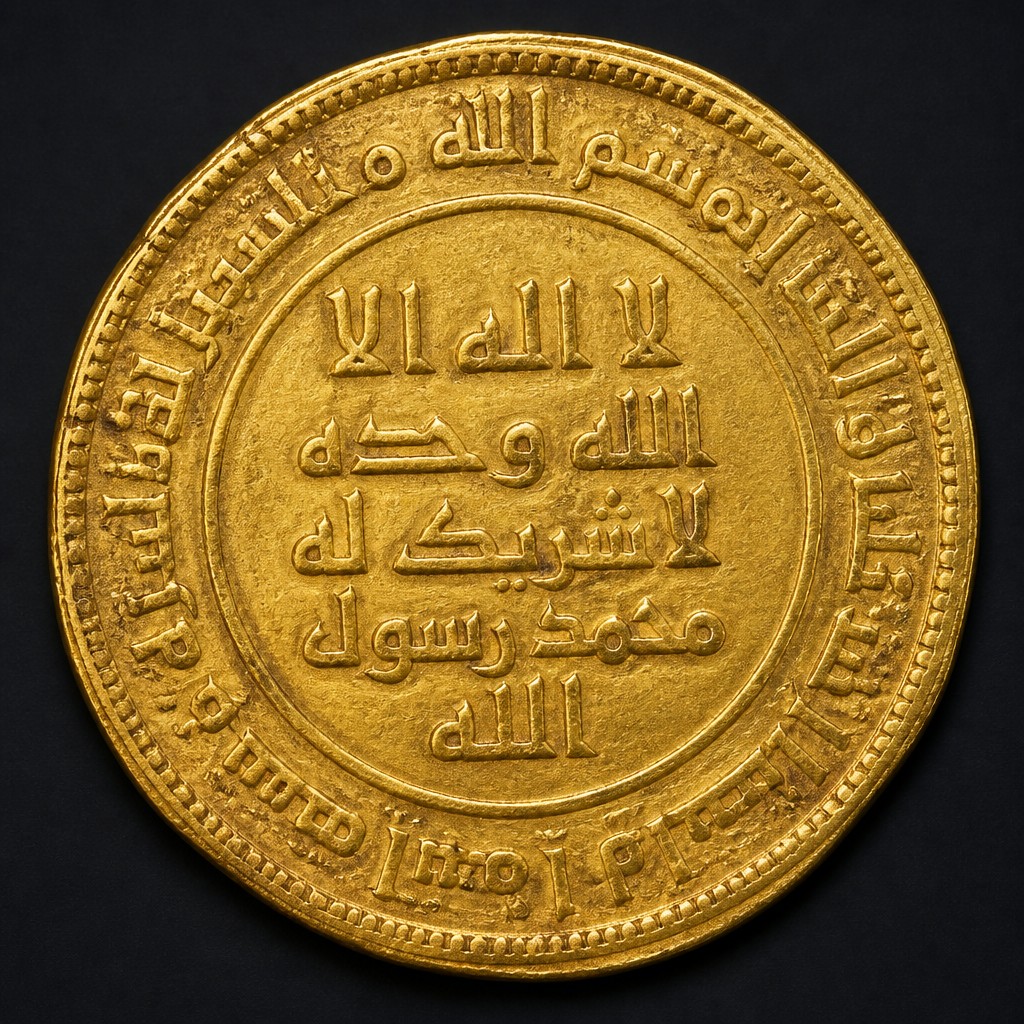
Islamic Gold Dinar (Umayyad)
c. 696–750 AD
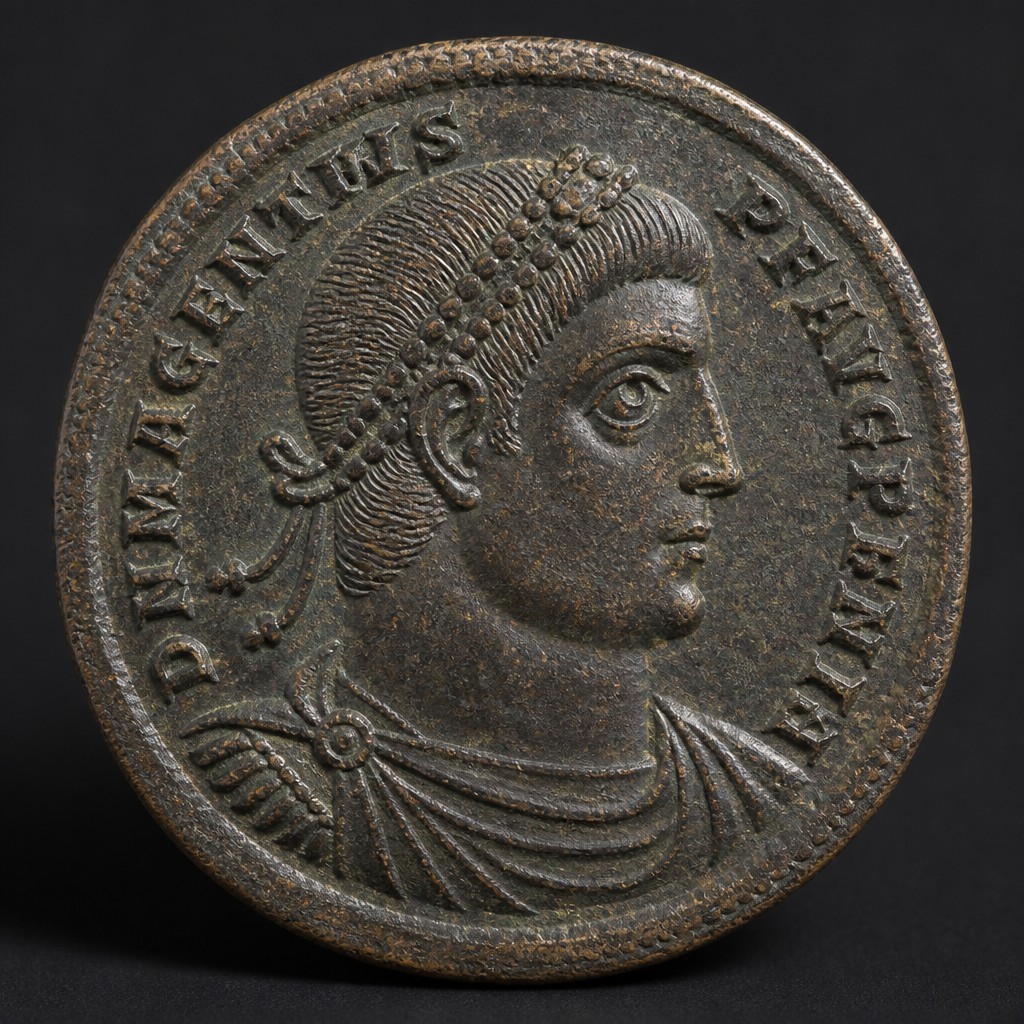
Magnentius Double Centenionalis
350–353 AD
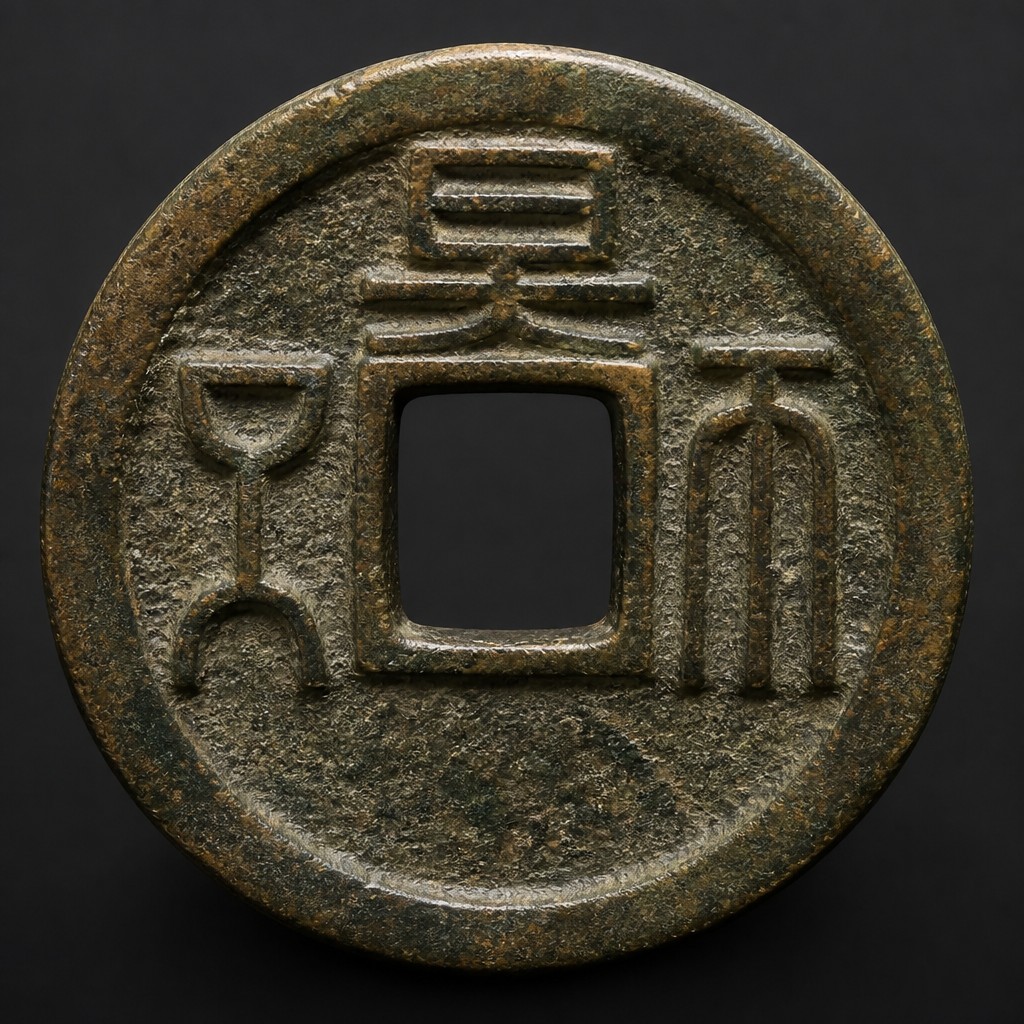
Chinese Wu Zhu Cash
118 BC – 618 AD
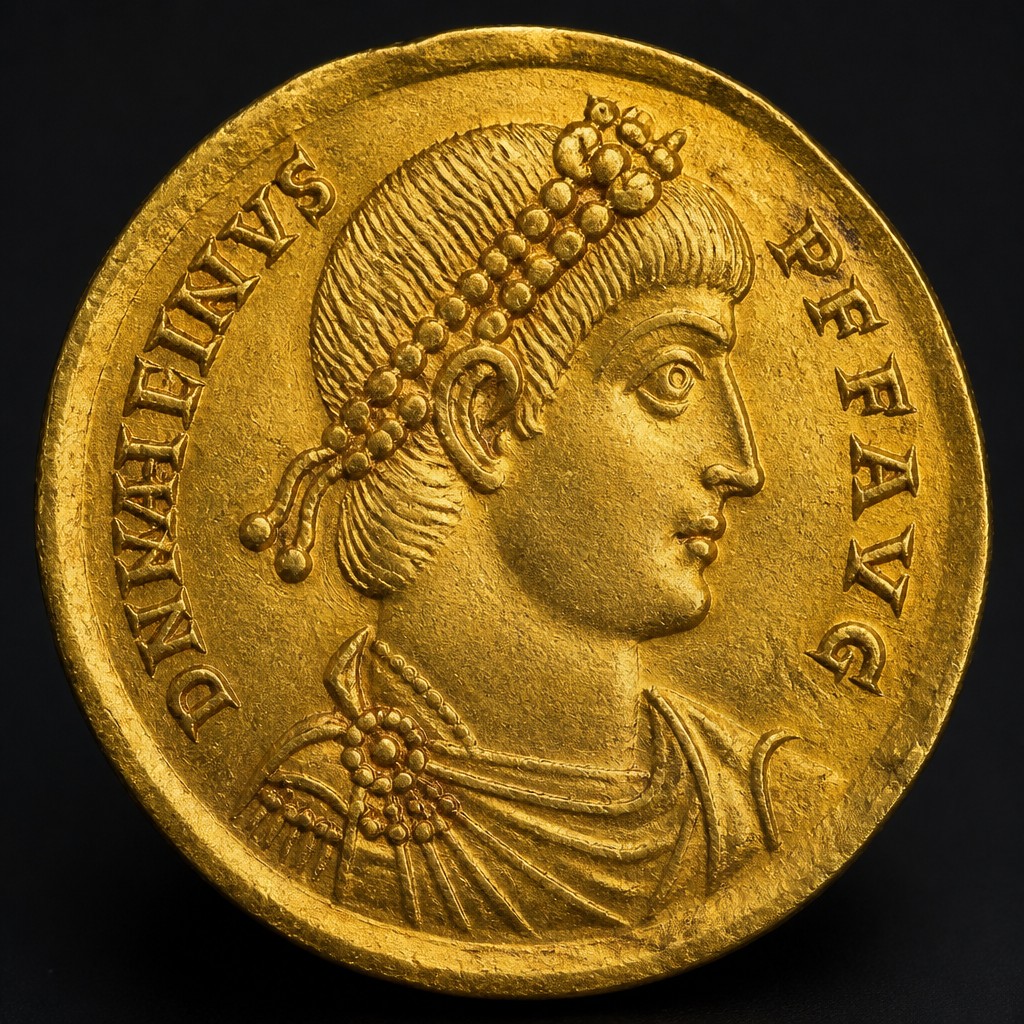
Valentinian I Solidus
364–375 AD
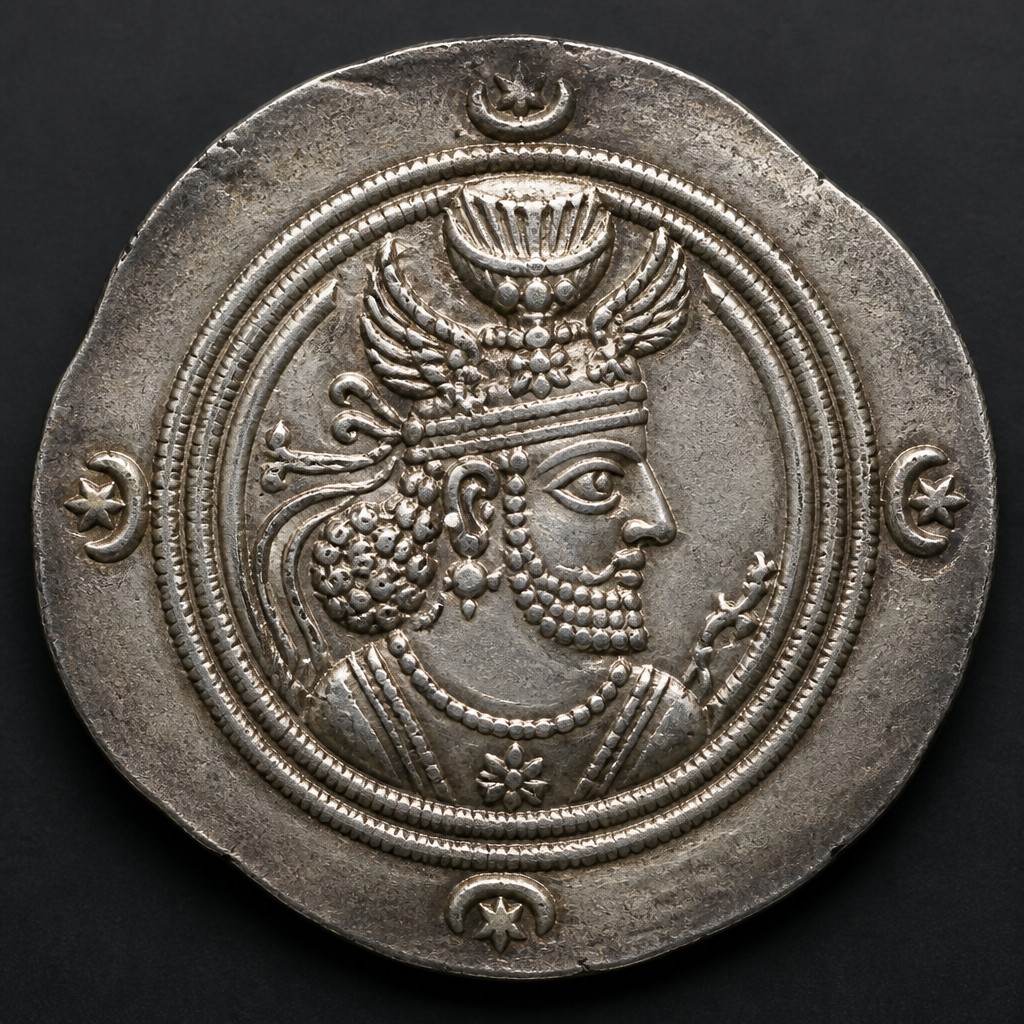
Sassanian Silver Drachm
c. 224–651 AD
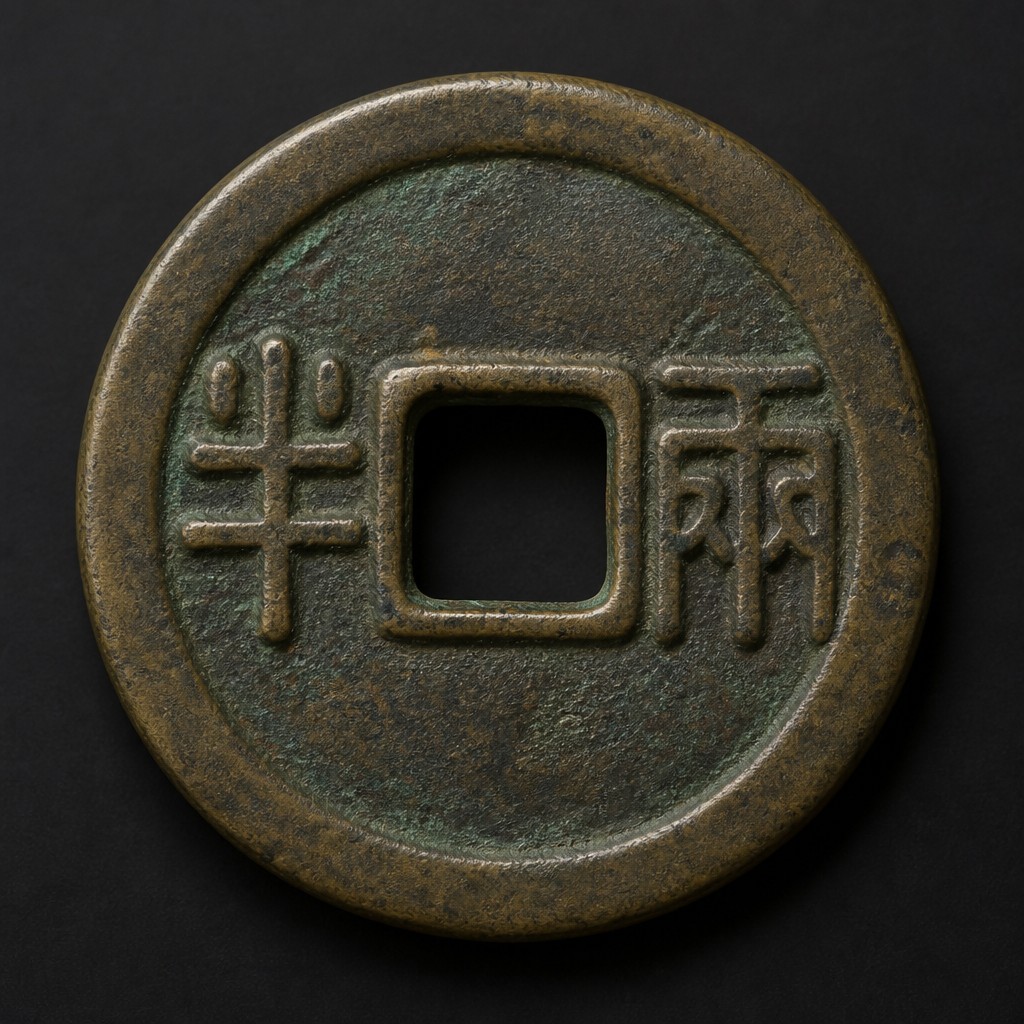
Chinese Ban Liang Cash
c. 221–118 BC
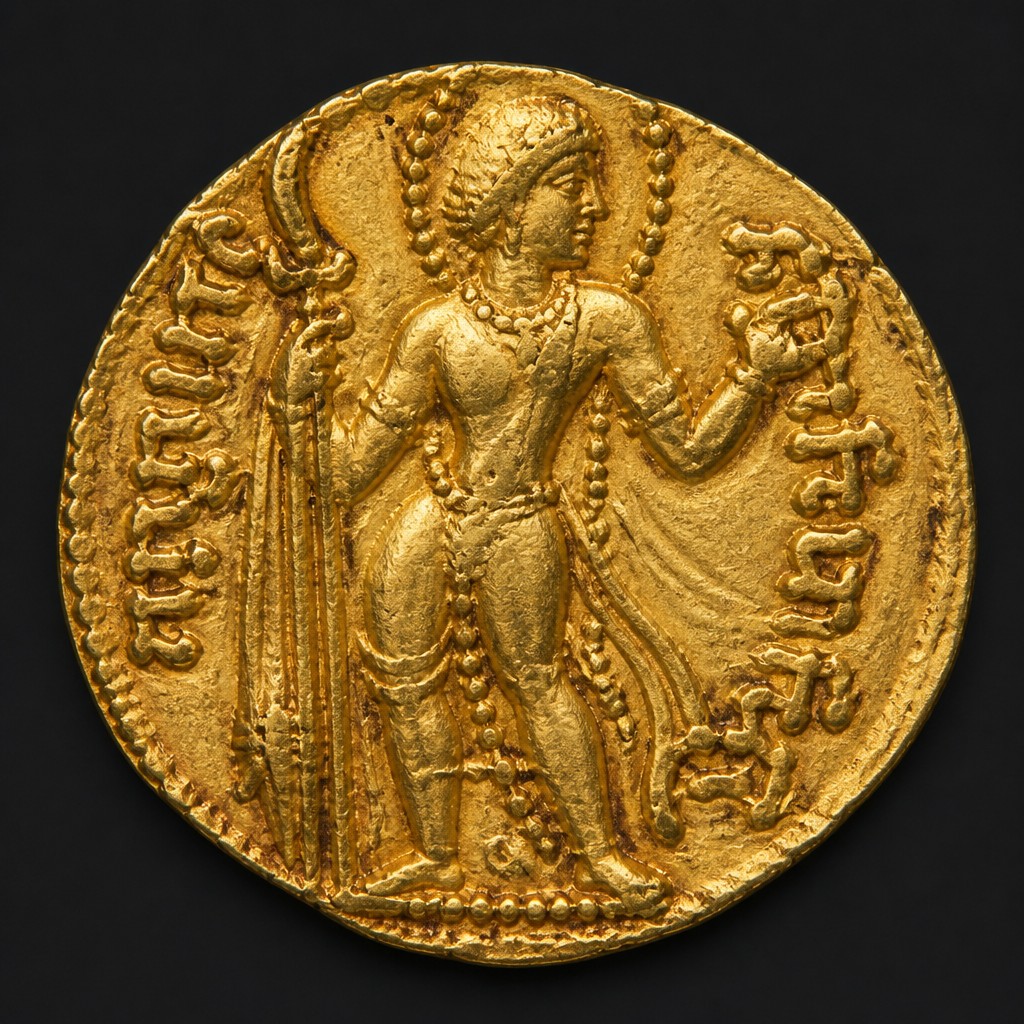
Gupta Empire Gold Dinar
c. 320–550 AD
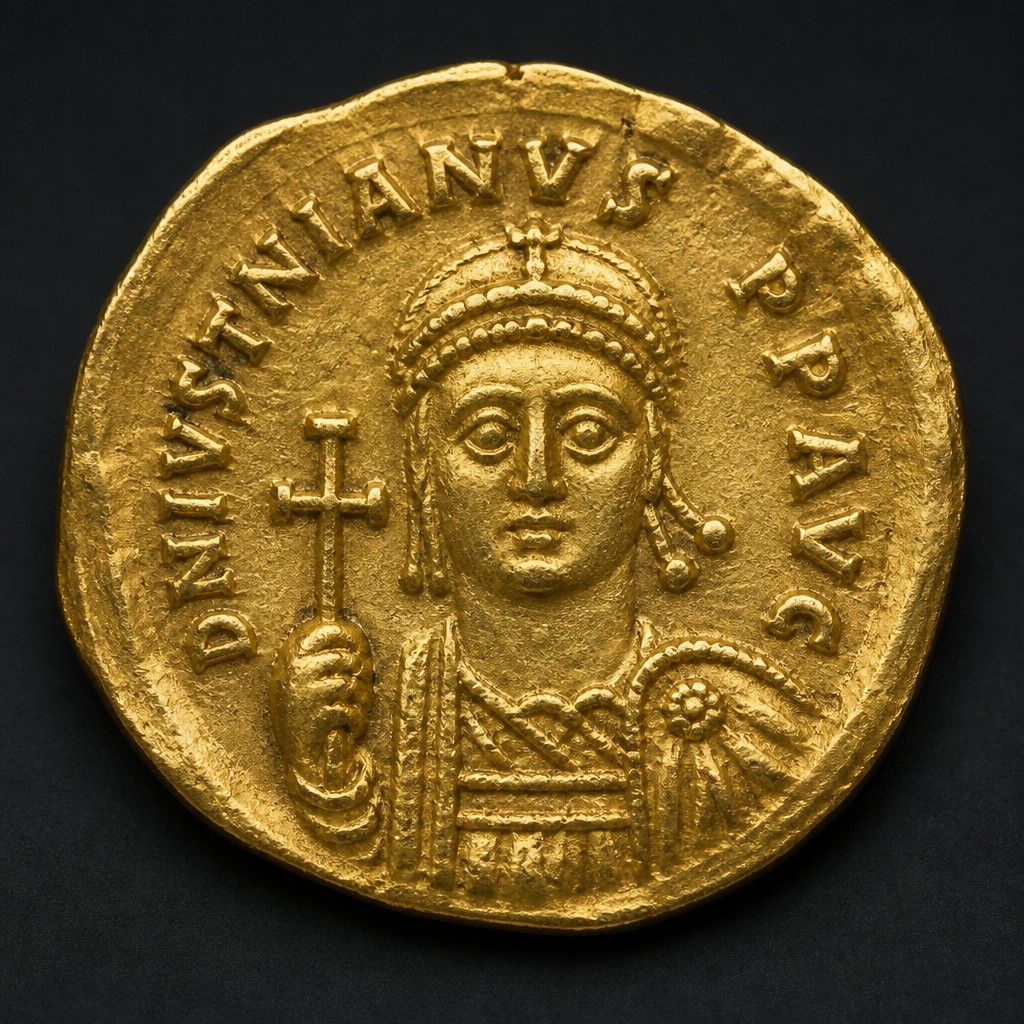
Byzantine Gold Tremissis
c. 4th–7th century AD
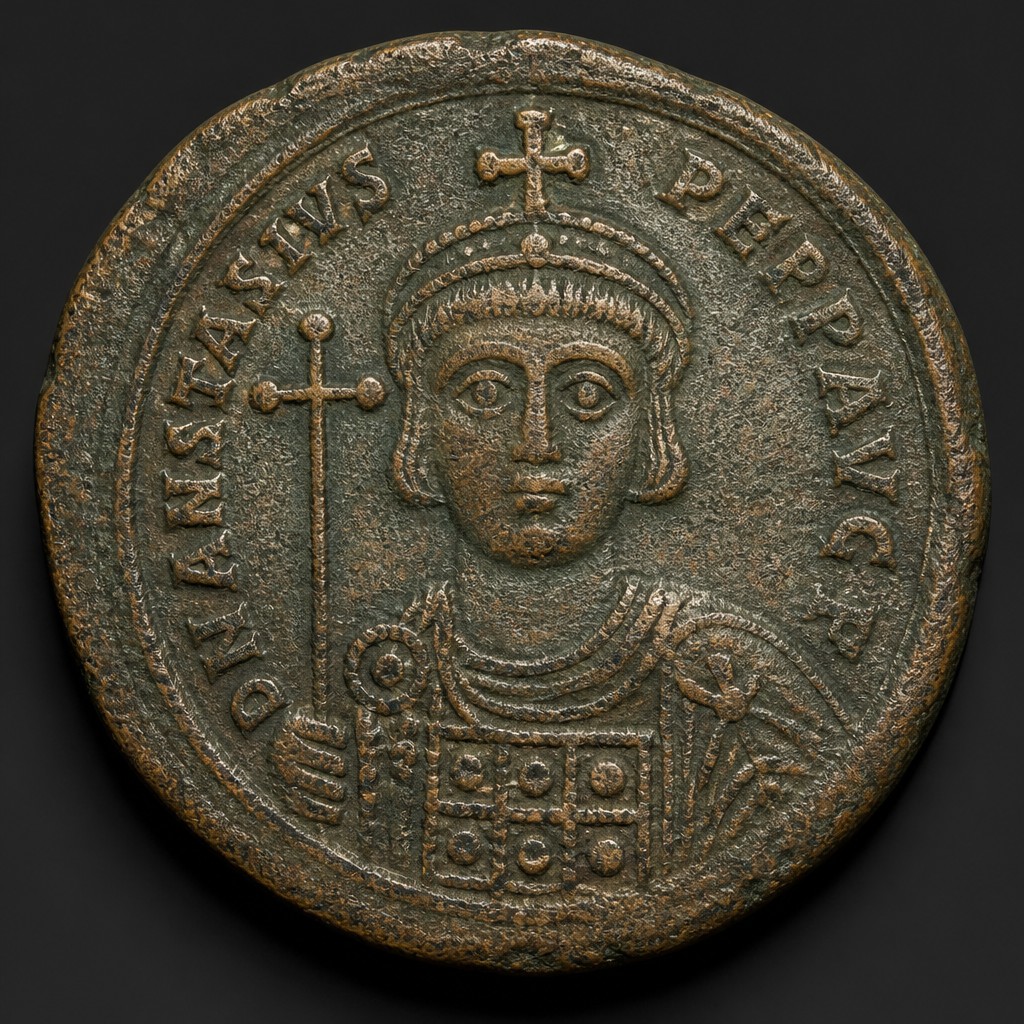
Byzantine Follis
498–c. 11th century AD
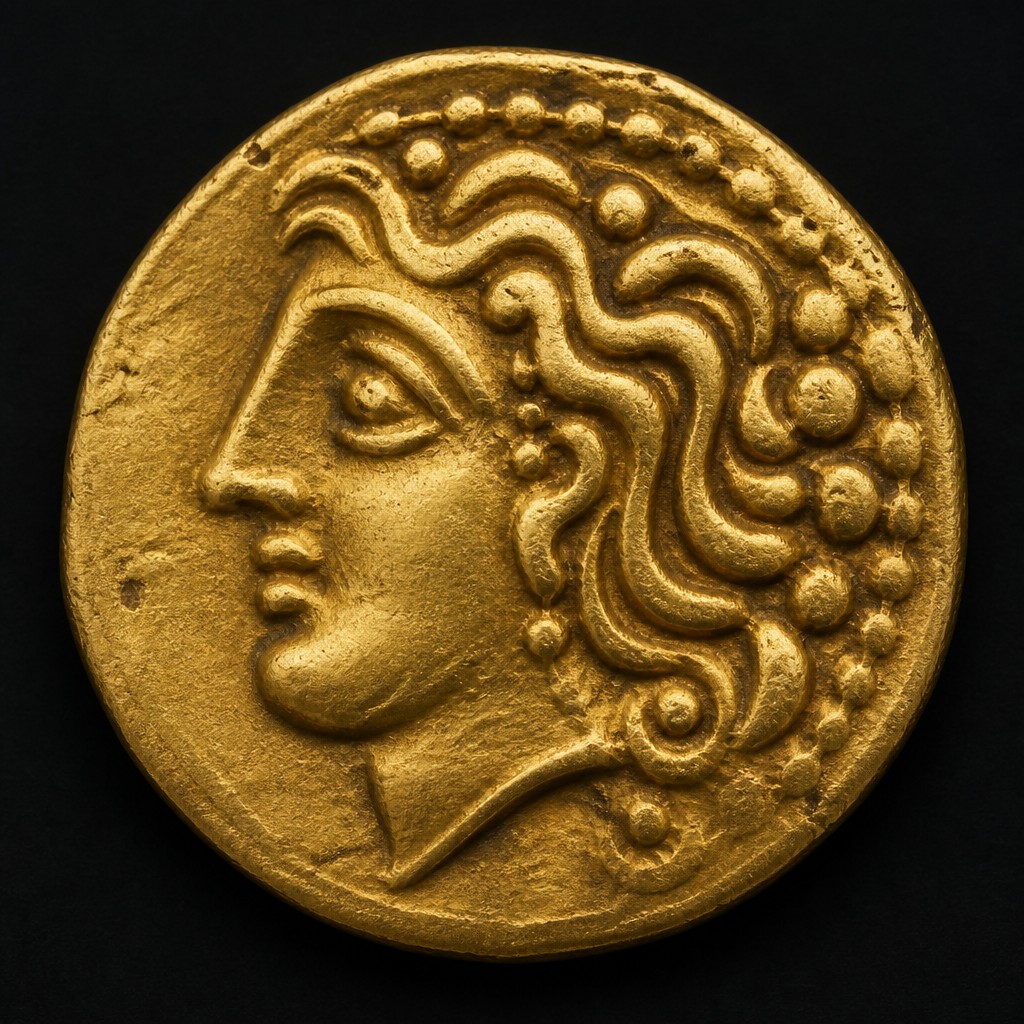
Celtic Gold Stater
c. 3rd century BC – 1st century AD