
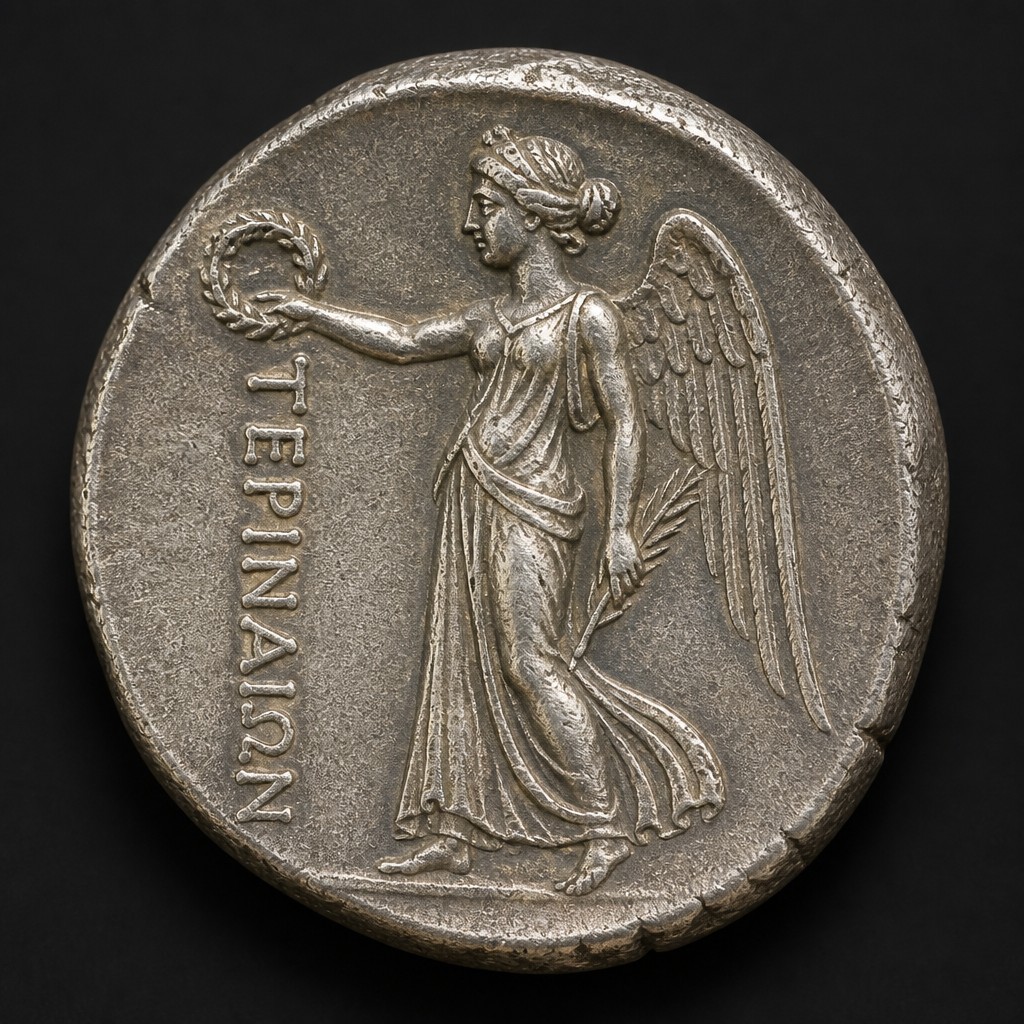
Terina Nike Nomos
A silver nomos from the South Italian city of Terina, celebrated among collectors for its graceful depictions of Nike, the winged goddess of victory, on the reverse.
- Country
- Ancient Greece (Terina, Bruttium)
- Denomination
- Nomos (Stater)
- Metal
- Silver
Got a coin like this?
Identify any coin from a photo, free.
Overview
Terina, a small but prosperous colony in Bruttium (modern Calabria), produced some of the most artistically admired coinage of Magna Graecia thanks to its recurring images of Nike in varied, elegant poses. The nomos (the South Italian term for the standard silver stater) typically pairs a serene female head, usually identified as the local nymph Terina, with a winged Nike on the reverse shown seated, standing, or engaged in some symbolic action.
Collectors value these coins for the sheer variety and beauty of the Nike compositions, which changed from issue to issue over roughly a century of production, making Terina a favorite specialty area within ancient Greek numismatics.
History & Background
Terina was founded around the sixth century BC, traditionally as a colony of Croton, on the western coast of Bruttium in southern Italy. Its coinage flourished in the fifth and fourth centuries BC, a period when many Greek colonies in Italy competed to produce visually distinctive silver to facilitate trade and express civic pride.
The city's choice of Nike as a reverse type, rather than a more common animal or deity emblem, is thought to reflect either a specific commemorated victory or simply the city's wish to align itself with the broader Greek cultural celebration of triumph and athletic success. Terina was eventually absorbed into the shifting political landscape of southern Italy as Bruttian and later Roman power expanded through the region.
How to Identify
The obverse typically depicts the head of the nymph Terina facing right or left, her hair bound with a simple band, sometimes wearing earrings and a necklace, rendered in the refined classical style typical of South Italian die engravers. The reverse shows Nike in one of several poses across different issues: seated on a stool or cippus, standing while fastening a helmet to a trophy, holding a caduceus, or flying with wings outstretched.
The civic legend, rendered as the city ethnic in Greek letters (a form of 'Terinaion'), appears near the figure, and the coins are struck in the classic broad, thin fabric typical of the nomos denomination, distinct from the thicker fabric of mainland Greek tetradrachms. Because so many Nike variants exist, specialists often catalog Terina coinage by the specific pose and attributes of the goddess.
Value & Collectibility
Terina nomoi are moderately scarce and command solid interest from collectors specializing in South Italian Greek coinage. Well-struck, well-centered examples with an attractive Nike composition and full obverse detail typically trade from roughly one to several thousand dollars, with exceptional artistic strikes reaching considerably higher at auction.
As with most Greek silver, value depends heavily on strike quality, centering, and surface preservation rather than a numeric grade alone, and certain rarer Nike poses attract premium bidding among specialist collectors.
Frequently asked questions
What does 'nomos' mean?
Nomos is the term used in South Italian Greek coinage for what is elsewhere called a stater, the standard large silver denomination.
Who is depicted on the obverse?
The obverse generally shows the head of Terina, the eponymous local nymph associated with the city.
Why is Nike shown in so many different poses?
Terina issued coinage over roughly a century, and engravers varied the Nike composition across successive issues, giving the series unusual artistic variety.
Is this the same as a Greek mainland stater?
It is the same general denomination class, though South Italian issuers used the local term nomos and often favored a broader, thinner fabric.
Other coins you may enjoy
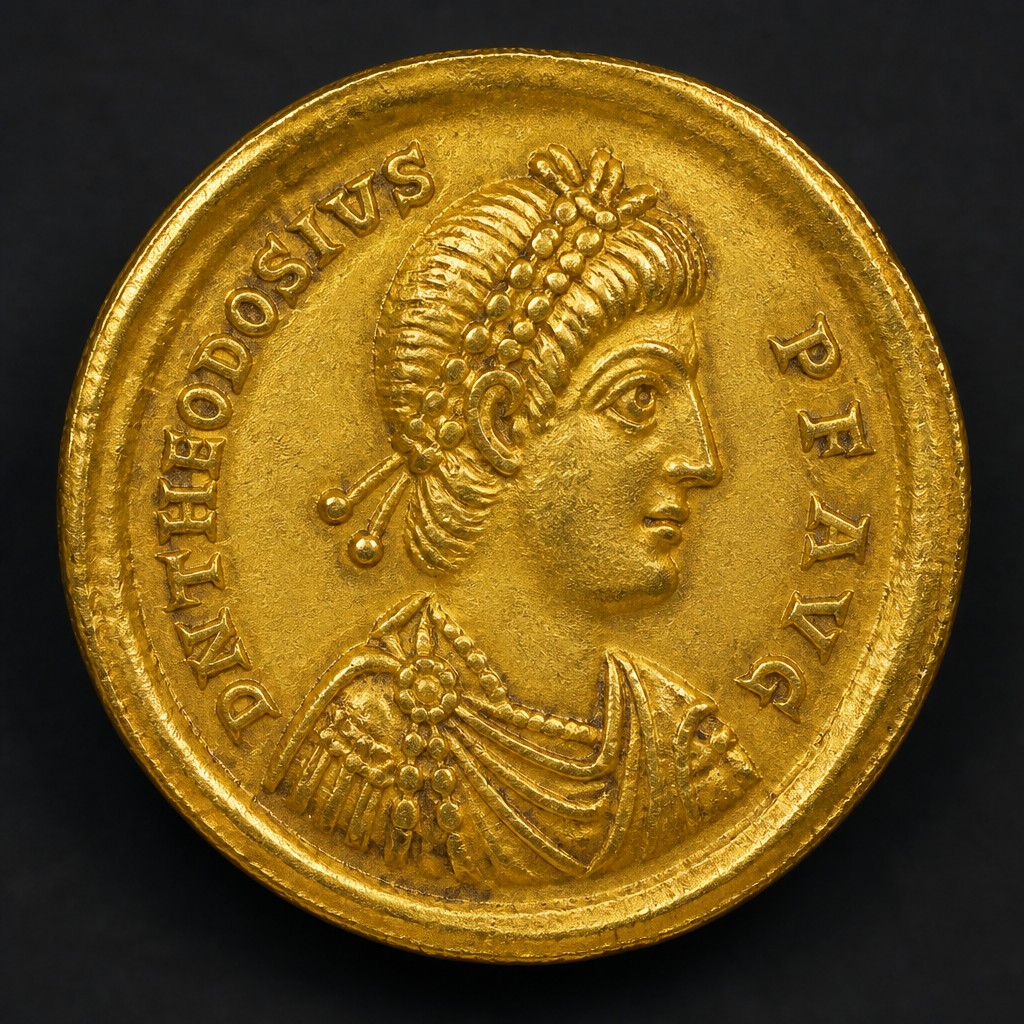
Theodosius I Solidus
379–395 AD
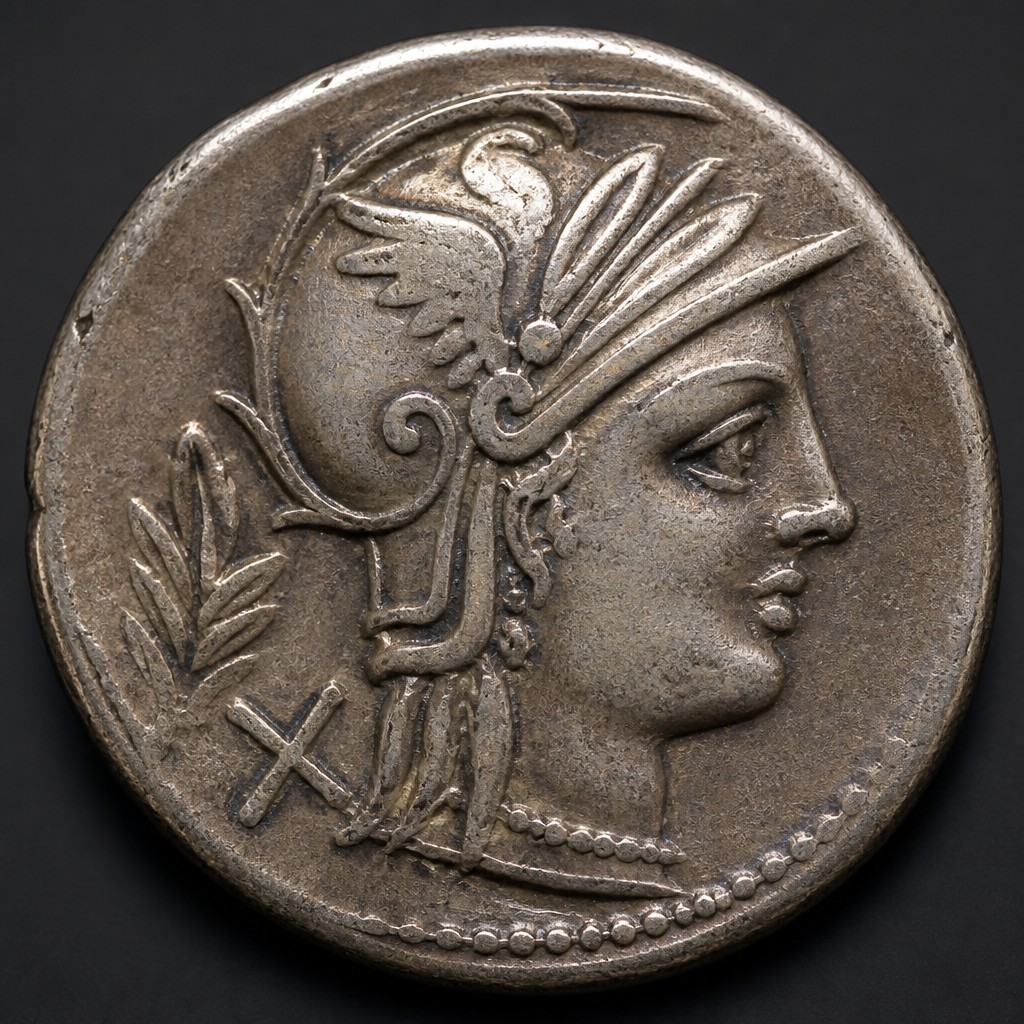
Republican Victoriatus
c. 211–170 BC
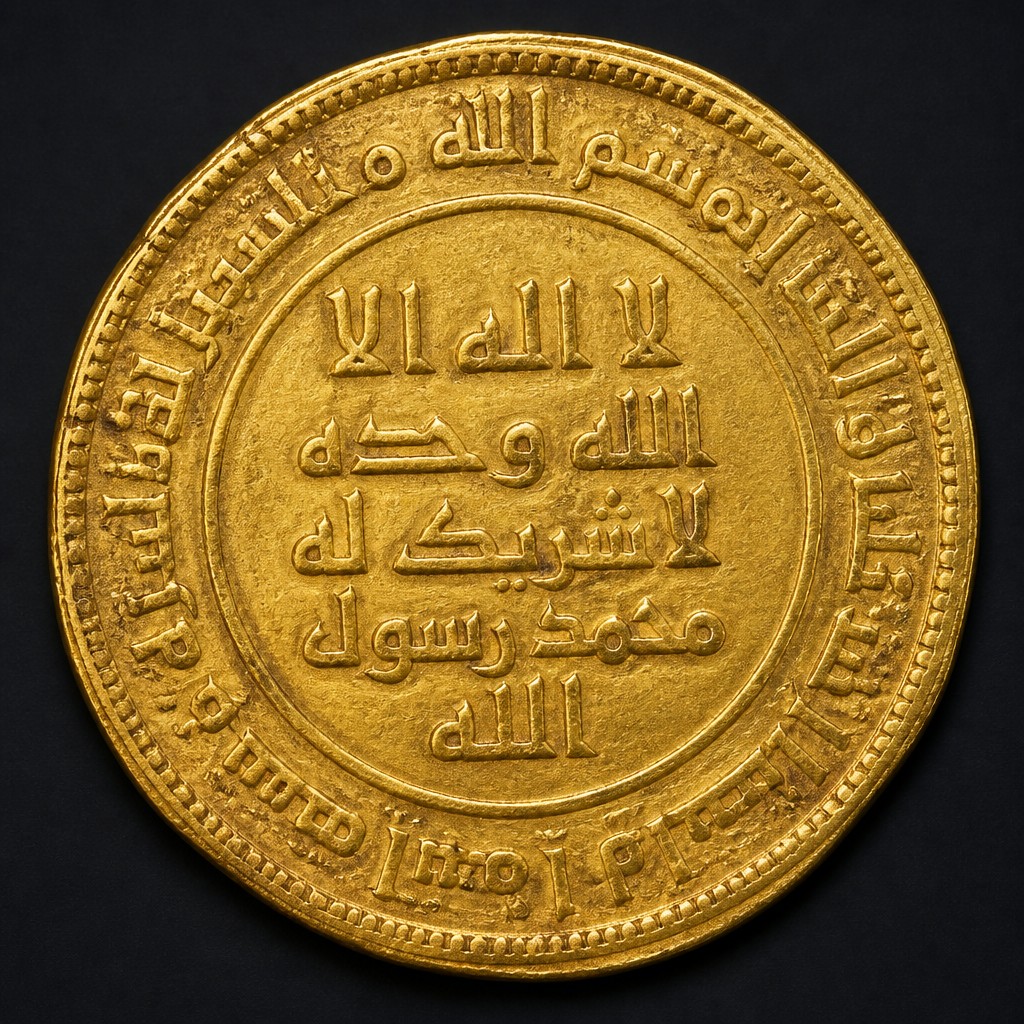
Islamic Gold Dinar (Umayyad)
c. 696–750 AD
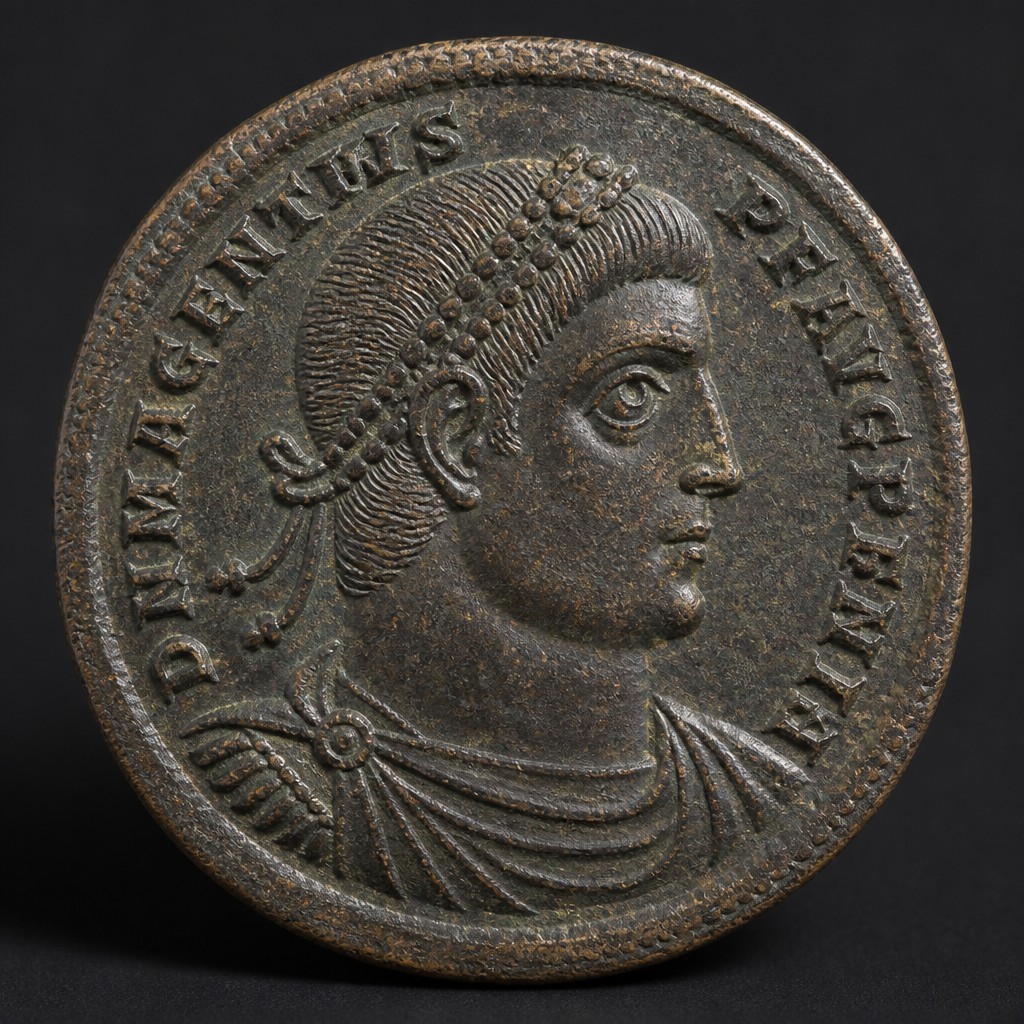
Magnentius Double Centenionalis
350–353 AD
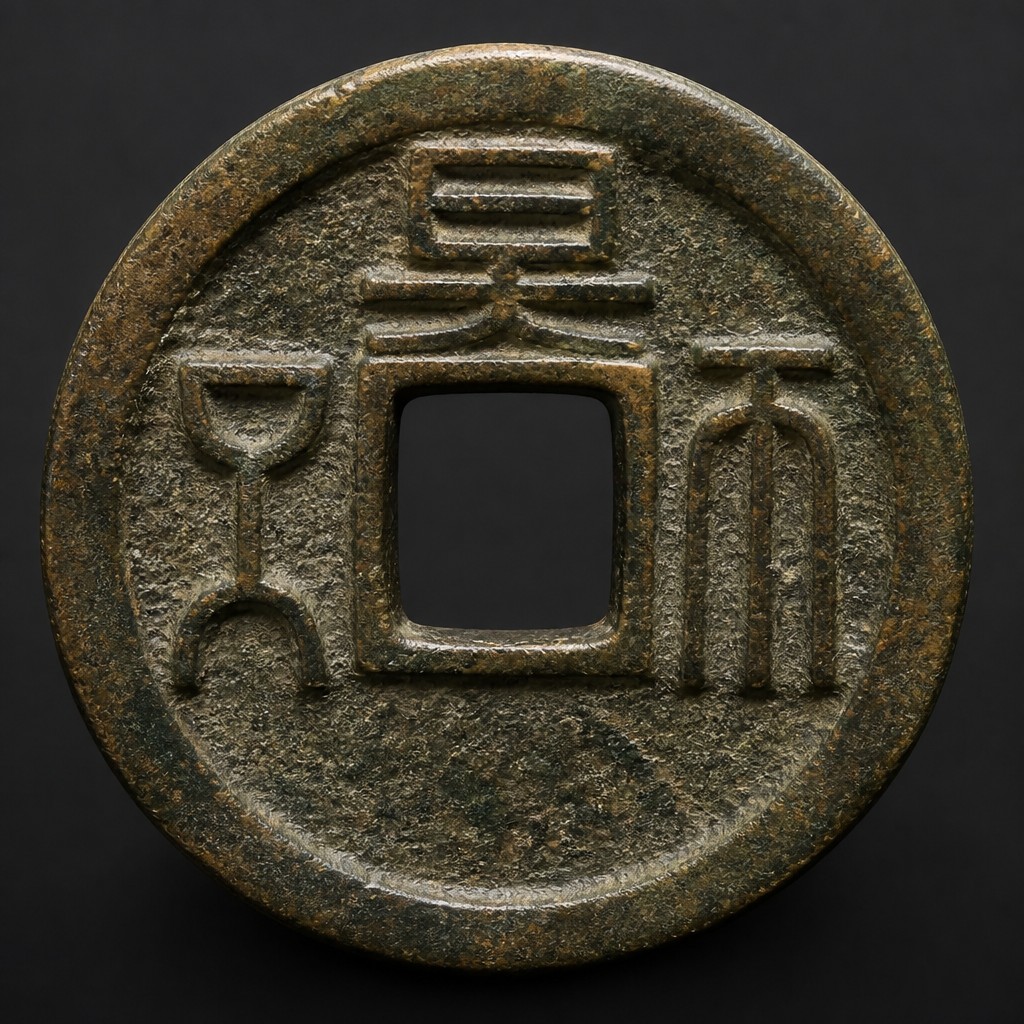
Chinese Wu Zhu Cash
118 BC – 618 AD
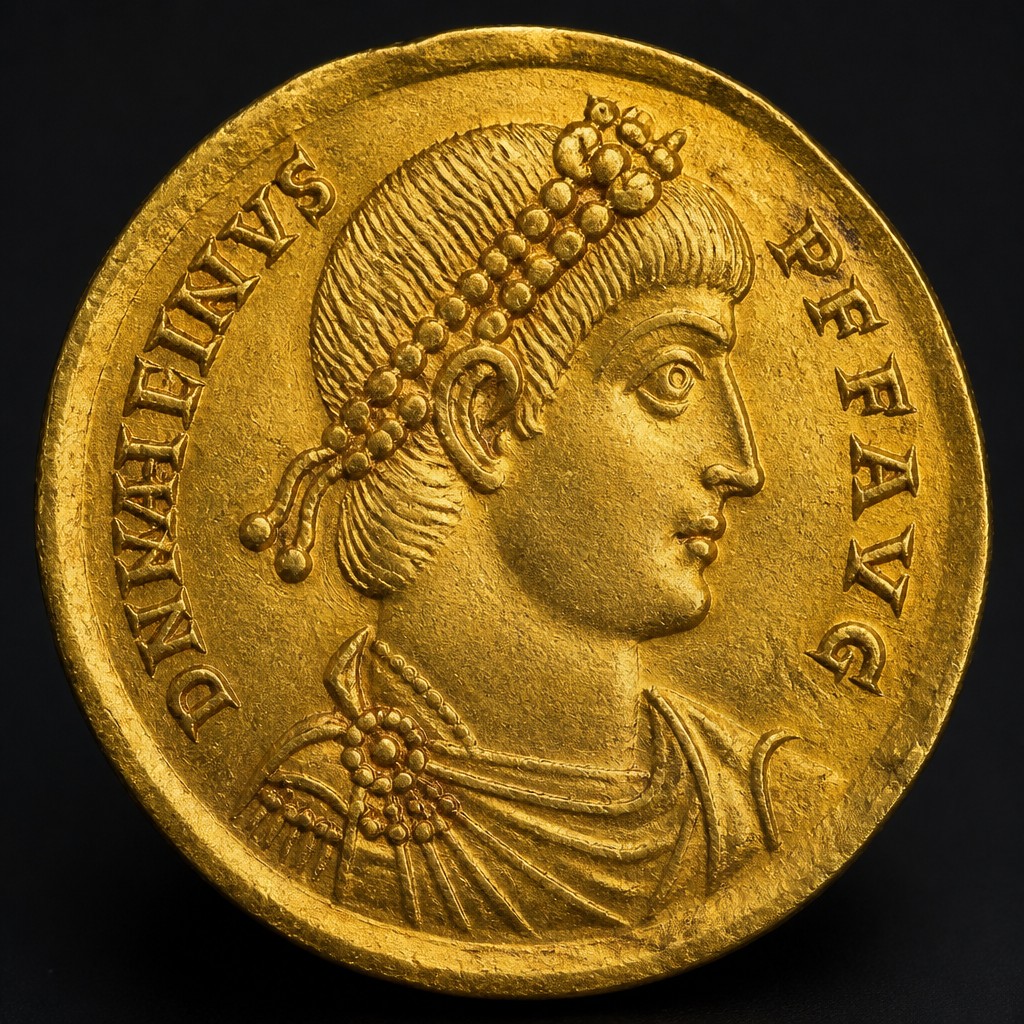
Valentinian I Solidus
364–375 AD
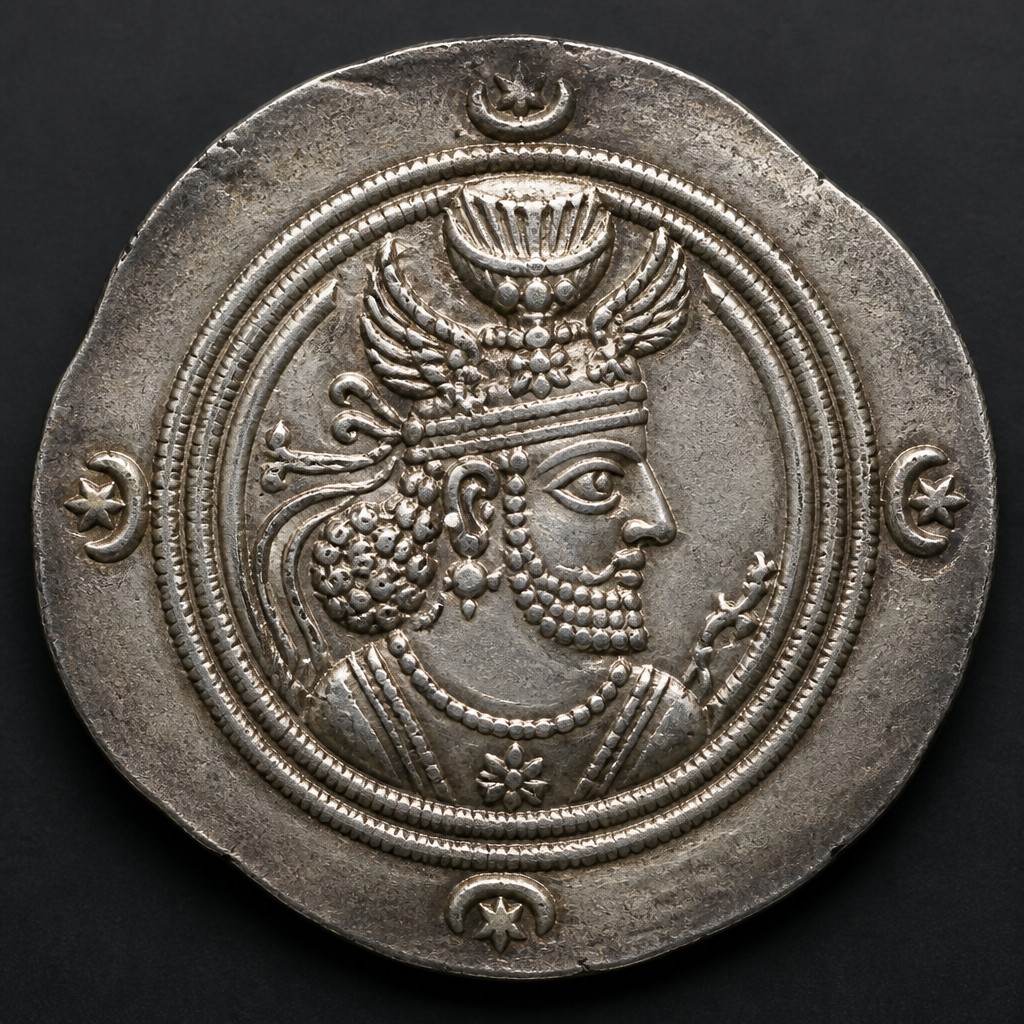
Sassanian Silver Drachm
c. 224–651 AD
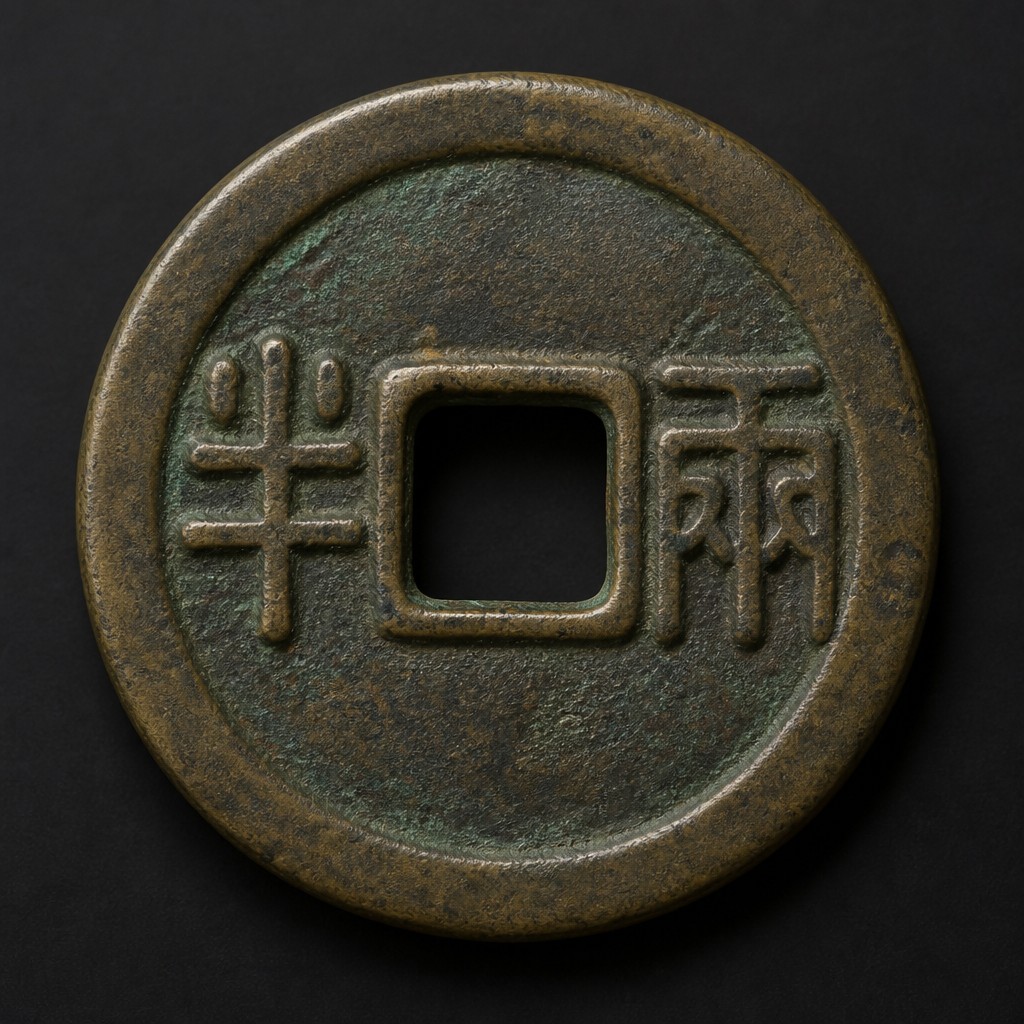
Chinese Ban Liang Cash
c. 221–118 BC
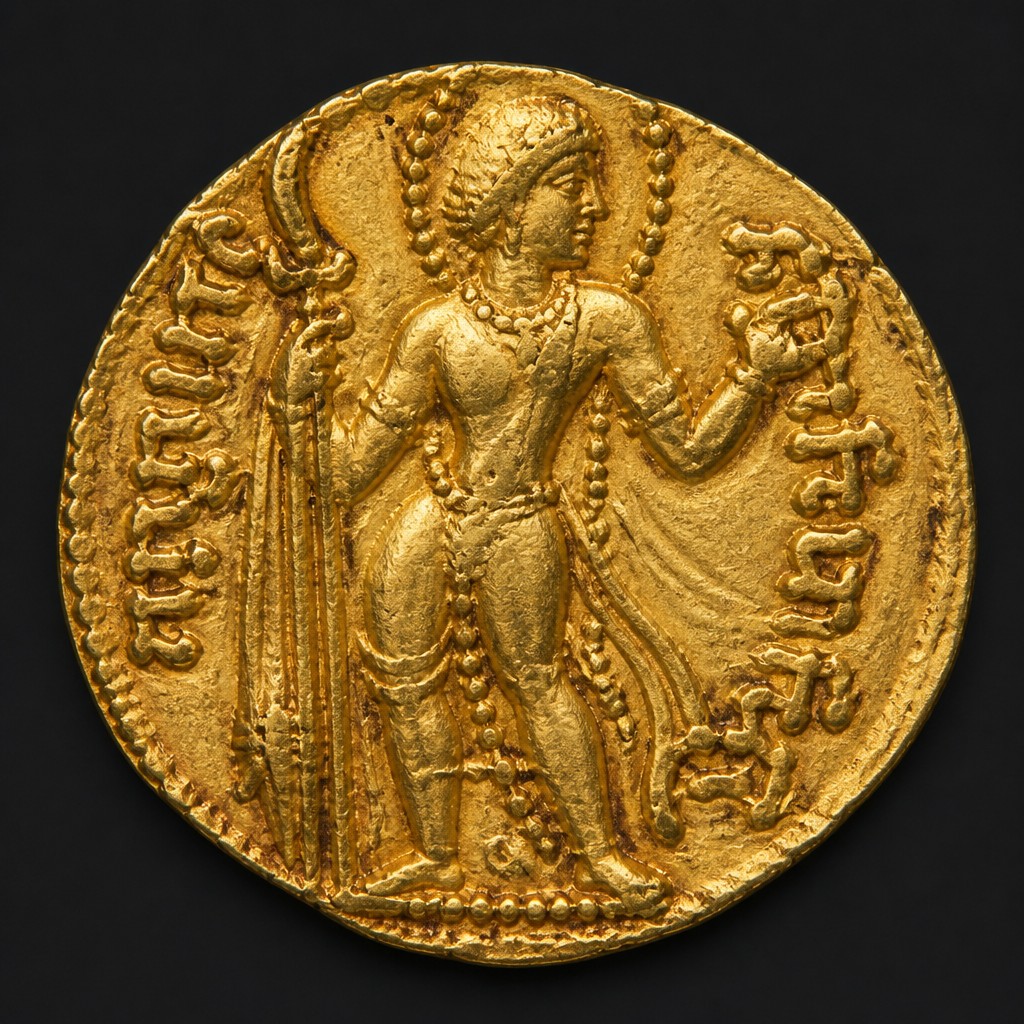
Gupta Empire Gold Dinar
c. 320–550 AD
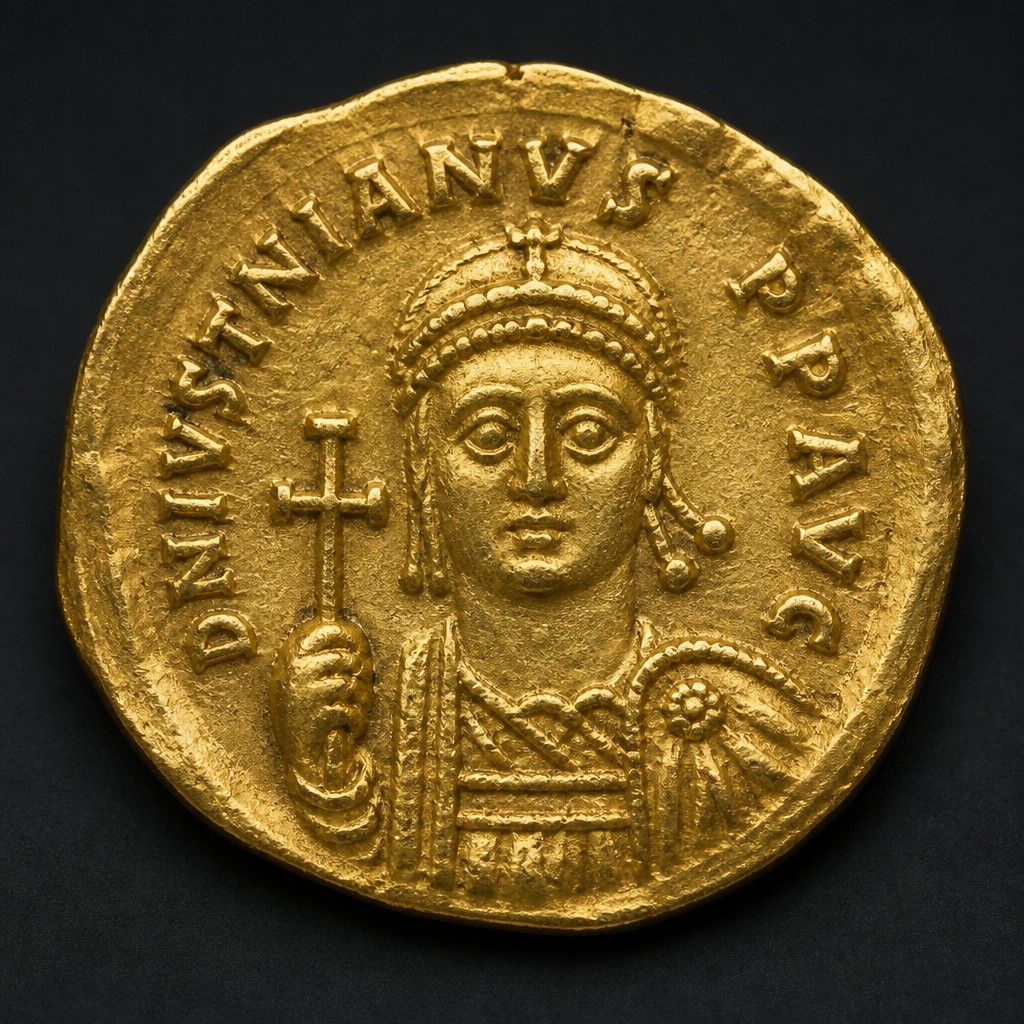
Byzantine Gold Tremissis
c. 4th–7th century AD
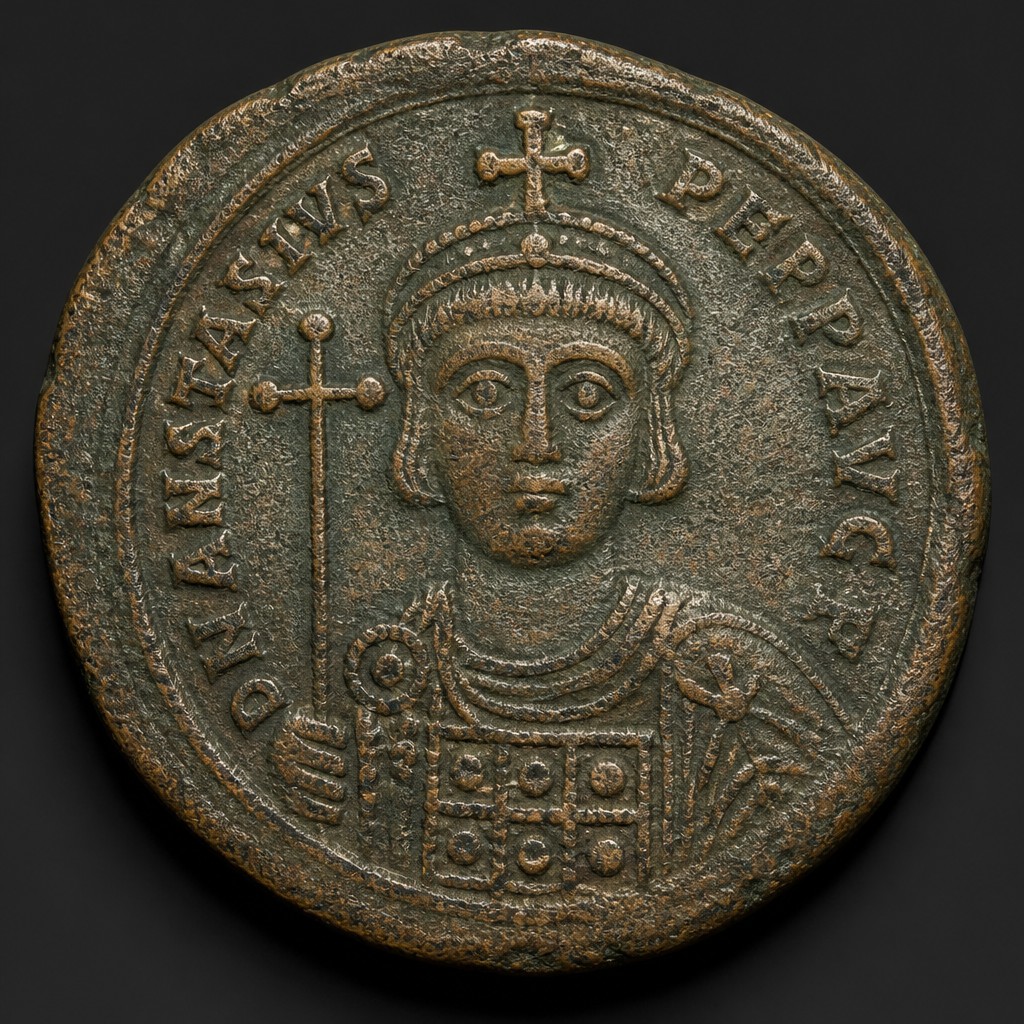
Byzantine Follis
498–c. 11th century AD
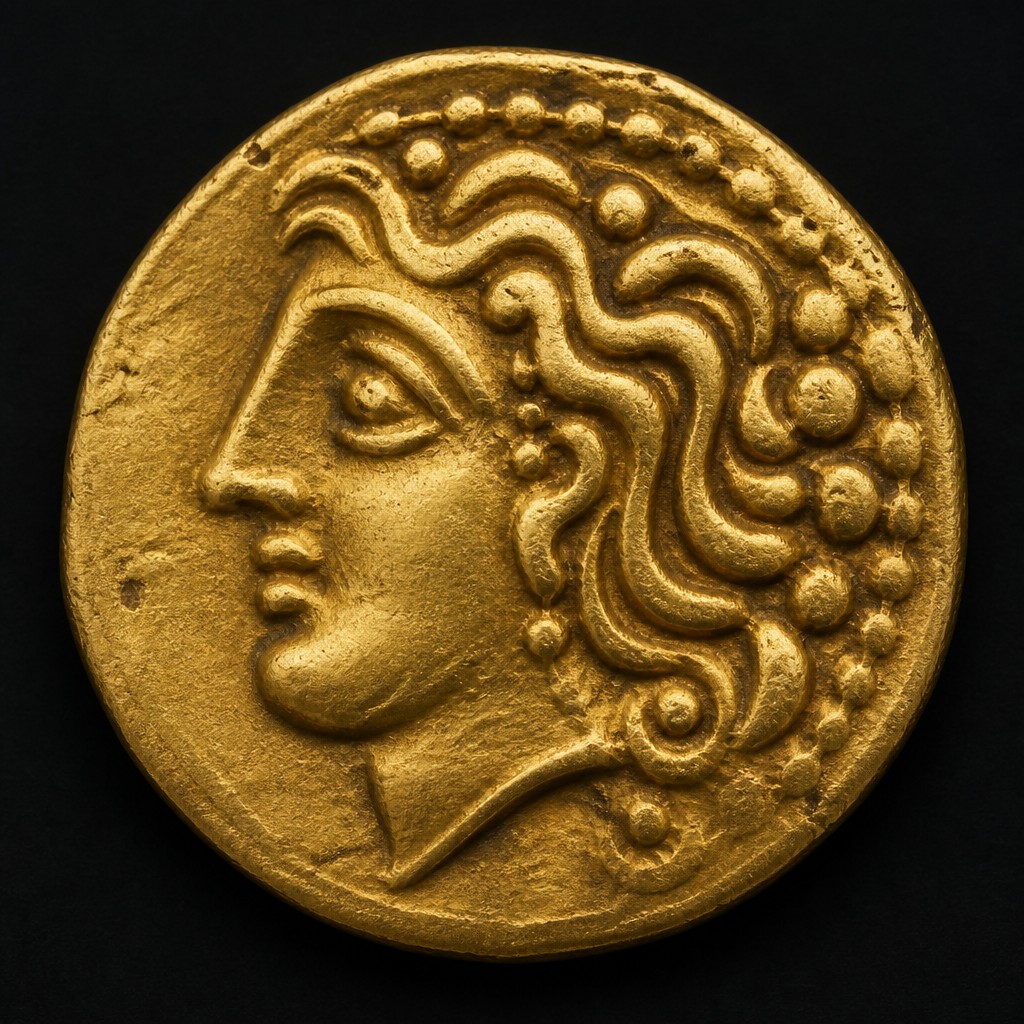
Celtic Gold Stater
c. 3rd century BC – 1st century AD