
Coin Encyclopedia
Search and identify coins from around the world — with country, denomination, metal, mint, history, and how to tell them apart.
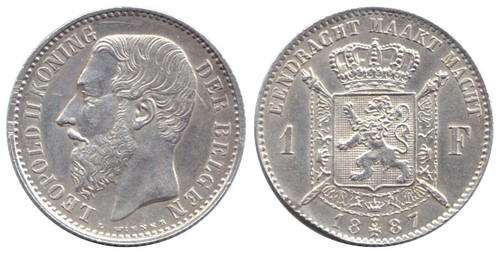
1 Franc (Leopold II)
A late-19th-century Belgian silver franc of King Leopold II, with his left-facing profile on the obverse and a crowned coat of arms on the reverse.
Modern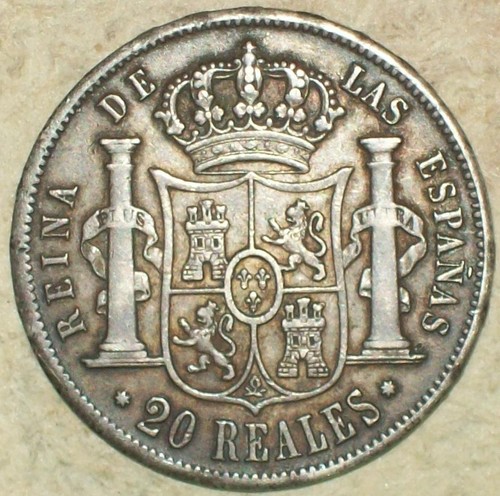
20 Reales (Isabel II)
Crown-sized Spanish silver 20 Reales of Queen Isabel II, with her crowned right-facing profile and a crowned pillared shield, dated 1854.
Modern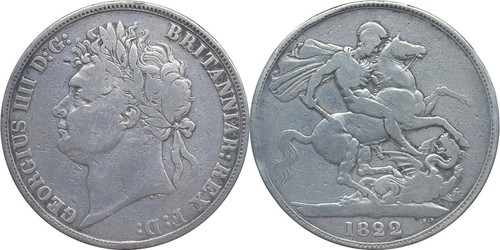
Crown of George IV
A milled silver crown of George IV, with a laureate head facing left and Pistrucci's St George and the dragon on the reverse; the photographed piece is dated 1822.
Milled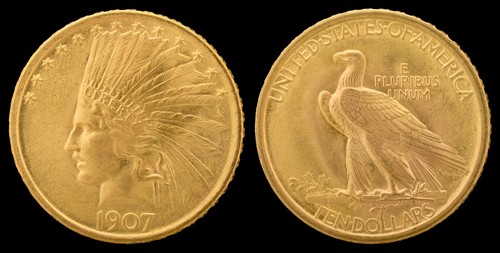
Indian Head Eagle
U.S. $10 gold eagle struck 1907–1933, designed by Augustus Saint-Gaudens, with a feathered-headdress Liberty and a standing eagle reverse.
Eagle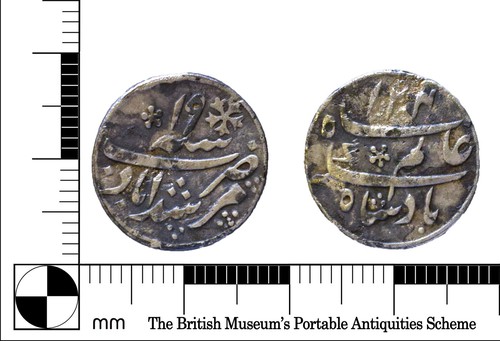
Mughal Islamic Rupee
A hand-struck silver rupee of the Mughal Empire, filled edge to edge with Persian and Arabic script naming the emperor, mint, and regnal year.
Islamic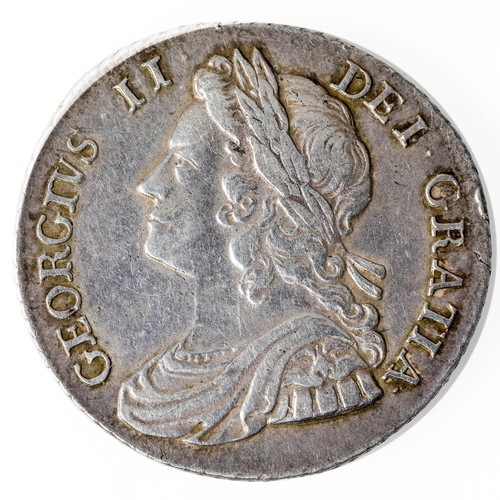
Shilling of George II
A milled silver shilling of George II, with a left-facing bust reading GEORGIVS II DEI GRATIA and a crowned cruciform-shields reverse; this one is a 1736 roses and plumes issue.
Milled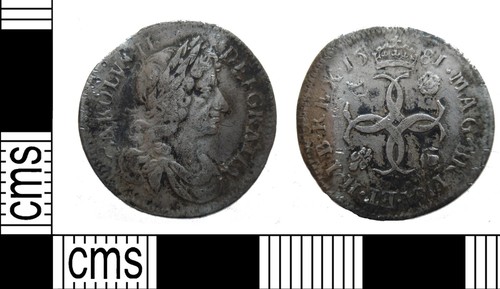
Charles II Fourpence
A small milled sterling silver fourpence of Charles II, with his laureate bust and a crowned cipher of interlinked C's flanked by the national emblems.
Milled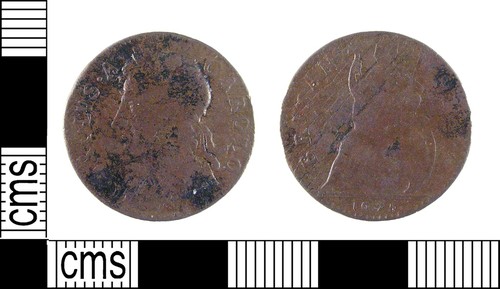
Charles II Halfpenny
A milled copper halfpenny of Charles II showing his laureate bust and a seated Britannia, part of the first regal copper coinage of England, dated 1675.
Milled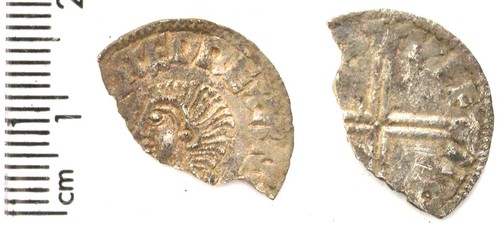
Penny of Aethelred II
Anglo-Saxon silver penny of King Aethelred II showing his diademed bust facing left and a cross with pellets and ornament on the reverse.
Medieval Coins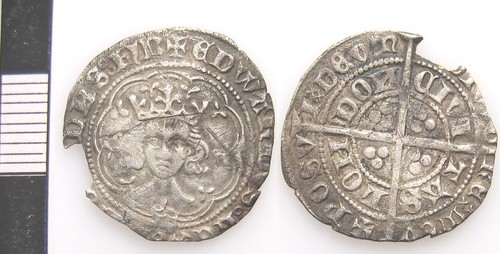
Edward III Half Groat
Hammered silver English half groat of Edward III showing a crowned facing bust and a long voided cross with pellets on the reverse.
Medieval Coins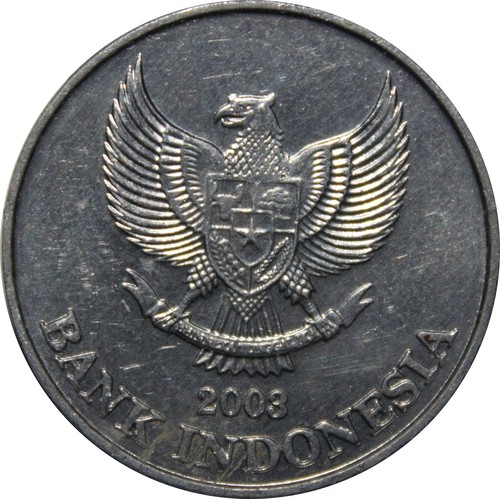
Indonesia 200 Rupiah
A lightweight aluminium Indonesian 200-rupiah coin: the Garuda Pancasila emblem on one side and a perched Bali Starling (Jalak Bali) with the value 200 on the other.
Southeast Asia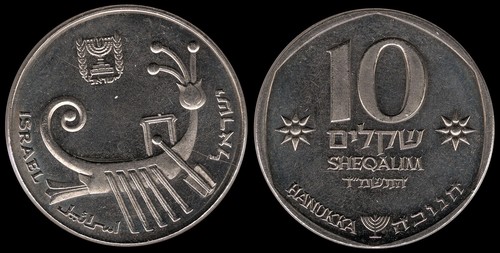
Israel 10 Sheqalim Hanukka Commemorative
A silver Bank of Israel commemorative from the annual Hanukka series, showing a historic Hanukka lamp with stars, dated 1983 and valued at 10 Sheqalim.
World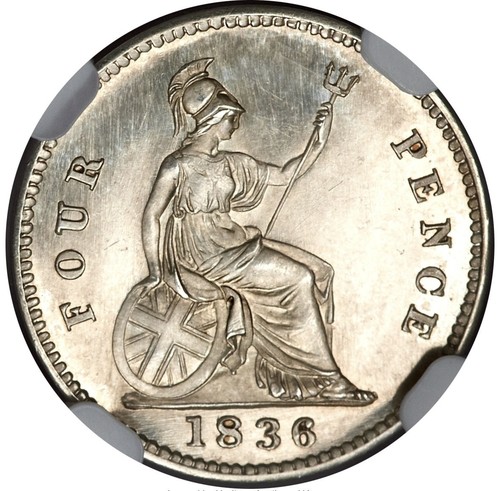
Groat of William IV
A small silver fourpenny piece of William IV (1836–1837), with a seated Britannia reverse; the coin that revived the modern British groat.
Milled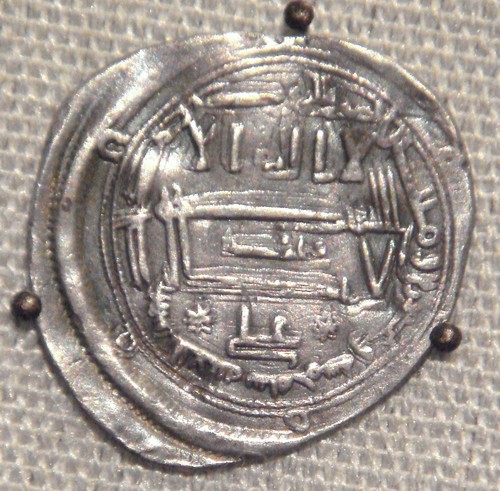
Idrisid Gold Dinar
Gold dinar of Morocco's Idrisid dynasty: a purely epigraphic Islamic coin bearing Kufic Arabic religious legends, no images.
Medieval Islamic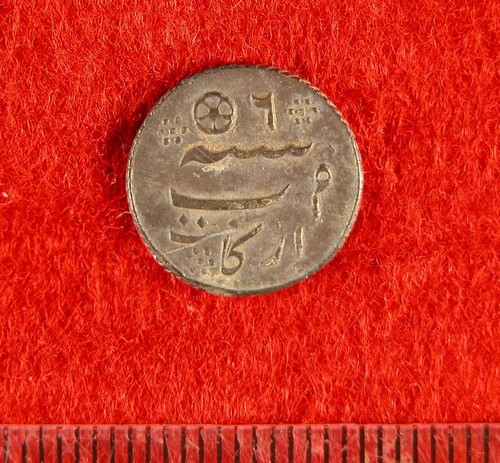
Indian Silver Coin
A silver coin of British India bearing Persian/Urdu calligraphy and a mint mark, in the Mughal-derived inscriptional style of Company-era coinage.
British India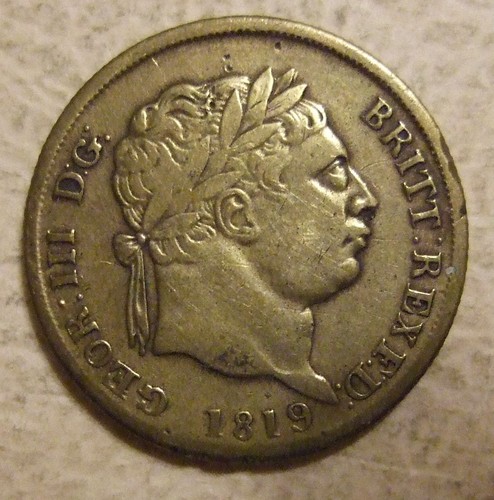
Shilling of George III
A milled silver shilling of George III from the Great Recoinage, with his laureate bust facing right and a crowned quartered royal shield within the Garter.
Milled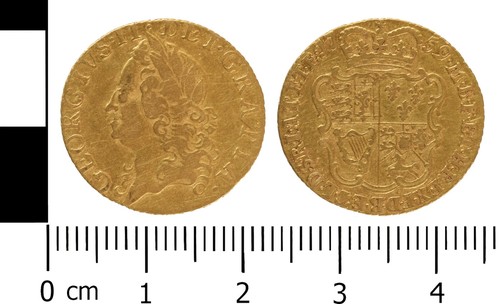
Half Guinea of George II
A small British gold coin of the reign of George II, worth half a guinea, with the king's left-facing bust and a crowned heraldic shield reverse.
Milled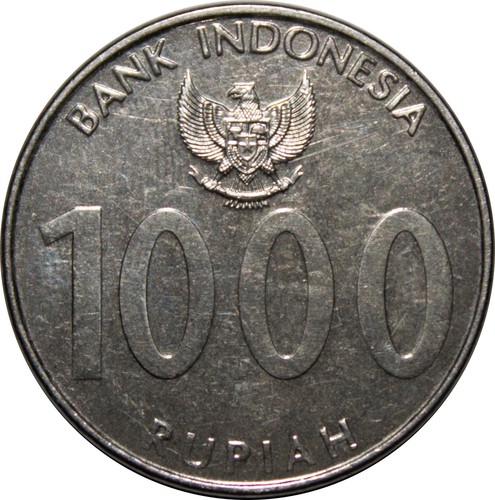
Indonesia 1000 Rupiah
A 2010 Indonesian 1000-rupiah circulation coin, its obverse bearing the Garuda Pancasila emblem and Bank Indonesia legend, its reverse a traditional monument design.
Southeast Asia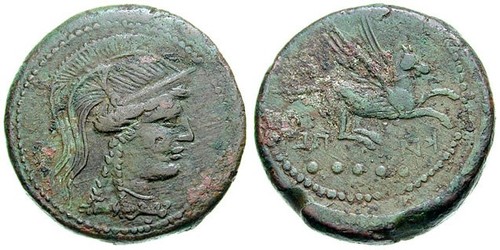
Quincunx of Capua
Bronze quincunx (5 unciae) struck by Capua in Campania in the 3rd century BC, pairing a diademed female head with a lion or griffin and five value pellets.
Ancient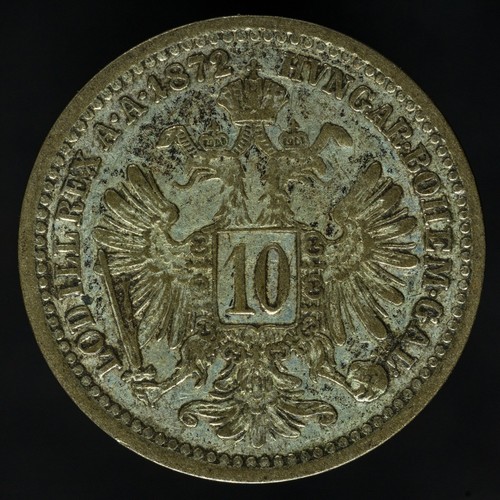
Austria-Hungary 10 Kreuzer
A small low-grade silver 10 Kreuzer of Emperor Franz Joseph I, pairing his laureate portrait with a crowned double-headed imperial eagle and a 10 value shield.
Circulation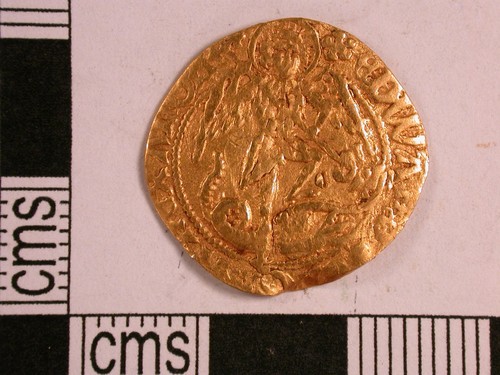
Edward IV Half Angel
Medieval English gold coin of King Edward IV, half the value of the angel, showing Saint Michael slaying a dragon with a spear and shield.
Medieval Coins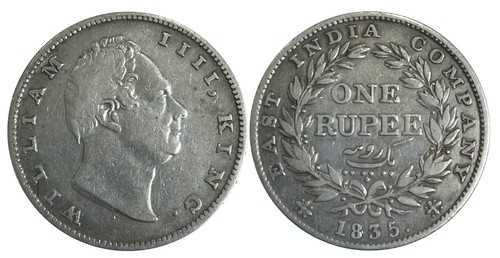
William IV One Rupee
Silver one-rupee coin of British India struck in 1835 under the East India Company, bearing the right-facing bust of King William IV.
British India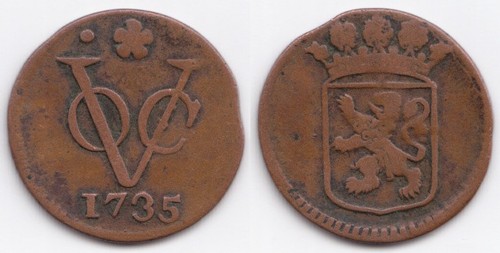
Dutch East Indies Duit
Small copper duit of the Dutch East India Company (VOC), showing the interlaced VOC monogram and a crowned provincial coat of arms, dated 1735.
Southeast Asia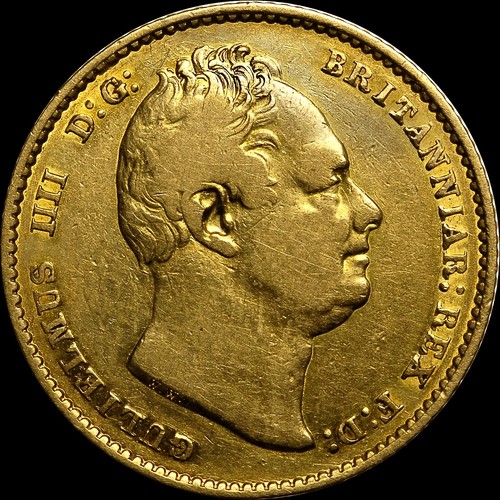
Sovereign of William IV
A 22-carat gold sovereign of William IV, with the king's bare head facing right and a crowned royal shield of arms on the reverse.
Milled