
Coin Encyclopedia
Search and identify coins from around the world — with country, denomination, metal, mint, history, and how to tell them apart.
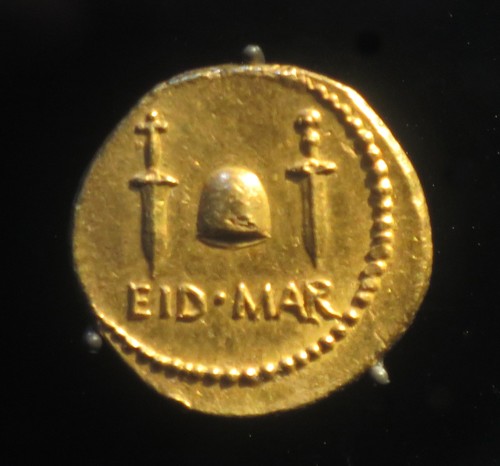
Brutus Aureus
The gold aureus of Marcus Junius Brutus, struck 42 BC, whose reverse celebrates Caesar's assassination with EID MAR, a cap of liberty, and two daggers.
Ancient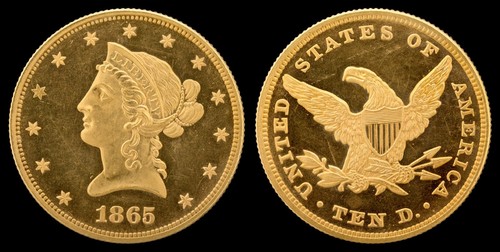
Liberty Head Eagle
A United States $10 gold coin struck 1838-1907, with Christian Gobrecht's coronet-crowned Liberty head and a shielded eagle. The example shown is dated 1839.
Eagle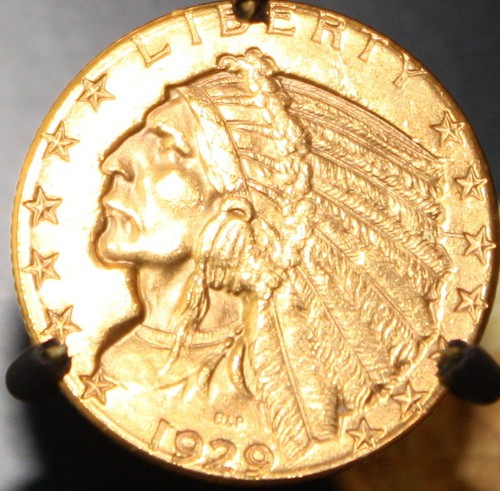
Indian Head Half Eagle
U.S. $5 gold half eagle struck 1908–1929, with an unusual sunken (incuse) design: a headdressed Native American obverse and a standing eagle reverse.
Half Eagle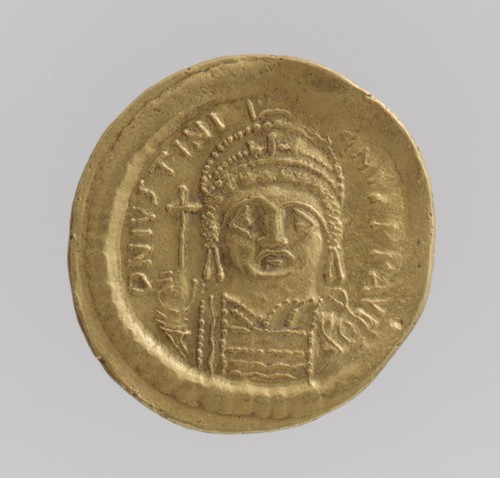
Solidus of Justinian I
Byzantine gold solidus of Emperor Justinian I (527-565 AD), showing his crowned imperial bust with a seated figure on the reverse.
Ancient Coins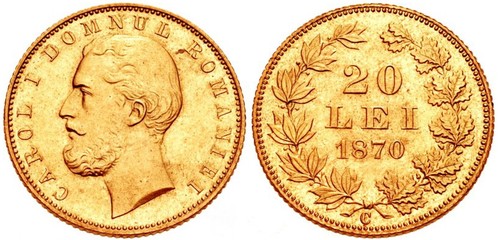
20 Lei
Romania's first gold coin, the 1870 20 Lei of Prince Carol I, pairing his left-facing portrait with the national coat of arms.
Modern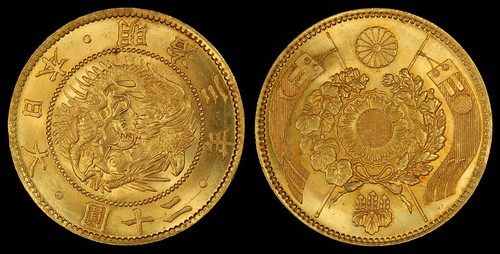
Japanese 20 Yen
Early Meiji-era Japanese gold coin showing a dragon among clouds on one side and a floral design with the 20 yen denomination on the other.
World Coins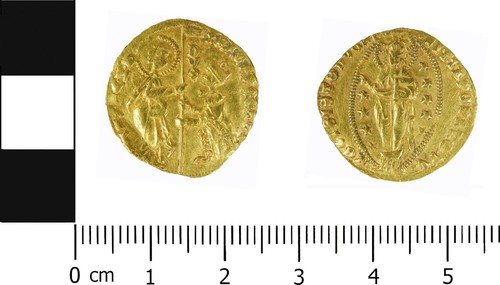
Venetian Ducat
A medieval gold ducat of the Republic of Venice, showing Saint Mark presenting a banner to the kneeling Doge on one side and Christ on the other.
Medieval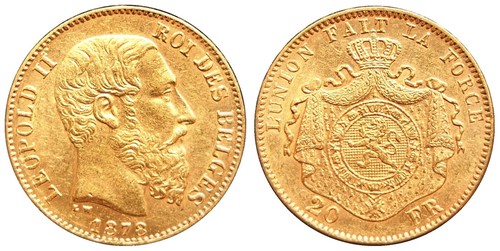
20 Francs (Leopold II)
Belgium's gold 20 francs under King Leopold II, a small Latin Monetary Union coin with the bearded king's profile and the crowned national arms.
Modern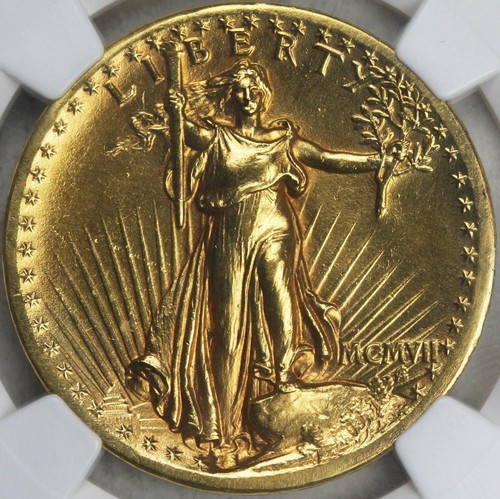
Saint-Gaudens Double Eagle
United States $20 gold coin (1907–1933) designed by Augustus Saint-Gaudens, showing a striding Liberty with torch and olive branch before a radiant sun.
Gold Type Coin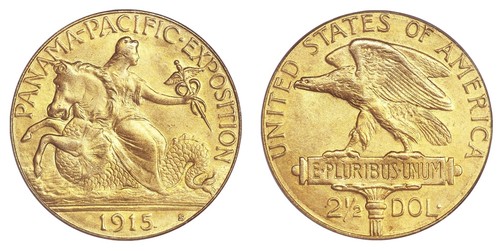
Panama-Pacific Exposition Quarter Eagle
A 1915 gold $2.50 commemorative for San Francisco's Panama-Pacific Exposition, showing Columbia astride a hippocamp and an eagle on the reverse.
Classic Commemorative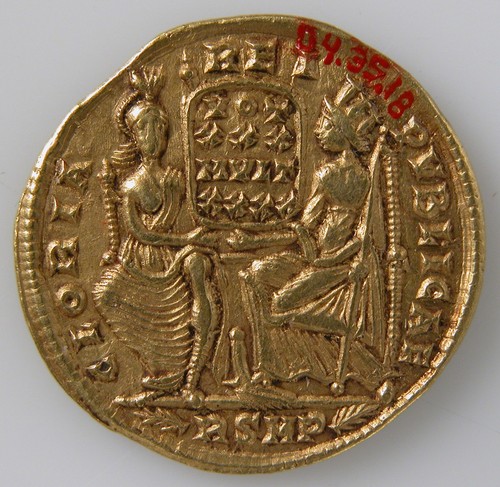
Solidus of Constantine II
Late Roman gold solidus of Constantine II, showing his ornately crowned bust and a seated figural reverse type.
Ancient Coins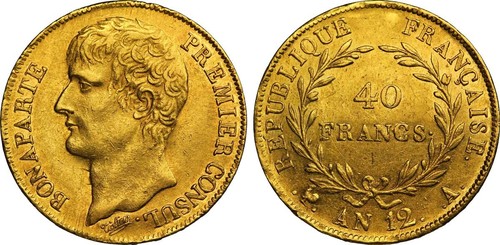
40 Francs Napoleon
A large early French gold 40 francs of Napoleon's Consulate, with the bare-headed BONAPARTE PREMIER CONSUL bust and a laurel-framed 40 FRANCS reverse dated 1804.
Bullion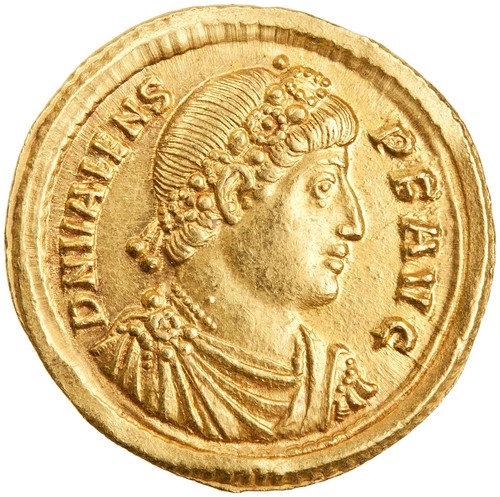
Solidus of Valens
A late Roman gold solidus struck for Valens, eastern emperor from AD 364 to 378, showing his diademed profile facing right.
Ancient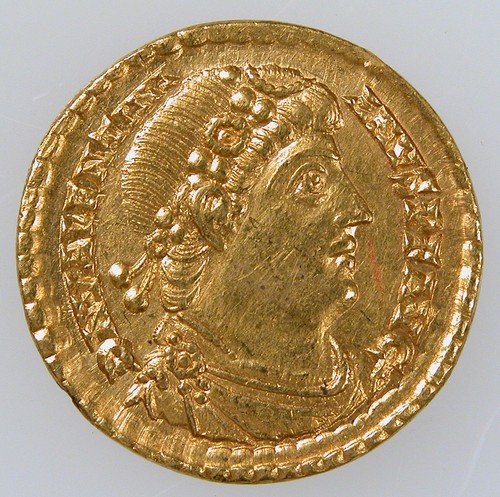
Solidus of Valentinian I
The gold solidus of Valentinian I (AD 364-375), a pure-gold coin bearing his pearl-diademed profile that anchored the late Roman monetary system.
Ancient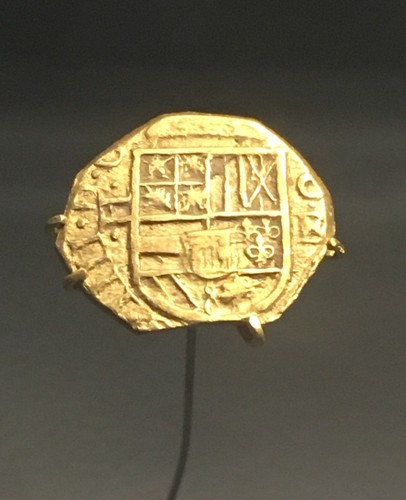
2 Escudos
A gold 2 Escudos of Habsburg Spain, the classic 'doubloon,' struck with a crowned coat of arms of castles and lions on both faces.
Early Modern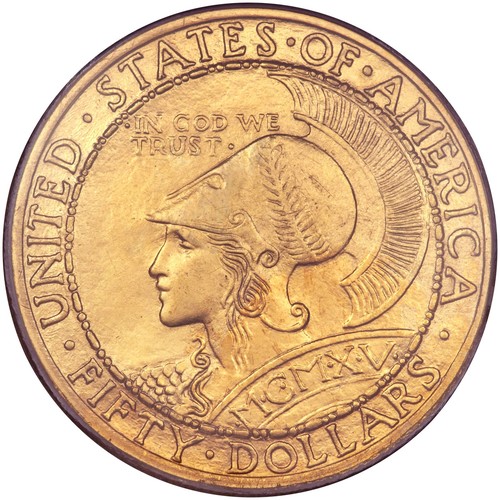
Panama-Pacific Exposition $50 (Octagonal)
An eight-sided $50 gold commemorative struck for San Francisco's 1915 world's fair, showing Minerva and her owl — the largest U.S. coin of its era.
Classic Commemorative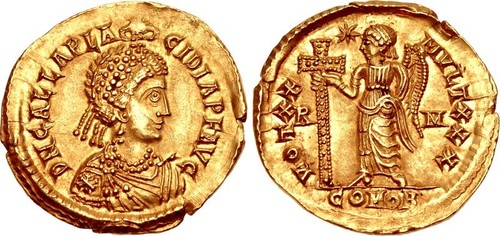
Solidus of Galla Placidia
A late Roman gold solidus struck in the name of Galla Placidia, empress and regent, showing her diademed bust and a Victory holding a long cross.
Ancient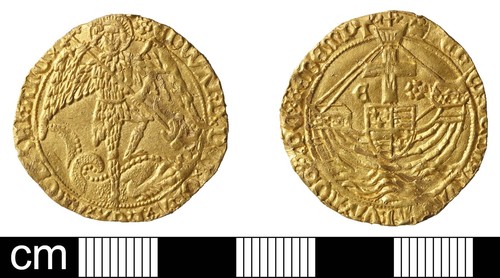
Edward IV Angel
Medieval English gold coin showing Saint Michael the Archangel slaying a dragon-demon, with a heraldic cross-and-shield reverse.
Medieval Coins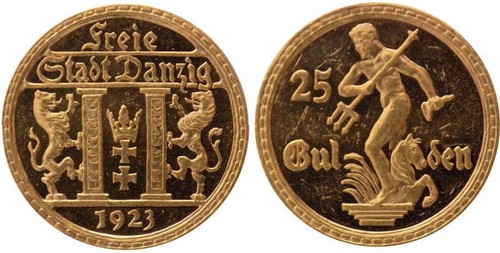
25 Gulden
The gold 25 Gulden of the Free City of Danzig, dated 1923, pairing the lion-supported Danzig arms with an armed female figure holding a trident.
Modern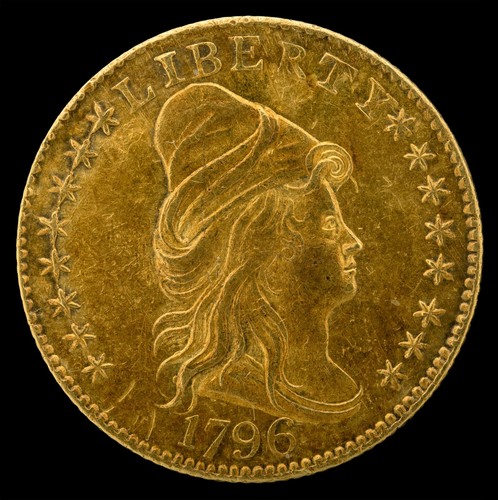
Turban Head Quarter Eagle
First U.S. $2.50 gold coin (1796), designed by Robert Scot; Liberty in a soft cap facing right with a heraldic eagle reverse. Extremely rare.
United States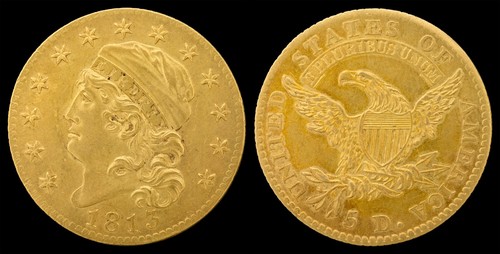
Capped Head Half Eagle
A U.S. five-dollar gold coin struck 1813–1834, showing a left-facing capped Liberty with stars and a heraldic eagle bearing a shield and E PLURIBUS UNUM.
United States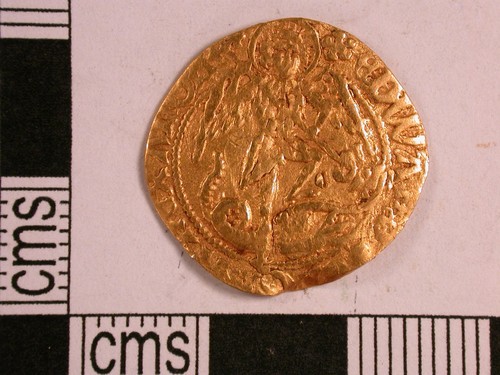
Edward IV Half Angel
Medieval English gold coin of King Edward IV, half the value of the angel, showing Saint Michael slaying a dragon with a spear and shield.
Medieval Coins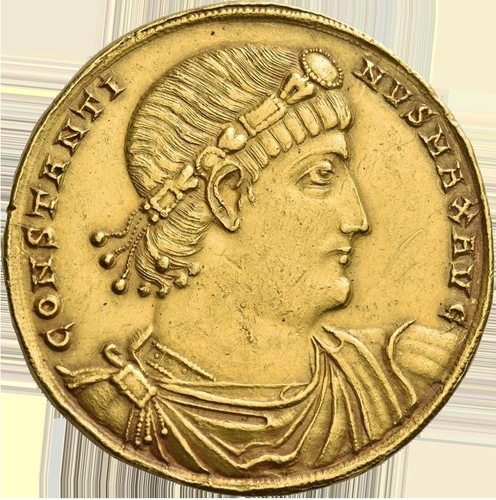
Solidus of Constantine I the Great
Constantine the Great's gold solidus, a high-purity coin struck from about AD 309 that became the standard of late Roman and Byzantine gold.
Ancient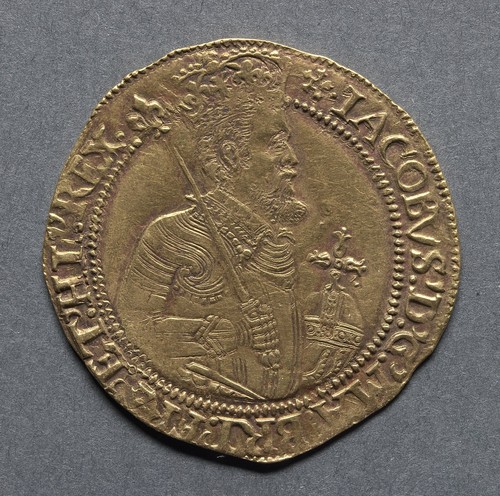
Unite of James I
A hammered gold pound coin of James I, named to celebrate the union of England and Scotland under one crown.
Hammered