
Coin Encyclopedia
Search and identify coins from around the world — with country, denomination, metal, mint, history, and how to tell them apart.
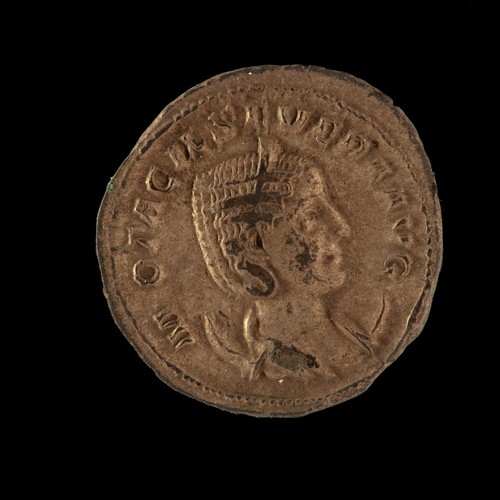
Antoninianus of Otacilia Severa
Roman double-denarius of the empress Otacilia Severa, wife of Philip I (246-248 AD), with her draped bust and a standing personification on the reverse.
Ancient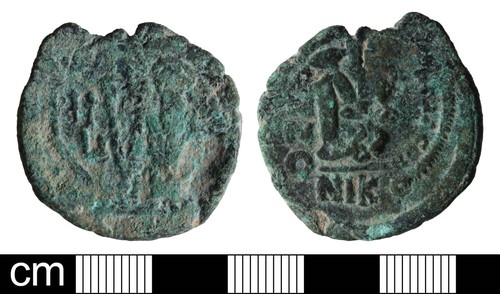
Byzantine Nummus of Tiberius Constantine
A small bronze coin of Byzantine emperor Tiberius II Constantine (AD 578-582), with an imperial portrait or inscription and a mark of value or monogram.
Ancient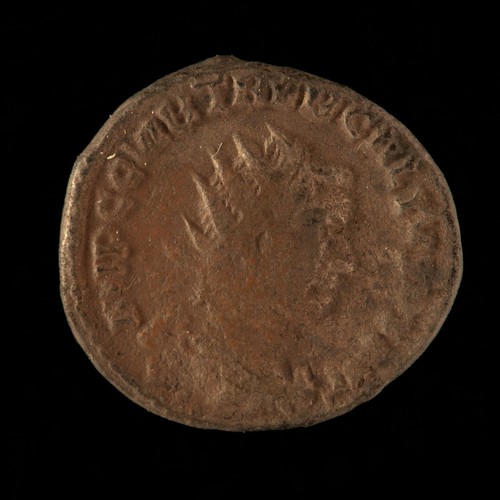
Antoninianus of Trebonianus Gallus
A radiate-crowned billon antoninianus of the emperor Trebonianus Gallus, struck AD 251-253 with a standing deity or personification on the reverse.
Ancient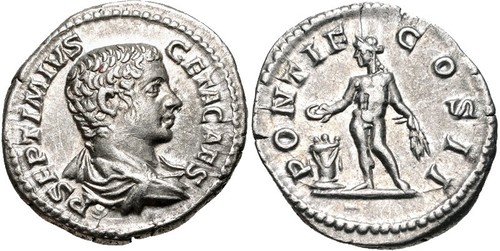
Denarius of Geta
Silver denarius of the Severan prince Geta, showing his youthful bust with a standing deity or personification on the reverse.
Ancient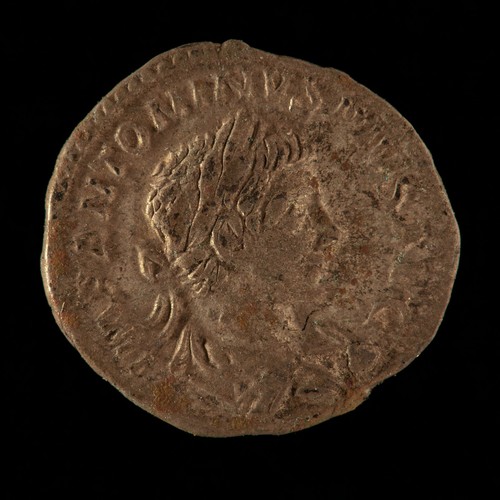
Denarius of Elagabalus
Silver denarius of the young Severan emperor Elagabalus (218–222 AD), with his laureate bust and a standing personified deity on the reverse.
Ancient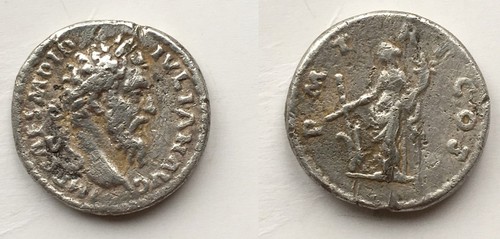
Denarius of Didius Julianus
A silver denarius of Didius Julianus, the short-lived emperor of 193 AD, bearing his laureate portrait and an imperial standing reverse.
Ancient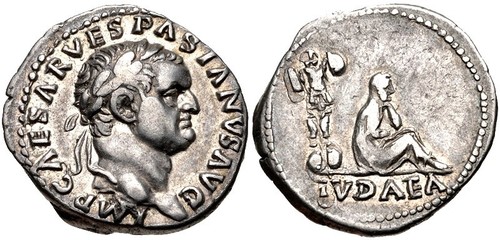
Vespasian Judaea Capta Denarius
Silver denarius of Emperor Vespasian (71–79 AD) with his laureate bust and a Judaea Capta reverse showing a mourning seated captive.
Ancient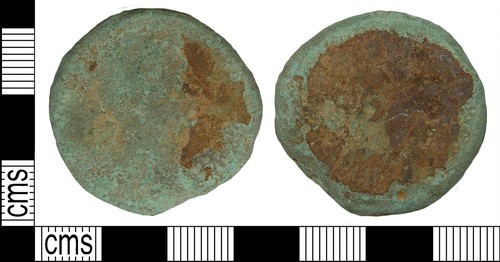
Sestertius of Commodus
A large Roman bronze sestertius of Emperor Commodus (180–192 AD), his laureate bearded head on one side and a standing figure on the other.
Ancient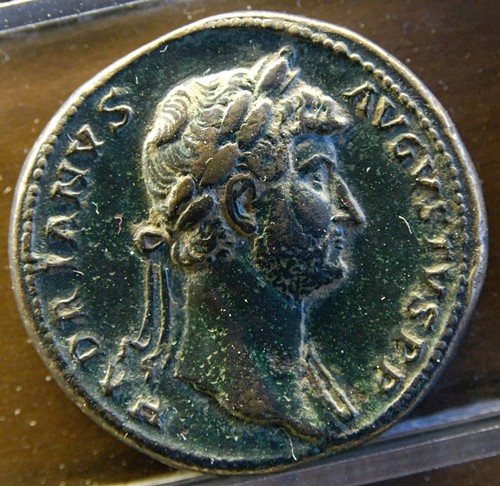
Sestertius of Hadrian
Large Roman bronze sestertius of Emperor Hadrian, showing his bearded curly-haired profile and a standing draped figure with a Latin legend on the reverse.
Ancient Coins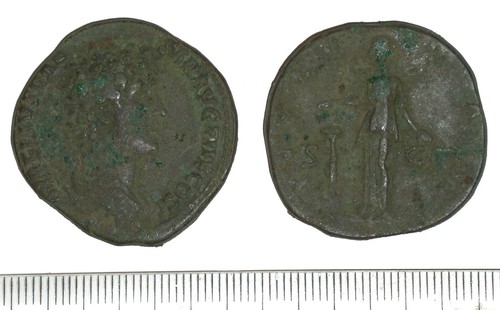
Sestertius of Marcus Aurelius
A large Roman bronze sestertius struck during the reign of Marcus Aurelius (161–180 CE), with his laureate portrait facing right and a Latin legend.
Ancient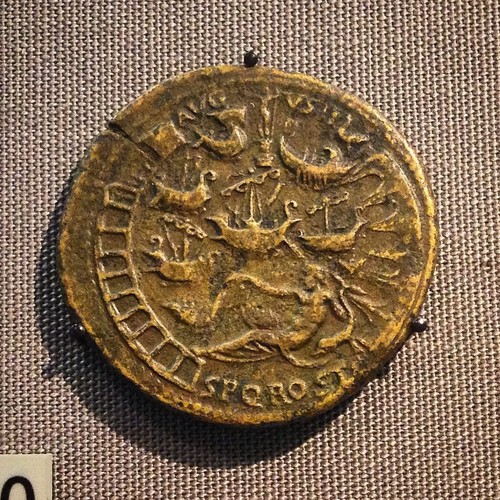
Sestertius of Nero (Port of Ostia)
A large brass sestertius of the emperor Nero (54–68 AD) showing his portrait on one side and a bird's-eye view of the harbour at Ostia on the other.
Ancient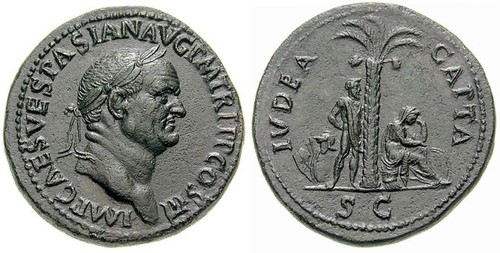
Sestertius of Vespasian (Iudaea Capta)
Large Roman bronze sestertius of Vespasian (AD 70–71) marking the conquest of Judaea, with a palm tree and mourning captives on the reverse.
Ancient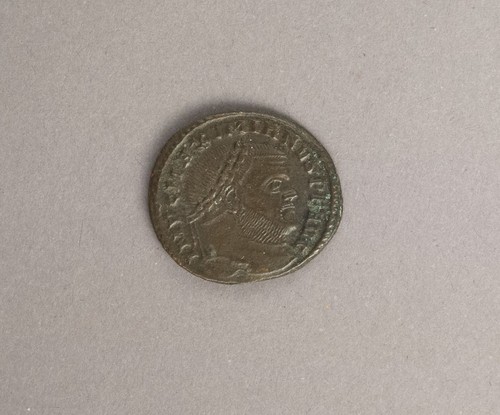
Nummus of Maximianus
A late-Roman bronze nummus (follis) of the emperor Maximianus, with his right-facing laureate portrait and a standing deity on the reverse.
Ancient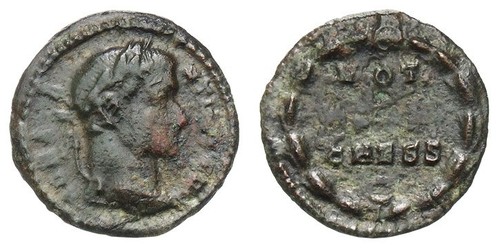
Nummus of Constantine I
Small late Roman bronze nummus (follis) of Constantine I the Great (306-337 CE), identified by his right-facing imperial portrait on the obverse.
Ancient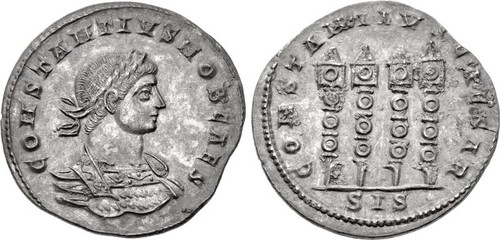
Miliarensis of Constantius II
A late Roman silver miliarensis of Emperor Constantius II (AD 327–361), showing his diademed portrait and a standing reverse figure.
Ancient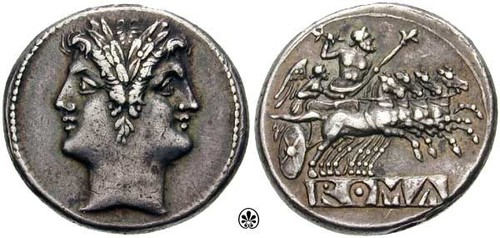
Roman As/Dupondius (Uncertain)
An uncertain Roman bronze As or Dupondius: a double-faced Janus head on one side and a ship (galley/prow) with ROMA below on the other.
Ancient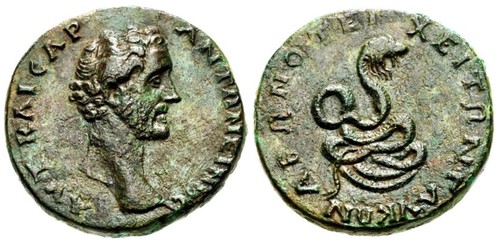
Glycon Bronze Coin
Roman provincial bronze of the 2nd century AD showing the snake-god Glycon: a bearded serpent head on one side and a coiled snake on the other.
Ancient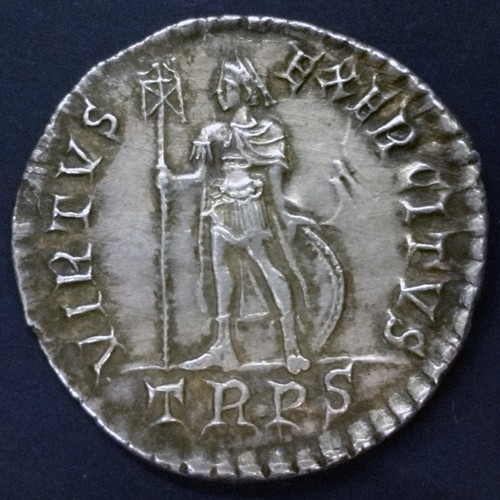
Hoxne Hoard Siliqua
A small late-Roman silver siliqua of the type found in Britain's Hoxne Hoard, with an imperial portrait and a standing figure or personified virtue.
Ancient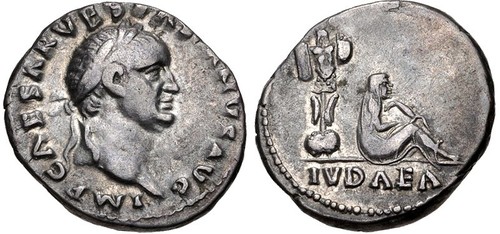
Denarius of Vespasian
Silver denarius struck under the emperor Vespasian (AD 69-79), founder of the Flavian dynasty, with his laureate portrait on the obverse.
Ancient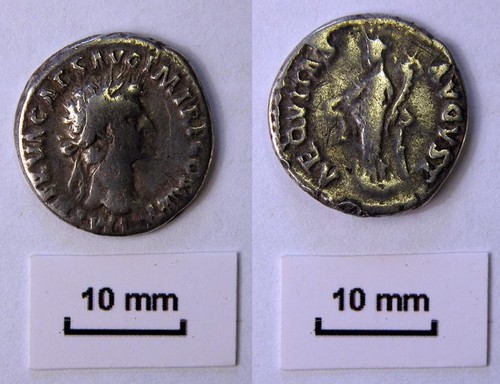
Denarius of Nerva
Roman Imperial silver denarius of Emperor Nerva (96-98 AD), with his laureate portrait and the legend IMP NERVA CAES AVG, and a seated Concordia reverse.
Ancient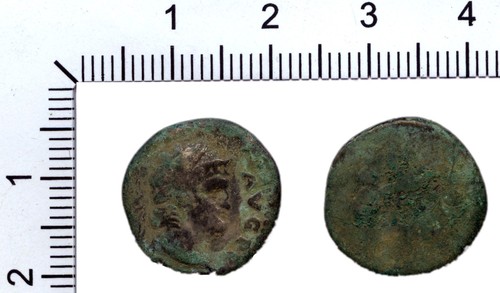
Denarius of Nero
Silver denarius of the emperor Nero (AD 54-68), the last Julio-Claudian ruler, shown with a laureate portrait and a military-standards reverse.
Ancient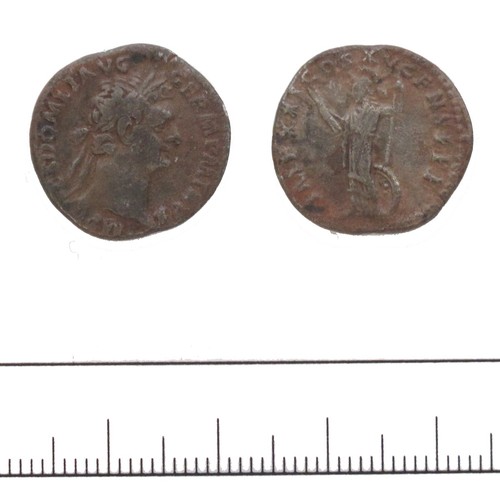
Denarius of Domitian
Silver denarius of the emperor Domitian (81-96 AD), with his laureate portrait on the obverse and, typically, the goddess Minerva on the reverse.
Ancient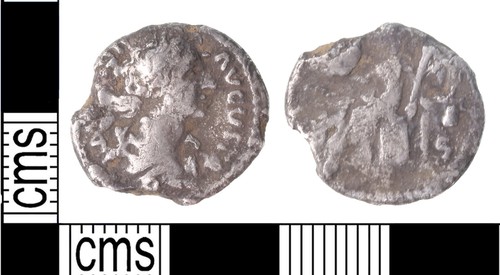
Denarius of Faustina the Younger
Roman Imperial silver denarius of Faustina the Younger, showing her draped bust with an elaborate curled hairstyle and a standing deity or personification on the reverse.
Ancient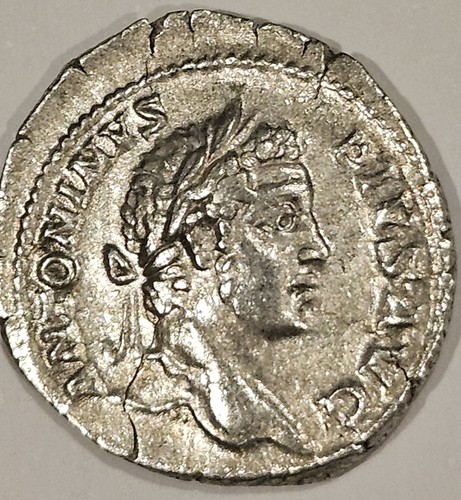
Denarius of Caracalla
A silver denarius of the Roman emperor Caracalla, struck 198–217 CE, showing his laureate right-facing bust and a Latin legend encircling the design.
Ancient