
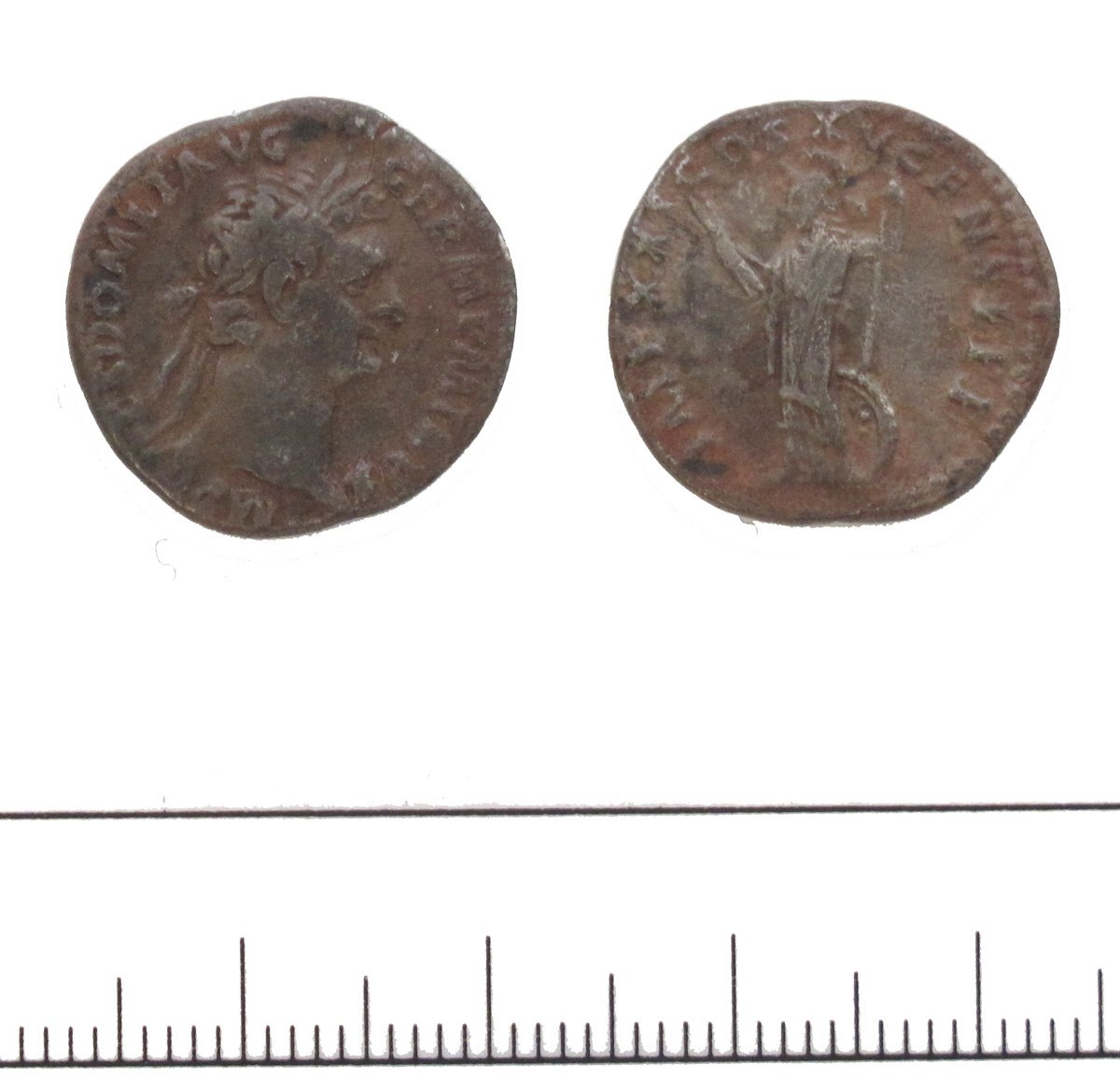
Denarius of Domitian
Silver denarius of the emperor Domitian (81-96 AD), with his laureate portrait on the obverse and, typically, the goddess Minerva on the reverse.
- Country
- Roman Empire
- Denomination
- Denarius
- Metal
- Silver
Got a coin like this?
Identify any coin from a photo, free.
Overview
The Denarius of Domitian is a Roman Imperial silver coin struck during the reign of the emperor Domitian, who ruled from 81 to 96 AD as the last of the Flavian dynasty. The example shown here follows the standard pattern of his silver: a laureate bust of Domitian facing right with a Latin legend on the obverse, and a standing deity on the reverse — most often the goddess Minerva with her spear and shield.
The denarius was the principal silver coin of the Roman Empire, a small hand-struck piece roughly the size of a modern dime. Domitian's issues are among the most recognizable Flavian denarii because of his lifelong devotion to Minerva, whose figure dominates the reverses of his silver.
Because each coin was struck by hand from individually engraved dies, centering, strike, and wear vary from piece to piece, and the exact reverse pose and titles differ across the fifteen years of his reign.
History & Background
Domitian was the younger son of the emperor Vespasian and the brother of Titus, whom he succeeded in 81 AD. His reign closed the Flavian dynasty that had restored stability after the civil wars of 68-69 AD. An energetic but increasingly autocratic ruler, Domitian strengthened the frontier, expanded the imperial administration, and adopted the title Germanicus after campaigns on the Rhine — a change reflected in the legends of his later coins.
Domitian took a personal cult of the goddess Minerva as a defining feature of his self-presentation, and she appears again and again on his denarii in a small set of standard standing and advancing poses. His silver also records his running tally of offices — tribunician powers, consulships, and censorial titles — which numismatists use to date individual issues within his reign.
His coinage tracked shifts in the silver standard: early in the reign he briefly raised the fineness and weight of the denarius, then trimmed it again in the mid-80s. Domitian was assassinated in 96 AD in a palace conspiracy and suffered damnatio memoriae, yet his denarii survive in quantity and remain a staple of Roman Imperial collections.
How to Identify
Identify the coin first as a Roman Imperial denarius: a small silver piece about 17-19 mm across and typically 3.0-3.5 grams, hand-struck so the flan is often slightly irregular. The obverse shows a laureate male head facing right — Domitian wears a laurel wreath, not the spiked radiate crown that marks later double-denominations.
Read the obverse legend to attribute it. Domitian's silver names him in abbreviated Latin, commonly forms of IMP CAES DOMITIANVS AVG and, from 83 AD onward, with GERM for Germanicus (e.g. IMP CAES DOMIT AVG GERM). The legend also carries office numerals such as COS, TR P, CENS, and P P that help date the coin.
The reverse most often shows Minerva standing or advancing, holding a spear and shield and sometimes a thunderbolt, with a legend recording Domitian's titles and the year's offices. Confirm the metal is toned silver with crisp die detail, not the brassy color or soft, blurry surfaces of a cast copy.
Value & Collectibility
Domitian denarii are a common and widely collected series rather than a great rarity, so value is driven mainly by condition, strike, and eye appeal. Worn or off-center examples with weak legends are affordable and plentiful, while well-centered coins with a sharp portrait, full readable titles, and attractive old toning command a clear premium.
Grade and surfaces matter most. A coin with fine portrait detail and a crisp Minerva reverse is worth considerably more than a low-grade piece with a soft strike, corrosion, or harsh cleaning. Scarcer reverse types, early high-standard issues, and exceptionally high-grade specimens can bring substantially higher prices.
Because Roman silver is frequently forged and prices swing with condition, confirm value against recent auction results for the same type and grade. For any coin of significant value, certification by a recognized ancient-coin grading service reduces both authenticity and grade risk.
Frequently asked questions
Who was Domitian?
Domitian was a Roman emperor who reigned from 81 to 96 AD. The younger son of Vespasian and brother of Titus, he was the last ruler of the Flavian dynasty before his assassination in 96 AD.
What is the figure on the reverse?
It is most often Minerva, the goddess Domitian personally venerated. She appears standing or advancing with a spear and shield, and sometimes a thunderbolt, in a small set of standard poses used across his silver.
Is the denarius real silver?
Yes. The denarius was the Roman Empire's main silver coin, roughly 17-19 mm across and about 3.0-3.5 grams. Genuine examples show toned silver with sharp die detail, not a brassy or blurry cast surface.
How can I tell which year it was struck?
The legends list Domitian's offices — consulships (COS), tribunician power (TR P), and censorial titles — as running numerals. Numismatists match these figures to known dates to place an issue within his 81-96 AD reign.
Is a Domitian denarius rare or valuable?
It is a common, widely available type, so value depends heavily on condition. Worn coins are modestly priced, while sharp, well-centered examples and scarce reverse types bring meaningful premiums.
Denarius of Domitian guides
In-depth guides for identifying, valuing, and collecting Denarius of Domitian.
Other coins you may enjoy
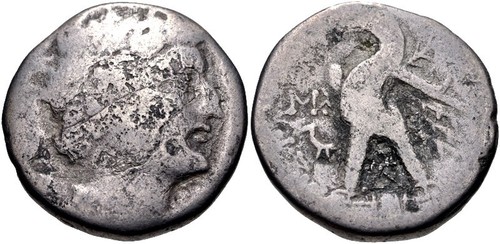
Tetradrachm of Ptolemy XII
80-51 BC
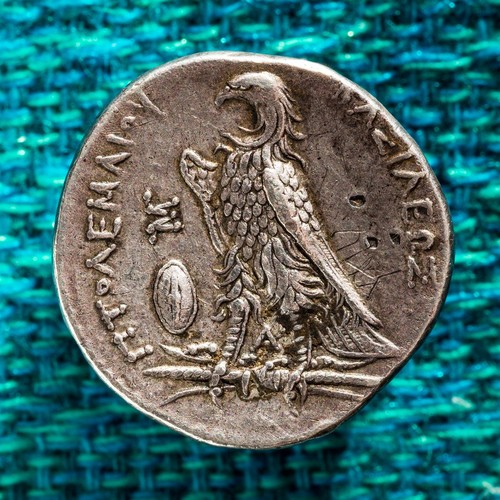
Tetradrachm of Ptolemy I
305-283 BC
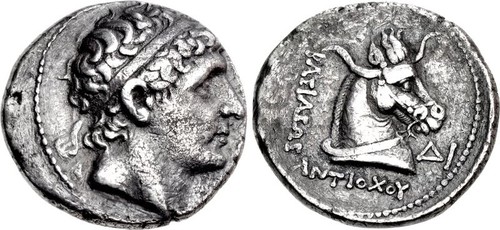
Tetradrachm of Antiochos I Soter
281-261 BC
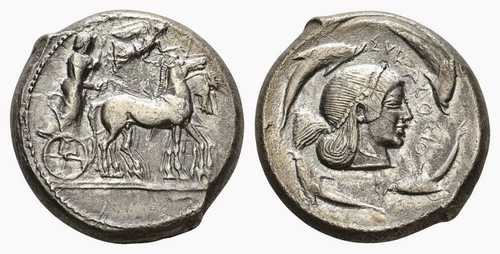
Syracuse Tetradrachm
c. 5th-4th century BC (Classical period)
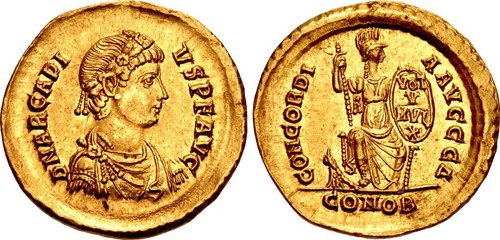
Solidus of Arcadius
AD 395-402
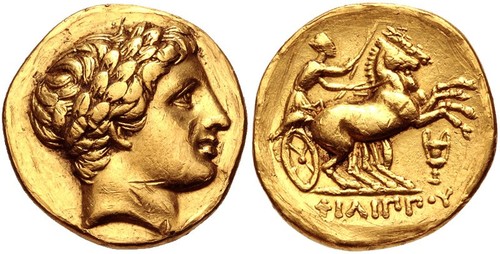
Philip III Gold Stater
323-317 BC
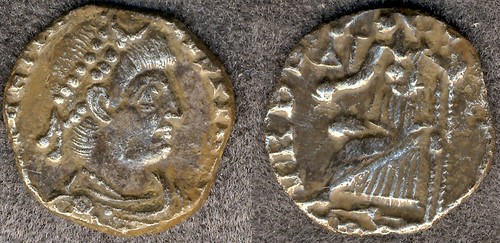
Siliqua of Gratian
AD 367-383
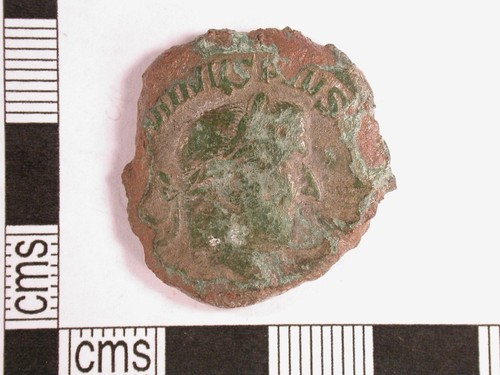
Sestertius of Maximinus Thrax
235-238 AD
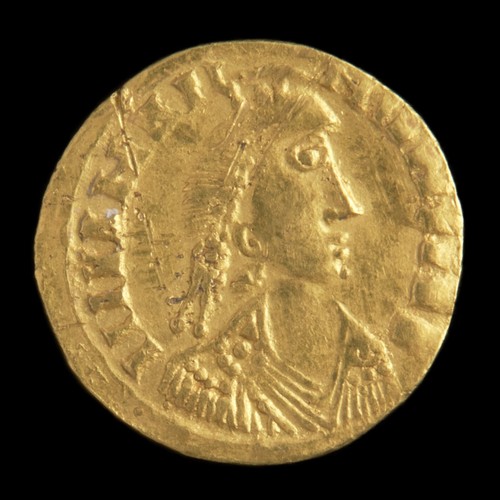
Solidus of Valentinian III
AD 425-455
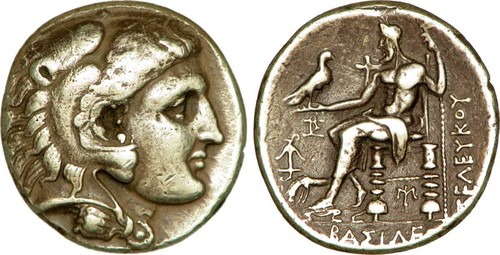
Seleucus I Nicator Tetradrachm
Late 4th-3rd century BC
Nummus of Magnentius
AD 350-353
Follis of Galerius
AD 308-310