
How to Identify the Denarius of Domitian
A collector's guide to confirming a silver denarius of Domitian by its laureate portrait, Latin titles, Minerva reverse, size, and metal.
Read the full Denarius of Domitian encyclopedia entry →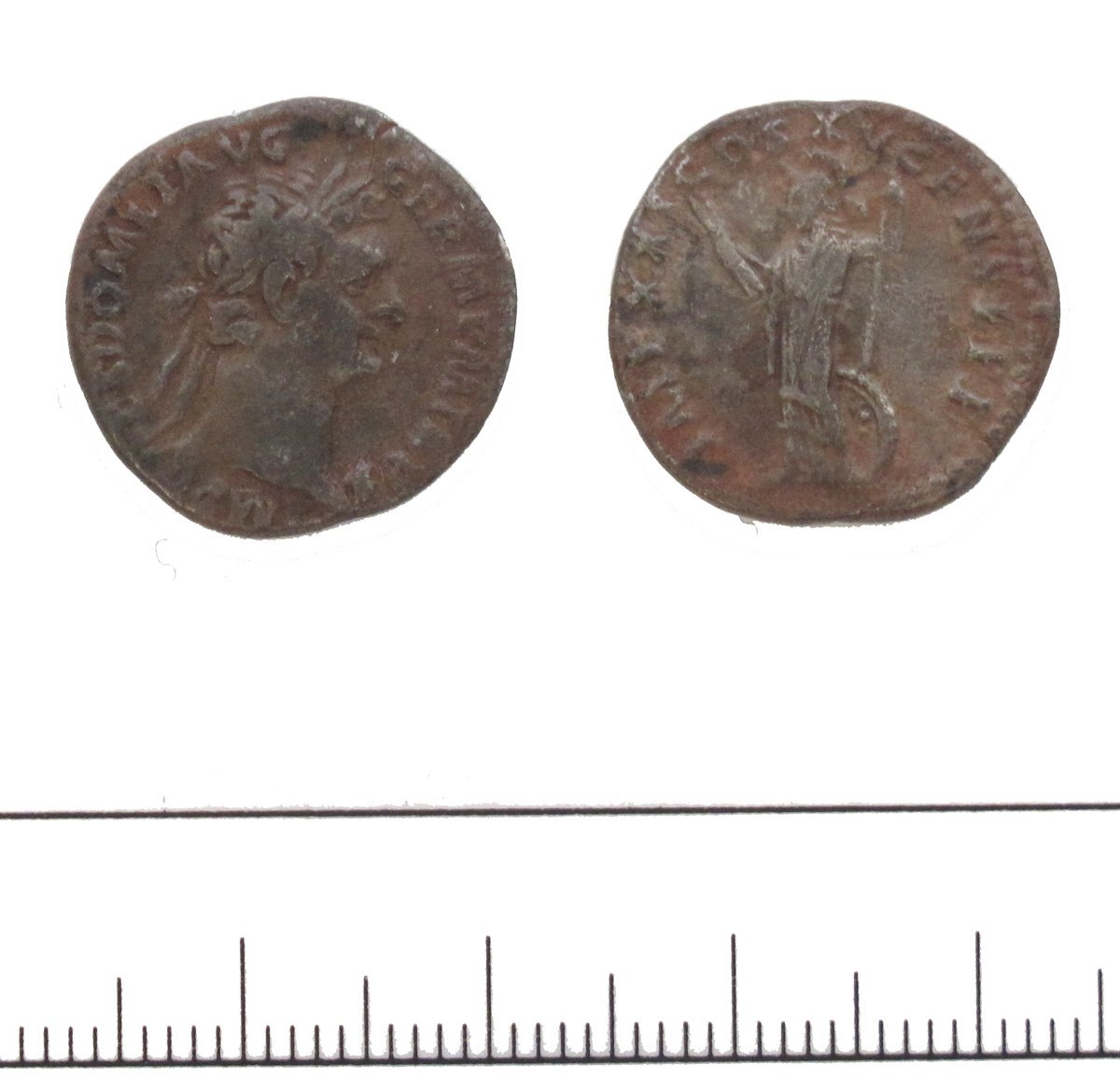
Start with the portrait and crown. This is a silver denarius, so the emperor wears a laurel wreath and faces right. If the head instead wears a spiked, sun-ray (radiate) crown, you are looking at a different denomination or a later coin, not a Domitian denarius. The style is a firm, full-cheeked Flavian profile.
Read the obverse legend carefully, as it is the primary attribution tool. Domitian's silver names him in abbreviated Latin — forms of IMP CAES DOMITIANVS AVG, and from 83 AD onward with GERM (Germanicus). Beware confusion with his father Vespasian and brother Titus, who also struck Flavian denarii; the name DOMITIANVS and the title GERM are the clearest separators. Numerals such as COS, TR P, and CENS in the legend both confirm the emperor and help date the coin.
Check the reverse. Most Domitian denarii carry Minerva in one of a few standard poses — standing with spear and shield, advancing with a thunderbolt, or standing on a ship's prow. A Minerva reverse combined with the Domitian obverse legend is a strong confirmation. Other reverse figures exist, so use the obverse name as the anchor and the reverse to narrow the exact type.
Measure size, weight, and metal. Expect roughly 17-19 mm and about 3.0-3.5 grams of toned silver with a hand-struck, slightly irregular flan. The coin should not be magnetic. Genuine strikes show crisp, detailed dies; soft, mushy relief, a seam around the edge, or a brassy tone point to a cast reproduction.
Finally, apply authentication caution. Domitian silver is popular and frequently forged, and modern casts and fantasy pieces circulate freely. Compare portrait style and lettering against verified reference images, watch for repeated flaws typical of casts, and be wary of surfaces that look too smooth or artificially toned. For any coin of real value, third-party certification by an ancient-coin grading service is the safest confirmation of both authenticity and grade.
Frequently asked questions
What is the fastest way to confirm a Domitian denarius?
Match a laureate right-facing portrait to an obverse legend naming DOMITIANVS (often with GERM), paired with a Minerva reverse. That combination on a small toned-silver coin is characteristic of his denarii.
How do I tell it apart from Vespasian or Titus denarii?
Read the name in the legend. All three Flavians struck similar silver, but only Domitian's coins carry DOMITIANVS, and from 83 AD the title GERM (Germanicus), which his father and brother did not use.
What size and weight should it be?
Expect a small silver coin about 17-19 mm across and roughly 3.0-3.5 grams, hand-struck on a slightly irregular flan. A magnetic, oversized, or seamed piece is a warning sign of a fake or cast.
Should I clean an ancient denarius before selling?
No. Cleaning silver leaves hairlines and strips the original toning that collectors value. Leave the surfaces as found and let a specialist or grading service assess the coin as-is.