
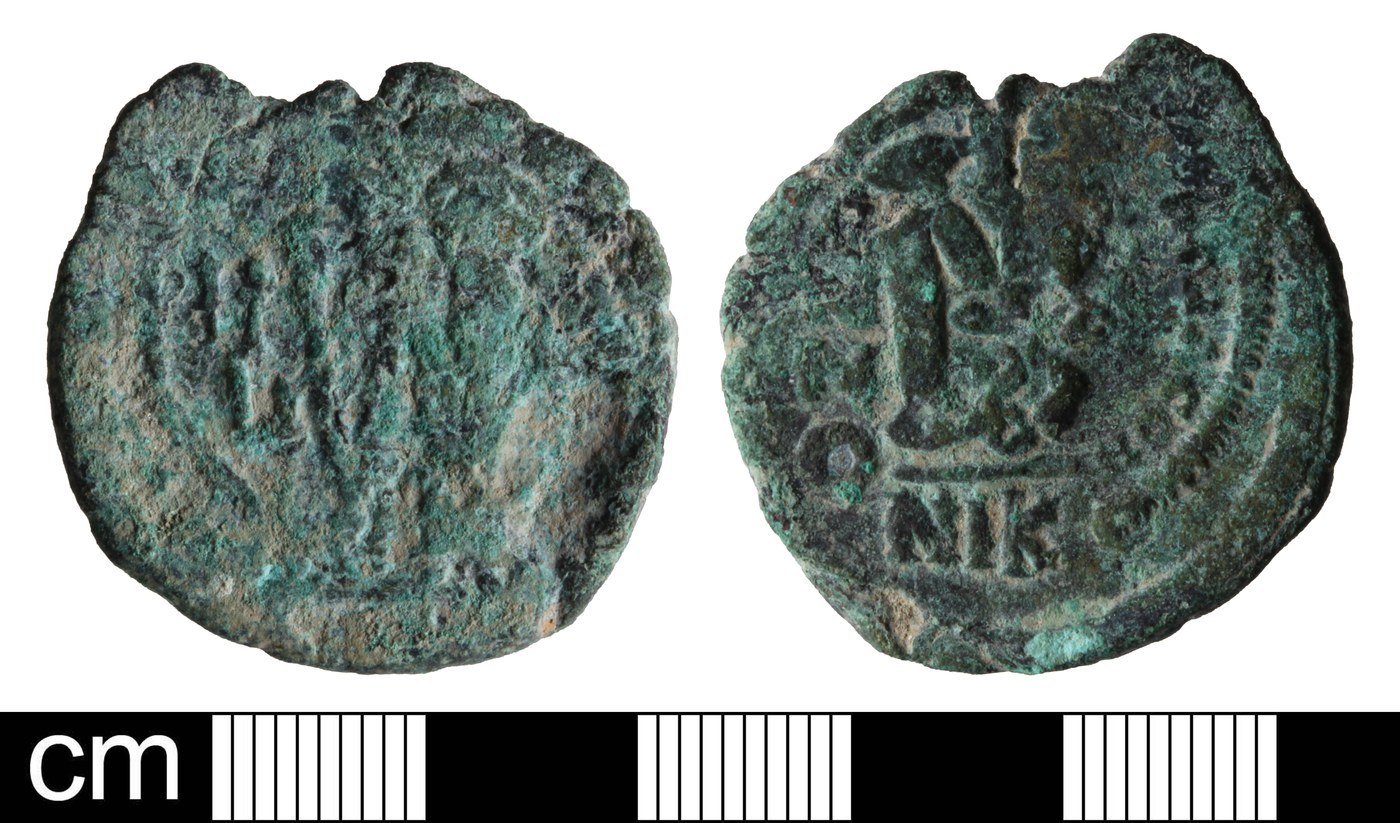
Byzantine Nummus of Tiberius Constantine
A small bronze coin of Byzantine emperor Tiberius II Constantine (AD 578-582), with an imperial portrait or inscription and a mark of value or monogram.
- Country
- Byzantine Empire
- Denomination
- Nummus
- Metal
- Bronze
Got a coin like this?
Identify any coin from a photo, free.
Overview
The nummus is the smallest bronze denomination of the late Roman and Byzantine monetary system, and this type was struck during the short reign of the emperor Tiberius II Constantine, who ruled from AD 578 to 582. By the sixth century the individual nummus was a tiny, low-value coin, with everyday transactions handled by larger bronze multiples such as the follis and its fractions.
On coins of this reign the obverse carries an imperial element: a crowned or diademed portrait, or an inscription naming the emperor in the Latin and increasingly abbreviated forms typical of Byzantine bronze. The reverse bears a numismatic device rather than a scene, most often a mark of value, a large letter or numeral, a cross, or an imperial monogram. The observed portrait-and-inscription obverse with an inscription-or-symbol reverse fits this pattern.
Because the nummus is small and its designs are compressed, these coins are prized more as historical artifacts of a brief but pivotal reign than as showpieces. They belong to the same reformed copper system that Anastasius introduced in AD 498 and that Justinian and his successors continued.
History & Background
Tiberius II Constantine rose through the imperial court and served as Caesar under the emperor Justin II before becoming sole Augustus in AD 578. His reign, cut short by his death in 582, fell in a turbulent era marked by warfare with Sasanian Persia in the east and Avar and Slav pressure in the Balkans. He was succeeded by Maurice, whom he designated as heir.
The coinage of his reign operated within the reformed bronze system created by Anastasius I in AD 498, which introduced the follis and marked the copper denominations with Greek numerals of value. In this scheme M stood for the follis of forty nummi, K for the half-follis of twenty, I for the decanummium of ten, and E for the pentanummium of five, while the plain nummus represented the single base unit. By Tiberius Constantine's day the smallest coins were struck in far smaller numbers than the workhorse folles.
Most bronze of the reign came from the great mint of Constantinople, with additional eastern and Balkan mints striking base coinage. The emperor's gold and silver bear his fuller titulature, but the small bronze compresses his name and titles heavily, reflecting the limited space on a tiny flan.
How to Identify
Attribution of a sixth-century nummus begins with the emperor. On this type the obverse presents an imperial portrait, typically a facing or profile crowned bust, or an inscription naming the ruler. The legend is in Latin, usually abbreviated and often blundered or only partly struck, and forms of the name Tiberius Constantine (Latin TIBERIVS CONSTANTINVS, frequently shortened) are the key confirmation of the reign.
The reverse of the smallest bronze is a numismatic device rather than a figural scene. Expect a mark of value, a large letter or monogram, a cross, or a similar symbol, sometimes with a mint signature in the exergue. Because the nummus is the single-unit coin, it does not carry the large M, K, I or E value marks of the bigger multiples; a monogram or plain symbol on the reverse is consistent with the base denomination.
In hand the coin is very small and light, on the order of a centimeter or so across and only a gram or two, struck in bronze. Surfaces are usually worn, and the metal now shows brown, green or dark patina. Strikes are often off-center or weak, so partial legends and softly rendered devices are the norm rather than a defect.
Value & Collectibility
Small Byzantine bronzes of this era are generally modest in price, and much depends on how completely the coin can be attributed. Worn, partially legible nummi and small fractions often trade in the low tens of dollars, while pieces with a clear portrait, a readable name, a sharp reverse device and an identifiable mint bring more.
Because the nummus is tiny and frequently weakly struck, legibility is the main driver of value. A coin on which the emperor's name and the reverse symbol can both be read commands a premium over an anonymous scrap of the same denomination. Attractive patina and good centering add appeal, while heavy corrosion, pitting or an illegible strike reduce it.
These figures are broad context, not appraisals. An individual coin's price depends on grade, legibility, denomination, mint and provenance, and securely attributed small bronzes of a short reign can sit above the ranges given here.
Frequently asked questions
Who was Tiberius Constantine?
Tiberius II Constantine was a Byzantine emperor who reigned from AD 578 to 582. He had served as Caesar under Justin II and was succeeded by Maurice. His reign was short and dominated by war with Persia and pressure on the Balkan frontier.
What is a nummus?
The nummus was the smallest bronze denomination of the late Roman and Byzantine coinage, the single base unit against which larger coins were valued. In the reformed system a follis equaled forty nummi, so the nummus itself was a very small, low-value coin.
Why is the coin so small and hard to read?
The nummus was struck on a tiny flan, so its designs are compressed and the Latin legends heavily abbreviated. Weak or off-center strikes were common, and centuries of wear and patina further obscure the details, so partial legends are typical.
What appears on the reverse?
On the smallest bronze the reverse usually shows a numismatic device rather than a figural scene: a mark of value, a large letter, a monogram, a cross, or a similar symbol, sometimes with a mint signature. The single nummus does not carry the large M, K, I or E value marks of the bigger multiples.
Byzantine Nummus of Tiberius Constantine guides
In-depth guides for identifying, valuing, and collecting Byzantine Nummus of Tiberius Constantine.
Other coins you may enjoy
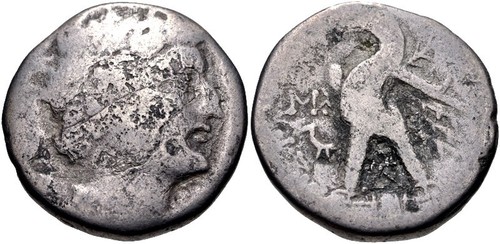
Tetradrachm of Ptolemy XII
80-51 BC
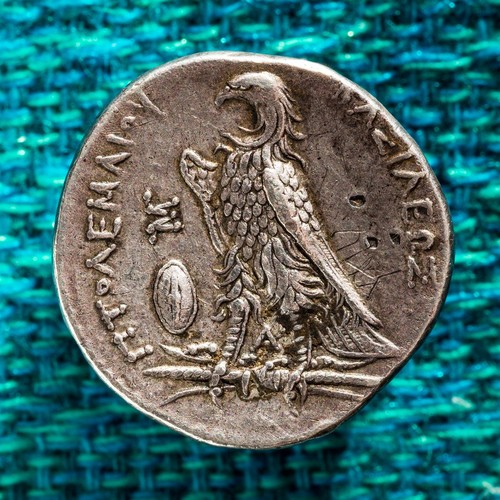
Tetradrachm of Ptolemy I
305-283 BC
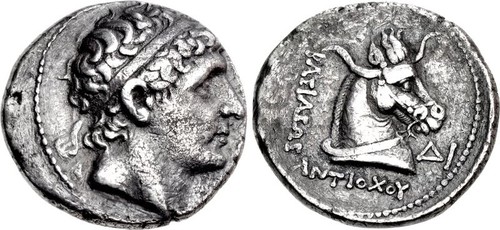
Tetradrachm of Antiochos I Soter
281-261 BC
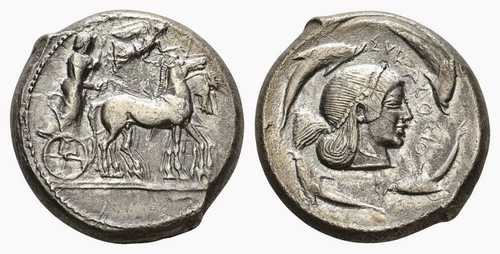
Syracuse Tetradrachm
c. 5th-4th century BC (Classical period)
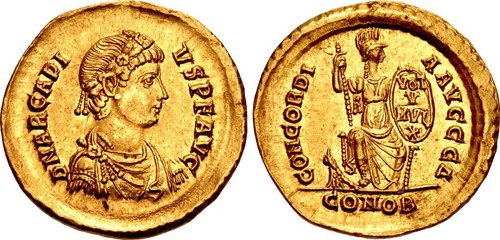
Solidus of Arcadius
AD 395-402
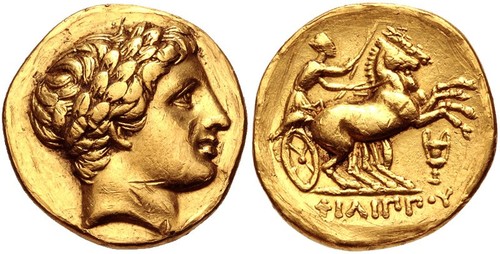
Philip III Gold Stater
323-317 BC
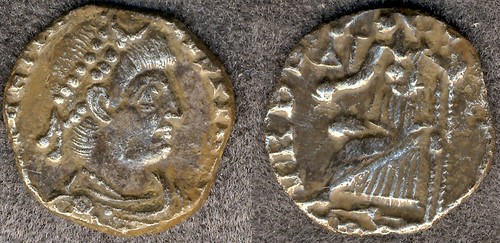
Siliqua of Gratian
AD 367-383
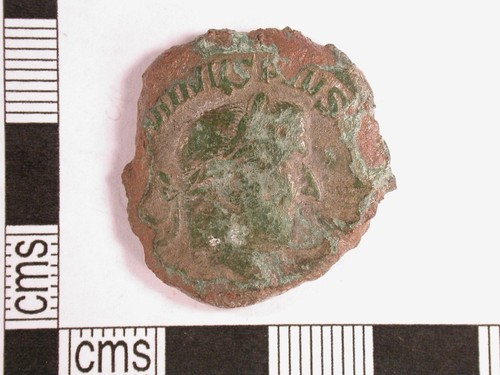
Sestertius of Maximinus Thrax
235-238 AD
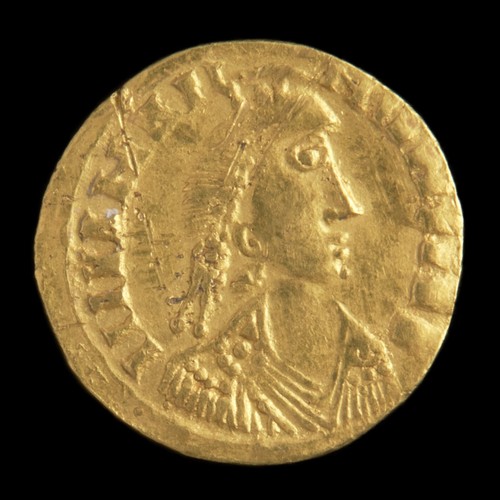
Solidus of Valentinian III
AD 425-455
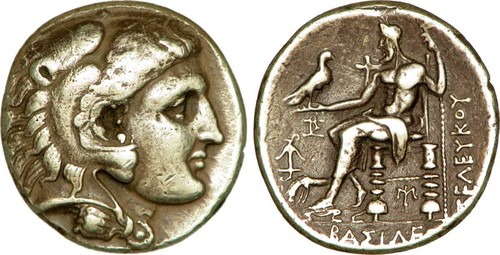
Seleucus I Nicator Tetradrachm
Late 4th-3rd century BC
Nummus of Magnentius
AD 350-353
Follis of Galerius
AD 308-310