
How to Identify the Byzantine Nummus of Tiberius Constantine
A collector's guide to attributing a tiny sixth-century Byzantine bronze: reading the portrait, the abbreviated name, reverse symbols, size and mint.
Read the full Byzantine Nummus of Tiberius Constantine encyclopedia entry →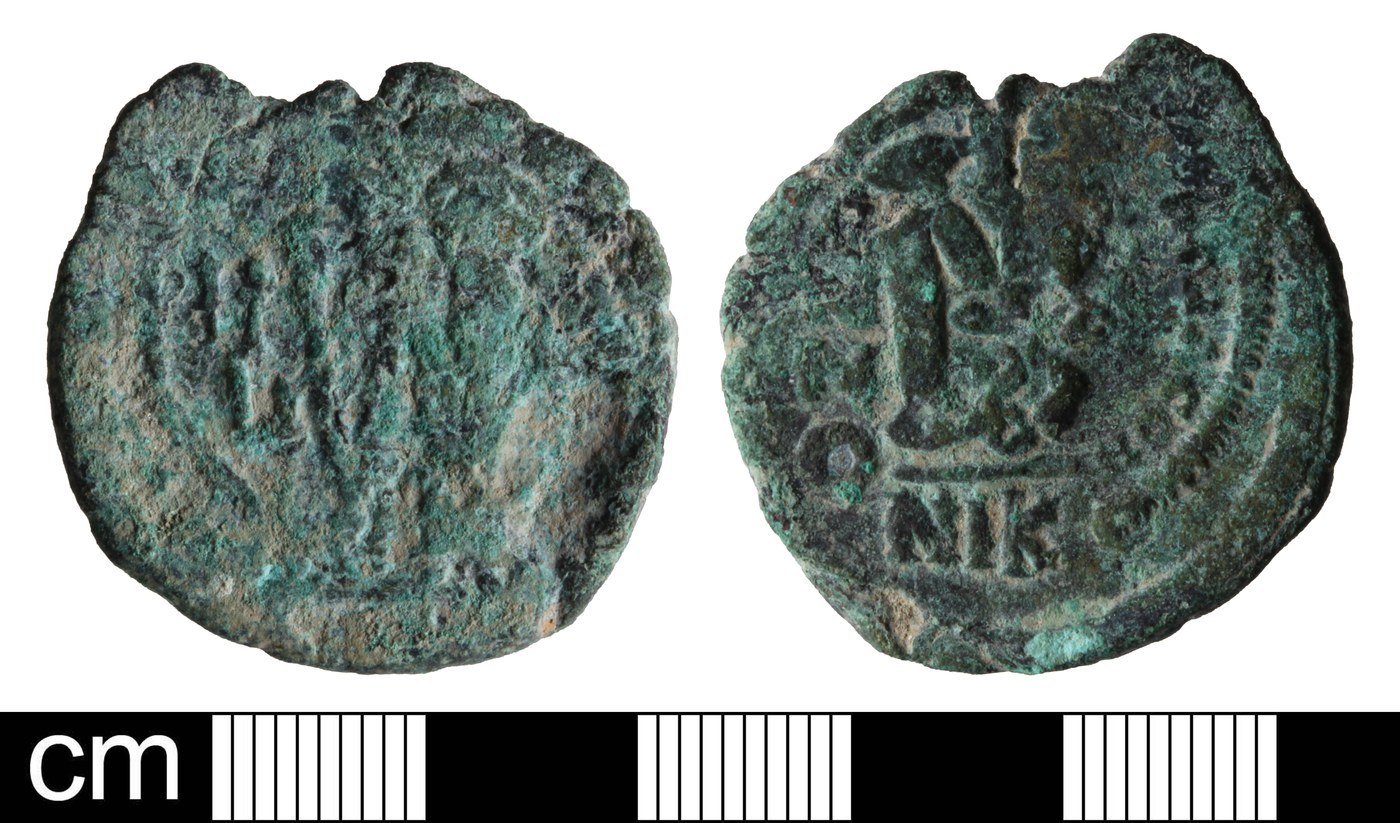
Start with the obverse, because it ties the coin to a ruler and an era. A nummus of this type shows an imperial portrait, commonly a crowned facing or profile bust, or an inscription naming the emperor. The legend is Latin and heavily abbreviated; look for forms of TIBERIVS CONSTANTINVS around the bust. Because these little coins are often weakly struck, you may recover only a few letters, so work with whatever fragment of the name survives and cross-check it against catalogued legends for the reign.
Measure and weigh the coin, since size alone narrows the denomination. The nummus is the smallest Byzantine bronze, on the order of roughly a centimeter across and only about one to two grams. If a coin is large and heavy and carries a big value mark on the reverse, it is a follis or a fraction of one, not a single nummus. The metal is bronze, so expect brown, green or dark patina rather than any silvery surface.
Read the reverse as a device, not a picture. The smallest bronze typically bears a mark of value, a large letter, a monogram, or a cross, and may show a mint signature in the exergue. Crucially, the single nummus does not carry the large M (40), K (20), I (10) or E (5) numerals that identify the larger multiples; those numerals point to a different denomination even within the same reign. A plain symbol or monogram is consistent with the base unit.
Use the mint signature where one survives. Most bronze of the reign came from Constantinople, but eastern and Balkan mints such as Antioch (Theoupolis), Nicomedia, Cyzicus and Thessalonica also struck base coinage, and exergual letters help pin down where a coin was made. On a nummus these marks are often off the flan or unstruck, so absence of a mint mark is common and not itself a red flag.
Watch for look-alikes and authentication concerns. Small bronzes of neighboring reigns, of Justin II or Maurice, share fabric, portrait style and reverse conventions, so the abbreviated name is what separates them, not the general appearance. Illegible or contemporary imitations exist, and modern cast fakes show tell-tale seams, soft bubbly surfaces or a style that does not match known dies. For any significant purchase, favor a coin whose name and reverse device can both be read, and lean on specialist attribution or reputable provenance rather than the portrait alone.
Frequently asked questions
How do I confirm the coin is Tiberius Constantine's and not another emperor's?
Read the obverse legend for forms of TIBERIVS CONSTANTINVS. Small bronzes of Justin II and Maurice look very similar in fabric and style, so the abbreviated name, not the portrait or reverse device, is what identifies the reign. Recover as much of the legend as the strike allows.
What size and weight mark it as a nummus rather than a larger bronze?
The nummus is the smallest Byzantine bronze, roughly a centimeter across and about one to two grams. Larger, heavier coins bearing big value numerals such as M, K, I or E are folles or their fractions, not single nummi.
There is no clear mint mark. Is that a problem?
Not necessarily. On such tiny, often off-center coins the exergual mint signature is frequently unstruck or off the flan. Most bronze came from Constantinople, with several eastern and Balkan mints active, but a missing mint mark is common and does not by itself indicate a fake.
How can I spot a cast forgery of a small Byzantine bronze?
Look for a seam around the edge, a soft or bubbly surface, unnatural weight, or a portrait and lettering style that does not match known dies. Genuine nummi are struck bronze with honest wear and patina; for valuable pieces, seek specialist attribution or trusted provenance.