
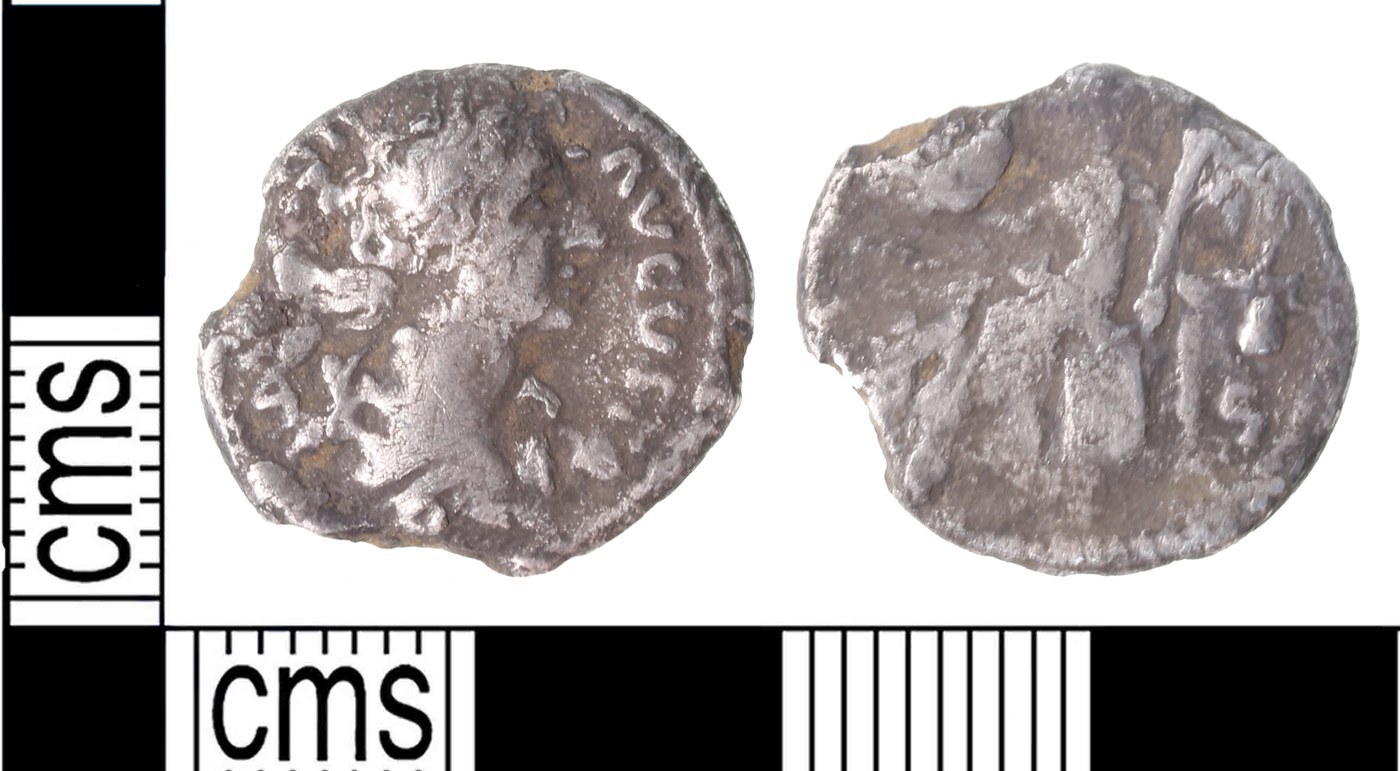
Denarius of Faustina the Younger
Roman Imperial silver denarius of Faustina the Younger, showing her draped bust with an elaborate curled hairstyle and a standing deity or personification on the reverse.
- Country
- Roman Empire
- Denomination
- Denarius
- Metal
- Silver
Got a coin like this?
Identify any coin from a photo, free.
Overview
The Denarius of Faustina the Younger is a Roman Imperial silver coin struck in the name of Faustina II, daughter of the emperor Antoninus Pius and wife of Marcus Aurelius. The example shown here follows the standard pattern for her coinage: a draped female bust facing right with an elaborate, tightly curled or waved hairstyle on the obverse, paired with a standing female figure in robes on the reverse, often a goddess or personification who may hold a scepter, patera, or other attribute.
The denarius was the everyday silver coin of the Roman Empire, a small hand-struck piece roughly the size of a modern dime. Faustina's obverse carries a Latin legend naming her — commonly FAVSTINA AVGVSTA — while the reverse legend names the deity or virtue depicted. Her coinage is abundant and was issued over a long span, both during her lifetime and, after her death, as commemorative deification issues.
Because each denarius was struck by hand from individually engraved dies, no two are identical; centering, strike, and wear vary from coin to coin, and her elaborate hairstyle is one of the most recognizable features of the type.
History & Background
Faustina the Younger (Annia Galeria Faustina Minor, ca. 130-175 AD) was the daughter of Antoninus Pius and Faustina the Elder and became the wife of Marcus Aurelius, making her empress during one of the high points of the Roman Empire. She bore numerous children, including the future emperor Commodus, and her coinage repeatedly emphasizes themes of family, fertility, and imperial harmony.
Her denarii were struck at the mint of Rome across a long period, beginning under her father Antoninus Pius (from the late 140s AD) and continuing through the reign of Marcus Aurelius until her death around 175 AD. Reverse types frequently show goddesses and personifications such as Venus, Juno, Concordia, Fecunditas (fertility), Diana, and Pudicitia, reflecting her public role as wife and mother of the imperial house. After she died she was deified, and later issues bear the legend DIVA FAVSTINA with consecration themes.
The denarius itself was the backbone of Roman silver currency for centuries. Faustina's issues were produced in large quantities and circulated widely across the empire, which is why they survive today in considerable numbers and remain among the more commonly encountered Antonine-era silver coins.
How to Identify
Identify the coin first as a Roman Imperial denarius: a small silver piece roughly 17-19 mm across and typically around 2.8-3.5 grams, hand-struck so the flan is often slightly irregular or off-center. The obverse shows a draped female bust facing right with a distinctive elaborate hairstyle — waves drawn back from the face and gathered into a bun or coiled arrangement — which is a hallmark of Faustina II's portraits.
Read the obverse legend to attribute it. Her coins are typically inscribed FAVSTINA AVGVSTA, or on earlier issues forms such as FAVSTINAE AVG PII AVG FIL (Faustina, daughter of Antoninus Pius); posthumous coins read DIVA FAVSTINA. The reverse shows a standing (or sometimes seated) female figure in robes, with a legend naming the deity or virtue — for example VENVS, IVNO, CONCORDIA, FECVNDITAS, or SALVS — often holding a scepter, patera, child, or other attribute.
Distinguish Faustina II from her mother, Faustina the Elder (Faustina I), whose coins are usually posthumous and read DIVA FAVSTINA with a somewhat different hairstyle. The metal should look like toned silver rather than the brassy tone of a base-metal cast, and genuine strikes show crisp die detail rather than the soft, blurry surfaces of a mould copy.
Value & Collectibility
Denarii of Faustina the Younger are among the more common and affordable Roman Imperial silver coins, so value is driven mainly by condition, strike, and eye appeal rather than by scarcity. Worn, off-center, or lightly corroded examples are inexpensive, while sharply struck coins with a full portrait, clear legends, and attractive toning bring a solid premium.
The reverse type also matters: some deity and personification types are more sought-after than others, and unusual or well-documented varieties can command higher prices. A coin with a bold, detailed portrait of the elaborate hairstyle and a readable reverse legend is worth considerably more than a low-grade piece with weak strike or cleaning marks.
Because Antonine silver is frequently forged and prices swing with condition, confirm value against recent auction results for the same type and grade. For any coin of significant value, certification by a recognized ancient-coin grading service reduces both authenticity and grade risk.
Frequently asked questions
Who was Faustina the Younger?
Faustina the Younger (Faustina II) was the daughter of the emperor Antoninus Pius and the wife of Marcus Aurelius, making her a Roman empress in the 2nd century AD. Her denarii were struck in her name to honor her role in the imperial family.
How can I tell it is Faustina II and not her mother?
Read the obverse legend and note the hairstyle. Faustina II's coins typically read FAVSTINA AVGVSTA (or DIVA FAVSTINA when posthumous), while her mother, Faustina the Elder, is almost always shown on posthumous DIVA FAVSTINA issues with a different coiffure. Comparing the portrait style to reference images helps confirm.
What is on the reverse?
Reverses usually show a standing or seated goddess or personification in robes, such as Venus, Juno, Concordia, Fecunditas, or Salus, often holding a scepter, patera, or child. A Latin legend naming the figure runs around the reverse.
Is the denarius real silver?
Yes. The denarius of this period was struck in silver, roughly 17-19 mm across and about 2.8-3.5 grams. Genuine examples show toned silver and crisp die detail, not the brassy color or soft surfaces of a base-metal cast copy.
Are these coins rare or valuable?
Faustina II denarii are relatively common, so most value comes from condition rather than scarcity. Worn pieces are affordable, while sharply struck, well-centered coins with clear legends and pleasing toning, or scarcer reverse types, bring higher prices.
Denarius of Faustina the Younger guides
In-depth guides for identifying, valuing, and collecting Denarius of Faustina the Younger.
Other coins you may enjoy
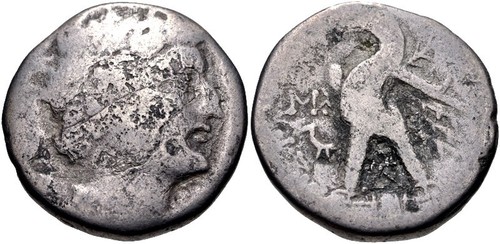
Tetradrachm of Ptolemy XII
80-51 BC
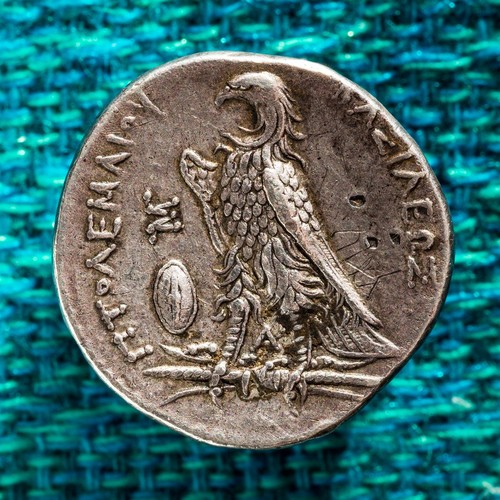
Tetradrachm of Ptolemy I
305-283 BC
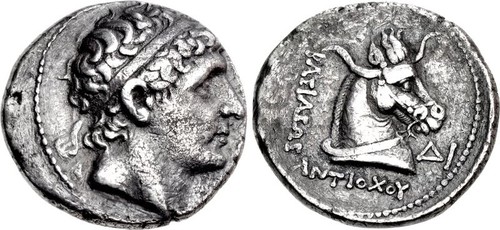
Tetradrachm of Antiochos I Soter
281-261 BC
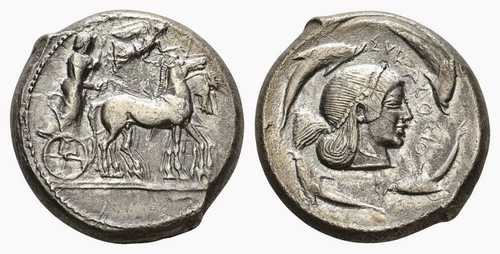
Syracuse Tetradrachm
c. 5th-4th century BC (Classical period)
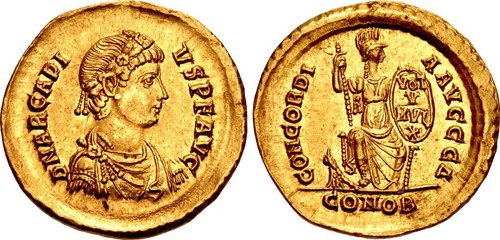
Solidus of Arcadius
AD 395-402
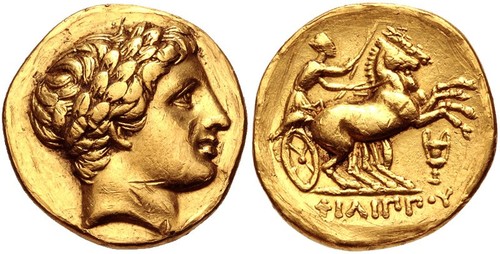
Philip III Gold Stater
323-317 BC
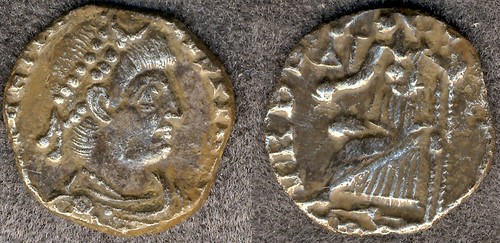
Siliqua of Gratian
AD 367-383
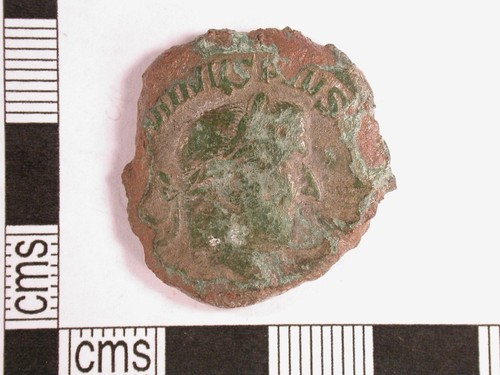
Sestertius of Maximinus Thrax
235-238 AD
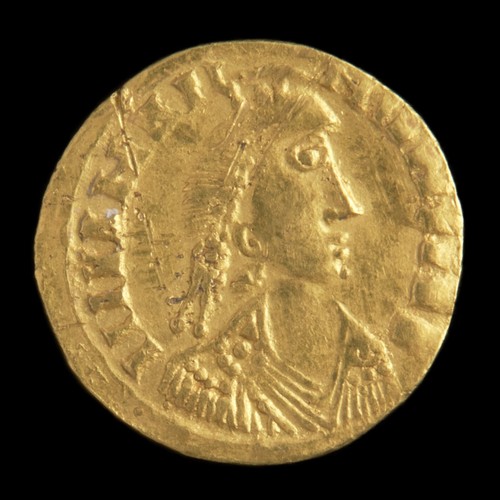
Solidus of Valentinian III
AD 425-455
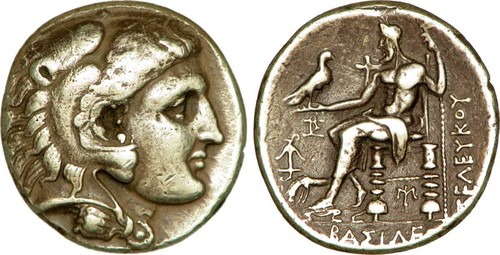
Seleucus I Nicator Tetradrachm
Late 4th-3rd century BC
Nummus of Magnentius
AD 350-353
Follis of Galerius
AD 308-310