
How to Identify the Denarius of Faustina the Younger
A collector's guide to recognizing a silver denarius of Faustina II by her elaborate hairstyle, FAVSTINA legend, standing-deity reverse, and silver fabric.
Read the full Denarius of Faustina the Younger encyclopedia entry →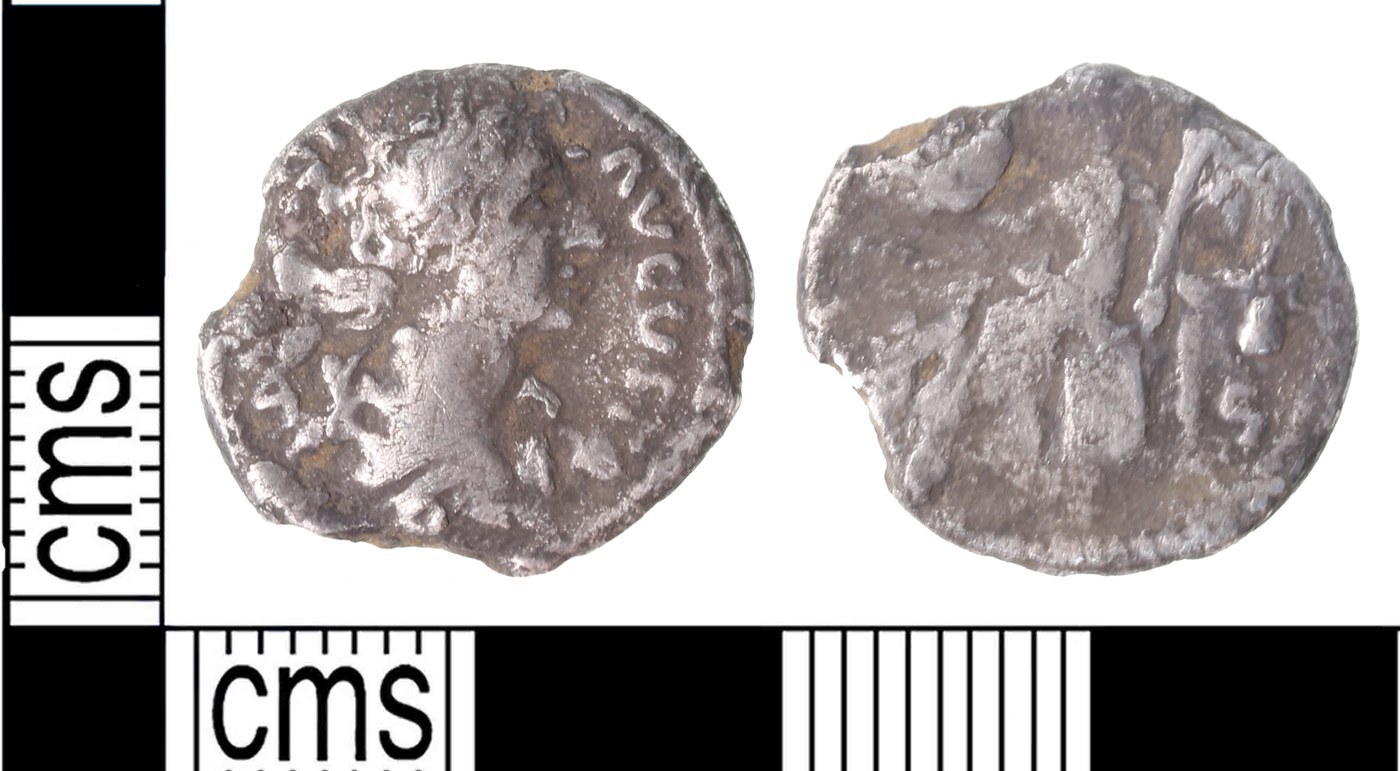
Begin by placing the coin in the right series. This is a Roman Imperial denarius: a small, hand-struck silver coin about 17-19 mm in diameter and roughly 2.8-3.5 grams. Expect a slightly irregular flan, some off-center striking, and a solid silver look with age toning. If the piece is large, perfectly round, thick, or brassy in color, it is likely a later coin, a provincial bronze, or a replica rather than an Antonine denarius.
Study the obverse portrait. Faustina the Younger is shown as a draped bust facing right with an elaborate hairstyle — waves or curls drawn back from the forehead and gathered into a coiled bun at the back of the head. This coiffure is one of the most reliable visual cues for her coinage. Then read the legend: look for FAVSTINA AVGVSTA, earlier forms such as FAVSTINAE AVG PII AVG FIL, or the posthumous DIVA FAVSTINA.
Check the reverse type and legend. Expect a standing or seated female figure in robes — a goddess or personification such as Venus, Juno, Concordia, Fecunditas, Diana, or Salus — commonly holding a scepter, patera, child, or cornucopia. The reverse legend names that figure, and matching both the legend and the pose to a reference catalogue pins down the exact variety among her many issues.
Beware of look-alikes. The biggest confusion is with Faustina the Elder (Faustina I), who also appears as DIVA FAVSTINA; distinguish them by hairstyle, portrait style, and the overall issue rather than the name alone. Provincial and later Roman coins can share a female bust and standing-deity layout, so rely on the silver fabric, small size, and Latin imperial legend to keep the identification on track.
For authentication, weigh and measure the coin and compare its style and legends to verified images of the same type. Antonine silver is heavily counterfeited: watch for cast signs such as soft or blurry detail, edge seams, surface bubbles, and incorrect weight, while genuine struck coins show crisp die work. For any valuable example, third-party certification by a recognized ancient-coin grading service is the safest way to confirm authenticity and grade.
Frequently asked questions
What features confirm it is Faustina the Younger?
The combination of an obverse legend reading FAVSTINA AVGVSTA (or DIVA FAVSTINA) with a draped female bust in her characteristic elaborate, coiled hairstyle. A standing goddess or personification on the reverse with a matching legend supports the attribution.
How do I tell Faustina II from Faustina I?
Both can read DIVA FAVSTINA, so use the hairstyle, portrait style, and overall issue rather than the name alone. Faustina the Elder's coins are almost all posthumous, while Faustina the Younger has extensive lifetime issues reading FAVSTINA AVGVSTA. Comparing to reference images is the surest method.
What size and weight should it be?
A genuine denarius of this era is small — about 17-19 mm across and roughly 2.8-3.5 grams of silver, often on a slightly irregular flan. Coins well outside that range, or magnetic ones, are suspect.
How do I spot a fake?
Check for cast signs such as soft or blurry detail, edge seams, surface bubbles, and wrong weight, since genuine coins are struck with crisp die detail. For valuable examples, rely on a reputable ancient-coin grading service to confirm authenticity.