
Coin Encyclopedia
Search and identify coins from around the world — with country, denomination, metal, mint, history, and how to tell them apart.
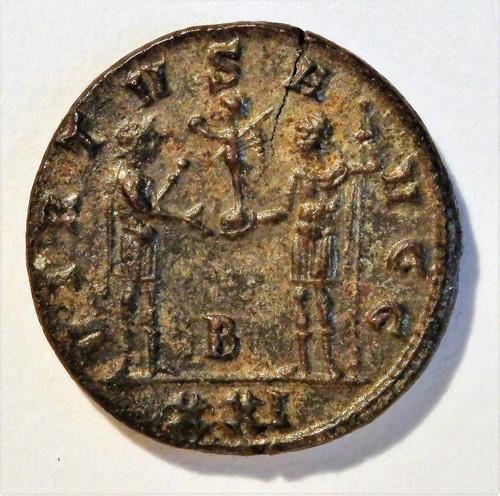
Antoninianus of Carinus
Bronze radiate coin of the emperor Carinus (283-285 AD), recognizable by his spiked crown and a standing or seated deity on the reverse.
Ancient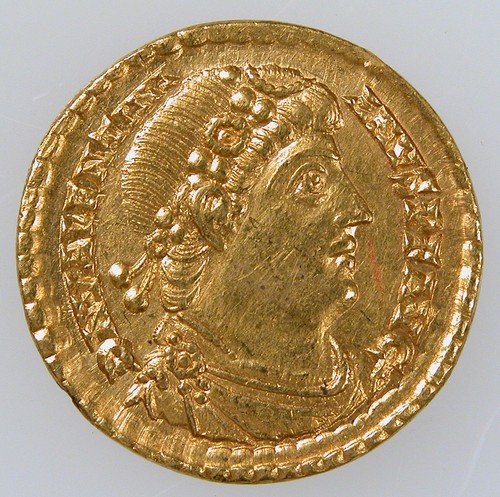
Solidus of Valentinian I
The gold solidus of Valentinian I (AD 364-375), a pure-gold coin bearing his pearl-diademed profile that anchored the late Roman monetary system.
Ancient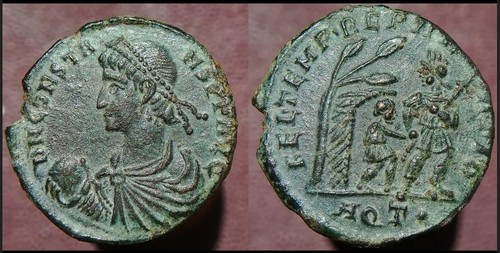
Centenionalis of Constans
A mid-4th-century Roman bronze of Constans bearing the FEL TEMP REPARATIO reform reverse, showing a soldier lifting a small captive from a hut.
Ancient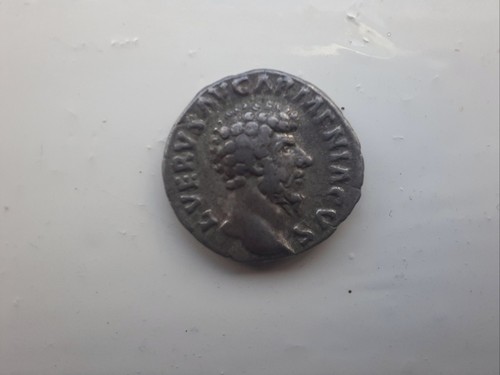
Denarius of Lucius Verus
A silver Roman denarius of the emperor Lucius Verus (161–169 AD), showing his curly-haired, bearded portrait facing right with a Latin legend.
Ancient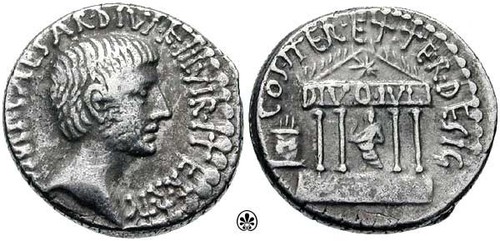
Denarius of Cordius
Roman Republican silver denarius struck by the moneyer Manius Cordius Rufus, with a right-facing head on the obverse and a standing figure and CORDIVS legend on the reverse.
Ancient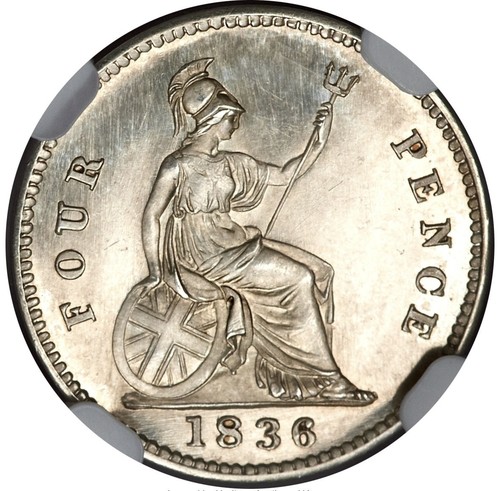
Groat of William IV
A small silver fourpenny piece of William IV (1836–1837), with a seated Britannia reverse; the coin that revived the modern British groat.
Milled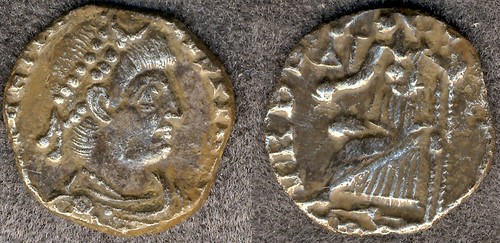
Siliqua of Gratian
A small late Roman silver siliqua of the emperor Gratian (AD 367-383), with his diademed bust on the obverse and a standing figure or personification on the reverse.
Ancient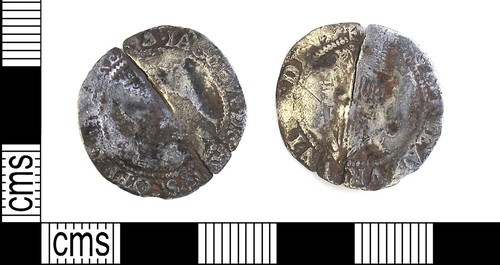
Sixpence of James I
A hammered silver sixpence of James I of England: crowned profile bust with VI value mark, and a dated garnished shield over a cross on the reverse.
Hammered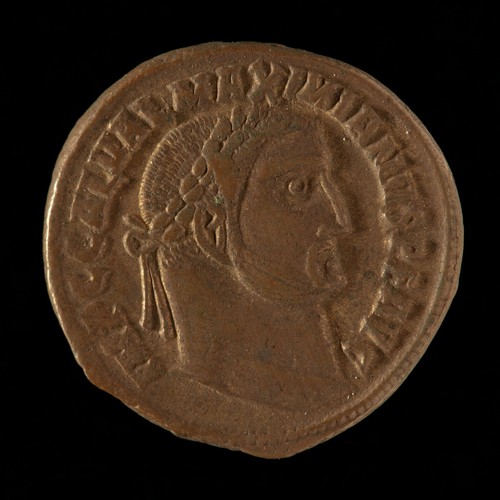
Follis of Galerius
A large silvered bronze follis of the emperor Galerius (Augustus AD 305-311), struck across the Tetrarchic mints with a laureate portrait and a standing deity reverse.
Ancient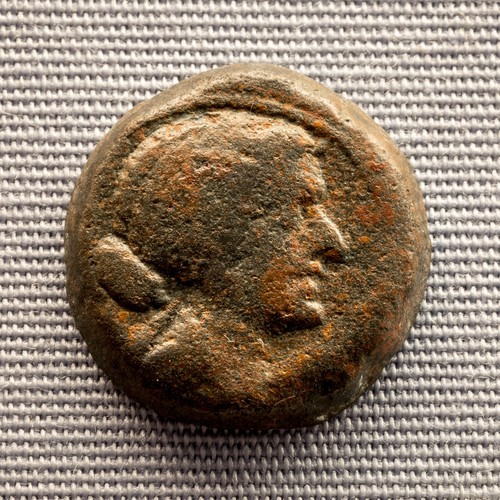
Bronze Coin of Cleopatra VII
Ptolemaic bronze coin of Cleopatra VII of Egypt, 51-30 BC, showing her draped diademed bust in profile as sole named female ruler of the dynasty.
Ancient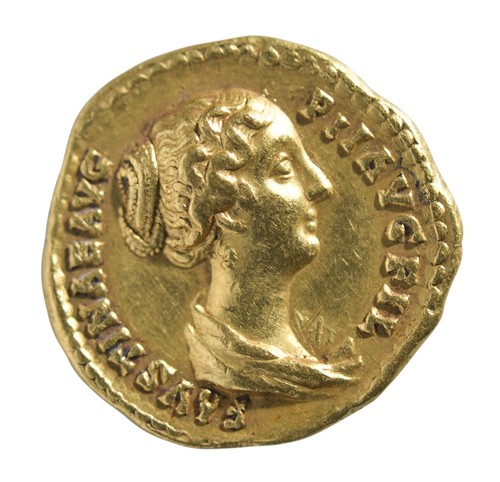
Aureus of Faustina II
Roman imperial gold coin with the draped bust of Faustina II, daughter of Antoninus Pius and wife of Marcus Aurelius, struck around 147-150 AD.
Ancient Coins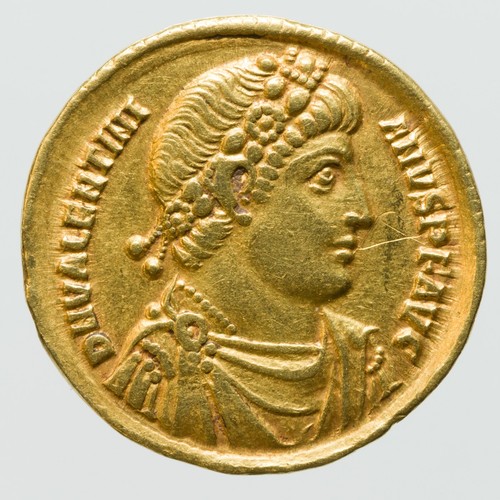
Solidus of Valentinian II
A late Roman gold solidus struck for Valentinian II, showing his diademed profile with the obverse legend D N VALENTINIANVS, from the 380s AD.
Ancient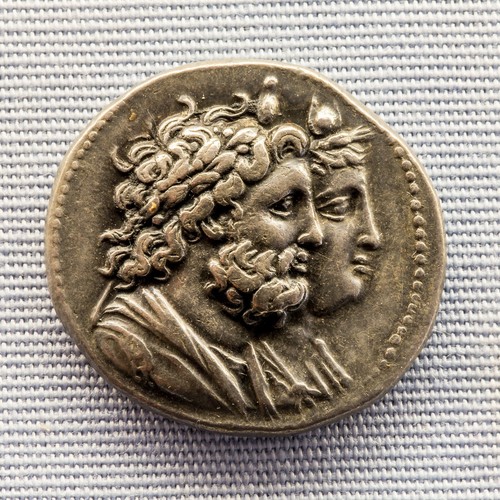
Tetradrachm of Ptolemy IV
Silver tetradrachm of Ptolemy IV Philopator, 221-204 BC, with the jugate busts of Sarapis and Isis on the obverse and an eagle on a thunderbolt on the reverse.
Ancient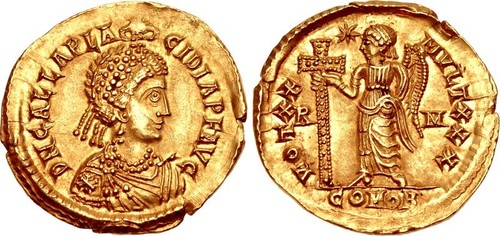
Solidus of Galla Placidia
A late Roman gold solidus struck in the name of Galla Placidia, empress and regent, showing her diademed bust and a Victory holding a long cross.
Ancient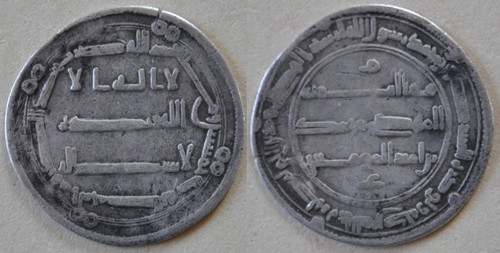
Dirham of Caliph al-Mansur
An Abbasid silver dirham dated AH 150 (767 CE), from the reign of Caliph al-Mansur, bearing purely Arabic religious inscriptions and a named mint.
Islamic (Medieval)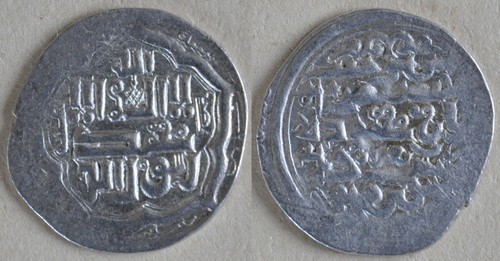
Ilkhanid Dirham of Ghazan
A silver dirham of the Mongol Ilkhanate struck for Ghazan Khan, with an ornamental cartouche bearing the ruler's name and concentric Arabic and Persian inscriptions.
Islamic (Medieval)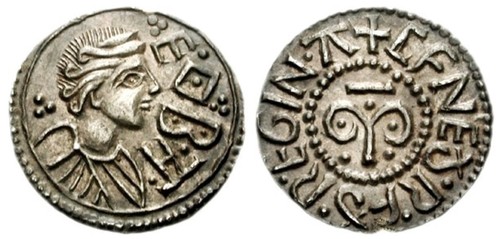
Penny of Cynethryth
Anglo-Saxon silver penny of Cynethryth, queen of Mercia and wife of Offa, and the only Anglo-Saxon queen named on her own coinage.
Medieval Coins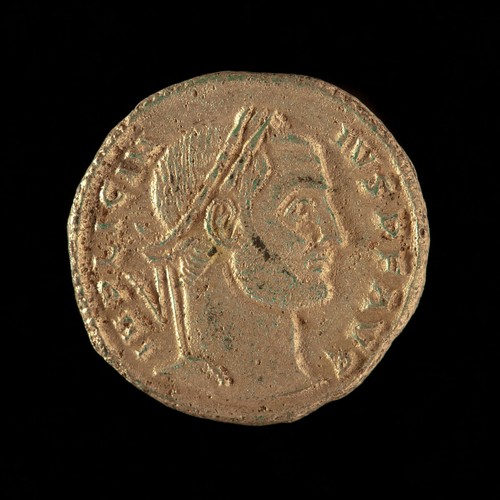
Follis of Licinius I
A small bronze follis of the emperor Licinius I (AD 308-324), showing his portrait and a standing deity reverse, struck around AD 320-321.
Ancient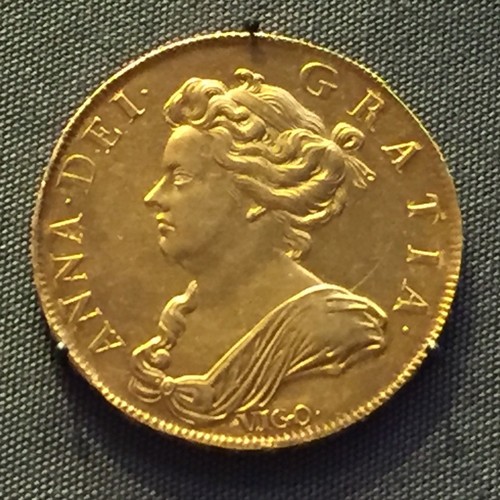
Five Guineas of Anne
Queen Anne's largest gold coin, the celebrated 1703 issue struck with VIGO below the bust from gold captured at the Battle of Vigo Bay.
Milled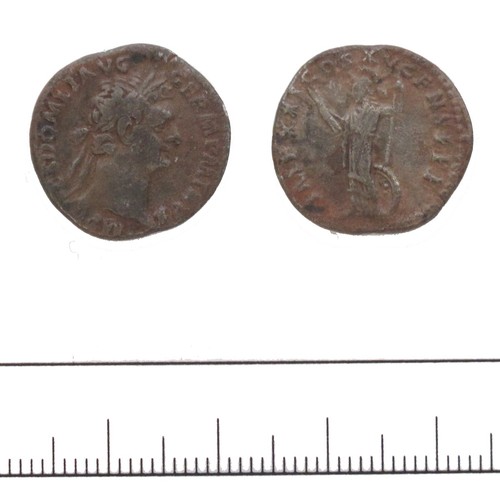
Denarius of Domitian
Silver denarius of the emperor Domitian (81-96 AD), with his laureate portrait on the obverse and, typically, the goddess Minerva on the reverse.
Ancient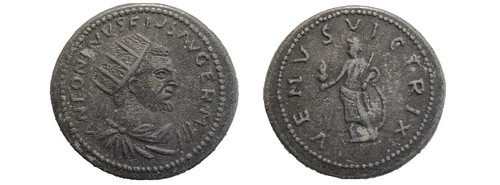
Antoninianus of Caracalla
The antoninianus introduced by Caracalla around AD 215, a radiate-crowned double denarius in debased silver that reshaped Roman coinage.
Ancient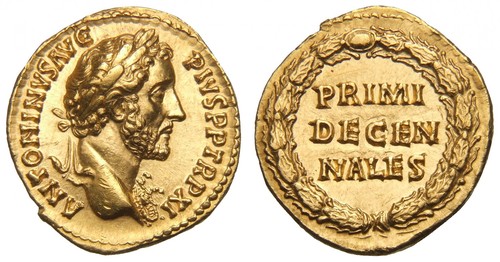
Denarius of Antoninus Pius
Silver denarius of the Roman emperor Antoninus Pius (138–161 AD), with his laureate portrait facing right and a legend-and-figure reverse.
Ancient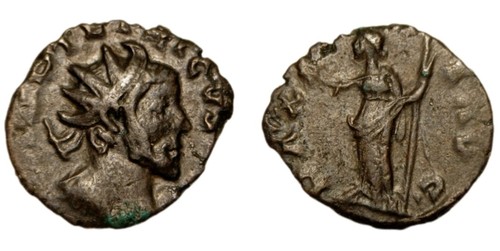
Antoninianus of Tetricus I
A billon antoninianus of the Gallic emperor Tetricus I (270–273 AD), showing his radiate portrait and a standing figure of Pax on the reverse.
Ancient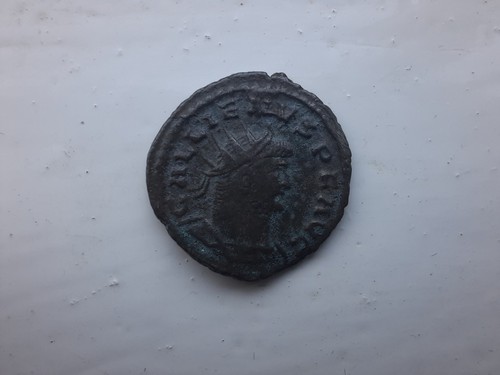
Antoninianus of Gallienus
Billon double-denarius of the emperor Gallienus, marked by a radiate crown; this piece shows a radiate male head and a standing deity on the reverse.
Ancient Coins