
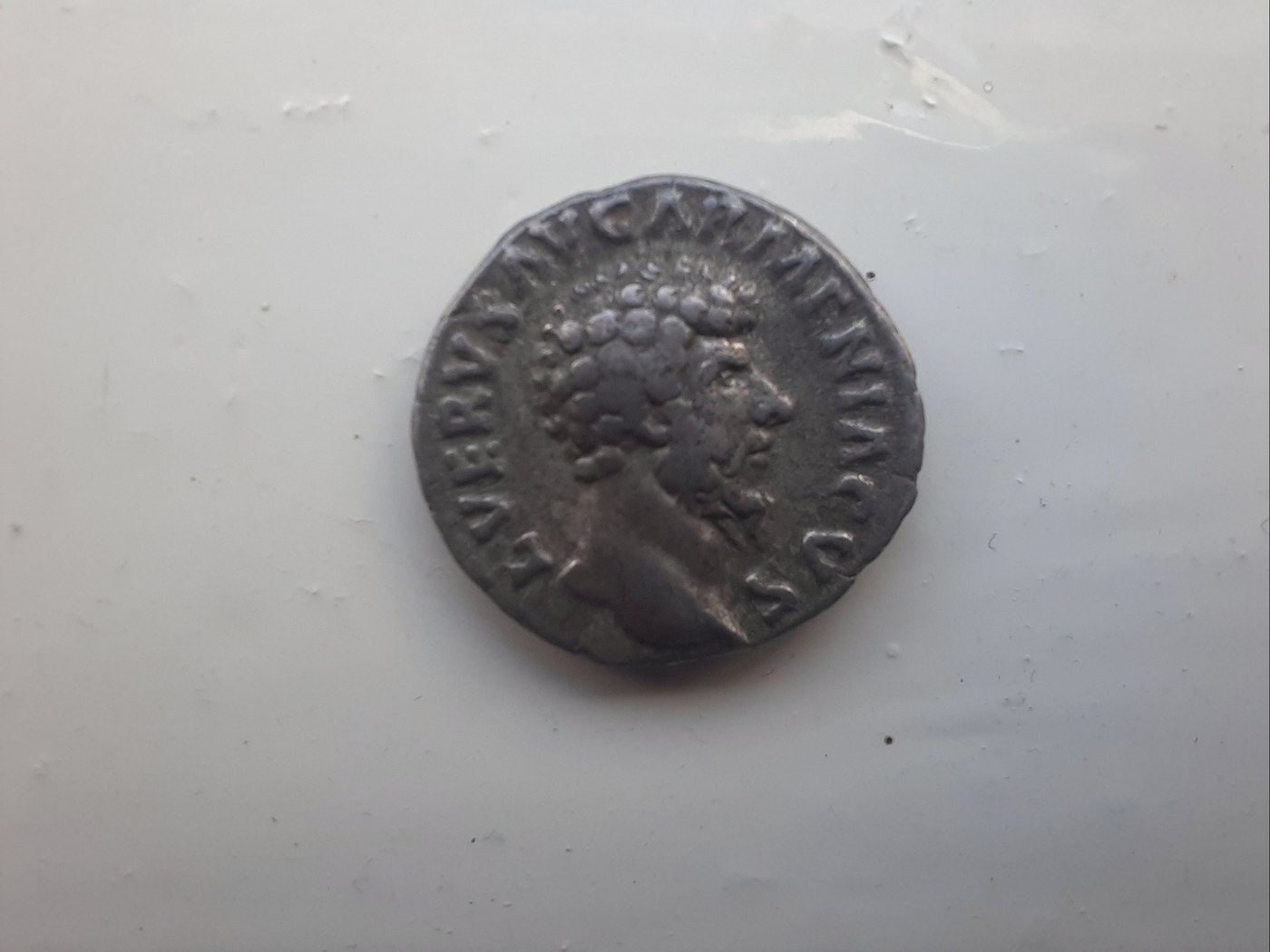
Denarius of Lucius Verus
A silver Roman denarius of the emperor Lucius Verus (161–169 AD), showing his curly-haired, bearded portrait facing right with a Latin legend.
- Country
- Roman Empire
- Denomination
- Denarius
- Metal
- Silver
Got a coin like this?
Identify any coin from a photo, free.
Overview
The denarius of Lucius Verus is a small silver coin struck during the reign of the emperor who ruled jointly with Marcus Aurelius from 161 to 169 AD. The obverse carries a right-facing portrait of Verus, recognizable by his thick curly hair and full beard in the fashion of the Antonine dynasty, surrounded by a Latin legend naming and titling the emperor. The coin shown here is photographed from the obverse.
As a denarius, the piece is the standard silver workhorse of the mid-second-century Roman economy. Reverses of the type typically depict a standing deity or personification, a seated figure, or a symbolic design paired with a short inscription, though the reverse is not visible on this example.
Denarii of Lucius Verus are collected today as an accessible and attractively styled piece of Antonine imperial silver, representing one of the more short-lived co-emperors of Rome's high-imperial peak.
History & Background
Lucius Verus was adopted into the imperial family alongside Marcus Aurelius and, on the death of Antoninus Pius in 161 AD, became co-emperor in an unusual arrangement of two Augusti ruling together. He held power until his sudden death in 169 AD, and much of his reign was occupied by the Roman war against Parthia in the East and by the return of armies bringing the devastating Antonine Plague.
During these years the mint at Rome produced denarii in his name in substantial quantities, celebrating his titles, victories, and imperial virtues. Many reverses reference his Parthian campaign and the honorary titles he accumulated, while others show conventional deities and personifications common to Antonine coinage. The silver denarius of this period still contained a high proportion of good silver, before the heavier debasement of later decades.
Because his joint reign was relatively brief, Verus issued far fewer coin types than long-reigning colleagues, yet his denarii survive in reasonable numbers and remain a familiar representative of Antonine-era Roman silver.
How to Identify
Start with the obverse portrait and legend. Verus is shown right-facing with distinctive thick, curly hair and a full beard, a grooming style shared across the Antonine emperors, so the surrounding Latin legend is the reliable identifier. Look for his name in forms such as L VERVS AVG, IMP L AVREL VERVS AVG, or L AVREL VERVS AVG ARMENIACVS depending on the issue and his titles at the time.
The reverse, not shown on this example, typically presents a single standing or seated figure, a deity or personification such as Providentia, Pax, Aequitas, or a Victory or Mars type tied to the Parthian war, accompanied by an inscription and often numerals recording the emperor's tribunician year (TR P) and consulships (COS), which help date the coin closely.
Physically a denarius of this era is a small silver coin roughly 17–19 mm in diameter and light in weight, struck in fairly good silver. Expect a gray or lightly toned surface; genuine wear, minor flan cracks, and slightly off-center strikes are normal. Beware confusing Verus with the very similar portraits of Marcus Aurelius, which share the same era and style.
Value & Collectibility
Denarii of Lucius Verus are affordable ancient Roman silver. Worn but legible examples commonly sell in the low tens of dollars, while attractive coins with clear portraits and good detail generally range into the higher tens or low hundreds of dollars depending on condition and eye appeal.
Value rises with sharp strike, pleasing toning, a well-centered portrait, and desirable or historically significant reverse types, particularly those referencing his Parthian victory. Scarcer legends or exceptional preservation command premiums, while heavily worn, corroded, or off-center pieces sit at the bottom of the range.
As with all ancient coins, condition, centering, and the completeness of the legend drive most of the price difference. Because these are genuine ancient silver rather than mass-produced base metal, they typically cost more than late-Roman bronze radiates but remain within reach for most collectors.
Frequently asked questions
Who was Lucius Verus?
He was a Roman emperor who ruled jointly with Marcus Aurelius from 161 to 169 AD. His reign was marked by the war against Parthia and the outbreak of the Antonine Plague.
Is a denarius of Lucius Verus real silver?
Yes. The denarius of this Antonine period was struck in fairly good silver, before the heavier debasement of later Roman coinage, so these are genuine ancient silver coins.
How do I tell Lucius Verus apart from Marcus Aurelius?
Their portraits are very similar curly-haired, bearded busts of the same era, so the reliable difference is the Latin legend. Look for the name VERVS to confirm Lucius Verus.
Are denarii of Lucius Verus valuable?
They are affordable ancient silver. Worn examples sell in the low tens of dollars, while well-preserved or historically notable pieces can reach the higher tens or low hundreds.
Denarius of Lucius Verus guides
In-depth guides for identifying, valuing, and collecting Denarius of Lucius Verus.
Other coins you may enjoy
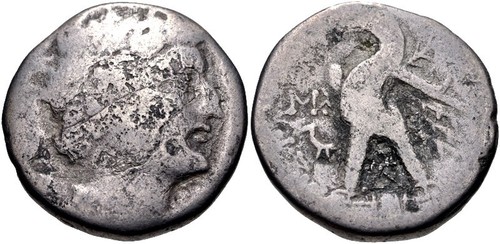
Tetradrachm of Ptolemy XII
80-51 BC
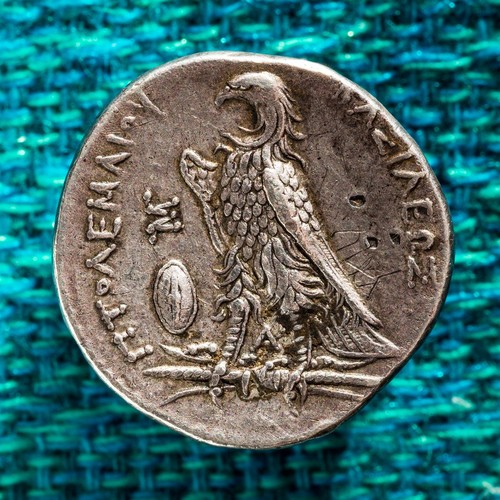
Tetradrachm of Ptolemy I
305-283 BC
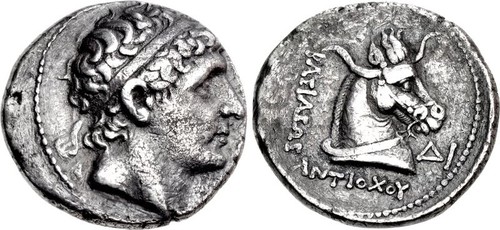
Tetradrachm of Antiochos I Soter
281-261 BC
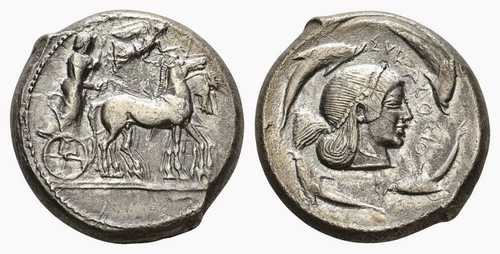
Syracuse Tetradrachm
c. 5th-4th century BC (Classical period)
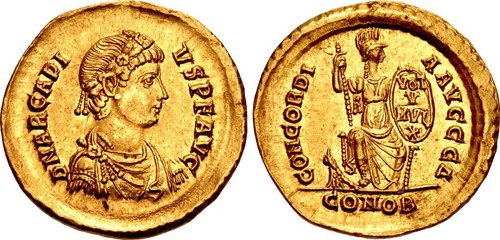
Solidus of Arcadius
AD 395-402
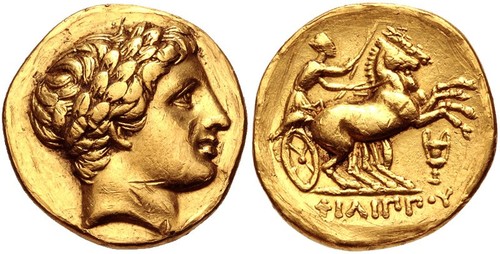
Philip III Gold Stater
323-317 BC
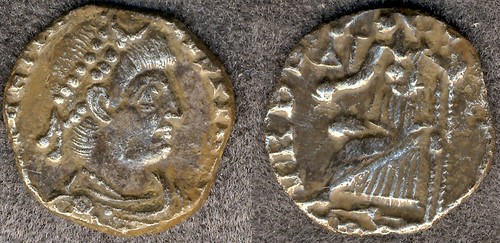
Siliqua of Gratian
AD 367-383
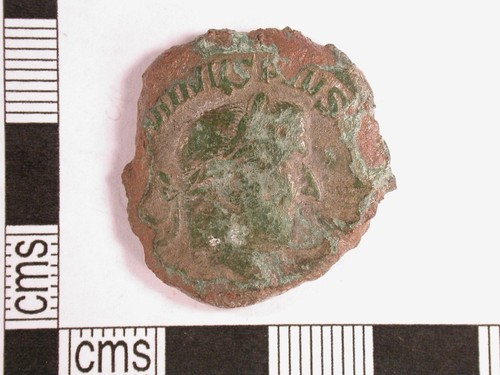
Sestertius of Maximinus Thrax
235-238 AD
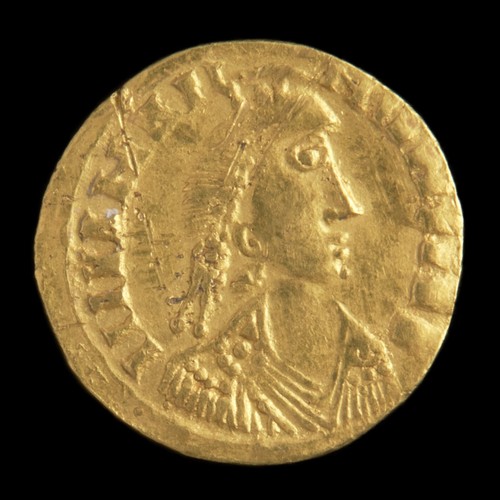
Solidus of Valentinian III
AD 425-455
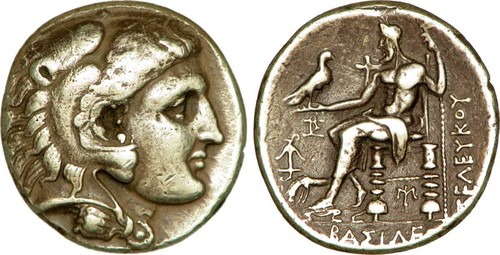
Seleucus I Nicator Tetradrachm
Late 4th-3rd century BC
Nummus of Magnentius
AD 350-353
Follis of Galerius
AD 308-310