
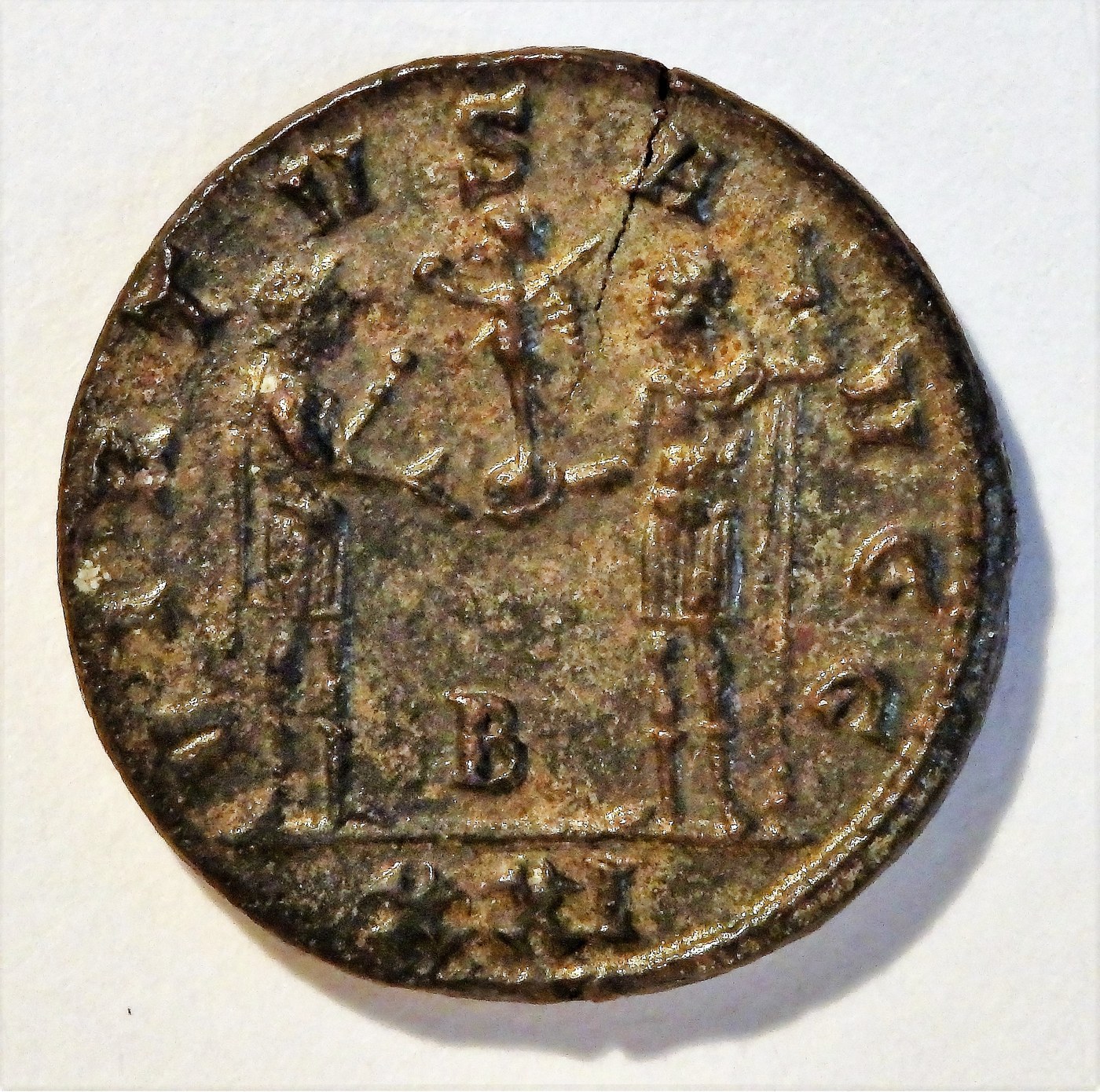
Antoninianus of Carinus
Bronze radiate coin of the emperor Carinus (283-285 AD), recognizable by his spiked crown and a standing or seated deity on the reverse.
- Country
- Roman Empire
- Denomination
- Antoninianus
- Metal
- Bronze
Got a coin like this?
Identify any coin from a photo, free.
Overview
The antoninianus of Carinus is a Roman coin struck during the short reign of Marcus Aurelius Carinus, who ruled from 283 to 285 AD, first as junior colleague to his father Carus and then as senior emperor alongside his brother Numerian. By this late-third-century date the antoninianus was no longer good silver but a bronze (billon) coin that was originally given a thin silver wash, so most surviving examples appear brown or dark and are effectively bronze.
The coin shown here follows the standard pattern of the period: a radiate (spiked-crown) bust of the emperor facing right on the obverse, paired with a standing or seated figure on the reverse. These radiate coins were the everyday circulating money of the empire in the 280s and were produced in very large quantities across several imperial mints.
History & Background
Carinus was raised to the rank of Caesar and then Augustus by his father Carus in 283 AD. When Carus died on campaign that same year, the empire was divided between his two sons: Carinus governed the western provinces while Numerian held the east. After Numerian's death in 284 AD, Carinus became sole Augustus until he was defeated and killed in 285 AD by Diocletian, whose accession ended the crisis-torn third century.
The coinage of Carinus belongs to the reformed radiate system that had followed the reforms of Aurelian. The antoninianus of this era was struck in bronze with only a surface silvering, reflecting the long debasement of Roman coinage, and many pieces carry small mint marks in the reverse field or exergue identifying the workshop that produced them.
How to Identify
The defining feature is the radiate crown of pointed spikes worn by the emperor on the obverse, which marks the coin as a radiate antoninianus rather than a laurel-wreathed denarius. The bust faces right, usually draped and cuirassed, within a Latin legend built around the name CARINVS, commonly a form of IMP C M AVR CARINVS P F AVG or IMP CARINVS P F AVG.
The reverse shows a single standing or seated figure, typically a deity or personification such as Fides, Aequitas, Providentia, Pax, Fortuna, or the emperor himself, identified by attributes such as a spear, patera, cornucopia, or standards. Typical coins measure roughly 20-23 mm in diameter and weigh about 3-4.5 grams. Look in the reverse field or exergue for small letters that record the mint and workshop.
Value & Collectibility
Antoniniani of Carinus are affordable and readily available ancient Roman coins. Worn brown examples with a legible portrait and a recognizable reverse trade at modest prices, while pieces that retain their original silvering, sharp detail, and full legends command a clear premium.
Value is driven mainly by condition and eye appeal rather than rarity, since most reverse types survive in quantity. Coins with well-preserved silvering, an attractive portrait, or a scarcer mint mark or reverse legend can sell well above the level of ordinary circulated specimens.
Frequently asked questions
Is this coin really bronze rather than silver?
Yes. By Carinus's reign the antoninianus was struck in bronze (billon) with only a thin silver surface wash, so most surviving coins look brown or dark and are effectively bronze.
How do I know it is an antoninianus and not a denarius?
The antoninianus shows the emperor wearing a radiate crown of pointed spikes, while the denarius uses a laurel wreath. Carinus's radiate coins are the standard denomination of his reign.
Who is the figure on the reverse?
It is usually a Roman deity or personification such as Fides, Pax, Aequitas, or Providentia, identified by the objects it holds and by the surrounding Latin legend.
Are coins of Carinus rare?
No. Despite his short reign, Carinus struck antoniniani in large numbers at several mints, so they are common and inexpensive today.
Antoninianus of Carinus guides
In-depth guides for identifying, valuing, and collecting Antoninianus of Carinus.
Other coins you may enjoy
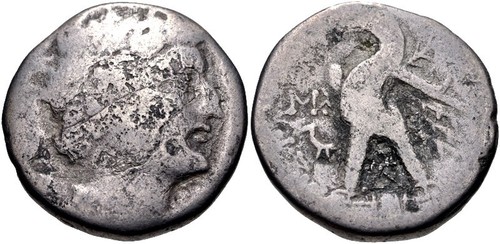
Tetradrachm of Ptolemy XII
80-51 BC
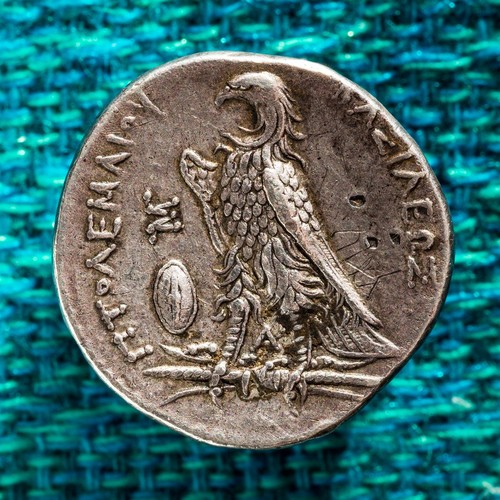
Tetradrachm of Ptolemy I
305-283 BC
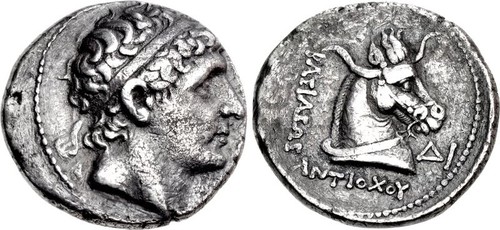
Tetradrachm of Antiochos I Soter
281-261 BC
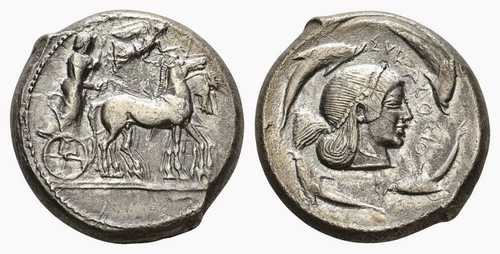
Syracuse Tetradrachm
c. 5th-4th century BC (Classical period)
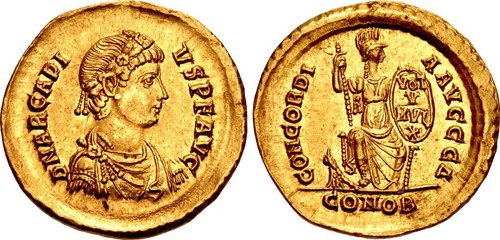
Solidus of Arcadius
AD 395-402
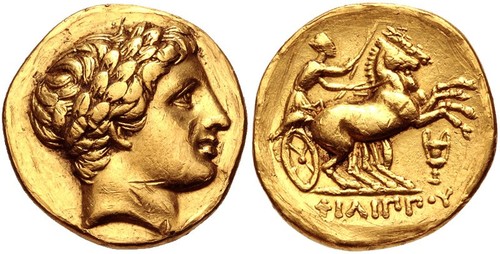
Philip III Gold Stater
323-317 BC
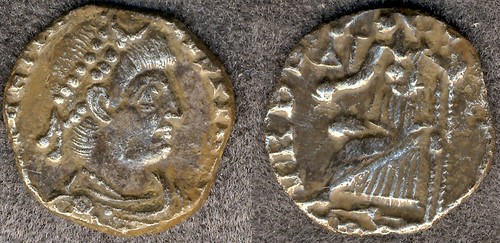
Siliqua of Gratian
AD 367-383
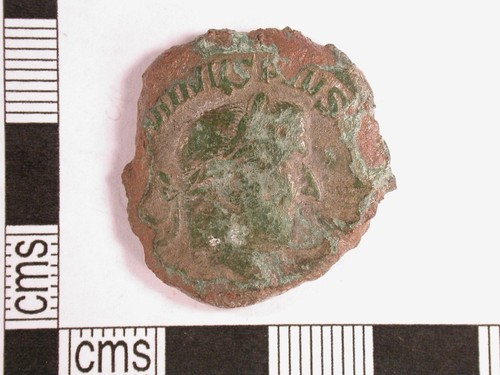
Sestertius of Maximinus Thrax
235-238 AD
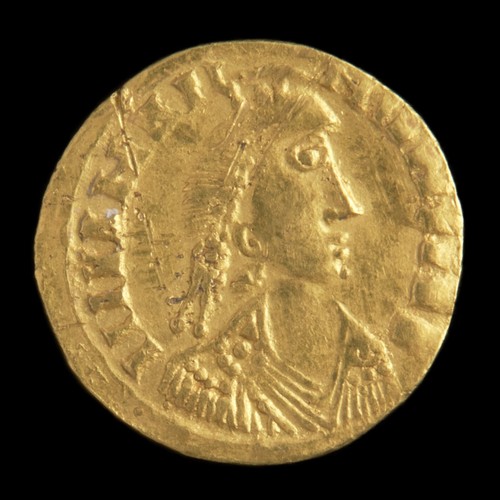
Solidus of Valentinian III
AD 425-455
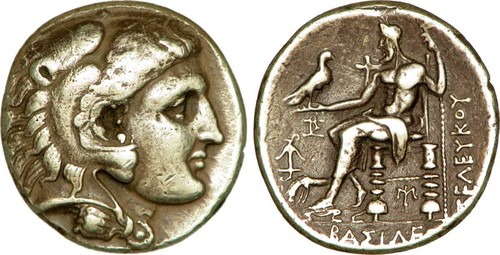
Seleucus I Nicator Tetradrachm
Late 4th-3rd century BC
Nummus of Magnentius
AD 350-353
Follis of Galerius
AD 308-310