
Coin Encyclopedia
Search and identify coins from around the world — with country, denomination, metal, mint, history, and how to tell them apart.
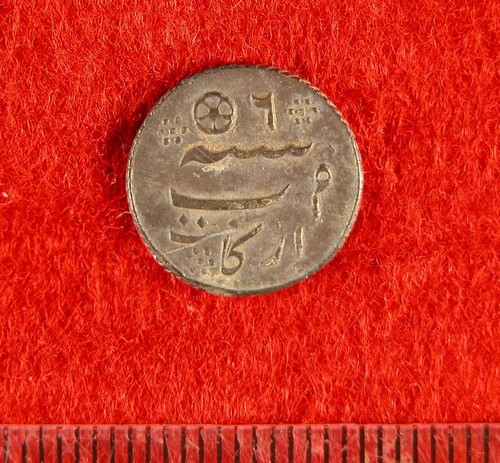
Indian Silver Coin
A silver coin of British India bearing Persian/Urdu calligraphy and a mint mark, in the Mughal-derived inscriptional style of Company-era coinage.
British India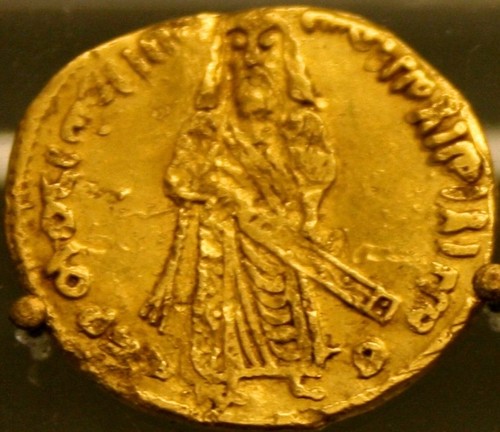
Gold Dinar of Abd al-Malik
An early Umayyad gold dinar of Caliph Abd al-Malik, the 'Standing Caliph' type, bearing a robed standing figure and Arabic religious inscriptions.
Islamic (Medieval)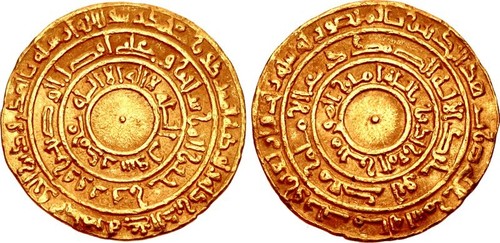
Gold Dinar of al-Mu'izz li-Din Allah
A gold dinar of the Fatimid caliph al-Mu'izz li-Din Allah dated AH 343, struck as concentric Arabic inscriptions with no image on either face.
Islamic (Medieval)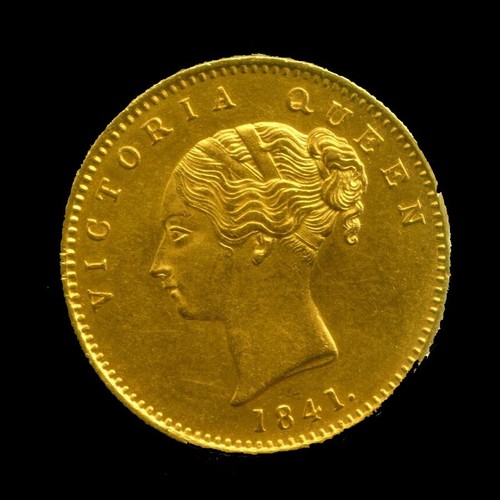
East India Company One Mohur
A machine-struck gold mohur of the East India Company bearing the young Queen Victoria, with a left-facing bust and the legend 'VICTORIA QUEEN', dated 1841.
British India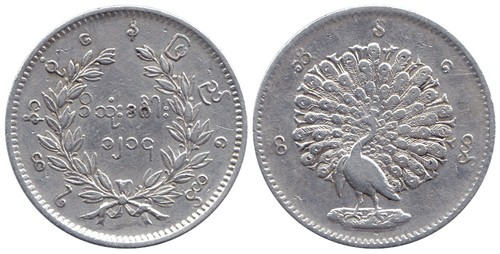
Burma One Kyat (Mindon Min)
Silver kyat of King Mindon Min's Burma, showing the royal peacock with spread tail on the obverse and the denomination within a wreath on the reverse.
Southeast Asia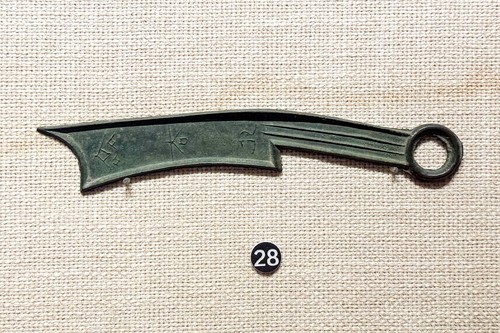
Qi State Knife Coin
A cast bronze knife-shaped coin of the ancient state of Qi, with Chinese characters running down the curved blade and a ringed handle terminal.
Ancient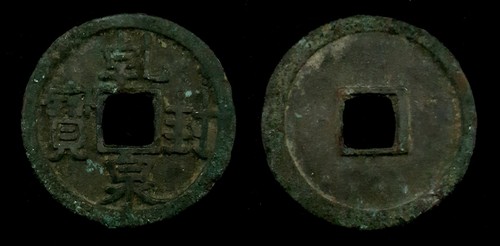
Qian Feng Quan Bao
A round bronze Tang cash coin with a square center hole, cast under Emperor Gaozong in the short-lived Qianfeng era and worth ten ordinary cash.
Cash Coin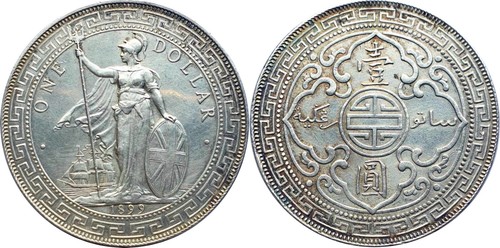
Hong Kong Trade Dollar
A large silver British Trade Dollar with standing Britannia on the obverse and a Chinese dragon reverse, made for commerce across the Far East.
Circulation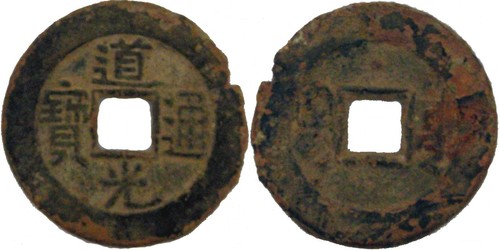
Daoguang Tongbao
A round Chinese bronze cash coin with a square center hole, cast under the Qing emperor Daoguang; this example bears the Bao Quan mint mark.
Cash Coin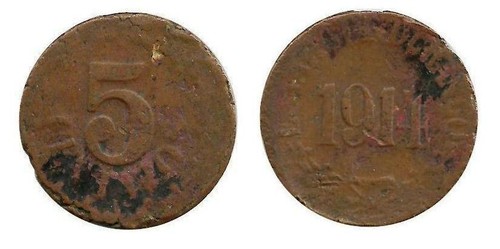
Durango 5 Centavos
A copper 5 centavos struck in the State of Durango during the Mexican Revolution, showing a large numeral 5 and the Mexican national eagle, dated 1914.
Revolutionary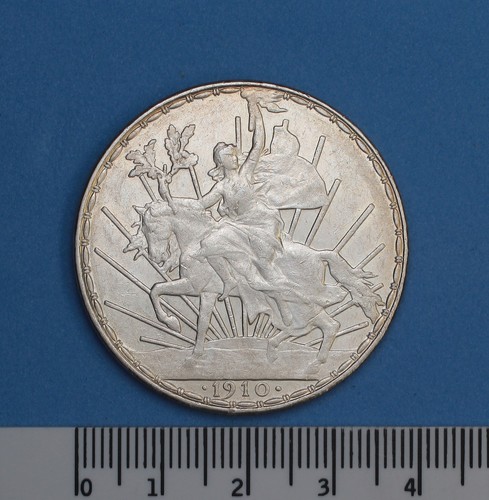
Caballito Peso
A silver Mexican peso nicknamed for the horse on its obverse: an allegorical figure on horseback holding a torch aloft, backed by the eagle-and-serpent arms.
Circulation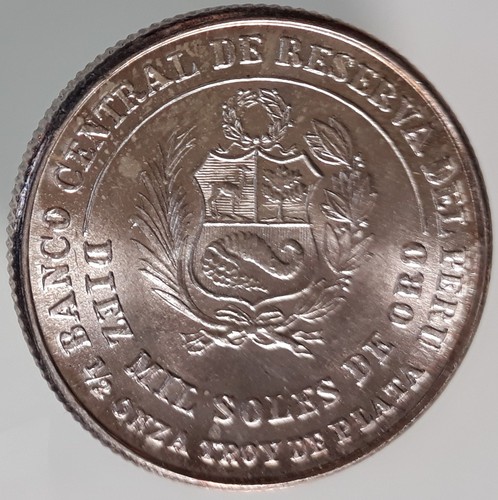
10,000 Soles de Oro
A large Peruvian silver coin of 10,000 soles de oro, its obverse bearing the national coat of arms with the vicuna, cinchona tree and cornucopia.
Circulation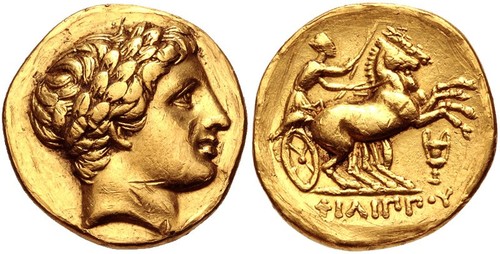
Philip III Gold Stater
A Macedonian gold stater struck under Philip III Arrhidaeus, half-brother of Alexander the Great, showing Heracles and an enthroned Zeus.
Ancient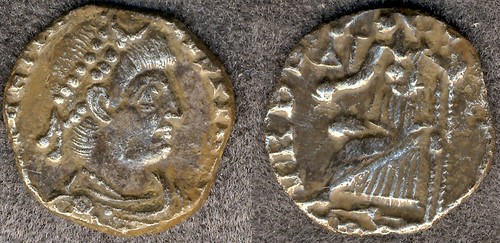
Siliqua of Gratian
A small late Roman silver siliqua of the emperor Gratian (AD 367-383), with his diademed bust on the obverse and a standing figure or personification on the reverse.
Ancient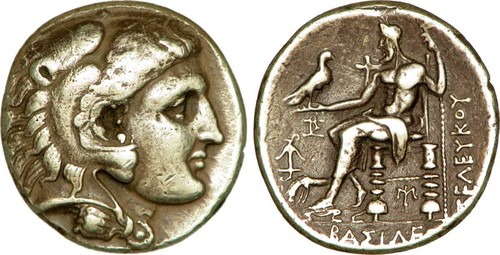
Seleucus I Nicator Tetradrachm
Large silver tetradrachm of Seleucus I Nicator, founder of the Seleucid Empire, showing a horned Alexander-type head and a mounted figure with a spear.
Ancient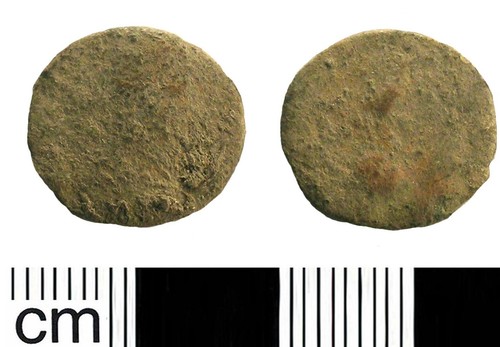
Half Centenionalis of Constans or Constantius II
A small mid-4th-century Roman bronze attributed to Constans or Constantius II, sons of Constantine the Great, worn but identifiable by its imperial portrait and era.
Ancient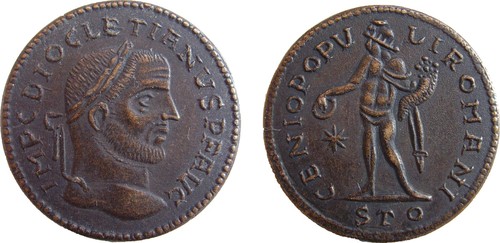
Follis of Diocletian
A large silver-washed bronze coin of the Tetrarchy, introduced by Diocletian's currency reform around AD 294 with a stern laureate portrait.
Ancient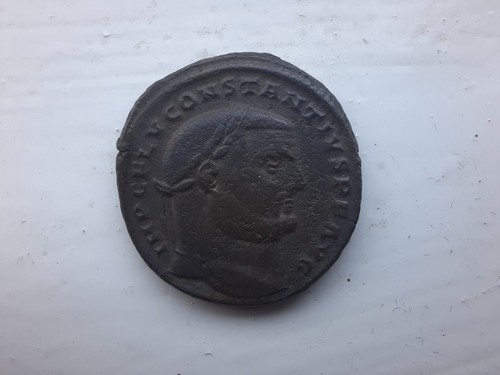
Follis of Constantius Chlorus
Large silvered-bronze follis of Constantius I (Chlorus), the Tetrarchic emperor and father of Constantine, showing his laureate portrait facing right.
Ancient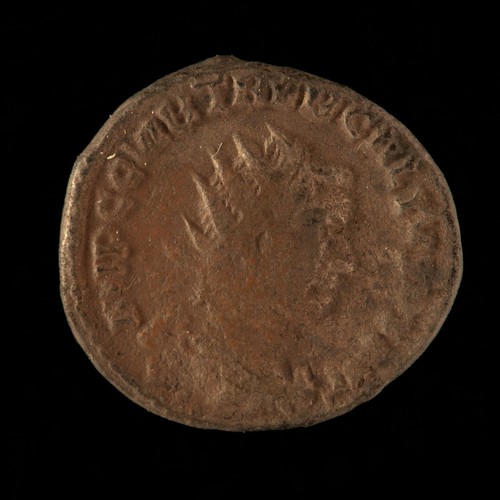
Antoninianus of Trebonianus Gallus
A radiate-crowned billon antoninianus of the emperor Trebonianus Gallus, struck AD 251-253 with a standing deity or personification on the reverse.
Ancient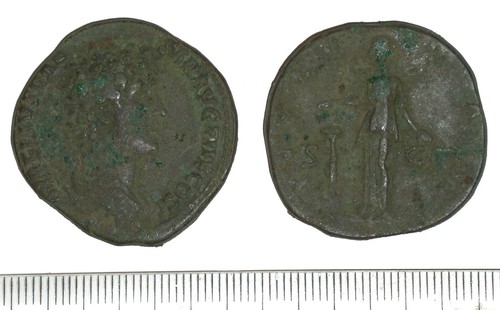
Sestertius of Marcus Aurelius
A large Roman bronze sestertius struck during the reign of Marcus Aurelius (161–180 CE), with his laureate portrait facing right and a Latin legend.
Ancient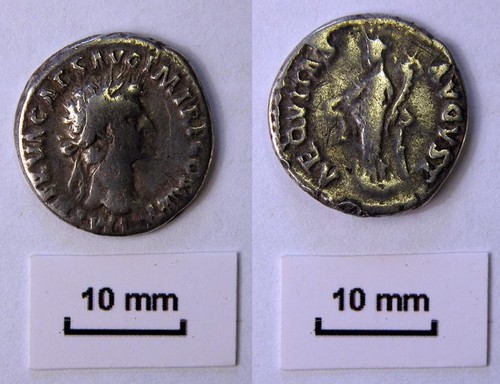
Denarius of Nerva
Roman Imperial silver denarius of Emperor Nerva (96-98 AD), with his laureate portrait and the legend IMP NERVA CAES AVG, and a seated Concordia reverse.
Ancient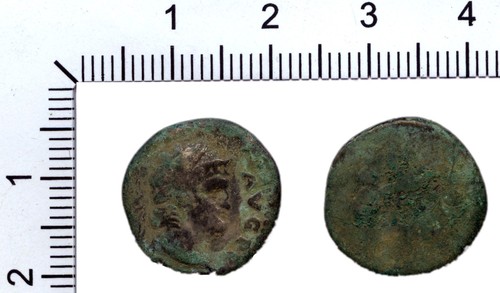
Denarius of Nero
Silver denarius of the emperor Nero (AD 54-68), the last Julio-Claudian ruler, shown with a laureate portrait and a military-standards reverse.
Ancient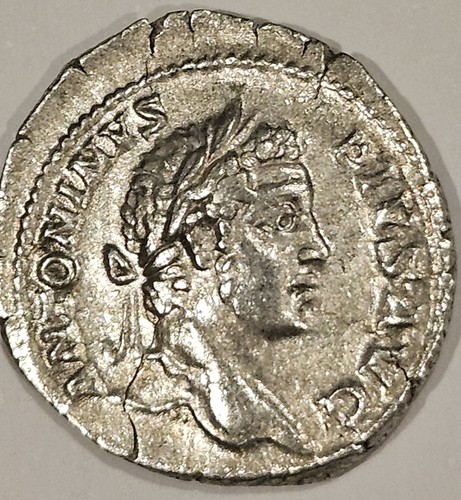
Denarius of Caracalla
A silver denarius of the Roman emperor Caracalla, struck 198–217 CE, showing his laureate right-facing bust and a Latin legend encircling the design.
Ancient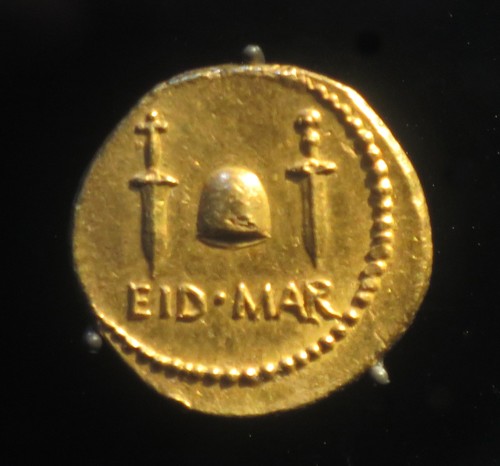
Brutus Aureus
The gold aureus of Marcus Junius Brutus, struck 42 BC, whose reverse celebrates Caesar's assassination with EID MAR, a cap of liberty, and two daggers.
Ancient