
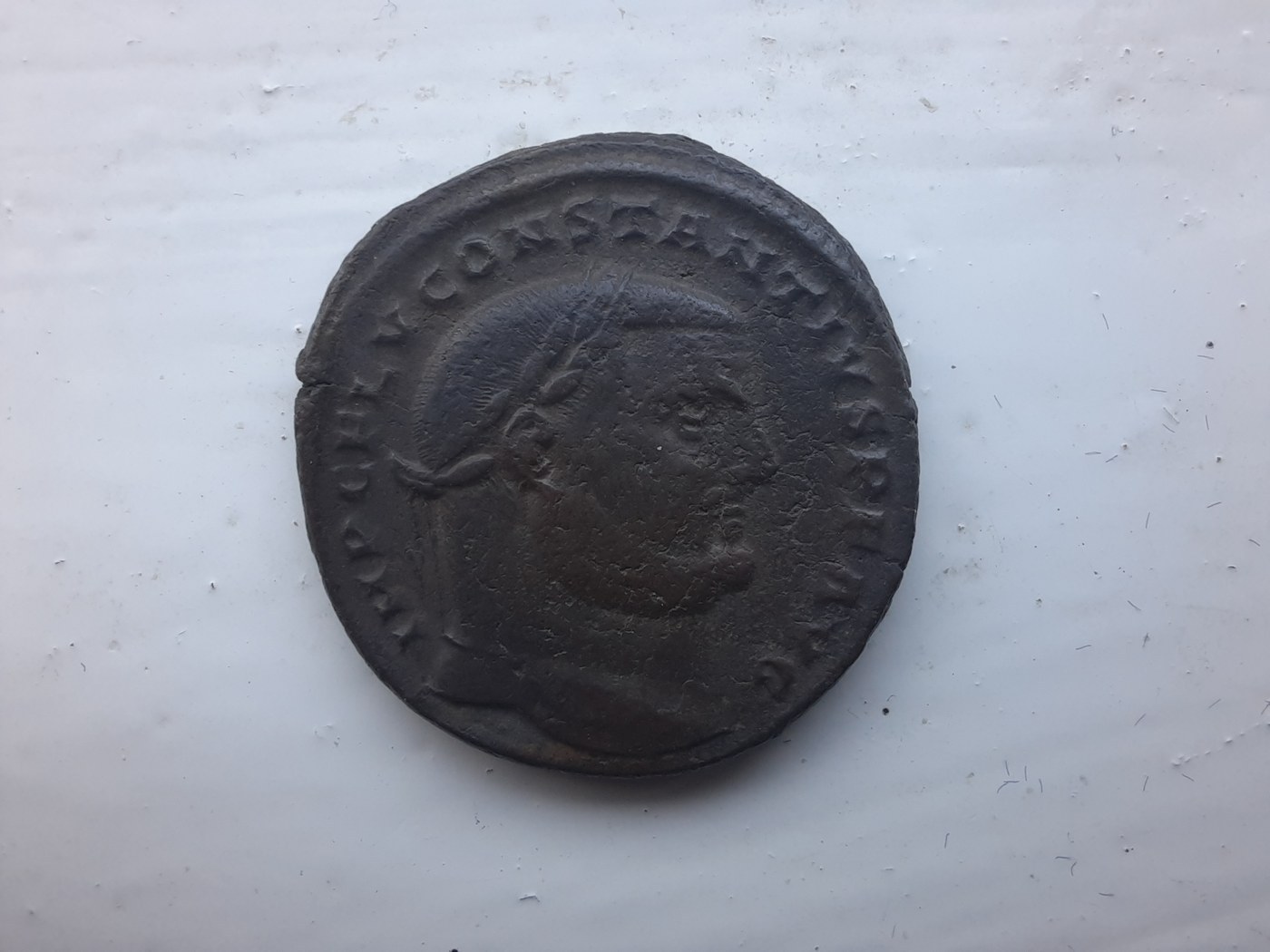
Follis of Constantius Chlorus
Large silvered-bronze follis of Constantius I (Chlorus), the Tetrarchic emperor and father of Constantine, showing his laureate portrait facing right.
- Country
- Roman Empire
- Denomination
- Follis
- Metal
- Bronze
Got a coin like this?
Identify any coin from a photo, free.
Overview
The follis of Constantius Chlorus is a large bronze coin struck for Flavius Valerius Constantius, known as Constantius I or Constantius Chlorus, who served as Caesar in the western half of the empire from 293 AD and as Augustus in 305-306 AD. He is best remembered today as the father of Constantine the Great. The coin shown here presents his portrait facing right on the obverse; the reverse is not visible in this image.
The follis was a new denomination introduced by the coinage reform of the emperor Diocletian around 294 AD. It was struck in bronze and originally coated with a thin silver wash, so most surviving examples now appear brown, gray, or patchily silvered. As the standard circulating coin of the Tetrarchy, the follis was produced in enormous quantities at mints across the Roman world.
History & Background
Constantius rose to prominence within the Tetrarchy, the system of four co-rulers established by Diocletian to share the government of the empire. In 293 AD he was appointed Caesar under the senior Augustus Maximian and took charge of the western provinces, including Gaul and Britain, where he campaigned to recover the breakaway British realm of Carausius and Allectus. On 1 May 305 AD, when Diocletian and Maximian abdicated, Constantius was elevated to Augustus of the West.
His reign as senior emperor was brief. Constantius died at Eboracum (modern York) in July 306 AD while campaigning in Britain, whereupon his troops proclaimed his son Constantine emperor. The folles struck in his name span both his years as Caesar and his short tenure as Augustus, and they belong to the same reformed bronze coinage issued for all members of the Tetrarchy.
How to Identify
The obverse shows a laureate male bust facing right, typically draped and cuirassed, surrounded by a Latin legend built around the name CONSTANTIVS. As Caesar the legend usually takes a form such as CONSTANTIVS NOB CAES or FL VAL CONSTANTIVS NOB C, while as Augustus it reads IMP CONSTANTIVS P F AVG or similar. The name in the legend is the decisive clue for attributing the coin.
The reverse is not visible on this specimen, but folles of Constantius most commonly carry the reverse GENIO POPVLI ROMANI, showing the Genius of the Roman People standing and holding a patera and cornucopia. Full-sized early folles are large coins, often around 26-30 mm in diameter and roughly 8-11 grams, though later reform issues are smaller and lighter. Look in the reverse exergue for mint marks that record the mint and workshop.
Value & Collectibility
Folles of Constantius Chlorus are common and affordable ancient Roman coins. Worn brown examples with a legible portrait trade at modest prices, while large, well-struck pieces that retain much of their original silvering command a clear premium.
Value depends mainly on size, condition, surviving silvering, and eye appeal rather than outright rarity, since these coins were struck in great numbers for the Tetrarchy. Early large-module folles in high grade, or coins with a scarcer mint mark or reverse type, sell above the level of ordinary circulated specimens.
Frequently asked questions
Who was Constantius Chlorus?
He was Constantius I, a Tetrarchic emperor who ruled the western empire as Caesar from 293 AD and as Augustus in 305-306 AD, and he was the father of Constantine the Great.
Is the follis really bronze?
Yes. The follis was struck in bronze and given only a thin silver surface wash, so most surviving coins look brown, gray, or patchily silvered and are effectively bronze.
What denomination is this coin?
It is a follis (sometimes called a nummus), the large bronze denomination introduced by Diocletian's coinage reform around 294 AD and used throughout the Tetrarchy.
Are coins of Constantius Chlorus rare?
No. Folles were struck in very large numbers across many mints, so coins of Constantius are common and inexpensive today, with value driven mostly by condition.
Follis of Constantius Chlorus guides
In-depth guides for identifying, valuing, and collecting Follis of Constantius Chlorus.
Other coins you may enjoy
Tetradrachm of Ptolemy XII
80-51 BC
Tetradrachm of Ptolemy I
305-283 BC
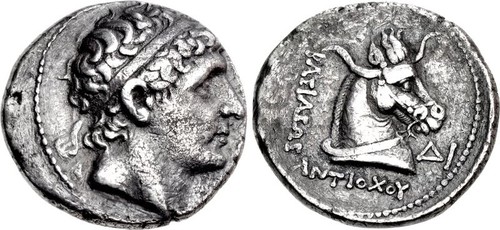
Tetradrachm of Antiochos I Soter
281-261 BC
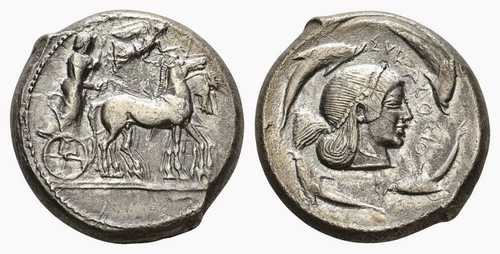
Syracuse Tetradrachm
c. 5th-4th century BC (Classical period)
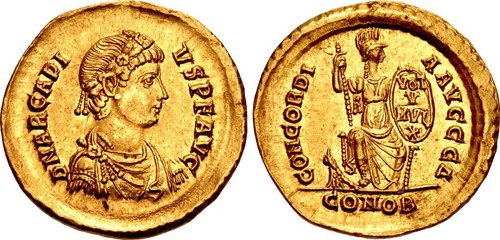
Solidus of Arcadius
AD 395-402
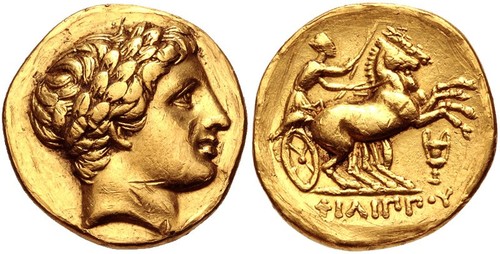
Philip III Gold Stater
323-317 BC
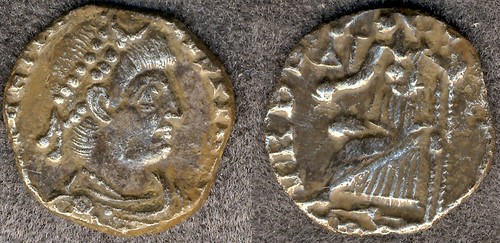
Siliqua of Gratian
AD 367-383
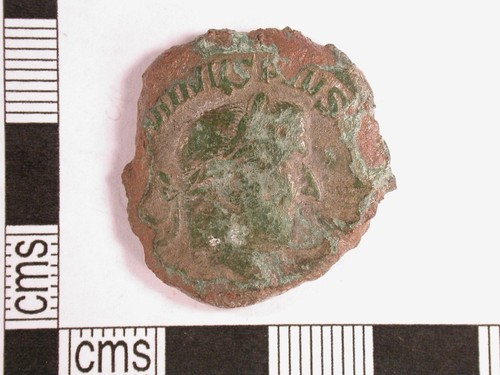
Sestertius of Maximinus Thrax
235-238 AD
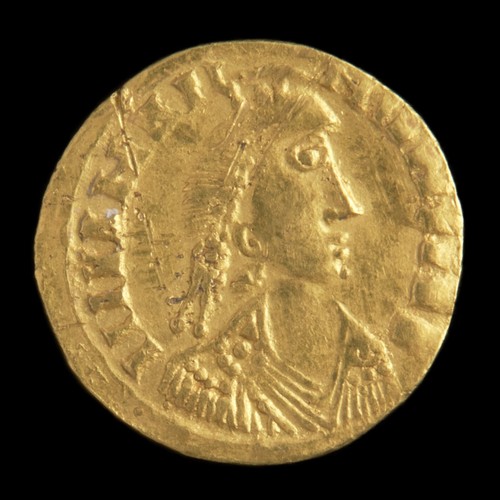
Solidus of Valentinian III
AD 425-455
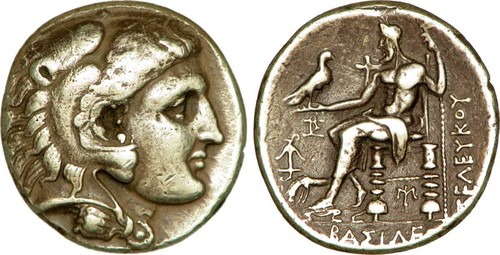
Seleucus I Nicator Tetradrachm
Late 4th-3rd century BC
Nummus of Magnentius
AD 350-353
Follis of Galerius
AD 308-310