
How to Identify the Follis of Constantius Chlorus
A collector's guide to attributing a follis of Constantius I by its laureate portrait, obverse legend, large bronze fabric, and mint marks.
Read the full Follis of Constantius Chlorus encyclopedia entry →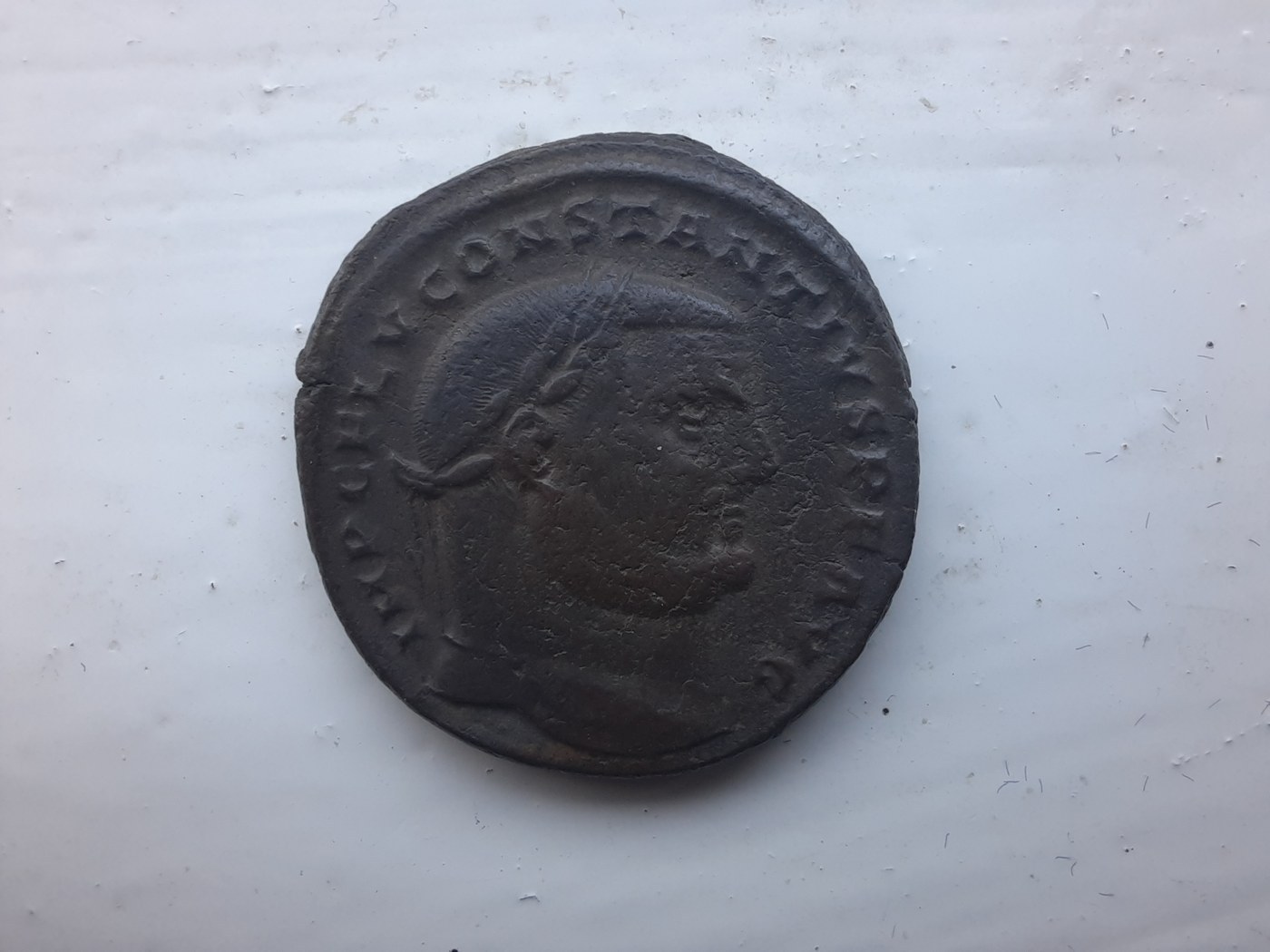
Start with the obverse legend. A follis of Constantius Chlorus carries a laureate bust facing right encircled by a Latin inscription containing the name CONSTANTIVS. Reading that name is the single most reliable attribution step, because the four Tetrarchs share the same coin format. As Caesar the legend often ends in NOB CAES or NOB C (for example FL VAL CONSTANTIVS NOB C); as Augustus it uses P F AVG (for example IMP CONSTANTIVS P F AVG). The wording tells you which stage of his career the coin belongs to.
Beware of a common confusion: the name Constantius appears on coins of several later emperors, and the very similar name Constantine (CONSTANTINVS) belongs to his son. Read the legend carefully and distinguish CONSTANTIVS from CONSTANTINVS before attributing the piece.
Check the reverse, which is not shown on this example. The most frequent Tetrarchic follis reverse is GENIO POPVLI ROMANI, depicting the standing Genius of the Roman People holding a patera and cornucopia, but other types such as SACRA MONETA or FIDES also occur. Match the standing figure's attributes to the reverse legend, then read the exergue for the mint mark, which identifies the mint (for example Trier, Lyon, Rome, Ticinum, Siscia, or Antioch) and the officina, or workshop.
Weigh and measure the coin. Early folles are large: roughly 26-30 mm across and about 8-11 grams, with later reform issues noticeably smaller and lighter. A brown, gray, or patchily silvered surface is normal, and traces of the original silver wash may survive in protected recesses of the design. A bright, all-silver piece of full weight would be atypical and warrants scrutiny.
Watch for imitations and authenticity red flags. Cast copies show a seam around the edge, surface pitting or bubbles, and soft, blurred lettering, whereas genuine folles are struck with crisp detail. When precise attribution or value matters, compare the exact obverse legend, reverse type, and mint mark against a standard reference such as RIC (Roman Imperial Coinage).
Frequently asked questions
How do I tell a follis of Constantius from one of Constantine?
Read the obverse legend: the father's coins say CONSTANTIVS, while his son's say CONSTANTINVS. The two names are similar, so check the spelling before attributing the coin.
The reverse of my coin isn't shown here. What should it look like?
Most folles of Constantius carry the GENIO POPVLI ROMANI reverse with the standing Genius holding a patera and cornucopia, though other Tetrarchic types exist; the exergue below usually holds a mint mark.
Why is my follis so large and heavy compared with other Roman bronzes?
Early folles were a large bronze denomination, often 26-30 mm and 8-11 grams. Later reform issues shrink, so size and weight help place the coin within the Tetrarchic series.
How can I spot a fake?
Cast forgeries show an edge seam, bubbles or pitting, and mushy lettering, while genuine coins are sharply struck. Confirm the legend, reverse type, and mint mark against a reference like RIC when in doubt.