
Hong Kong Trade Dollar
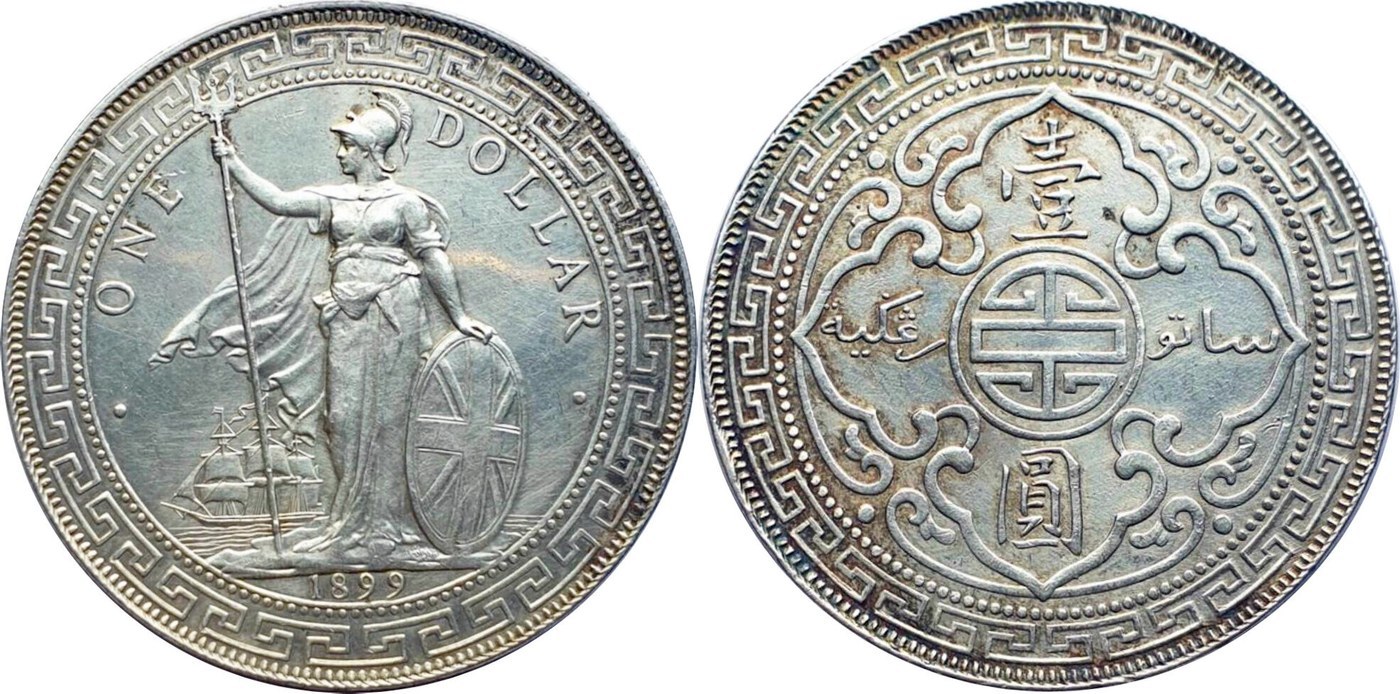
A large silver British Trade Dollar with standing Britannia on the obverse and a Chinese dragon reverse, made for commerce across the Far East.
- Country
- British Hong Kong
- Denomination
- Trade Dollar
- Metal
- Silver
Got a coin like this?
Identify any coin from a photo, free.
Overview
The coin pictured is a Hong Kong (British) Trade Dollar, a large silver crown-sized piece struck by Britain specifically for trade in the Far East. The obverse shows Britannia standing on a shore, holding a trident in one hand and steadying a shield with the other, framed by the inscription ONE SILVER TRADE DOLLAR with the value repeated in Chinese and Jawi (Malay) script.
The reverse carries an ornate Chinese dragon design at the center, surrounded by Chinese characters and the inscription HONG-KONG, with the denomination expressed as "one dollar" in Chinese and Malay. The example here is dated 1899, placing it early in the series.
Rather than a domestic coin meant only for Hong Kong, the Trade Dollar was a circulating trade coin intended to compete with the Mexican peso, the U.S. trade dollar, and other silver dollars then moving through the ports of China and Southeast Asia. Its bold Britannia-and-dragon pairing makes it one of the most recognizable British colonial-era silver coins.
History & Background
By the late nineteenth century, silver "dollar" coins from many nations circulated freely in the trading ports of East and Southeast Asia, with the Mexican peso long dominant. To give British merchants a coin of their own with a trusted silver content, the United Kingdom introduced the British Trade Dollar in 1895, struck primarily at the Royal Mint's branch operations in India (Bombay and Calcutta) and marked for use through Hong Kong.
The design was the work of engraver George William de Saulcy, pairing the imperial figure of Britannia with a Chinese dragon and multilingual inscriptions so the coin would be readily accepted by Chinese, Malay, and Western traders alike. Production continued into the 1930s, with the bulk of the series struck between 1895 and around 1908 and a final issue in the mid-1930s.
The Trade Dollar circulated widely and was frequently chop-marked by Chinese merchants and banks, who stamped small test marks into the silver to certify its weight and purity. The 1899 date on this example falls within the heaviest years of production, when these coins were a common medium of large-value trade across the region.
How to Identify
Identify this coin by its crown-size silver format and its distinctive two-sided imagery. The obverse shows Britannia standing with a trident and shield, and reads ONE SILVER TRADE DOLLAR; the denomination is repeated in Chinese characters and in Jawi (Arabic-script Malay) in the surrounding field, with the date (here 1899) in the exergue below Britannia's feet.
The reverse centers on an intricate Chinese dragon within a scalloped or arabesque frame, encircled by Chinese characters and the Roman-letter inscription HONG-KONG. The multilingual "one dollar" legends in Chinese and Malay confirm the trade-coin purpose.
Genuine examples are large silver pieces roughly the size of a U.S. silver dollar or British crown. Many authentic coins carry chop marks, small punched merchant test-stamps in the fields; these are original to circulation and are a period feature rather than damage. The mint identity is indicated by a small mint mark (for the Indian branch mints) in the design; read it directly on the coin to attribute the striking.
Value & Collectibility
Value for a Hong Kong Trade Dollar depends chiefly on date, mint, condition, and the presence of chop marks. As a large silver coin, every example carries a silver bullion floor, and most circulated pieces trade at a modest premium over their metal content. Common dates in worn grades are among the more affordable large world silver coins.
Higher grades and scarcer date-and-mint combinations command stronger premiums, and lightly circulated or uncirculated coins can be worth many multiples of a well-worn example. Chop-marked coins are generally valued a little below unmarked ones by type collectors, though some enthusiasts prize the chops as historical evidence of trade use.
Because the series was heavily counterfeited, both in period and by modern fakes, condition and authenticity drive price far more than any single catalog figure. Treat online prices as guidance only, and for a valuable or high-grade example seek professional grading and compare against recent auction results for the same date and mint.
Frequently asked questions
What is a Hong Kong Trade Dollar?
It is a large British silver coin introduced in 1895 for commerce across the Far East. It shows Britannia with a trident and shield on the obverse and a Chinese dragon with the inscription HONG-KONG on the reverse, and was made to compete with the Mexican peso and other trade dollars.
Is my 1899 example rare?
1899 falls within the busiest years of production, so it is one of the more available dates. Rarity depends on the mint and the coin's condition; well-worn common-date pieces are affordable, while high-grade examples are scarcer and more valuable.
What are the small stamped marks on some coins?
Those are chop marks, tiny test-stamps punched into the silver by Chinese merchants and banks to verify the coin's weight and purity. They are original to the coin's trade use and are a period feature, not modern damage.
Why does the coin have Chinese and Malay writing?
The Trade Dollar was made to circulate among Chinese, Malay, and Western traders, so the value "one dollar" appears in English, Chinese characters, and Jawi (Arabic-script Malay) to make it readily accepted across the region.
How much silver does it contain?
It is a crown-sized silver coin roughly the size of a U.S. silver dollar, giving it a substantial silver content. Most circulated examples trade close to their bullion value, with a premium for better grades and scarcer dates.
Hong Kong Trade Dollar guides
In-depth guides for identifying, valuing, and collecting Hong Kong Trade Dollar.
Other coins you may enjoy
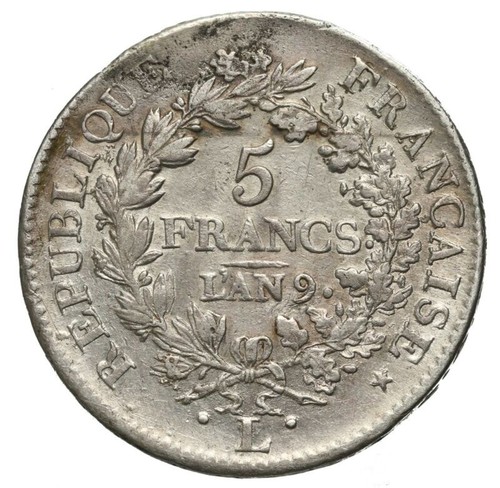
5 Francs (First Republic)
L'an 9 (1800–1801)
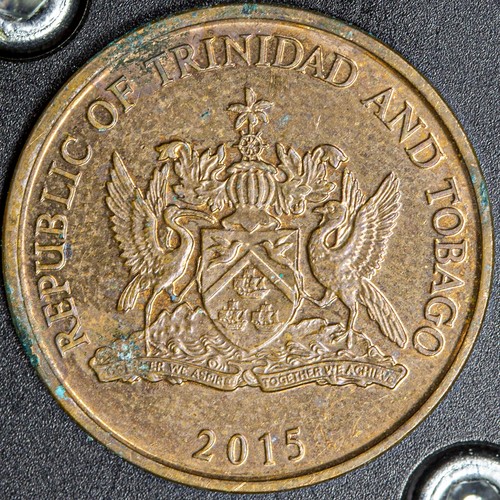
Trinidad and Tobago Dollar
2015
German 5 Reichsmark (Hindenburg)
1935–1936 (Hindenburg type with swastika)
5 Francs Semeuse
1960–1969
French Cérès 1 Franc
1849–1895
French Semeuse 2 Francs
1898–1920 (silver issues; pictured example dated 1899)
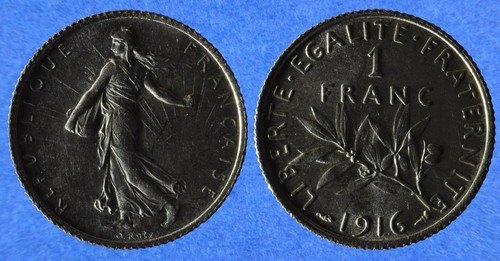
French Semeuse 1 Franc
1898–1920 (silver Semeuse 1 franc type)
France 50 Cent Euro
1999–present
Swiss 1 Franc
1861
France 20 Centimes
1962–2001 (Fifth Republic, Marianne / Lagriffoul type)
Swiss 2 Francs
1860
Austria-Hungary 15 Kreuzer
1807