
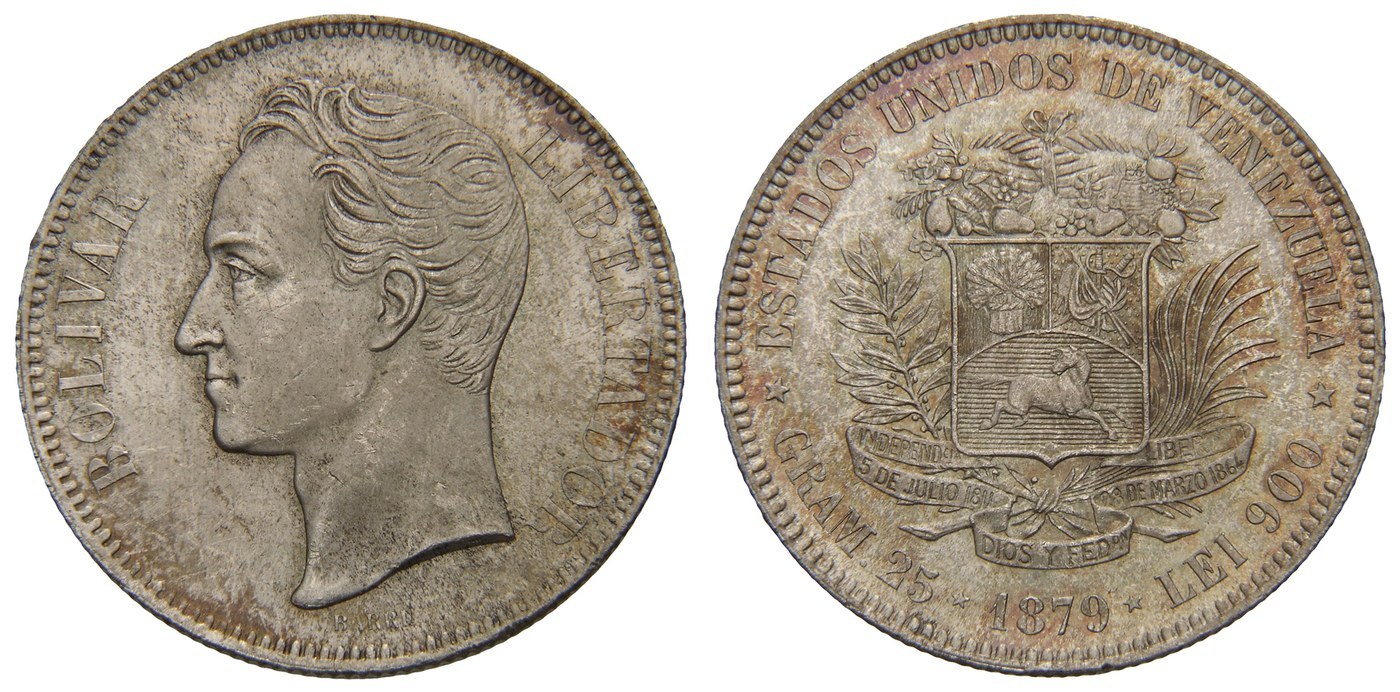
Venezuelan Silver Coin (1879)
An 1879 Venezuelan silver coin: the left-facing head of Simón Bolívar on one side and the national coat of arms in a wreath on the other.
- Country
- Venezuela
- Denomination
- Undetermined (silver bolívar coinage)
- Metal
- Silver
Got a coin like this?
Identify any coin from a photo, free.
Overview
This is a silver circulating coin of Venezuela dated 1879. One face carries a male profile facing left with wavy hair — the Liberator Simón Bolívar, whose portrait anchors Venezuela's silver coinage of this era. The other face shows the national coat of arms set within an ornate wreath, surrounded by a Spanish-language inscription naming the country.
The year 1879 is significant: it marks the reorganization of Venezuela's currency around the bolívar, the silver-based unit that would define the country's money for generations. Coins of this design were struck in fine silver, so the piece carries intrinsic bullion value in addition to its interest as a historical artifact.
Because the exact denomination cannot be confirmed from the images alone, this entry treats the coin as a representative of Venezuela's 1879 Bolívar-portrait silver series rather than fixing it to a single face value. The largest and most familiar member of that series is the crown-sized 5 Bolívares, but smaller silver fractions share the same Bolívar-and-arms design.
History & Background
Venezuela spent much of the nineteenth century revising its money as the young republic sought a stable standard. In 1879 a monetary law reorganized the coinage around the bolívar, named for Simón Bolívar, and tied it to a silver standard in step with the international bimetallic conventions of the period. The 1879 silver coins are among the first issues of this new arrangement.
The portrait of Bolívar facing left became the standard obverse for Venezuelan silver, pairing the nation's founding hero with the state coat of arms on the reverse. Production of these coins involved both the mint at Caracas and European facilities, most notably the Paris Mint, which struck Venezuelan silver on contract during this era.
An 1879 date therefore places the coin at the very beginning of the long-running Bolívar silver series. Later strikings continued the same basic design for decades, which is why the Bolívar head and wreathed arms are so closely associated with Venezuelan coinage of the late nineteenth and early twentieth centuries.
How to Identify
Begin with the portrait side. The device is a male head in profile facing left, with wavy hair and no crown or laurel — the depiction of Simón Bolívar used across Venezuelan silver. A Spanish legend and the date 1879 accompany the bust. The absence of a monarch's crown and the realistic, bare-headed portrait are consistent with a republican Latin American coin rather than a European royal issue.
Turn to the reverse to find the national coat of arms enclosed by an ornate wreath, typically of laurel and palm branches tied with a ribbon. The surrounding inscription names the country in Spanish (the period style is "Estados Unidos de Venezuela," the United States of Venezuela). The denomination and fineness are normally expressed in the reverse design as well.
Physically this is a fine-silver coin; genuine examples feel dense for their size and ring cleanly. Diameter, weight, and edge treatment vary with the denomination, so measuring the coin and comparing it to published specifications for the 1879 Bolívar silver series is the surest way to pin down which value it represents.
Value & Collectibility
An 1879 Venezuelan silver coin draws value from two sources: its silver content and its standing as an early issue of the bolívar system. Even well-worn examples are worth a multiple of face value on bullion alone, and coins with clear detail and honest surfaces attract additional collector demand.
Denomination matters a great deal here. The large crown-sized silver pieces are worth substantially more than the small fractional coins of the same year, so confirming the exact value and weight of the coin is the first step in estimating price. Condition then drives the rest: the high points of Bolívar's hair and cheek and the raised detail of the coat of arms wear first, and cleaned or damaged coins sell for less.
Because prices depend on denomination, grade, scarcity of the specific variety, and the current silver market, values are best checked against recent sales of comparable 1879 Venezuelan silver rather than a fixed figure. For higher-value pieces, independent authentication and grading are worthwhile.
Frequently asked questions
Who is the man on the 1879 Venezuelan silver coin?
It is Simón Bolívar, the Liberator, shown in left-facing profile with wavy hair. His portrait is the standard obverse of Venezuela's silver coinage from this period, pairing the nation's founder with the state coat of arms on the reverse.
What denomination is it?
The exact face value cannot be confirmed from the images alone. The coin belongs to Venezuela's 1879 Bolívar-portrait silver series, which ranged from small fractional pieces up to the large crown-sized 5 Bolívares. Measuring its weight and diameter against published figures identifies the specific value.
Is it really silver?
Yes. Coins of this 1879 Venezuelan type were struck in fine silver, which gives the piece bullion value on top of its collector interest. Genuine examples feel heavy for their size and ring true.
Why is 1879 an important date?
In 1879 Venezuela reorganized its currency around the bolívar, named for Simón Bolívar, on a silver standard. The 1879 silver coins are among the first issues of that long-running system.
Where was it minted?
Venezuelan silver of this era was produced at the Caracas mint and on contract at European facilities, most notably the Paris Mint. Small mint marks or engravers' initials in the design can indicate where a given coin was struck.
Venezuelan Silver Coin (1879) guides
In-depth guides for identifying, valuing, and collecting Venezuelan Silver Coin (1879).
Other coins you may enjoy
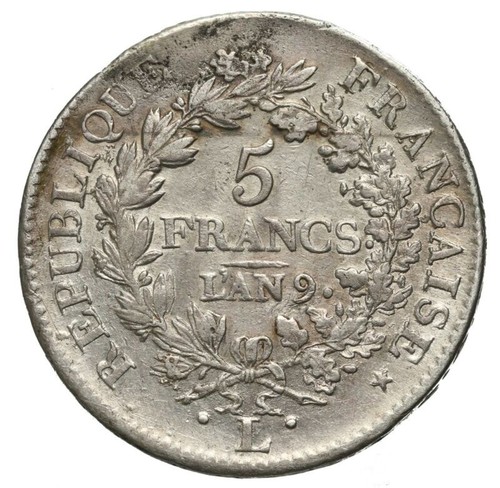
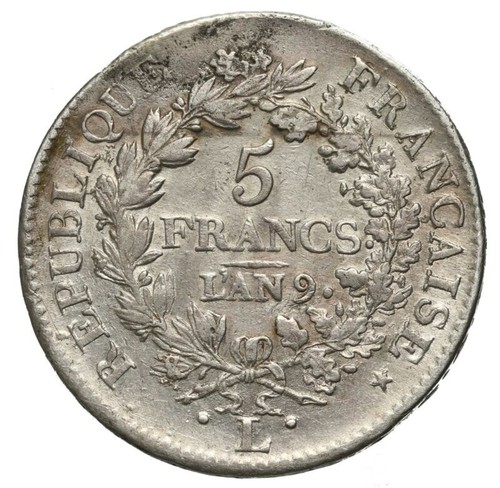
5 Francs (First Republic)
L'an 9 (1800–1801)
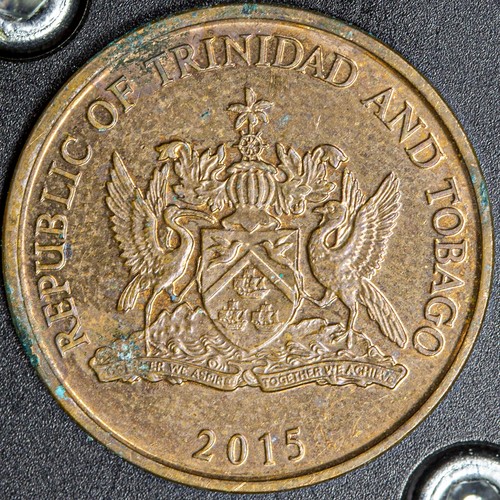
Trinidad and Tobago Dollar
2015
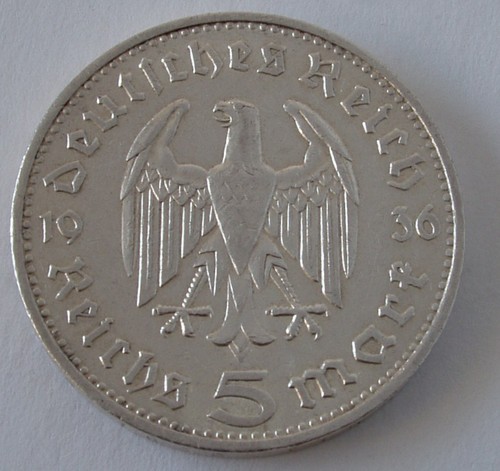
German 5 Reichsmark (Hindenburg)
1935–1936 (Hindenburg type with swastika)
5 Francs Semeuse
1960–1969
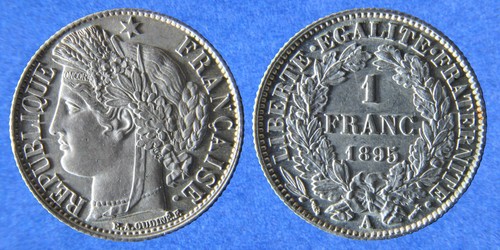
French Cérès 1 Franc
1849–1895
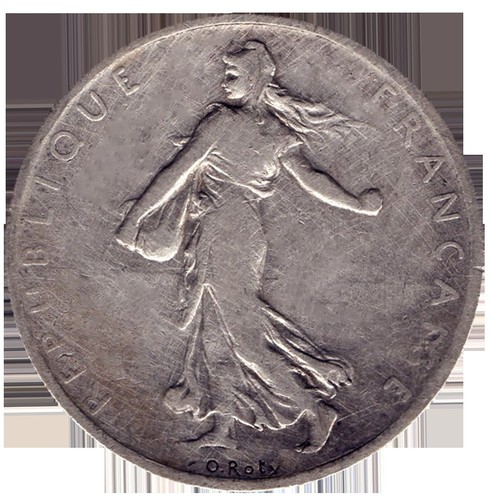
French Semeuse 2 Francs
1898–1920 (silver issues; pictured example dated 1899)
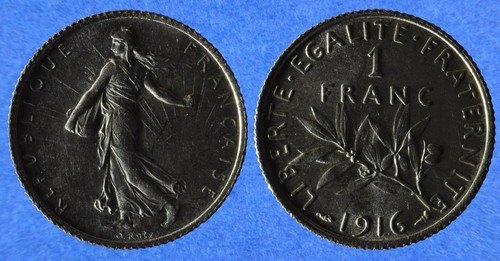
French Semeuse 1 Franc
1898–1920 (silver Semeuse 1 franc type)
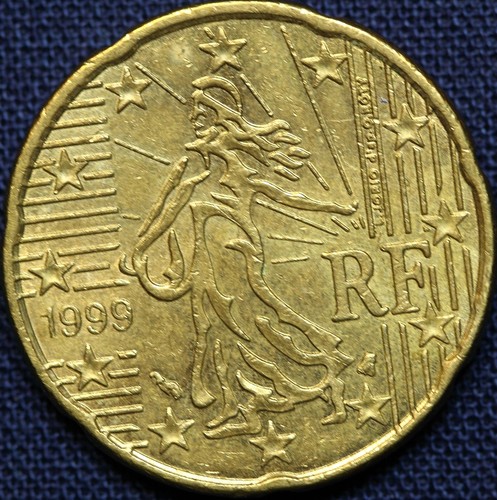
France 50 Cent Euro
1999–present
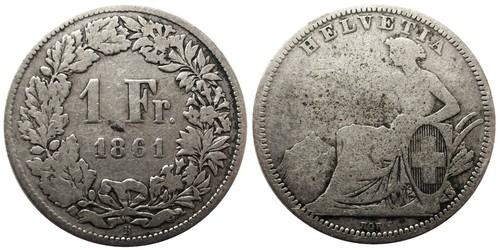
Swiss 1 Franc
1861
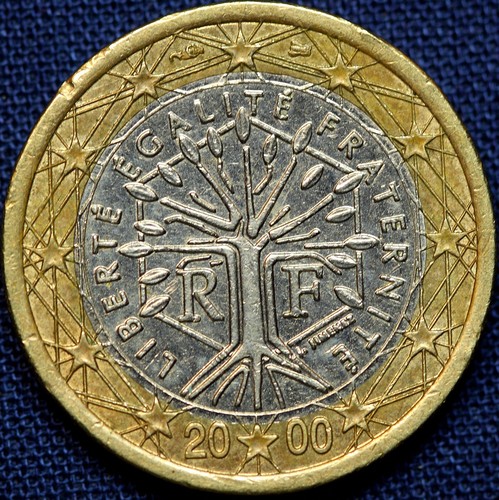
France 20 Centimes
1962–2001 (Fifth Republic, Marianne / Lagriffoul type)
Swiss 2 Francs
1860
Austria-Hungary 15 Kreuzer
1807