
Yuan Shikai Dollar
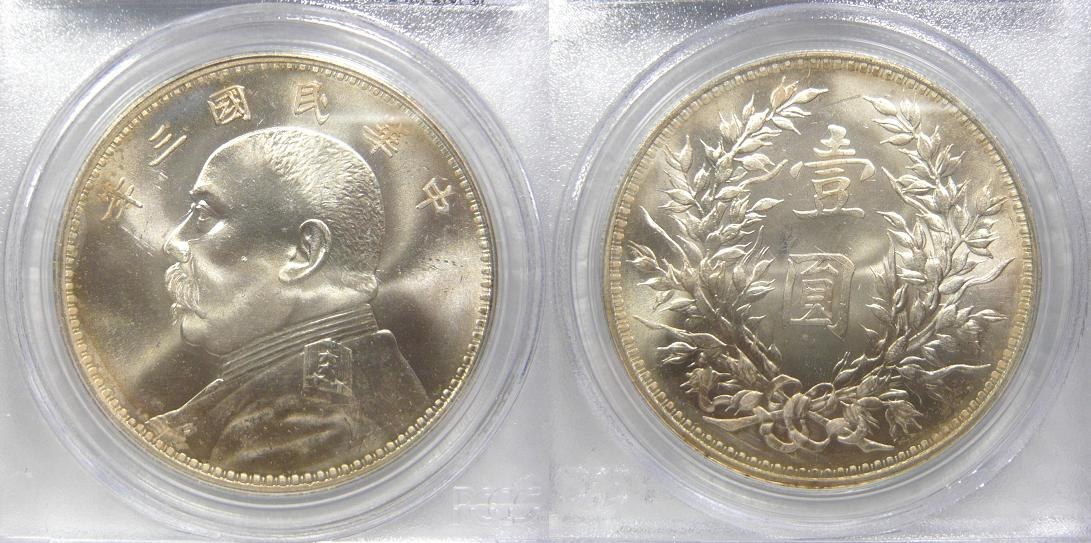
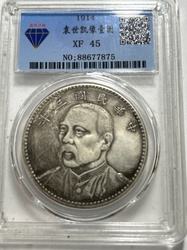
A silver one-yuan dollar of the early Chinese Republic bearing the left-facing bust of Yuan Shikai, nicknamed the "Fatman Dollar" by collectors.
- Country
- China
- Denomination
- 1 Yuan
- Metal
- Silver
Got a coin like this?
Identify any coin from a photo, free.
Overview
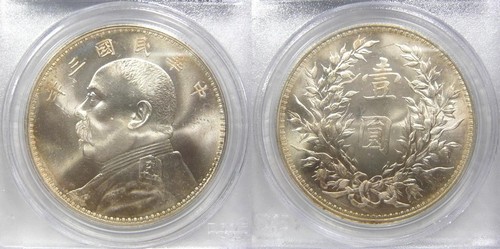
The Yuan Shikai Dollar is a silver one-yuan coin of the Republic of China, instantly recognizable by the left-facing profile bust of Yuan Shikai on its obverse. The example pictured is dated Year 3 (1914), the first and most common year of the type. Above the portrait run the Chinese characters reading "Republic of China, Year 3." The reverse shows the denomination "One Yuan" enclosed within a wreath of grain and laurel.
Collectors know the coin affectionately as the "Fatman Dollar" or "Fat Man Dollar," a reference to Yuan Shikai's rounded, close-cropped head; in Chinese it is called Yuan Datou, literally "Yuan Big Head." It was one of the most heavily produced silver dollars in Chinese history and circulated widely as a trade and everyday coin for decades.
As a large crown-sized silver piece, the Yuan Shikai Dollar is both a bullion coin and a cornerstone type for anyone collecting the coinage of Republican China. Its familiar design makes it one of the most frequently encountered — and most frequently counterfeited — Chinese silver dollars.
History & Background
Yuan Shikai was a powerful military and political figure who became the first formal President of the Republic of China after the 1911 revolution that ended the Qing dynasty. To unify the new nation's chaotic, fragmented currency, his government issued a standardized national silver dollar. The coin was authorized under the national coinage regulations of 1914, and the Year 3 date on the pictured coin corresponds to that year.
The design has long been attributed to the Italian engraver Luigi Giorgi, who worked at the Tianjin Mint. The new dollar was intended to replace the many competing provincial dragon dollars and foreign trade coins then circulating, and it succeeded so thoroughly that it became the dominant silver coin across much of China.
Production of the type continued well after Yuan Shikai's death in 1916, with additional issues dated Year 8, Year 9, and Year 10 struck into the early 1920s. Because the coin remained trusted, mints kept striking it — and later restrikes and copies were made — long after the original dates. It circulated for decades and was heavily hoarded, which is why so many survive today.
How to Identify
The obverse shows the bare-headed bust of Yuan Shikai in profile facing left, wearing a high-collared military uniform. A line of Chinese characters arcs across the top reading "Republic of China, Year 3" (or Year 8, 9, or 10 on later issues). The portrait's rounded head is the origin of the "Fatman" and "Big Head" nicknames.
The reverse is dominated by the denomination in large Chinese characters — Yi Yuan, "One Yuan" — set within an open wreath of two branches of grain tied at the bottom. Unlike many later Chinese dollars, the standard Year 3 reverse carries no dragon and no Latin lettering, so the wreath-and-characters design is a key identifier.
Physically the coin is a crown-sized silver dollar, roughly 39 mm across and about 26 to 27 grams, struck in high-grade (about .890 fine) silver with a reeded edge. Confirm the left-facing military bust, the "Year 3" legend, and the grain wreath enclosing "One Yuan" to identify the type. Genuine pieces are substantial in the hand and ring true for silver.
Value & Collectibility
The Yuan Shikai Dollar is among the most widely traded Chinese silver dollars, and because millions were struck, common Year 3 examples in circulated grades trade at modest premiums over their silver content. Demand is strong and steady, so even worn coins have a ready market.
Value rises sharply with condition and with scarcer varieties. Sharply struck, lustrous uncirculated coins, particular die varieties, and certain rarer dates or signature/lettered-edge types command significant premiums, while ordinary circulated Year 3 pieces remain affordable and easy to find.
Because the type is so popular and so valuable in high grade, it is one of the most counterfeited coins in the world, including deceptive silver and base-metal fakes as well as later restrikes. Certified examples from a reputable grading service bring the most confidence and the strongest prices. Actual values depend on date, grade, variety, and the silver market, and are best checked against recent sales of comparable coins.
Frequently asked questions
Why is it called the "Fatman Dollar"?
The nickname refers to Yuan Shikai's rounded, close-cropped head on the obverse. In Chinese the coin is called Yuan Datou, meaning "Yuan Big Head," and English-speaking collectors translated that idea into "Fatman" or "Fat Man" Dollar.
What does "Year 3" mean on the coin?
Republican China dated its coins by the year of the Republic rather than the Western calendar. Year 3 corresponds to 1914, the year the national dollar was authorized. The type was also struck dated Year 8, 9, and 10.
Is the Yuan Shikai Dollar real silver?
Yes. It is a large crown-sized silver dollar of roughly 26 to 27 grams and about 39 mm, struck in high-grade silver (around .890 fine). This gives it intrinsic bullion value on top of its collector appeal.
Who was Yuan Shikai?
Yuan Shikai was a leading military and political figure who became the first formal President of the Republic of China after the fall of the Qing dynasty. The dollar was issued to standardize the young republic's currency.
Are these coins rare?
Common Year 3 examples are not rare — the type was produced in enormous numbers and many survive. Value comes mainly from silver content, condition, and scarcer dates or varieties, with high-grade and certified coins commanding premiums.
Yuan Shikai Dollar guides
In-depth guides for identifying, valuing, and collecting Yuan Shikai Dollar.
Yuan Shikai Dollar identified by the community
Real coins identified with Coin Identifier.
Other coins you may enjoy
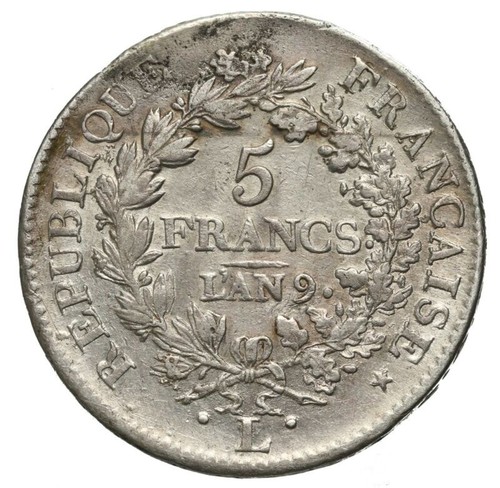
5 Francs (First Republic)
L'an 9 (1800–1801)
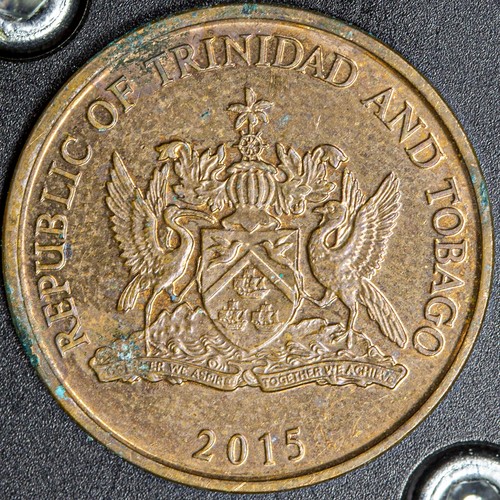
Trinidad and Tobago Dollar
2015
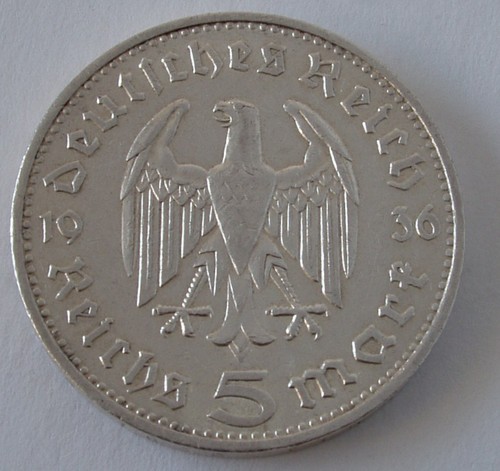
German 5 Reichsmark (Hindenburg)
1935–1936 (Hindenburg type with swastika)
5 Francs Semeuse
1960–1969
French Cérès 1 Franc
1849–1895
French Semeuse 2 Francs
1898–1920 (silver issues; pictured example dated 1899)
French Semeuse 1 Franc
1898–1920 (silver Semeuse 1 franc type)
France 50 Cent Euro
1999–present
Swiss 1 Franc
1861
France 20 Centimes
1962–2001 (Fifth Republic, Marianne / Lagriffoul type)
Swiss 2 Francs
1860
Austria-Hungary 15 Kreuzer
1807