How to Identify the Yuan Shikai Dollar
A collector's checklist for the silver "Fatman" dollar: the left-facing bust, the Year 3 legend, the grain wreath reverse, size and metal, and cautions on the many fakes.
Read the full Yuan Shikai Dollar encyclopedia entry →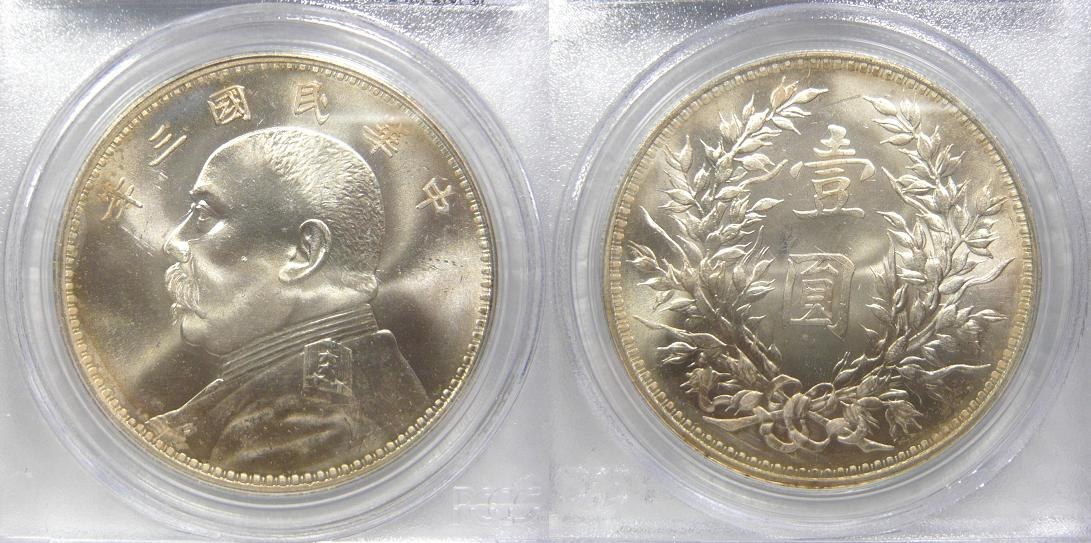
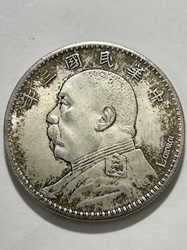
Start with the portrait, because the obverse defines the type. Look for a bare-headed bust of Yuan Shikai in profile facing left, wearing a high-collared military uniform. The rounded head that earned the "Fatman" and "Big Head" nicknames should sit centrally, with a row of Chinese characters curving across the top. Those characters read "Republic of China, Year 3" on the pictured coin; later issues read Year 8, Year 9, or Year 10.
Turn to the reverse to confirm. The standard type shows the denomination in two large Chinese characters — Yi Yuan, "One Yuan" — framed by an open wreath of two grain branches tied at the base. Note what is absent: the ordinary Year 3 dollar has no dragon and no Latin lettering. That plain wreath-and-characters layout is a reliable identifier and helps separate it from provincial dragon dollars and later commemorative types.
Check the physical specifications next. A genuine Yuan Shikai Dollar is crown-sized, roughly 39 mm in diameter and about 26 to 27 grams, struck in high-grade silver with a reeded edge. Weigh and measure the coin against published figures, and expect real heft and a clear silver ring. A piece that is noticeably light, undersized, oversized, or dull-sounding should be treated with suspicion.
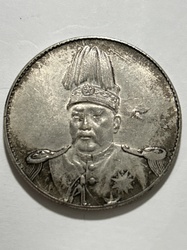
Be aware of look-alikes and varieties. The type was struck across several years and by more than one mint, and there are collectible variants including different date characters, minor die differences, and scarcer lettered-edge or signature types. Distinguishing an ordinary Year 3 coin from a scarce variety takes careful comparison against reference images, so match the exact characters and details rather than assuming.
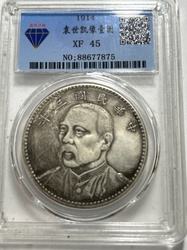
Finally, authenticate with care, because the Yuan Shikai Dollar is one of the most counterfeited coins in the world. Fakes range from crude base-metal copies to deceptive struck silver forgeries and later restrikes. Watch for wrong weight or diameter, a poor or greasy silver ring, seam lines or casting bubbles, mushy portrait detail, and lettering that looks slightly off in shape or spacing. For any coin of value, favor examples certified by a reputable grading service and compare weight, size, and design against known-genuine references before buying.
Frequently asked questions
What is the quickest way to recognize a Yuan Shikai Dollar?
Look for the left-facing military bust of Yuan Shikai with a rounded head on the obverse and a row of Chinese characters reading "Republic of China, Year 3" above it, paired with a reverse showing "One Yuan" inside a grain wreath. That combination identifies the type.
How do I tell a Year 3 coin from the later issues?
The date is written in the Chinese characters arcing over the portrait. Year 3 corresponds to 1914; the type was also struck as Year 8, 9, and 10. Matching those specific date characters against a reference tells you which year you have.
What size and weight should a genuine coin be?
It is a crown-sized silver dollar, roughly 39 mm across and about 26 to 27 grams in high-grade silver with a reeded edge. Measuring and weighing the coin against published specifications is a basic and important authentication step.
Why is authentication so important for this coin?
The Yuan Shikai Dollar is one of the most heavily counterfeited coins in the world, with everything from crude fakes to convincing struck forgeries and restrikes. Verify weight, diameter, and detail, and for valuable examples rely on coins certified by a reputable grading service.
Yuan Shikai Dollar identified by the community
Recent Yuan Shikai Dollar coins identified with Coin Identifier.