
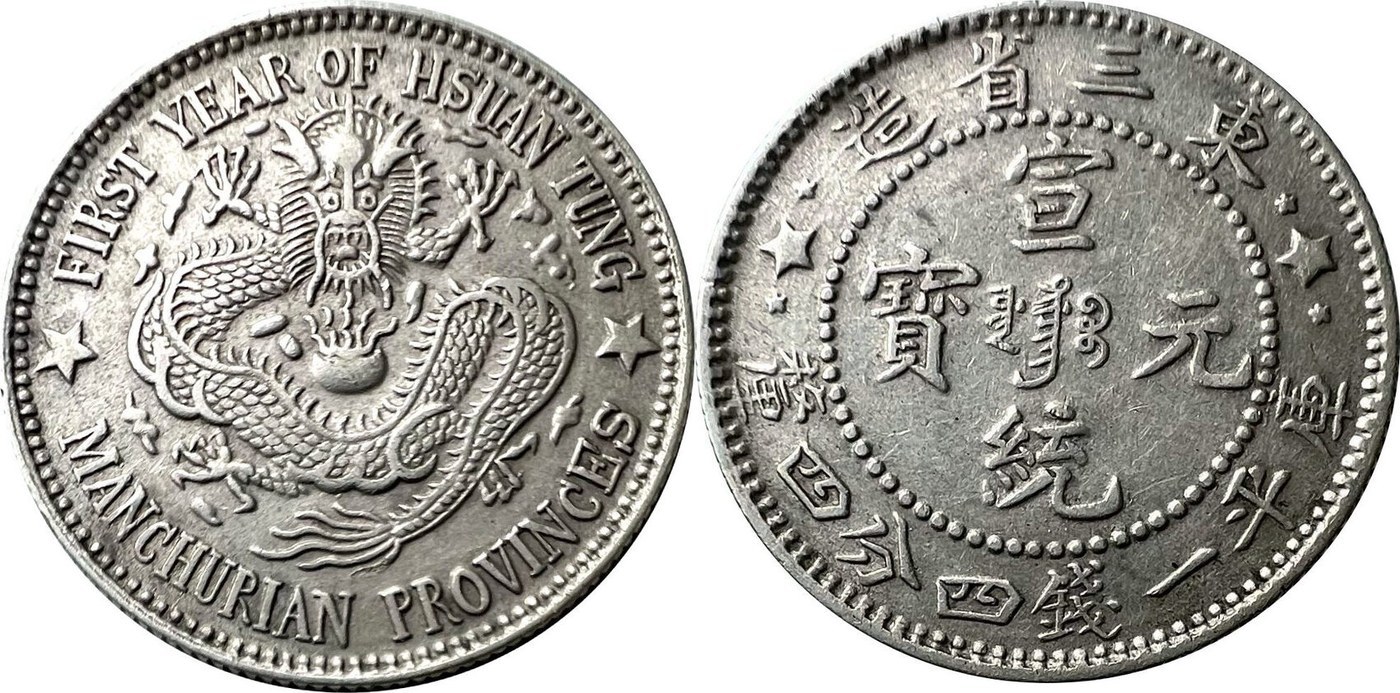
Xuantong Yuanbao 20 Cents
A small late-Qing silver 20-cent coin with a Western-style dragon, the English legend FIRST YEAR OF HSUAN TUNG, and Chinese characters reading Xuantong Yuanbao.
- Country
- China
- Denomination
- 20 Cents
- Metal
- Silver
Got a coin like this?
Identify any coin from a photo, free.
Overview
The coin pictured is a Xuantong Yuanbao 20 Cents (宣統元寶), a small silver fractional coin struck in the final years of China's Qing dynasty under the Xuantong reign (romanized on the coin as Hsuan Tung). Xuantong was the reign title of the boy emperor Puyi, China's last emperor, whose rule ran from 1908 to 1912.
The piece follows the standard late-Qing bilingual dragon format. One side carries a dragon rendered in a rounded, Western-influenced style, encircled by the English legend identifying the reign and value, including the phrase FIRST YEAR OF HSUAN TUNG. The other side bears the four Chinese characters Xuantong Yuanbao ("Xuantong currency") around a central field, framed by decorative borders.
The 20 Cents is a minor denomination in the silver series, worth two jiao (two-tenths of a dollar) and equivalent in the older Chinese weight system to roughly one mace and four-plus candareens of silver. It was struck by provincial mints as everyday small change alongside the larger dragon dollars and half-dollars of the same reign.
History & Background
The coin belongs to the last chapter of the Qing dynasty. When the Guangxu Emperor died in 1908, the two-year-old Puyi was placed on the throne under the reign name Xuantong. His brief reign, ending with the 1911–1912 revolution that founded the Republic of China, is the entire window in which these coins were made, so the type is closely dated to 1908–1912.
By this period China's coinage had shifted from cast, square-holed cash to machine-struck silver and copper coins produced on Western presses. Following the pattern set in the Guangxu reign, mints paired a dragon design with bilingual legends in Chinese and English so the coins could function in a country increasingly tied to international trade. The English wording, including the FIRST YEAR OF HSUAN TUNG dating, reflects that outward-facing design.
Silver denominations in the reign ran from small pieces like the 20 Cents up through the dragon dollar. These fractional coins were largely a provincial phenomenon: individual provincial mints struck them for regional circulation rather than there being a single unified national issue, which is why surviving Xuantong minor silver varies in fabric and style from one striking to another.
How to Identify
Confirm the coin by its bilingual dragon layout. One face shows a dragon in a rounded, Western-style rendering surrounded by an English legend that names the reign and states the value, with the distinctive phrase FIRST YEAR OF HSUAN TUNG. The opposite face carries the four Chinese characters Xuantong Yuanbao (宣統元寶) around a central field, set within decorative and beaded borders.
Check the size and metal. As a 20-cent piece this is a small silver coin, considerably smaller than the dragon dollar or half-dollar of the same series, typically only a couple of centimeters across. It is a struck coin with sharp, machine-made detail and a reeded or patterned edge, not a cast piece; genuine silver shows a grey tone or toning rather than the yellow of brass.
Use the reign name and denomination to place it. The characters Xuantong date it to the reign of Puyi, distinguishing it from the very similar Guangxu Yuanbao coins of the previous reign, which share the dragon-and-English format but carry a different reign title. The English value confirms the 20 Cents denomination, separating it from the 10-cent, half-dollar, and dollar pieces of the same design family.
Value & Collectibility
The Xuantong Yuanbao 20 Cents is a collectible late-Qing silver coin whose worth depends heavily on the specific issue, condition, and eye appeal rather than any single catalog number. Worn but genuine circulated examples are affordable minor silver, while sharply struck, lightly worn, or scarcer provincial varieties bring stronger prices.
Because the type covers several provincial strikings, some issues are common and others genuinely scarce, and grade makes a large difference: original surfaces, full dragon detail, and attractive toning add value, while cleaning, scratches, or heavy wear reduce it. Treat any single price as a starting point and compare against recent sales of the same issue and grade.
Late-Qing dragon coins are frequently counterfeited and reproduced, including fantasy and modern copies, so higher-value examples benefit from weighing, measuring, and, where the price warrants it, third-party authentication before purchase.
Frequently asked questions
What does Xuantong Yuanbao mean?
Xuantong Yuanbao (宣統元寶) combines the reign title Xuantong—the era name of the last Qing emperor, Puyi—with yuanbao, a term for currency. Together it marks the coin as money issued during the Xuantong reign.
Why does the coin say FIRST YEAR OF HSUAN TUNG in English?
Hsuan Tung is an older romanization of Xuantong, and the English legend dates the coin to the first year of that reign. Late-Qing silver coins used bilingual Chinese and English legends so they could circulate in a country heavily engaged in foreign trade.
How much silver is in a 20-cent coin?
It is a small silver fractional coin worth two jiao, or two-tenths of a dollar. As a minor denomination it contains only a modest amount of silver and is much smaller and lighter than the dragon dollar of the same series.
Is this the same as a Guangxu dragon coin?
No. Guangxu and Xuantong coins share the dragon-and-English format, but they name different reigns. This coin reads Xuantong (Hsuan Tung), placing it in the reign of Puyi, whereas Guangxu Yuanbao coins belong to the previous emperor's reign.
How old is the coin?
It dates to the Xuantong reign of 1908 to 1912, the final years of the Qing dynasty before the Republic of China was founded, making genuine examples well over a century old.
Xuantong Yuanbao 20 Cents guides
In-depth guides for identifying, valuing, and collecting Xuantong Yuanbao 20 Cents.
Other coins you may enjoy
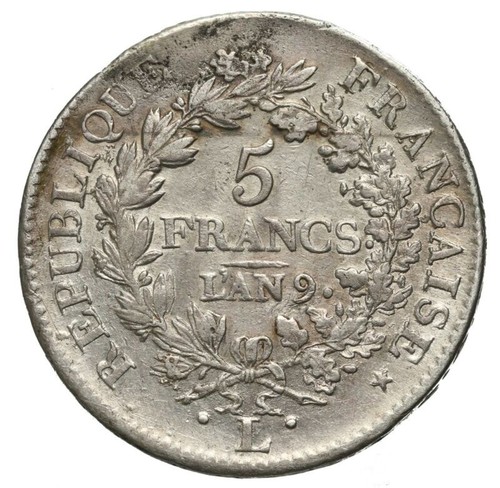
5 Francs (First Republic)
L'an 9 (1800–1801)
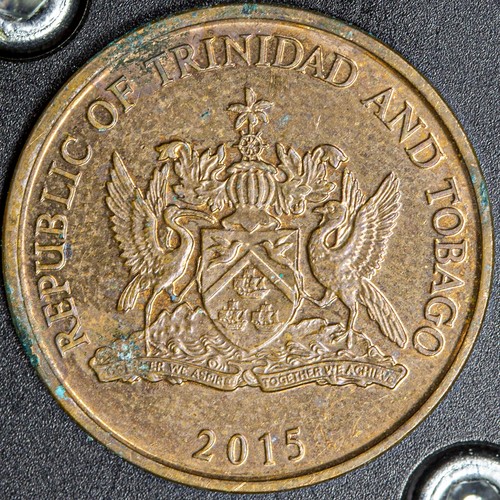
Trinidad and Tobago Dollar
2015
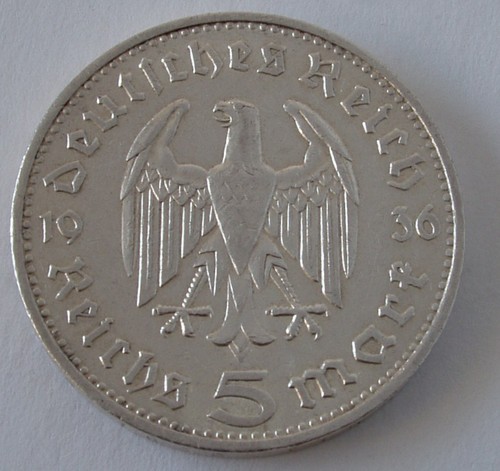
German 5 Reichsmark (Hindenburg)
1935–1936 (Hindenburg type with swastika)
5 Francs Semeuse
1960–1969
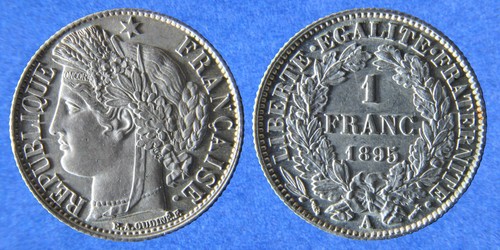
French Cérès 1 Franc
1849–1895
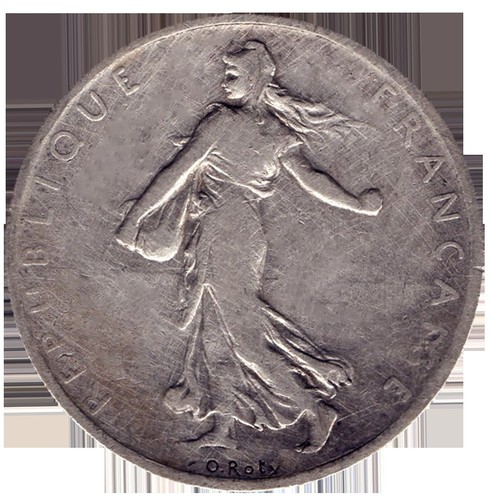
French Semeuse 2 Francs
1898–1920 (silver issues; pictured example dated 1899)
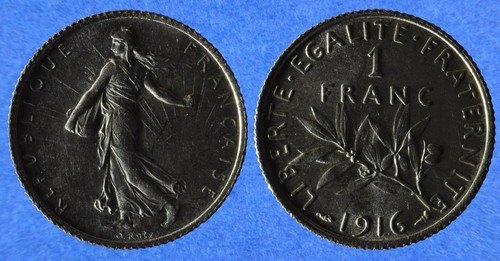
French Semeuse 1 Franc
1898–1920 (silver Semeuse 1 franc type)
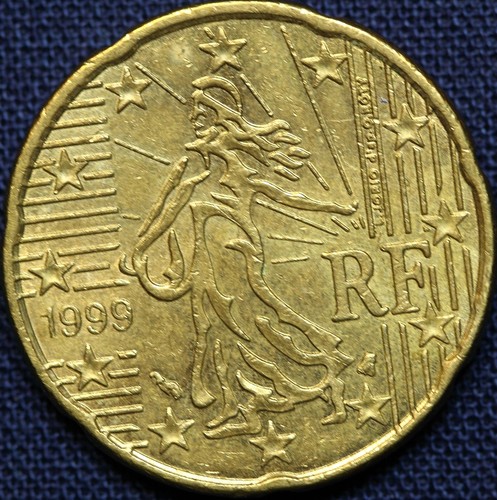
France 50 Cent Euro
1999–present
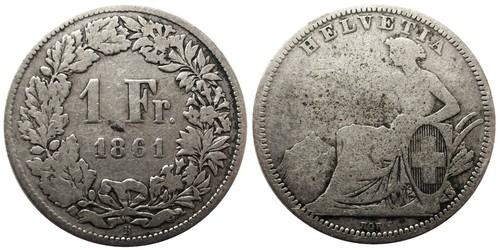
Swiss 1 Franc
1861
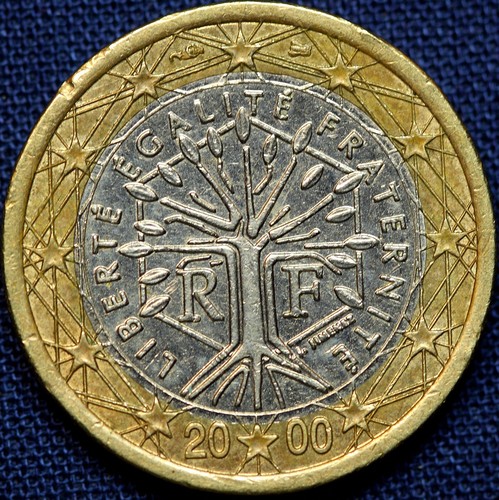
France 20 Centimes
1962–2001 (Fifth Republic, Marianne / Lagriffoul type)
Swiss 2 Francs
1860
Austria-Hungary 15 Kreuzer
1807