
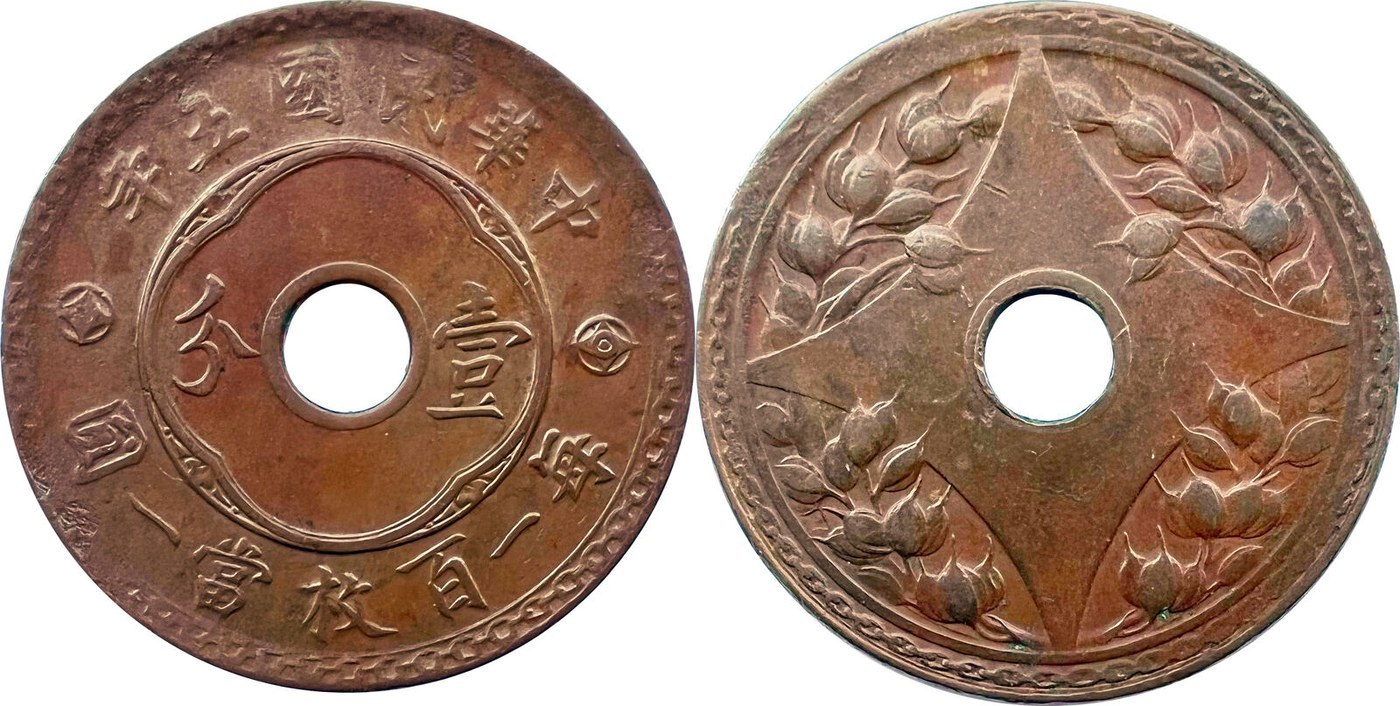
Republic 1 Fen
A holed copper 1 fen of Republican China, showing a numeral 1 with Chinese characters on one side and flowering plum blossoms on the other, around a central square-ish hole.
- Country
- China
- Denomination
- 1 Fen
- Metal
- Copper
Got a coin like this?
Identify any coin from a photo, free.
Overview
The Republic 1 fen is a small copper minor coin of Republican China (Zhonghua Minguo, the Republic of China). One fen was the lowest working unit of the decimal money used alongside the fen, jiao, and yuan (dollar), so this piece served as everyday small change. The example here carries a central hole, a numeral 1 with Chinese characters on one side, and a spray of flowering plum blossoms on the other.
The coin is dated in the Republican (Minguo) style, which counts years from the founding of the Republic in 1912. The observed date, Year 5, corresponds to 1916. Because it is a base-copper piece with a central hole, it belongs to the tradition of small holed cash-style coinage that carried into the early Republican period.
Collectors treat the type as an inexpensive, tangible piece of early twentieth-century Chinese coinage. Its appeal is historical and decorative, resting on the plum-blossom design and the Republican dating rather than on any precious-metal content.
History & Background
The Republic of China was founded in 1912, and its coinage adopted a Minguo (Republic) year count that begins from that year, so Year 5 corresponds to 1916. During this period China was moving from the old cash-and-tael system toward a decimal structure of fen, jiao, and yuan, and low-value copper pieces like the 1 fen supplied the small change ordinary people needed.
The central hole on this coin echoes the centuries-old Chinese cash format, in which round coins carried a central opening so they could be strung together. Carrying that feature onto a Republican-era fen linked the new decimal money to a familiar, long-standing form of Chinese currency.
The plum blossom is a traditional Chinese emblem long associated with endurance and renewal, and it appears as a decorative motif on Republican coinage. As a heavily handled copper minor, the 1 fen circulated as pocket change, so surviving pieces show a broad range of wear from smooth brown examples to sharper survivors.
How to Identify
Look for a small round copper coin with a central hole. One side shows a large numeral 1 accompanied by Chinese characters that state the denomination and the issuing authority; the other side is filled with a spray of flowering plum blossoms arranged around the hole. This numeral-and-plum-blossom pairing is the quickest way to recognize the type.
The date is given in Republican (Minguo) style rather than a Western year. The observed coin reads Year 5, which converts to 1916 by adding 1911 to the Minguo number. The characters for the country and value are Chinese, so reading them, or matching them against a reference, confirms both the denomination (1 fen) and the Republican issuer.
The coin is copper, showing brown to reddish tones where original surface survives, and is a small, light minor-coin module. Confirm the exact year, variety, and any mint details against published references for Republican Chinese fen coinage, since the reading of the Minguo date and characters is essential to a correct attribution.
Value & Collectibility
As a circulating base-copper minor coin, the Republic 1 fen is generally affordable and accessible to collectors. Worn brown examples are common and inexpensive, while pieces that keep sharp plum-blossom detail, clean surfaces, or original copper color command higher premiums.
Value is driven mainly by condition, eye appeal, and the specific year and variety rather than by metal content, since these are copper rather than precious-metal coins. Well-struck, problem-free survivors are the most sought after, and some Minguo years or varieties within the broader series are scarcer than others.
Because Republican fen coinage spans multiple years and design details, confirming the exact Minguo date, such as Year 5 (1916), and the specific variety helps place a coin's value. As with any circulated copper, surfaces and grade matter more than the small nominal denomination, and prices are best checked against recent sales of comparable pieces.
Frequently asked questions
What country and denomination is this coin?
It is a 1 fen of the Republic of China (Zhonghua Minguo). One fen was the lowest unit of China's decimal money, used alongside the jiao and the yuan (dollar) as everyday small change.
What year is 'Year 5' in Western dating?
The coin uses the Republican (Minguo) calendar, which counts from the founding of the Republic in 1912. Year 5 therefore corresponds to 1916; add 1911 to the Minguo number to convert.
Why does the coin have a hole in the middle?
The central hole follows the old Chinese cash tradition, in which round coins had a central opening so they could be strung together. The feature carried onto some early Republican minor coins like this fen.
What are the flowers on the reverse?
They are plum blossoms, a traditional Chinese emblem associated with endurance and renewal. The plum-blossom spray is the decorative side of the coin, opposite the numeral 1.
Is the 1 fen valuable?
As a circulating copper coin, most examples are affordable, with value depending on condition, surfaces, and the specific year and variety. Better-preserved pieces with sharp detail or original color are worth more; check recent comparable sales.
Republic 1 Fen guides
In-depth guides for identifying, valuing, and collecting Republic 1 Fen.
Other coins you may enjoy
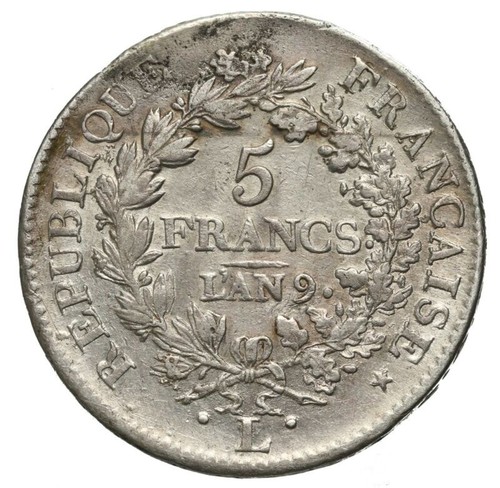
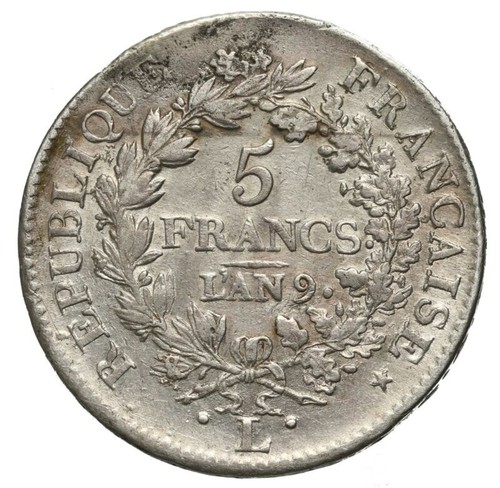
5 Francs (First Republic)
L'an 9 (1800–1801)
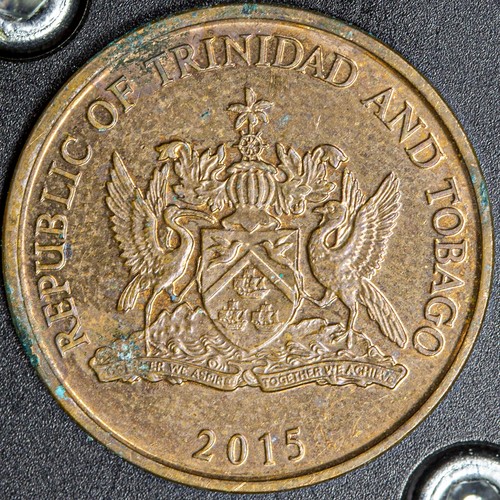
Trinidad and Tobago Dollar
2015
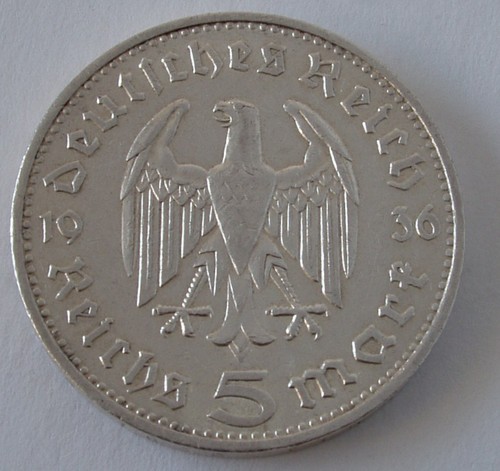
German 5 Reichsmark (Hindenburg)
1935–1936 (Hindenburg type with swastika)
5 Francs Semeuse
1960–1969
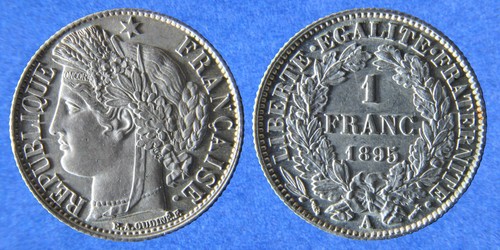
French Cérès 1 Franc
1849–1895
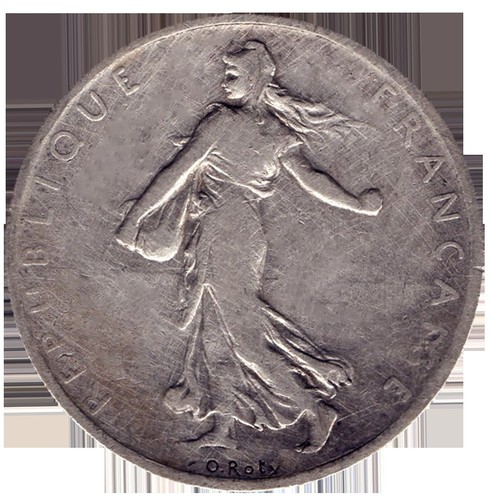
French Semeuse 2 Francs
1898–1920 (silver issues; pictured example dated 1899)
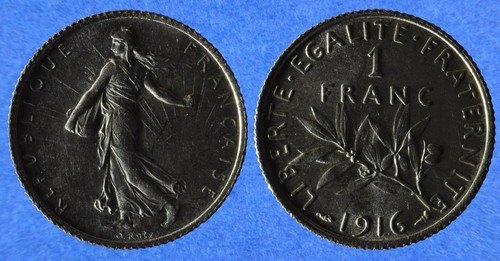
French Semeuse 1 Franc
1898–1920 (silver Semeuse 1 franc type)
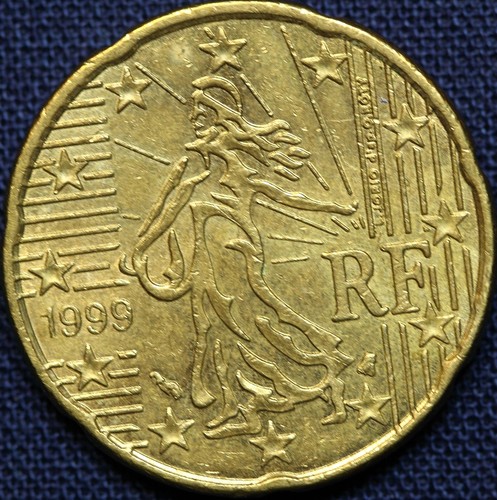
France 50 Cent Euro
1999–present
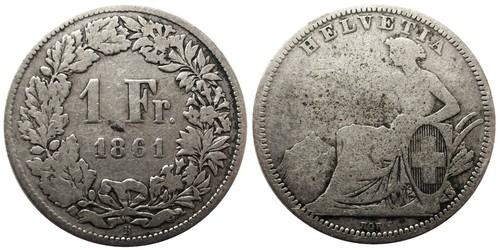
Swiss 1 Franc
1861
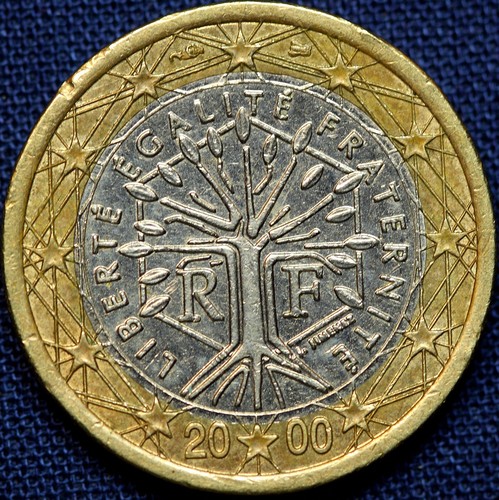
France 20 Centimes
1962–2001 (Fifth Republic, Marianne / Lagriffoul type)
Swiss 2 Francs
1860
Austria-Hungary 15 Kreuzer
1807