
How to Identify the Venezuelan Silver Coin (1879)
A collector's checklist for the 1879 Venezuelan silver coin: the left-facing Bolívar portrait, the wreathed coat of arms, metal and size, and cautions on look-alikes.
Read the full Venezuelan Silver Coin (1879) encyclopedia entry →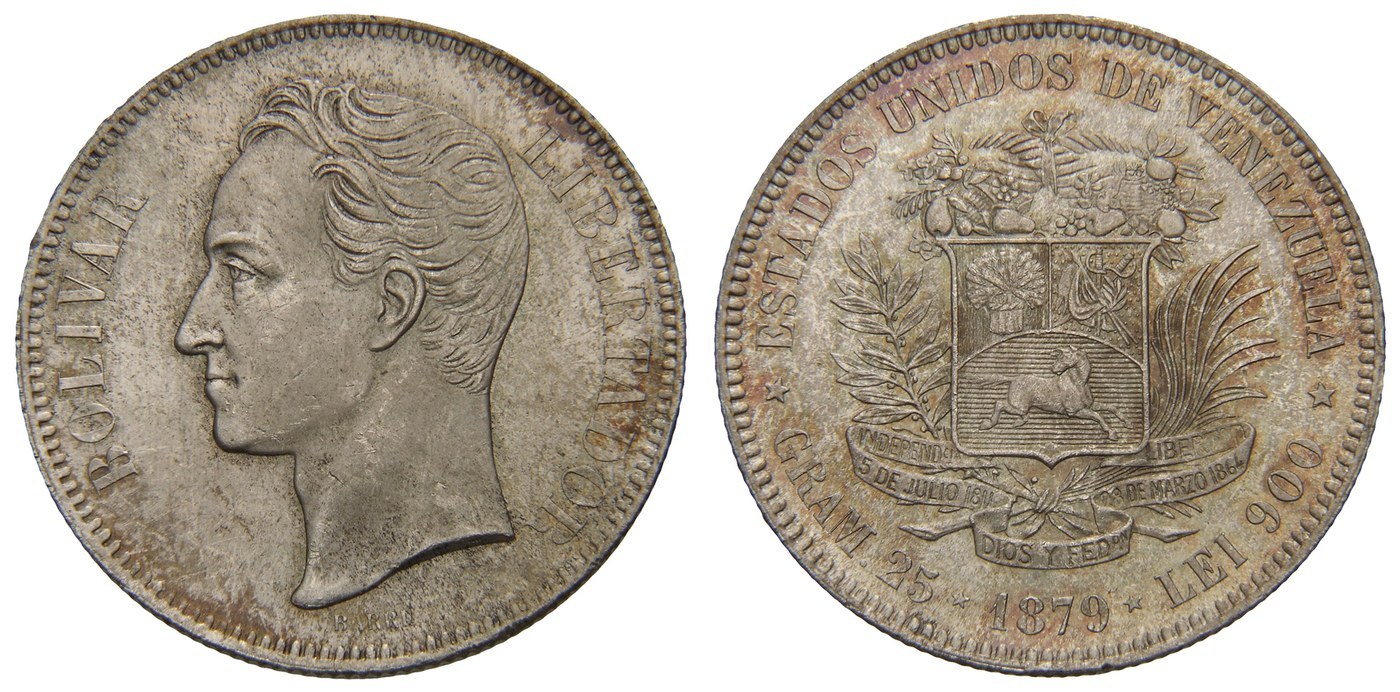
Start with the portrait, because it is the fastest identifier. Look for a bare-headed male bust in profile facing left, with wavy hair and no crown or laurel wreath on the head. That is Simón Bolívar, and the realistic, uncrowned portrait tells you immediately you are holding a republican Latin American coin rather than a European royal piece. Read the surrounding Spanish legend and confirm the date reads 1879.
Turn the coin over and examine the reverse. You should see the Venezuelan national coat of arms — a shield above heraldic devices — enclosed by an ornate wreath, usually laurel and palm branches tied with a ribbon at the base. The encircling inscription names the country in Spanish, in the period form "Estados Unidos de Venezuela." The denomination and silver fineness are normally lettered into this side as well, so read them carefully.
Confirm the physical traits next, since the design was used across several silver denominations in 1879. Weigh and measure the coin and compare the figures to published specifications for the Bolívar silver series; this is what separates a small fractional piece from the large crown-sized 5 Bolívares. Fine silver should feel dense for its size and produce a clean ring. A coin that is noticeably light, undersized, or dull-sounding warrants caution. Check the design for small mint marks or engravers' initials, which can indicate a Caracas or Paris striking.
Be careful not to confuse this coin with other nineteenth-century Latin American silver that shares a hero-portrait-and-arms formula. Several republics placed a founding figure on the obverse and a wreathed shield on the reverse, so rely on the specifics: a left-facing Bolívar head, the Venezuelan arms, and wording naming Venezuela, all with an 1879 date. Do not identify the coin from the general layout alone.
Finally, watch for authenticity problems common to popular silver coins. Inspect Bolívar's hair and the shield detail for the crispness of a struck coin rather than the soft, grainy look of a cast copy, and examine the fields and edge for tooling, filed seams, or altered date digits. For any valuable example, favor coins authenticated by a reputable grading service and verify weight and diameter against trusted references before buying.
Frequently asked questions
What is the quickest way to recognize this coin?
Match two features: a left-facing, bare-headed portrait of Simón Bolívar with wavy hair on one side, and the Venezuelan coat of arms inside an ornate wreath on the other. Together with a Spanish legend naming Venezuela and an 1879 date, that pairing identifies the type.
How do I tell which denomination I have?
The 1879 Bolívar silver design was used on several values, from small fractions up to the large 5 Bolívares. Weigh and measure the coin and compare it to published specifications, and read any denomination lettered into the reverse, to fix the exact value.
How do I keep from confusing it with other Latin American silver?
Many republics used a hero portrait paired with a wreathed shield, so do not rely on the general layout. Confirm the specifics — a left-facing Bolívar head, the Venezuelan arms, and wording naming Venezuela — along with the 1879 date.
What should I check to guard against fakes?
Confirm weight and diameter against published figures, listen for a true silver ring, and inspect the portrait and shield for sharp struck detail rather than soft cast surfaces. Examine the date for altered digits, and for valuable pieces buy coins authenticated by a reputable grading service.