
10,000 Soles de Oro
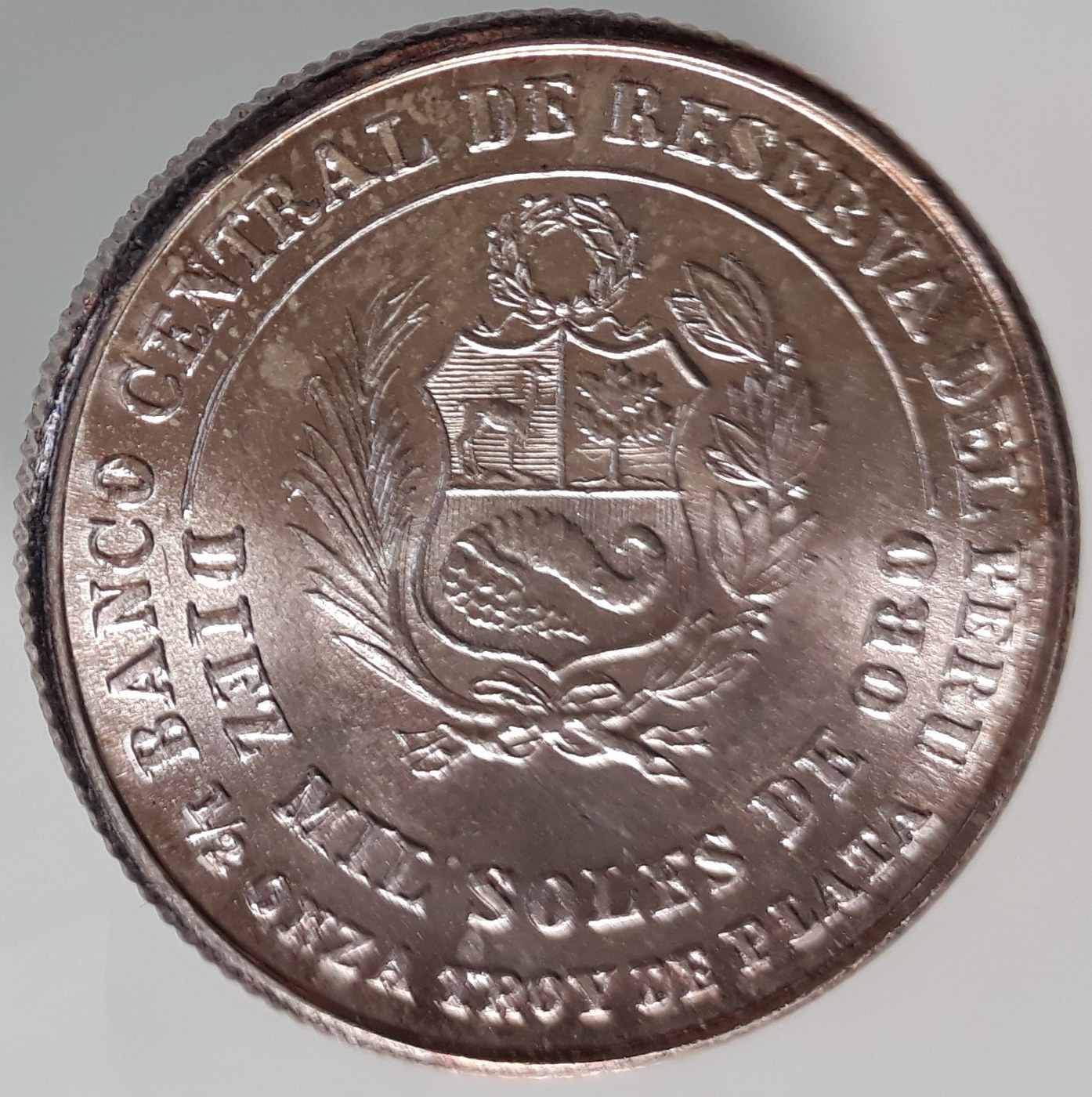
A large Peruvian silver coin of 10,000 soles de oro, its obverse bearing the national coat of arms with the vicuna, cinchona tree and cornucopia.
- Country
- Peru
- Denomination
- 10,000 Soles de Oro
- Metal
- Silver
Got a coin like this?
Identify any coin from a photo, free.
Overview
The 10,000 Soles de Oro is a high-denomination Peruvian coin issued in the early 1980s, at a time when years of inflation had pushed the sol de oro to very large face values. The example pictured is dated 1982 and shows the obverse: the national coat of arms of Peru, with its shield displaying a vicuna, a cinchona tree and a cornucopia, framed by branches and surmounted by a wreath.
Despite the name, the coin is not gold. "Sol de oro" was simply the name of Peru's monetary unit — literally "sol of gold" or "golden sol" — and this piece was struck in silver. The denomination 10,000 SOLES DE ORO and the date appear as part of the design, together with the issuing authority.
The reverse is not visible in the available obverse-only photograph, so it is not described here. What can be confirmed from the coin itself is a substantial silver piece carrying Peru's arms and a five-figure face value that reflects the currency conditions of its era.
History & Background
The sol de oro served as Peru's currency for much of the twentieth century, until it was replaced by the inti in 1985. Through the late 1970s and early 1980s, Peru experienced strong inflation, and the practical face values of everyday money climbed steeply. This is the backdrop against which coins denominated in thousands of soles — figures unthinkable a generation earlier — came to be produced.
A 10,000-soles-de-oro coin dated 1982 belongs to this period of large-denomination issues. Coins of this scale were struck in precious metal as much for their bullion and commemorative character as for ordinary pocket use, at a moment when the smaller circulating coinage was rapidly losing purchasing power.
Peruvian coinage of this era was produced at the national mint in Lima (Casa Nacional de Moneda), which struck the country's regular and commemorative issues. Within a few years the sol de oro would be retired entirely in favor of a new unit, making these late high-value soles a record of the currency's final phase.
How to Identify
The identifying feature visible on this coin is the obverse: the Peruvian national coat of arms. The central shield is divided into three parts — a vicuna (the native camelid), a cinchona tree, and a cornucopia pouring out coins — and is surrounded by palm and laurel branches with a wreath above. Around the arms you will typically find the name of the issuing authority and the country.
The denomination is spelled out as 10,000 SOLES DE ORO, and the date 1982 appears with the design. Reading the full five-figure denomination is the surest way to separate this piece from lower-value soles that share the same coat-of-arms motif, since the arms alone appear on many Peruvian coins across different denominations.
The reverse is not shown in the obverse-only photograph used here and is therefore not described. Physically, this is a large, heavy coin struck in silver; its size, weight and metal, combined with the 10,000-soles denomination and the 1982 date, are the key points of identification.
Value & Collectibility
As a large silver coin, the 10,000 Soles de Oro carries value from its precious-metal content as well as from collector interest in late sol-de-oro issues. Circulated examples typically trade in a modest range tied closely to the prevailing silver price, while sharp, uncirculated pieces with original surfaces bring a premium above bullion.
Actual prices depend on grade, eye appeal, and whether a coin was issued or preserved in proof or business-strike form, so figures are best confirmed against recent sales of comparable Peruvian silver of this period rather than any fixed number. The silver market itself moves the baseline for common examples.
Because the coin is silver and of a distinctive large size, its condition matters: original luster and problem-free surfaces are what separate an ordinary example from a desirable one. Cleaned, damaged or heavily worn coins sell at a discount to well-preserved pieces.
Frequently asked questions
Is the 10,000 Soles de Oro made of gold?
No. "Sol de oro" was the name of Peru's currency unit, meaning "golden sol," but this coin was struck in silver. The words "de oro" describe the money system, not the metal of the coin.
What is shown on this coin?
The pictured obverse shows Peru's national coat of arms — a shield with a vicuna, a cinchona tree and a cornucopia, framed by branches. The reverse is not visible in this obverse-only photograph.
Why is the face value so high — 10,000 soles?
Peru saw significant inflation in the late 1970s and early 1980s, which pushed money into very large denominations. A 10,000-soles coin reflects the currency conditions just before the sol de oro was replaced by the inti in 1985.
What year is the pictured coin?
It is dated 1982, placing it in the final years of the sol de oro before Peru changed to a new monetary unit in 1985.
Does the coin have bullion value?
Yes. Because it is a large silver coin, it carries intrinsic value tied to the silver market, on top of any collector premium for condition or scarcity.
10,000 Soles de Oro guides
In-depth guides for identifying, valuing, and collecting 10,000 Soles de Oro.
Other coins you may enjoy
5 Francs (First Republic)
L'an 9 (1800–1801)
Trinidad and Tobago Dollar
2015
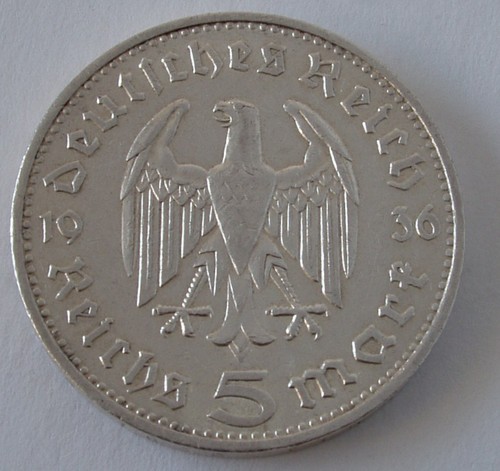
German 5 Reichsmark (Hindenburg)
1935–1936 (Hindenburg type with swastika)
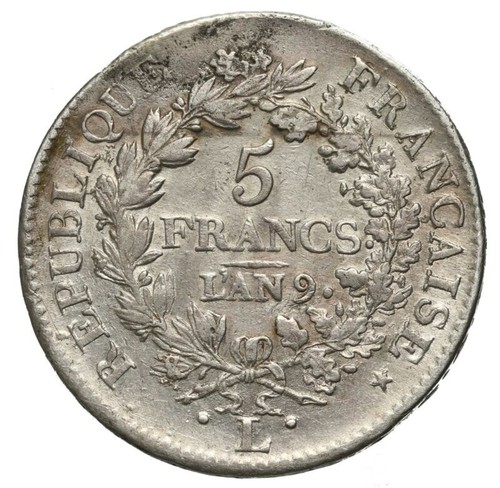
5 Francs Semeuse
1960–1969
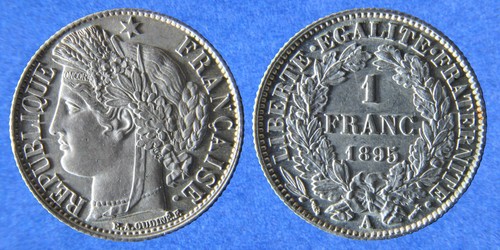
French Cérès 1 Franc
1849–1895
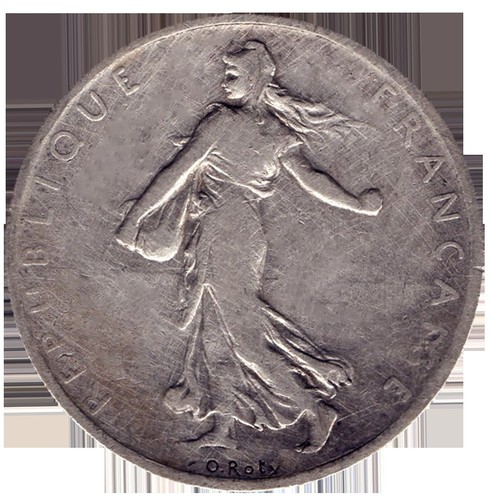
French Semeuse 2 Francs
1898–1920 (silver issues; pictured example dated 1899)
French Semeuse 1 Franc
1898–1920 (silver Semeuse 1 franc type)
France 50 Cent Euro
1999–present
Swiss 1 Franc
1861
France 20 Centimes
1962–2001 (Fifth Republic, Marianne / Lagriffoul type)
Swiss 2 Francs
1860
Austria-Hungary 15 Kreuzer
1807