
How to Identify the 10,000 Soles de Oro
A collector's checklist for Peru's 10,000-soles-de-oro silver coin: reading the full denomination, the coat of arms, size and metal, and cautions.
Read the full 10,000 Soles de Oro encyclopedia entry →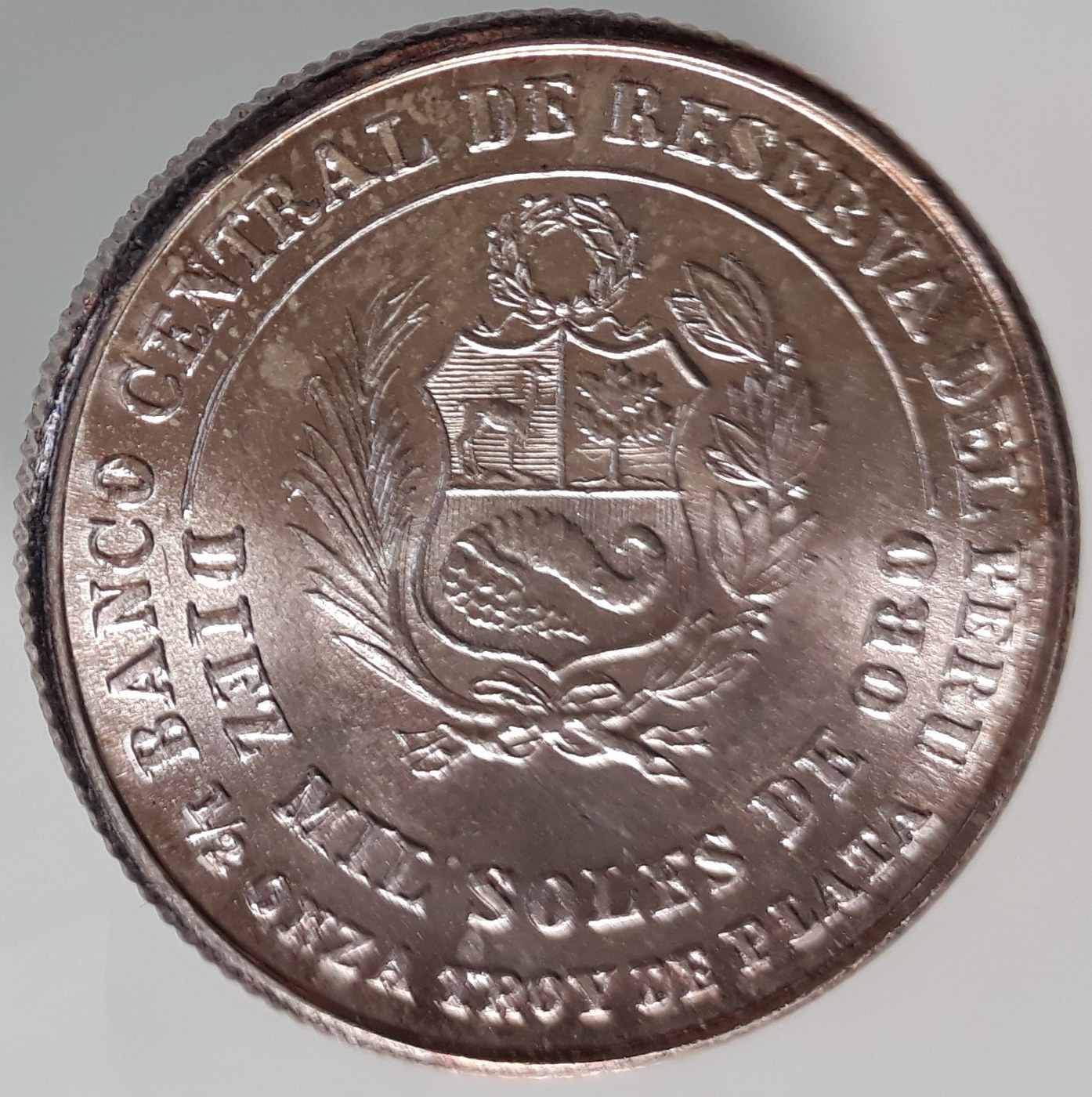
Start by reading the denomination in full. Many Peruvian coins carry the national coat of arms, so the arms by themselves will not tell you which coin you have. The decisive text is 10,000 SOLES DE ORO — confirm all the zeros, because lower values such as 500, 1,000 or 5,000 soles can share the same design language and legends. Pair that with the date, which on this example is 1982.
Study the coat of arms carefully. The Peruvian shield is split into three fields: a vicuna at upper left, a cinchona tree at upper right, and a cornucopia spilling coins along the bottom, all wrapped in palm and laurel branches with a wreath above. This is Peru's standard national emblem; it verifies the country of issue but not the denomination, so use it together with the value and date, not on its own.
Assess metal and size directly. This is a large, heavy silver coin, not gold — the phrase "de oro" refers to the old currency name rather than the composition. Weigh and measure it against published specifications for the type, and expect the solid feel and ring of a full-size silver piece. A coin that is noticeably light, undersized, or dull-sounding should be treated with caution.
Because this is an obverse-only identification, do not assume a reverse design you cannot see. If you have the coin in hand, turn it over and record the reverse before matching it to any catalog listing, since Peru issued several large soles types in this era and the reverse is often what distinguishes one commemorative from another.
Finally, apply normal silver-coin authentication. Check that weight and diameter match reference figures, look for crisp rather than soft or grainy detail, and inspect the edge and fields for casting seams or tooling. For any purchase where price depends on grade, favor coins authenticated or graded by a reputable service and compare against known-genuine examples.
Frequently asked questions
How do I tell this apart from other Peruvian coins with the same arms?
Read the denomination line in full. The coat of arms appears on many Peruvian coins, so the deciding factor is the printed value — confirm it reads 10,000 SOLES DE ORO and note the date, here 1982.
The coin says 'de oro' — should it be gold?
No. "Sol de oro" was the name of Peru's currency, so "de oro" is part of the denomination, not a statement of metal. This coin is silver, and its weight and color should reflect that.
Can I identify it from the coat-of-arms side alone?
You can confirm the country, denomination and date from the obverse, but not the full type, because the reverse is not shown. If possible, examine the reverse and match it to catalog references before finalizing an attribution.
How can I check that a silver example is genuine?
Compare weight and diameter to published specifications, look for sharp detail rather than blurry or grainy surfaces, and inspect the edge for casting seams. For valuable pieces, rely on a reputable grading or authentication service.