
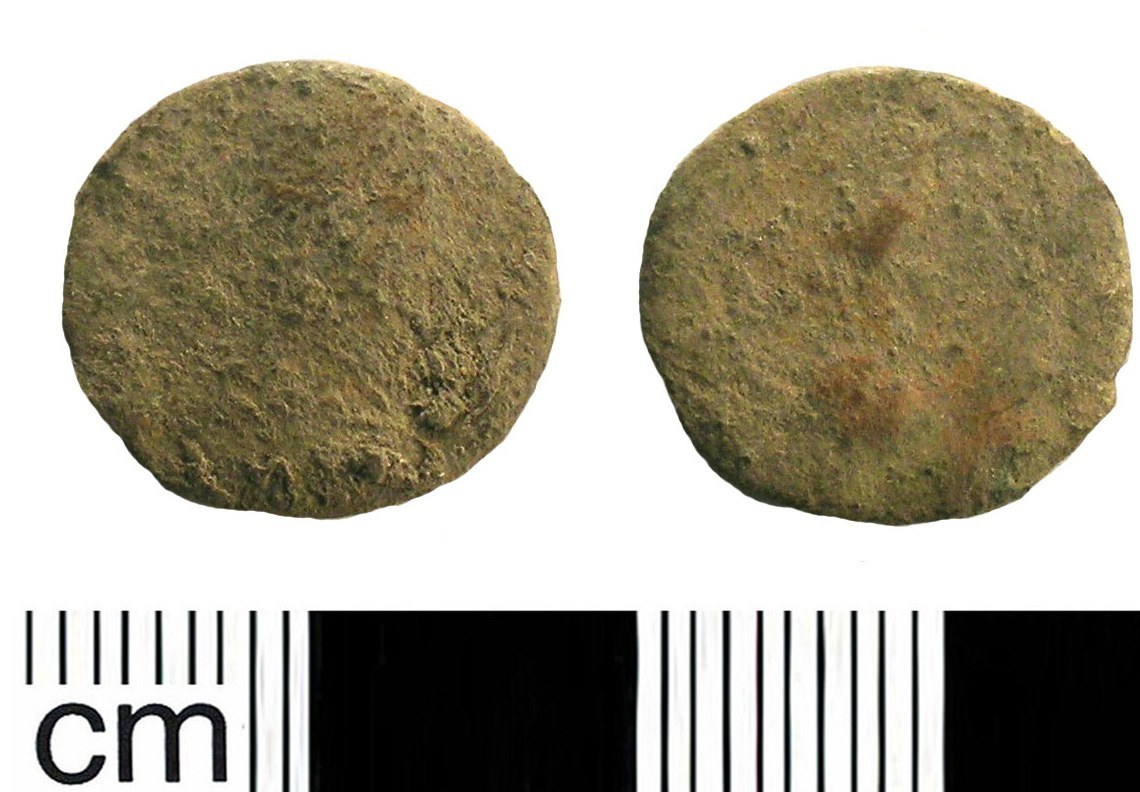
Half Centenionalis of Constans or Constantius II
A small mid-4th-century Roman bronze attributed to Constans or Constantius II, sons of Constantine the Great, worn but identifiable by its imperial portrait and era.
- Country
- Roman Empire
- Denomination
- Half Centenionalis
- Metal
- Bronze
Got a coin like this?
Identify any coin from a photo, free.
Overview
The half centenionalis is a small Roman base-metal coin of the mid-fourth century AD, here attributed to one of two brothers who ruled after Constantine the Great: Constans (Augustus AD 337-350) or Constantius II (Augustus AD 337-361). The two are grouped together because worn examples of this size share almost identical fabric, portrait style, and reverse types, and a heavily circulated coin often cannot be pinned to one emperor with certainty.
The obverse observed on this coin carries a diademed imperial portrait facing right, now worn, surrounded by a Latin legend that named the ruler and his titles. The reverse, also worn, would originally have shown a standard mid-century type such as paired Victories, soldiers and standards, or a vota inscription within a wreath. In hand it is a small, thin bronze disc, coppery brown where any surface enrichment has worn away.
"Half centenionalis" is a modern convenience label rather than an ancient name. The late Roman bronze denominations are known mainly from a few laws and are debated by numismatists, who commonly describe coins of this size by module (for example AE3 or AE4) when the exact denomination is uncertain.
History & Background
Constans and Constantius II were sons of Constantine I who, together with their brother Constantine II, divided the empire after their father's death in AD 337. Constans took the central and western provinces, while Constantius II governed the East. Constans was overthrown and killed by the usurper Magnentius in AD 350; Constantius II eventually defeated Magnentius and ruled as sole Augustus until his death in AD 361. Their coinage runs through the middle decades of the fourth century.
This was a period of repeated adjustment to the bronze coinage. Constantine and his successors issued a series of small billon and bronze denominations whose weights and sizes were reduced and reformed several times. A major reform associated with Constans and Constantius II around AD 348 introduced the FEL TEMP REPARATIO ("restoration of happy times") coinage, along with a set of denomination names, including the centenionalis, that appear in imperial legislation but are difficult to match precisely to surviving coins.
Because of this uncertainty, modern catalogues often use terms such as centenionalis and half centenionalis, or simply the size classes AE2, AE3, and AE4, to describe the different modules. A small coin of this era attributed to Constans or Constantius II sits within that reformed bronze system, struck at imperial mints across the empire in very large numbers.
How to Identify
Start with the portrait and the fabric. This is a small, thin bronze coin bearing a right-facing imperial bust, typically diademed (wearing a pearl or rosette diadem) and draped and cuirassed, in the style of Constantine's dynasty. The surrounding obverse legend would have named the emperor, most often in forms such as DN CONSTANS PF AVG or DN CONSTANTIVS PF AVG; where the legend survives, the name CONSTANS or CONSTANTIVS is the key to attribution. On a worn coin like this one the legend may be illegible, which is why it is catalogued to either brother.
The reverse carries one of the standard mid-century types. Common choices for this size include two Victories facing each other and holding wreaths (VICTORIAE DD AVGG Q NN), two soldiers flanking one or two standards (GLORIA EXERCITVS), or a vow inscription such as VOT XX MVLT XXX set within a wreath. Matching the worn design to one of these standard types, together with any surviving reverse legend, is how the coin is identified.
By size and metal it is a small bronze, commonly around 14-18 mm and roughly 1.5-2.5 grams, struck in copper alloy that sometimes carried a slight silvering now generally lost. Look in the reverse exergue for a mint mark, a short string of letters that identifies the mint and workshop and can place the coin to a specific city such as Rome, Aquileia, Siscia, Thessalonica, Constantinople, Antioch, or Alexandria.
Value & Collectibility
Small bronzes of Constans and Constantius II are among the most abundant of all late Roman coins, produced in enormous quantities across many mints, so they are inexpensive and widely available. A worn example such as this one, with an unclear portrait and reverse, generally trades in the low single-digit to low tens of dollars, in line with ordinary uncleaned or lightly circulated late Roman bronze.
Value rises with legibility and eye appeal. Coins with a sharp portrait, a fully readable obverse legend that fixes the emperor, a clear reverse type, and a complete mint mark are worth more than a worn piece that can only be attributed to "Constans or Constantius II." Scarcer reverse types, less common mints, and any surviving silvering add to desirability.
These figures are general context rather than an appraisal. Condition, the specific type and mint, and whether the coin can be firmly attributed to one emperor all affect price, and an individual coin can fall outside these ranges.
Frequently asked questions
Why is this coin attributed to Constans OR Constantius II rather than one emperor?
The two brothers struck near-identical small bronzes at the same time with the same portrait style and reverse types. When a coin is worn and its obverse legend, which carries the name CONSTANS or CONSTANTIVS, is no longer readable, it cannot be assigned to just one of them, so it is catalogued to either.
Is the half centenionalis silver or bronze?
It is a base-metal coin, essentially bronze or low-grade billon. Some issues of the period carried a thin surface silvering, but on most surviving coins this has worn away to leave a coppery brown surface.
Is "half centenionalis" the coin's original ancient name?
No. It is a modern label. The centenionalis is named in late Roman law but is hard to match to specific coins, so numismatists use terms like centenionalis and half centenionalis, or size classes such as AE3 and AE4, to describe the different bronze modules of this era.
Are these coins rare?
No. Bronzes of Constans and Constantius II were struck in vast numbers at mints across the empire and are among the most common ancient Roman coins available to collectors today, which keeps ordinary examples inexpensive.
Half Centenionalis of Constans or Constantius II guides
In-depth guides for identifying, valuing, and collecting Half Centenionalis of Constans or Constantius II.
Other coins you may enjoy
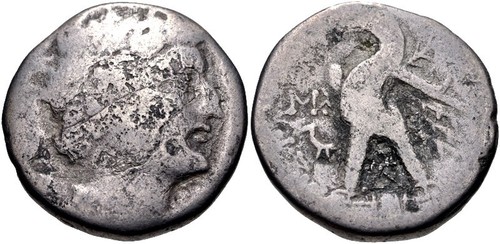
Tetradrachm of Ptolemy XII
80-51 BC
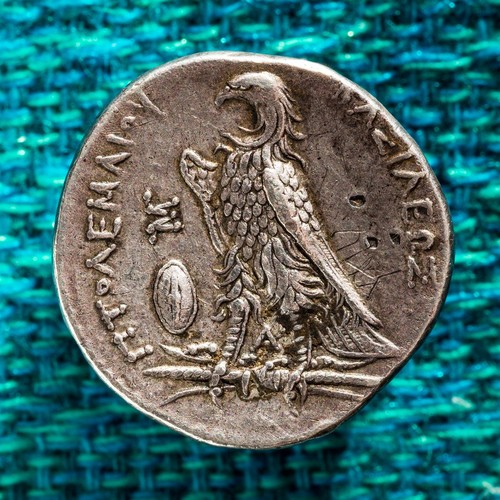
Tetradrachm of Ptolemy I
305-283 BC
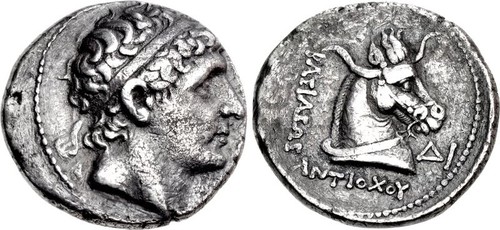
Tetradrachm of Antiochos I Soter
281-261 BC
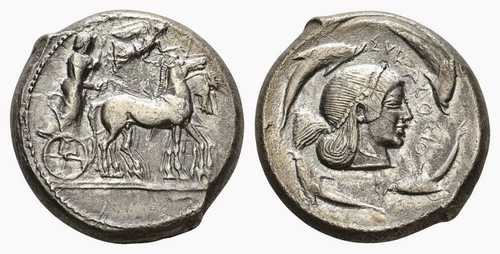
Syracuse Tetradrachm
c. 5th-4th century BC (Classical period)
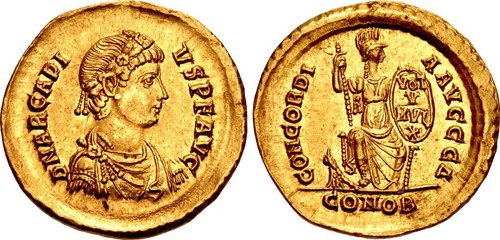
Solidus of Arcadius
AD 395-402
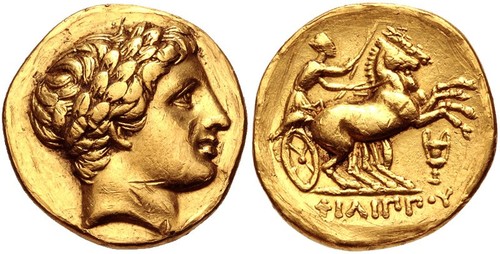
Philip III Gold Stater
323-317 BC
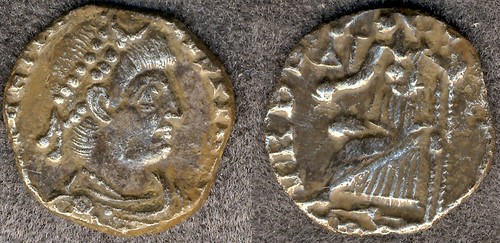
Siliqua of Gratian
AD 367-383
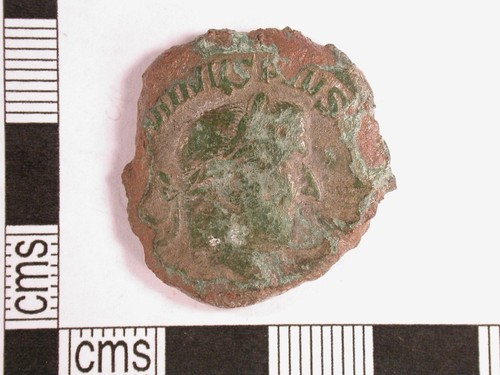
Sestertius of Maximinus Thrax
235-238 AD
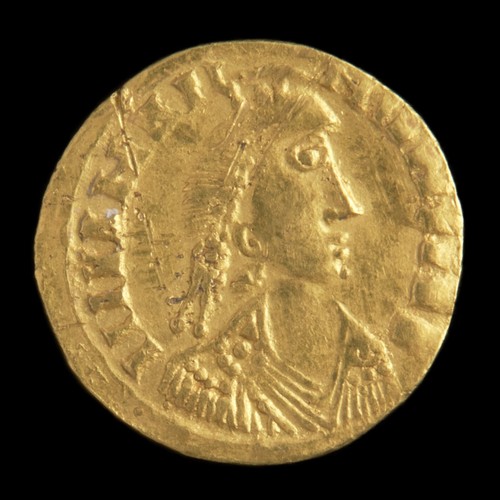
Solidus of Valentinian III
AD 425-455
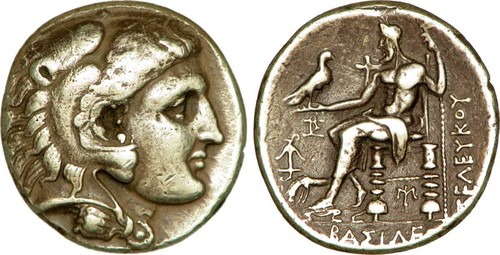
Seleucus I Nicator Tetradrachm
Late 4th-3rd century BC
Nummus of Magnentius
AD 350-353
Follis of Galerius
AD 308-310