
How to Identify the Half Centenionalis of Constans or Constantius II
A collector's guide to reading the diademed portrait, dynastic reverse types, small bronze fabric, and mint marks of these mid-4th-century coins.
Read the full Half Centenionalis of Constans or Constantius II encyclopedia entry →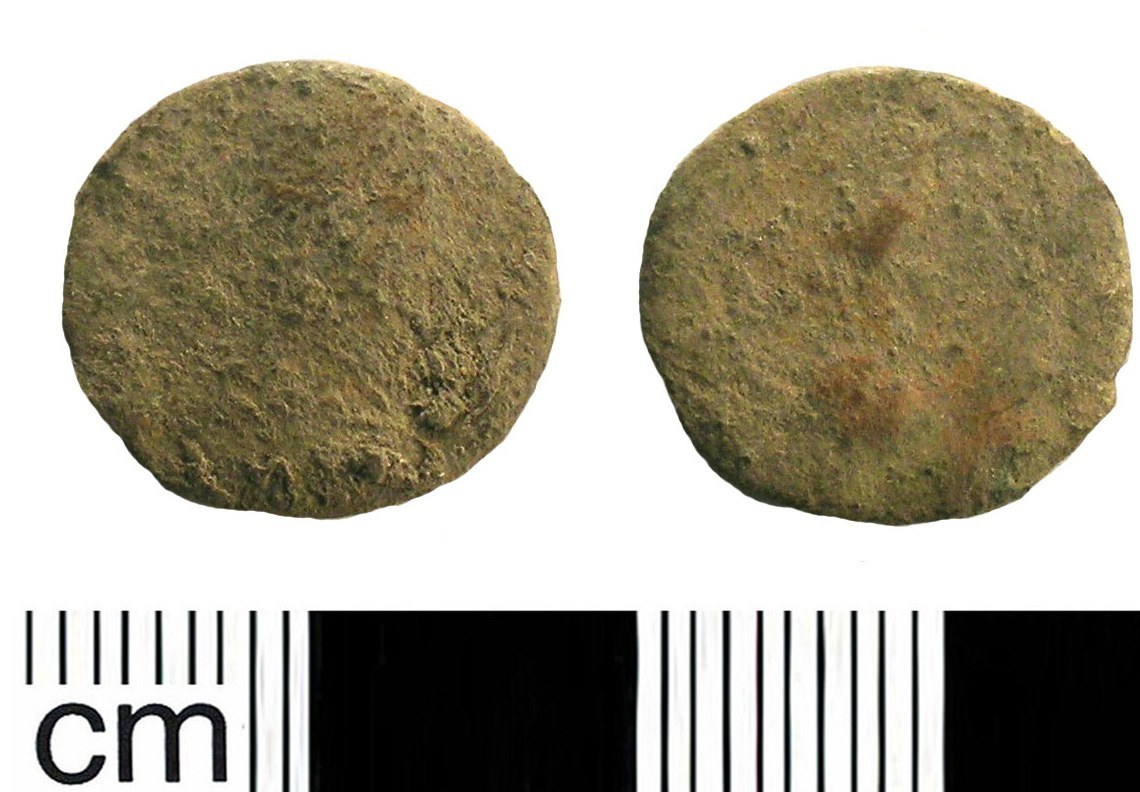
Begin with the portrait style and the name. These small bronzes show a right-facing imperial bust wearing a diadem (a beaded or rosette headband, not a laurel wreath or a radiate crown), draped and cuirassed in the manner of Constantine's dynasty. Read what remains of the obverse legend: an intact example reads something like DN CONSTANS PF AVG or DN CONSTANTIVS PF AVG, and the surviving portion of the name, CONSTANS or CONSTANTIVS, is what separates the two brothers. On a worn coin the legend may be gone, which is exactly why such pieces are catalogued to "Constans or Constantius II" rather than to one ruler.
Check the size, weight, and metal before anything else. This is a small, thin coin, commonly about 14-18 mm and roughly 1.5-2.5 grams, struck in bronze or low-grade billon. The surface is usually a coppery or olive brown, sometimes with green patina; a few issues once had a light silvering that is generally worn off. A coin far larger, heavier, or made of good silver does not belong to this small mid-century bronze class.
Use the reverse type to narrow the identification. The mid-fourth century relies on a small set of standard designs: two Victories facing each other holding wreaths (VICTORIAE DD AVGG Q NN), two helmeted soldiers flanking one or two military standards (GLORIA EXERCITVS), a vota inscription such as VOT XX MVLT XXX inside a wreath, or the FEL TEMP REPARATIO series introduced around AD 348. Identify the worn design by its overall layout even when the legend is faint, then read the exergue for a mint mark, a short block of letters that ties the coin to a mint such as Rome, Aquileia, Siscia, Thessalonica, Constantinople, Antioch, or Alexandria and to a specific workshop.
Be careful with look-alikes and authentication. Nearly identical small bronzes were struck for other members of the house of Constantine, including Constantine II, Constantius Gallus, and later Julian, and for the usurper Magnentius, so always read the obverse name rather than assuming from the portrait or reverse alone. Most genuine examples are hand-struck and slightly irregular, with off-centre legends and uneven flans. Because these coins are common and cheap, elaborate forgeries are uncommon, but cast copies exist; warning signs include a seam around the edge, a soft or grainy surface, bubbles under any silvering, and a suspiciously smooth, uniform fabric. When precise attribution matters, compare the coin against a standard reference such as the Roman Imperial Coinage volumes for this period or seek an opinion from a specialist in late Roman bronze.
Frequently asked questions
What is the quickest way to place this coin in the mid-4th century?
Look for a small thin bronze, about 14-18 mm, with a diademed right-facing bust and a dynastic reverse such as paired Victories, soldiers with standards, or a vota wreath. That combination points to the house of Constantine in the middle decades of the fourth century.
How do I tell Constans from Constantius II?
Read the obverse legend. The name appears as CONSTANS or CONSTANTIVS within a legend like DN CONSTANS PF AVG or DN CONSTANTIVS PF AVG. If the legend is worn away, the coin genuinely cannot be separated between the two and is catalogued to either.
What does the block of letters in the exergue mean?
That is the mint mark. It combines an abbreviation for the mint city with letters or symbols for the workshop and issue, and it lets you attribute the coin to a specific mint such as Siscia, Thessalonica, Antioch, or Alexandria.
Could a worn coin like this be a fake?
It is unlikely, because these small bronzes are so common and inexpensive that they are rarely worth forging. Still, watch for a casting seam, a grainy or overly smooth surface, or a portrait and legend style that do not match genuine mid-century coins, and use a standard reference or specialist to confirm.