
Coin Encyclopedia
Search and identify coins from around the world — with country, denomination, metal, mint, history, and how to tell them apart.
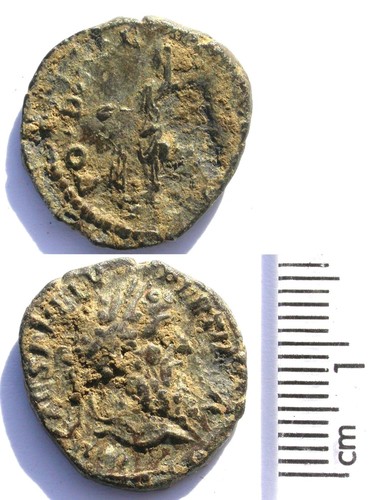
Denarius of Pertinax
A rare silver denarius of Pertinax, Roman emperor for 86 days in 193 AD, showing his laureate portrait and a personification reverse.
Ancient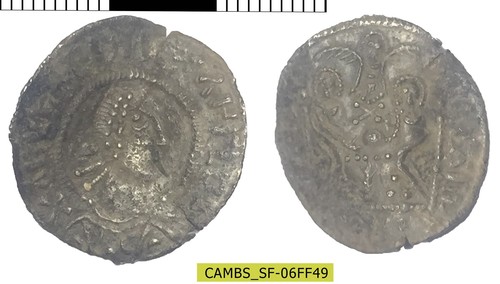
Penny of Alfred the Great
Hand-struck silver penny of Alfred the Great of Wessex, showing a right-facing royal bust and a cross-based reverse with a moneyer's inscription.
Medieval Coins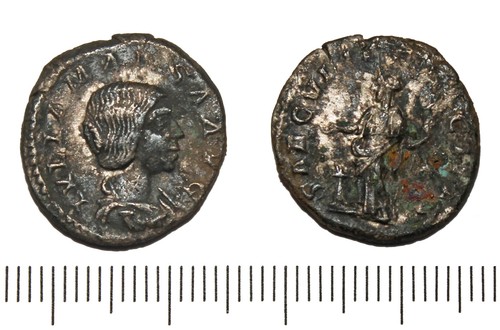
Denarius of Julia Maesa
Roman silver denarius struck for Julia Maesa (c. 218–222 CE), showing her draped bust with wavy hair and a standing deity on the reverse.
Ancient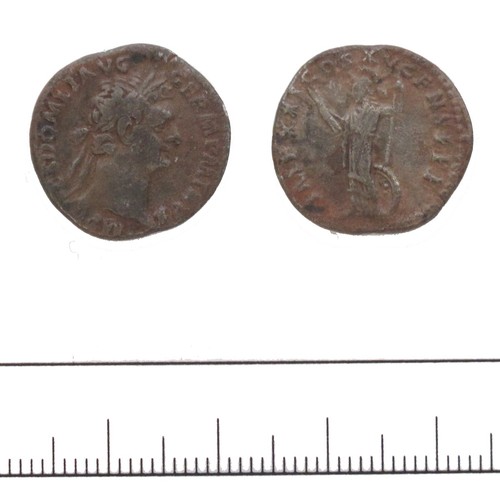
Denarius of Domitian
Silver denarius of the emperor Domitian (81-96 AD), with his laureate portrait on the obverse and, typically, the goddess Minerva on the reverse.
Ancient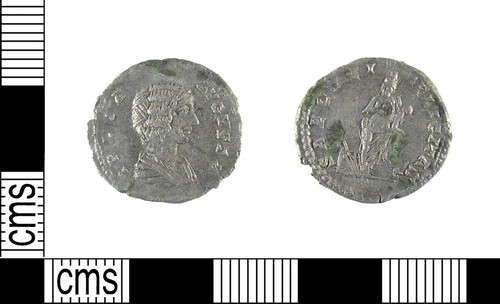
Denarius of Julia Domna
Roman silver denarius of the empress Julia Domna (193-217 CE), with her draped bust and a standing goddess or personification on the reverse.
Ancient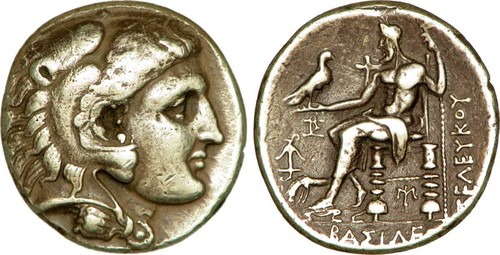
Seleucus I Nicator Tetradrachm
Large silver tetradrachm of Seleucus I Nicator, founder of the Seleucid Empire, showing a horned Alexander-type head and a mounted figure with a spear.
Ancient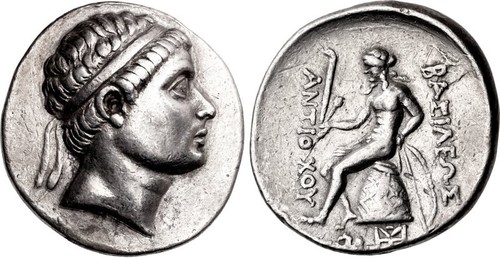
Antiochos Hierax Tetradrachm
Silver tetradrachm of the Seleucid prince Antiochos Hierax, c. 242-227 BC, with a diademed royal head and a reverse figure bearing shield and spear.
Ancient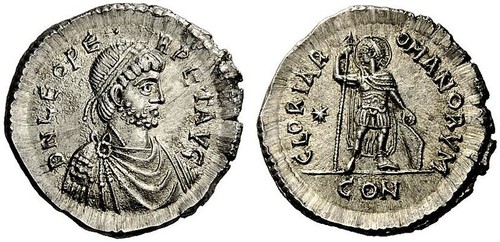
Miliarense of Leo I
Eastern Roman silver miliarensis of Leo I (AD 457-474), showing his diademed bust and a standing military figure with spear and shield.
Ancient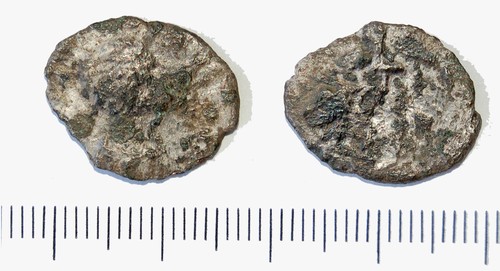
Denarius of Faustina the Elder
A silver Roman denarius honoring Faustina the Elder, wife of Antoninus Pius, with her draped bust and a seated Fortuna reverse, struck c. 141–161 AD.
Ancient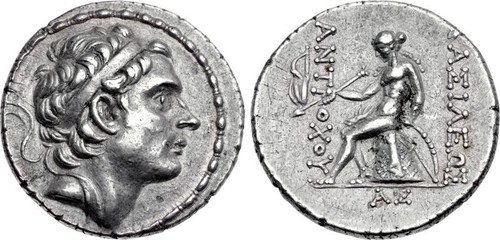
Antiochos III Tetradrachm
A large Seleucid silver coin of Antiochos III the Great, showing his diademed head and a seated deity holding shield and spear.
Ancient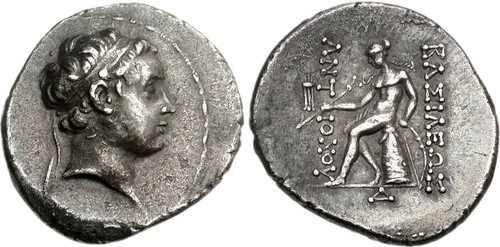
Antiochos the Child Tetradrachm
Silver Seleucid tetradrachm, c. 175 BC, with a young diademed head and a martial reverse figure with spear and shield.
Ancient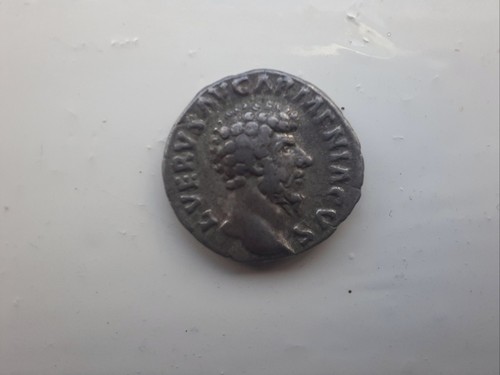
Denarius of Lucius Verus
A silver Roman denarius of the emperor Lucius Verus (161–169 AD), showing his curly-haired, bearded portrait facing right with a Latin legend.
Ancient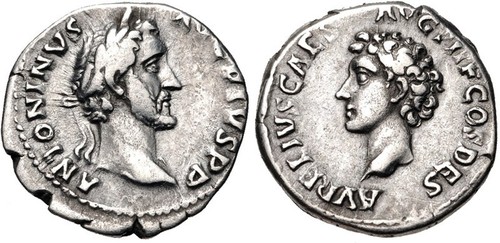
Denarius of Antoninus Pius and Marcus Aurelius
Roman silver denarius of Antoninus Pius (138–161 AD), a dynastic type showing the emperor and the two young Caesars, Marcus Aurelius and Lucius Verus.
Ancient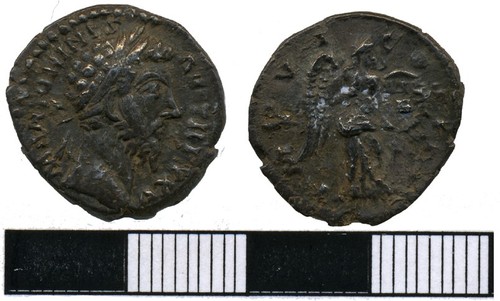
Denarius of Marcus Aurelius
Roman silver denarius of Marcus Aurelius (c. 170-171 AD): laureate bearded emperor on the obverse, a standing personification on the reverse.
Ancient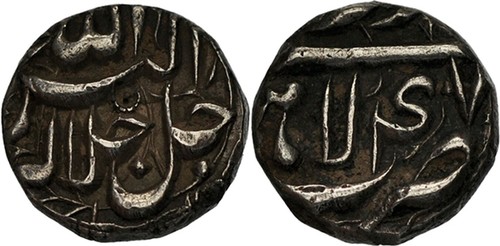
Mughal Quarter-Rupee
A small hammered Mughal silver quarter-rupee inscribed in Persian, struck at the Lahore mint and dated Ilahi 47 (AD 1602-1603).
Historic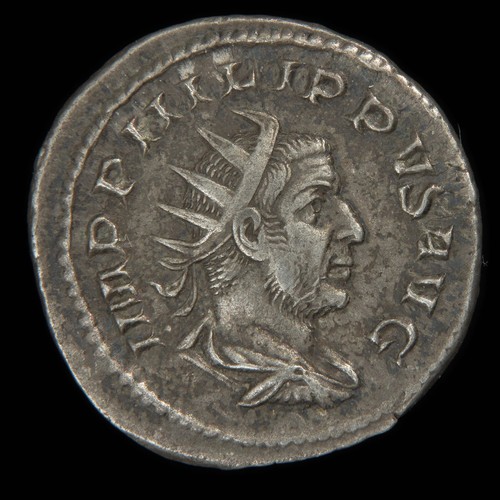
Antoninianus
Roman imperial coin of the crisis era, marked by a radiate (spiked) crown on the emperor's head; struck in debased silver-and-copper billon, c. 250-270 AD.
Ancient Coins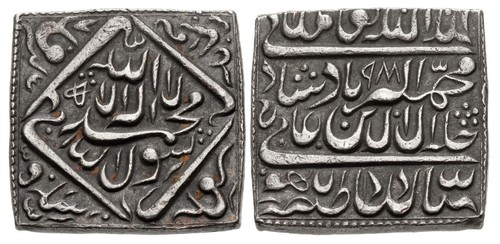
Mughal Square Rupee Token
A square silver-colored token copying a Mughal square rupee, with Persian and Islamic inscriptions and an AH 988 date, produced as a later reproduction.
Token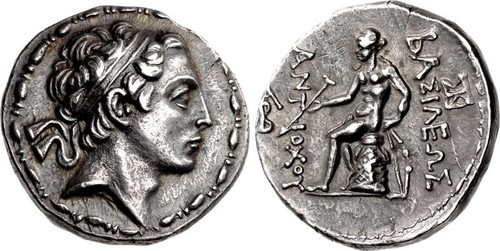
Antiochos IV Epiphanes Tetradrachm
Large silver tetradrachm of the Seleucid king Antiochos IV Epiphanes, 175-164 BC, with his diademed head and an enthroned deity reverse.
Ancient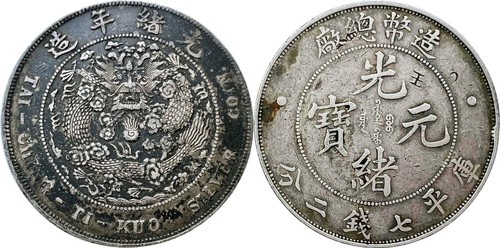
Guangxu Yuanbao 7 Mace 2 Candareens
A silver Chinese dragon dollar of the Guangxu era, marked Guangxu Yuanbao and valued at 7 Mace 2 Candareens, with a coiled dragon on one face and Chinese legends on the other.
Circulation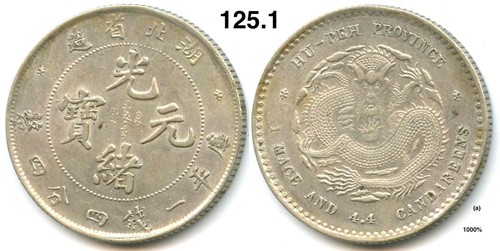
Guangxu Yuanbao 1 Mace 4.4 Candareens
A small silver dragon coin of Qing China from the Guangxu era, its face reading 1 Mace 4.4 Candareens and its back showing a coiled Chinese dragon.
Circulation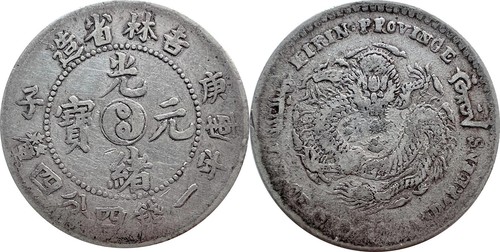
Guangxu Yuanbao 20 Cents
A machine-struck Qing silver 20 cents of the Guangxu era, with a coiled dragon on one face and a yin-yang (taiji) symbol on the other.
Circulation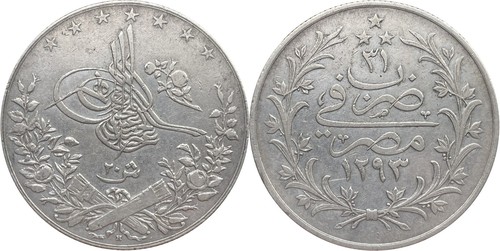
Egypt 20 Qirsh
The 20 qirsh was Egypt's largest silver coin under the Khedivate, bearing the Ottoman sultan's tughra; this example dates to 1905.
World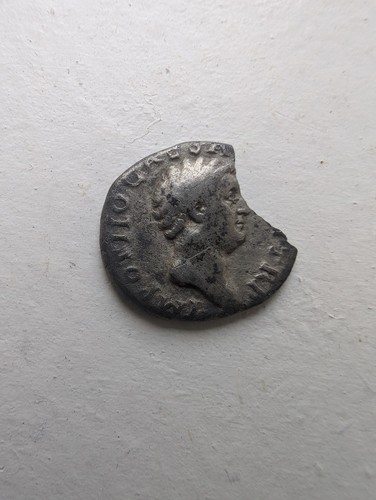
Denarius of Otho
Silver denarius of the emperor Otho, struck at Rome during his brief AD 69 reign, showing his bare head right with the legend IMP OTHO CAESAR.
Ancient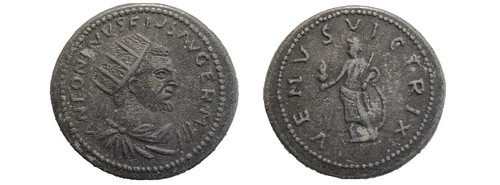
Antoninianus of Caracalla
The antoninianus introduced by Caracalla around AD 215, a radiate-crowned double denarius in debased silver that reshaped Roman coinage.
Ancient