
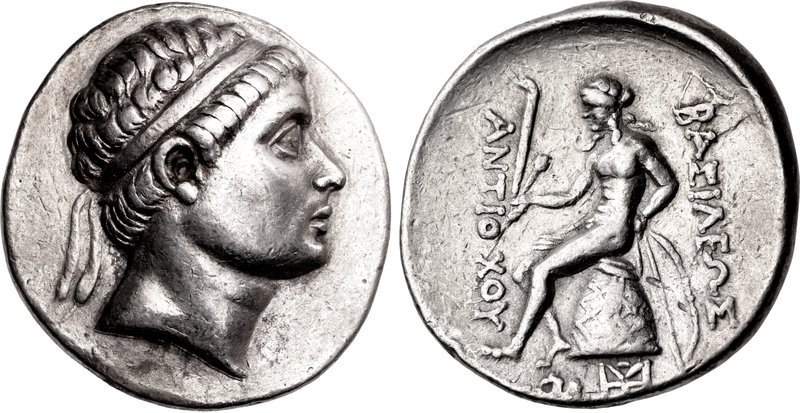
Antiochos Hierax Tetradrachm
Silver tetradrachm of the Seleucid prince Antiochos Hierax, c. 242-227 BC, with a diademed royal head and a reverse figure bearing shield and spear.
- Country
- Seleucid Empire (Ancient)
- Denomination
- Tetradrachm
- Metal
- Silver
Got a coin like this?
Identify any coin from a photo, free.
Overview
The Antiochos Hierax tetradrachm is a large silver coin struck for Antiochos Hierax, a younger son of the Seleucid king Antiochos II who carved out an independent power in Asia Minor. The example shown pairs a diademed head facing right on the obverse with a standing or seated figure holding a shield and spear on the reverse, a martial image that suits a ruler whose whole career was built on war.
As a tetradrachm, the coin was worth four drachms and served as the standard large silver denomination of the Hellenistic Greek world. It is a broad, heavy disc of high-grade silver, struck on the Attic weight standard used across the Seleucid realm for major payments, trade, and military pay.
The coinage belongs to the generation after Alexander the Great, when his successors' kingdoms fought among themselves and, in this case, within a single dynasty. Coins of Antiochos Hierax advertised his claim to kingship in the regions he controlled, carrying his portrait and royal title through the cities and armies of Asia Minor.
History & Background
Antiochos Hierax earned his nickname, "the Hawk," for his restless aggression. He was a younger brother of the Seleucid king Seleukos II Kallinikos, and in the 240s BC he was set up as a co-ruler or subordinate in Asia Minor. He soon turned against his brother in a drawn-out struggle known as the War of the Brothers, roughly 241 to 236 BC, seeking an independent kingdom of his own north and west of the Taurus mountains.
The coin shown, dated to about 242 to 227 BC, spans this period of rivalry and its aftermath. Operating largely apart from the central Seleucid administration, Hierax struck coinage at mints in Asia Minor to fund his forces and assert his royal standing. His alliances shifted repeatedly, drawing in Galatian mercenaries and the neighboring kingdoms of Pergamon and Bithynia, and his fortunes rose and fell with the fighting.
Hierax was ultimately driven from Asia Minor after defeats, notably at the hands of Attalos I of Pergamon, and died around 226 BC as a fugitive. Because his issues were produced during a fragmented, contested period rather than by a stable central authority, they survive in a range of local styles and are prized as coinage of one of the Hellenistic world's most turbulent claimants.
How to Identify
The obverse shows a royal head in profile facing right, wearing the diadem (a plain cloth band tied at the back with trailing ends), the standard emblem of Hellenistic kingship. The portrait is idealized in the Seleucid manner; on his coinage Hierax is often shown as a notably youthful ruler. Look for the diadem band and high-relief modeling of the hair.
The reverse carries a figure equipped with a shield and spear, martial attributes associated with Athena and with the warlike self-image of this ruler. A Greek royal legend naming the king normally runs beside the figure, in the form BASILEOS ANTIOCHOU ("of King Antiochos"), accompanied by monograms or small control marks that vary between the different mints of Asia Minor.
In hand the coin is a large, thick silver disc. Attic-standard Hellenistic tetradrachms of this kind typically run on the order of about 16 to 17 grams and roughly 27 to 32 mm across, struck from hand-cut dies so that centering is uneven and the flan is slightly irregular. The metal is high-grade silver, usually toned grey with age. The combination of a diademed head right, a shield-and-spear reverse figure, and the Antiochos legend is the coin's key identifier.
Value & Collectibility
Silver tetradrachms attributed to Antiochos Hierax are authentic Seleucid-era royal coinage and are actively collected, both for their art and for their association with a dramatic dynastic conflict, so they hold a solid market. Worn but clearly identifiable examples generally trade in the mid hundreds of dollars, while sharply struck, well-centered coins with a bold portrait can reach into the four figures.
Value depends on the strength and style of the portrait, the completeness of the reverse figure and legend, centering, surface quality and toning, and overall eye appeal. Fine local dies, secure attribution to Hierax rather than to another Antiochos, and superb or provenanced coins command premiums, while off-center strikes, corrosion, or heavy wear reduce value.
These figures are general context rather than appraisals. Any specific coin's price depends heavily on condition, attribution, and authenticity, and valuable Hellenistic silver of this kind is often sold with specialist attribution or third-party certification.
Frequently asked questions
Who was Antiochos Hierax?
He was a younger son of the Seleucid king Antiochos II and brother of Seleukos II. Nicknamed 'the Hawk,' he fought his brother for an independent kingdom in Asia Minor during the 240s and 230s BC and died a fugitive around 226 BC.
What does the reverse show?
It shows a standing or seated figure holding a shield and spear, martial attributes linked to Athena and to this ruler's warlike image, usually with a Greek legend naming King Antiochos.
How big and heavy is the coin?
It is a large silver tetradrachm, typically on the order of about 16 to 17 grams and roughly 27 to 32 mm across. It is a thick, substantial piece struck on a hand-cut blank, so its shape is somewhat irregular.
Is there writing on the coin?
Yes. The reverse normally carries a Greek royal legend naming the king, in the form BASILEOS ANTIOCHOU, meaning 'of King Antiochos,' often with monograms or control marks that vary between mints.
Why does the coin name Antiochos when he is called Hierax?
'Hierax' (the Hawk) was a nickname given by historians, not a name he put on his coins. His issues use his official royal name, Antiochos, so telling his coinage from that of other kings named Antiochos relies on style, portrait, and find context.
Antiochos Hierax Tetradrachm guides
In-depth guides for identifying, valuing, and collecting Antiochos Hierax Tetradrachm.
Other coins you may enjoy
Tetradrachm of Ptolemy XII
80-51 BC
Tetradrachm of Ptolemy I
305-283 BC
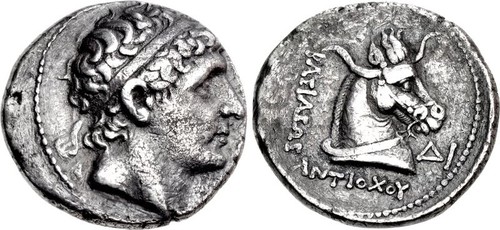
Tetradrachm of Antiochos I Soter
281-261 BC
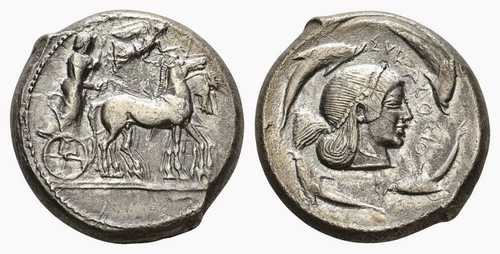
Syracuse Tetradrachm
c. 5th-4th century BC (Classical period)
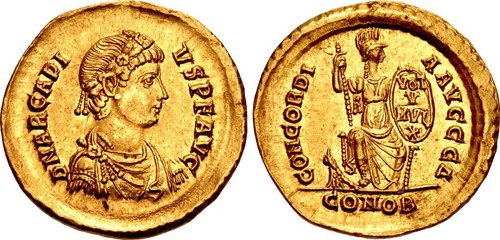
Solidus of Arcadius
AD 395-402
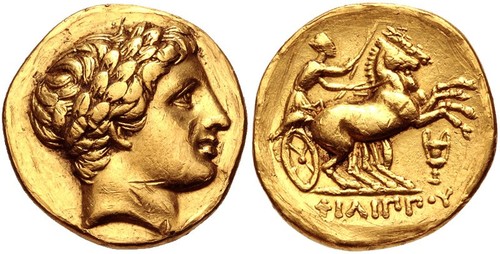
Philip III Gold Stater
323-317 BC
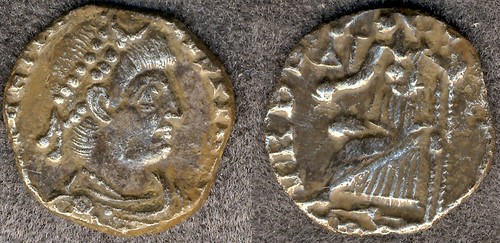
Siliqua of Gratian
AD 367-383
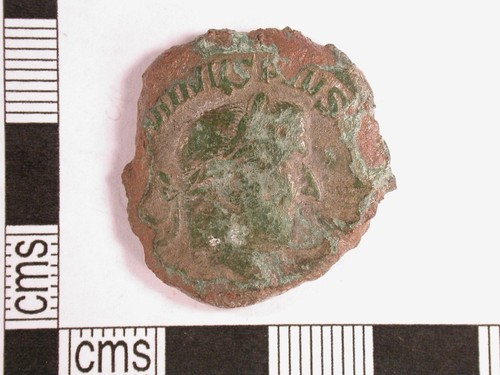
Sestertius of Maximinus Thrax
235-238 AD
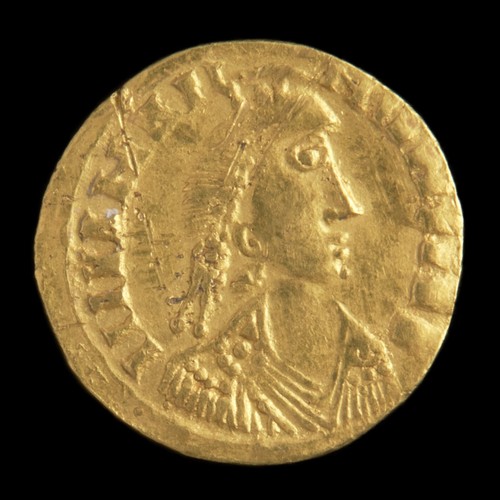
Solidus of Valentinian III
AD 425-455
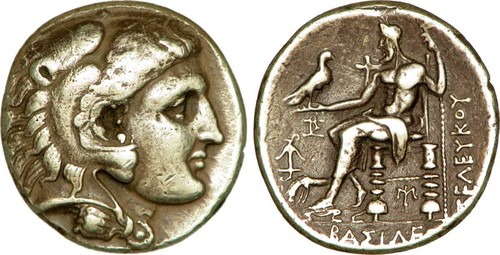
Seleucus I Nicator Tetradrachm
Late 4th-3rd century BC
Nummus of Magnentius
AD 350-353
Follis of Galerius
AD 308-310